Torres del Paine National Park, Chile
The buffet breakfast this morning was the most impressive of the trip — but we didn’t realize that there was a made-to-order omelet station until we were on our way out. Bummer. Burt made a quick run to the North Face store for more gear before our transfer arrived to take us on the 7-hour journey north.
We booked our trek with Cascada Expediciones, a travel company based out of Santiago. There are many ways to experience Torres del Paine — from the über-luxurious 5-star explora to basic self-camping. Cascada hit the sweet spot, providing some luxuries while not breaking the bank. Plus, it had been named one of the best adventure travel outfitters by National Geographic. So, we would be in good hands.
After a stop at the airport to pick up a couple from Denmark, we started on the 3-hour drive to Puerto Natales. The paved road stretched for miles and miles into the horizon. There were gauchos rounding up cattle. A lake filled with flamingos. Sheep gazing in an endless field. This was Patagonia.

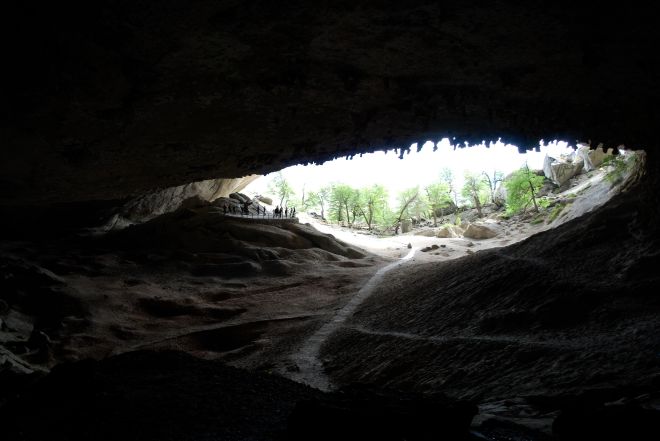
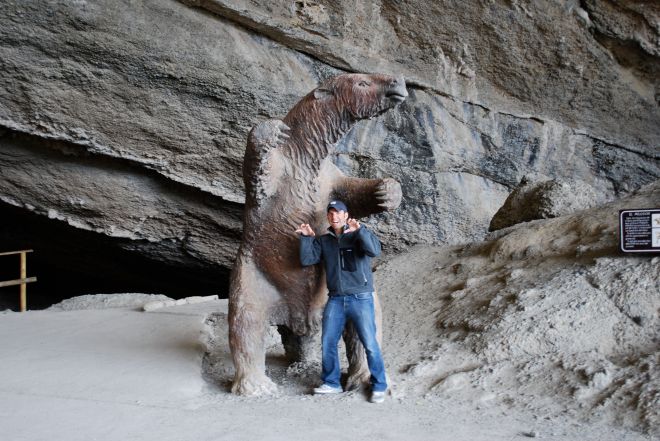
We had some solid Chilean sandwiches before passing through Puerto Natales, a small but lively place of about 18,000 situated on the banks of Seno Última Esperanza (Last Hope Sound). Just outside of town is the Cueva de Milodón, a cave where a German pioneer by the name of Hermann Eberhard discovered the partial remains of a giant ground sloth in the 1890s. The massive prehistoric cave was formed by glacial waves that ate into sedimentary rock. And although the mylodons were hunted to extinction, there is an amazingly tacky replica perfect for tourists to pose with today.
The road turned to gravel, and soon dust was filling the van. Perhaps the air conditioning was malfunctioning, the driver said. He advised putting jackets over the vents for the remaining 3-hour drive. When the Danish folks raised an eyebrow, he pulled over to give us all a breath of fresh air.
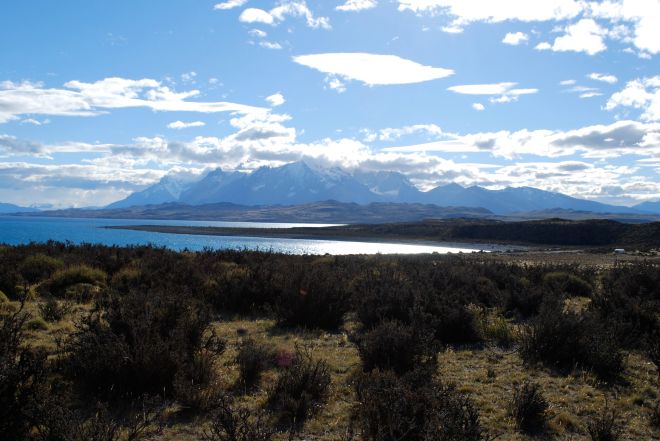

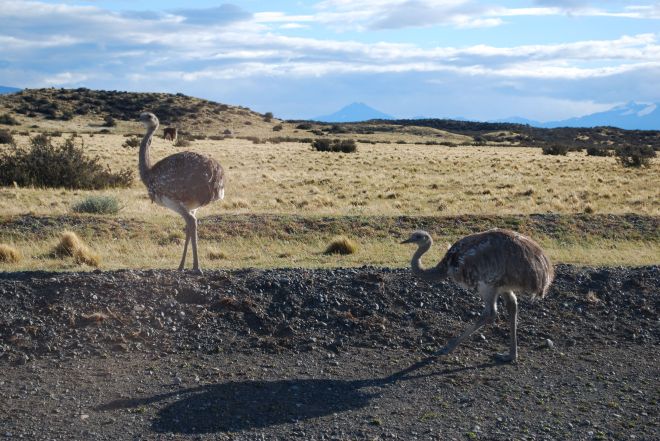
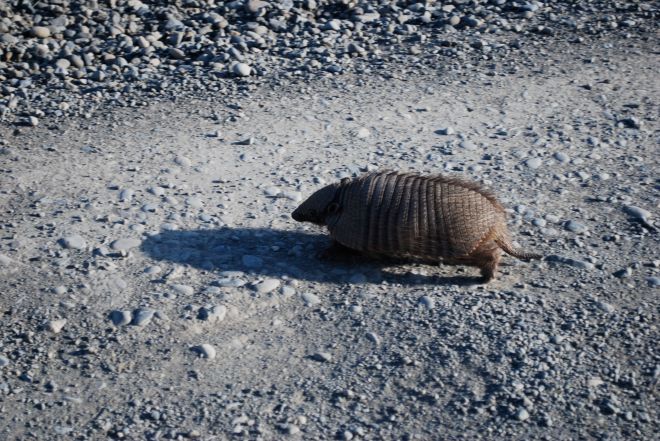
Entering the park, we passed gazing guanacos, llama-like animals, flocks of ñandú, which look like ostriches, and an armadillo scurrying across the road.

Our destination was EcoCamp, which sits at the base of the Torres del Paine (Towers of Paine) on the northeast side of the park. The camp isn’t an “ecocamp” — it’s an actual ecocamp in every sense of the word. It is run by renewable energy sources (both wind and solar), has compost toilets and biodegradable soaps in the bathroom. Yet, this no-impact commitment does not come at the expense of comfort.


Our dome, #10, had commanding views of the jaw-dropping Torres, those iconic granite pillars, which were visible through a clear segment of the roof.


The guides, Hernán, Eduardo and Jonathan, met us down at the dining dome with pisco sours for a trip briefing. We were given a brief history of the park, which has been part of Unesco’s Biosphere Reserve since 1978, before getting into the details of our “W” trek — so named because of the route’s resemblance to the letter.
After an overnight here, we would start a three-day hike, staying at basic refugios the first two nights. We would then return to the EcoCamp, which would serve as our base for the remainder of the trek. All together, we would cover 80 kilometers, or about 50 miles. Burt looked at me. I looked at him. What had we gotten ourselves into?
Dinner was tomato soup, steak with a pumpkin puree and rice pudding. Afterward, we had a chance to meet the rest of our group, who (somewhat surprisingly) was all from the U.S. There were several twenty-something guys traveling with their folks. A couple from Atlanta; another from Colorado Springs; and a solo traveler who worked for an outdoor adventure travel company. All seemed friendly and outgoing; many had done a trip like this before. “What about you guys?” they asked.
We grabbed one last microbrew from the keg and walked back to our dome under the clearest of night’s skies. There wasn’t time to linger though. Tomorrow would be a big day.




 Marc Zawel