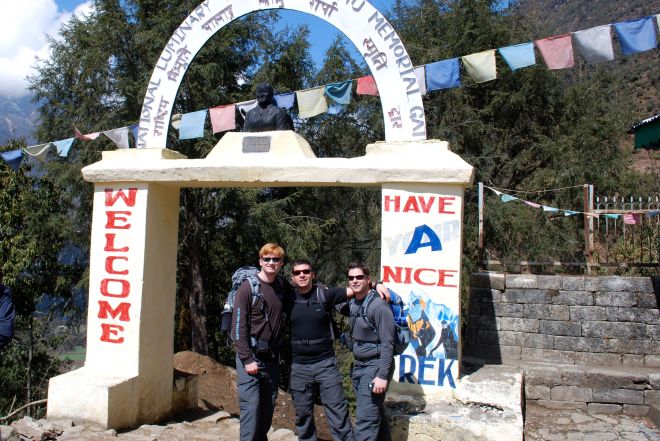
Day 5: Tengboche to Dingboche

Dingboche, Nepal
14,298 feet above sea level; 57% oxygen

The thermostat was in the mid-twenties when the sunrise woke us this morning.

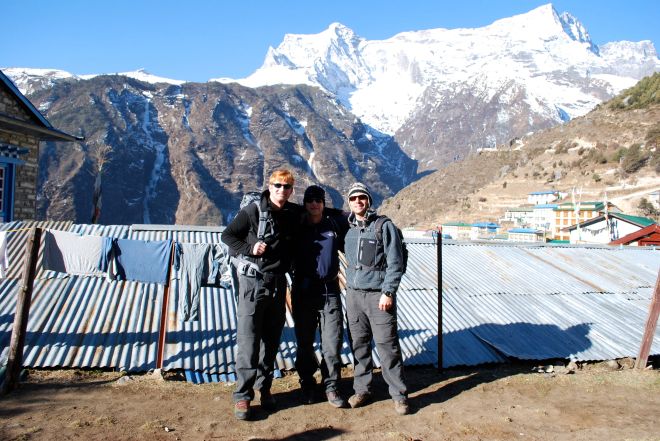
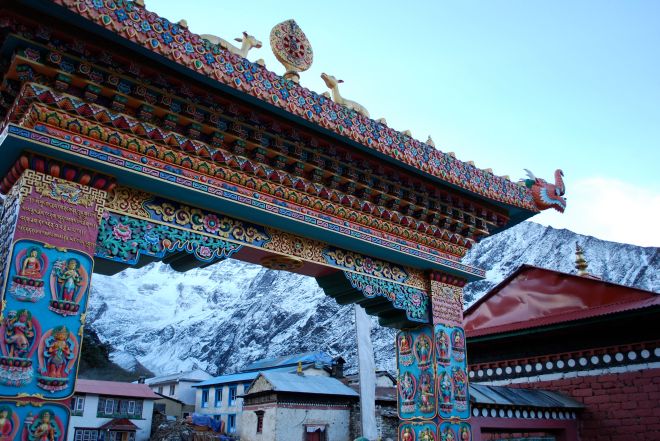
While difficult to get out from our sleeping bags, the dawn — with its perfect lighting for photos — was compelling enough. We watched as the sun slowly rose, illuminating the face of Everest in the distance and a conch shell blew from the monastery called the monks to prayer.

DSC_0035

DSC_0035

DSC_0035

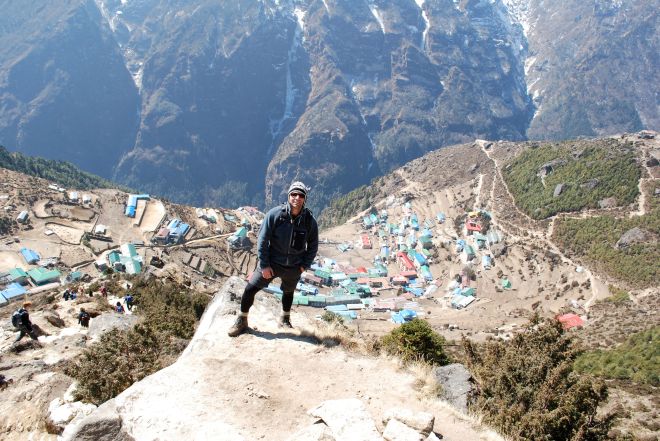
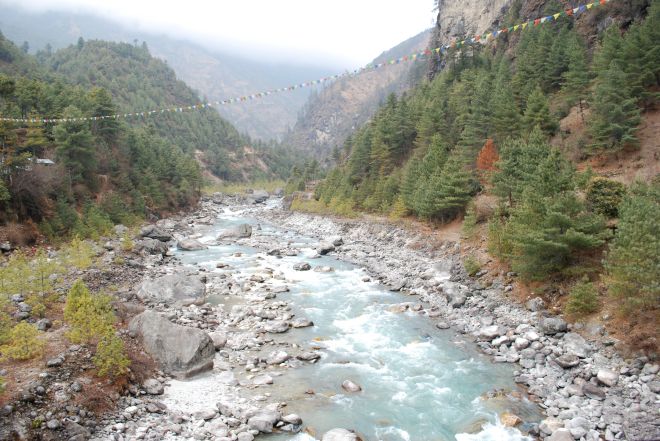
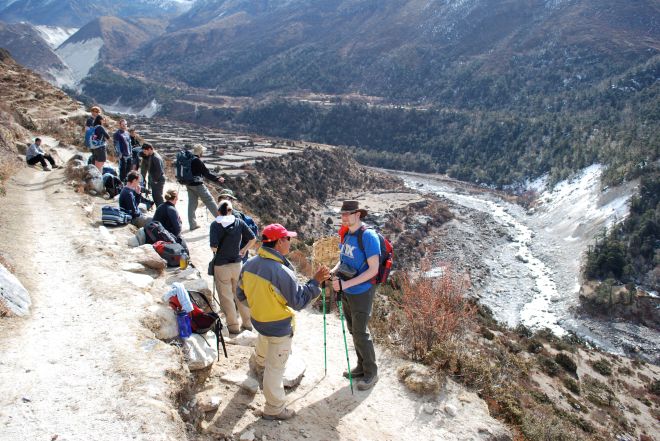
After breakfast, we descended steeply through rhododendrons, birches and conifers, crossed a river and then began climbing upward. Today’s trek was about 5 miles but as we cruised above the 14,000-foot mark, became increasingly difficult. At this altitude, the landscape changes markedly — trees cannot survive here – as we entered alpine meadows of scrub juniper.

DSC_0035

DSC_0035

DSC_0035

Occasionally, a rescue chopper flew overhead. During the high season — which begins next month – our guide, Dawa, said that there could be several dozen trekker evacuations per day.

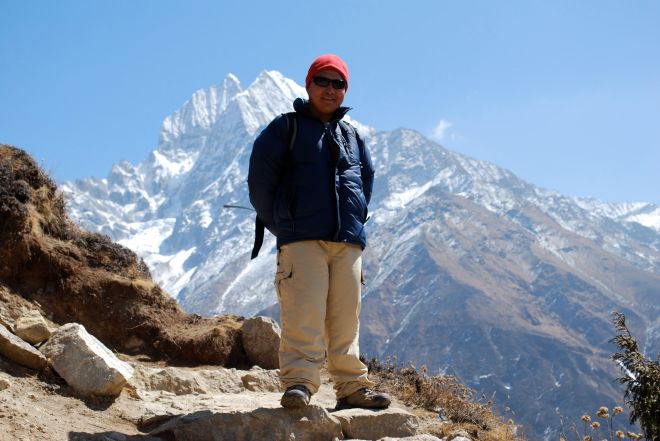
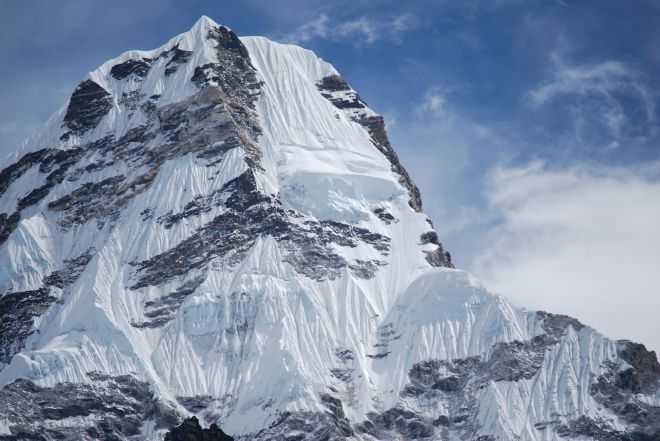
Yet, altitude or not, the more we walked, the more dramatic the terrain became.
DSC_0035

DSC_0035

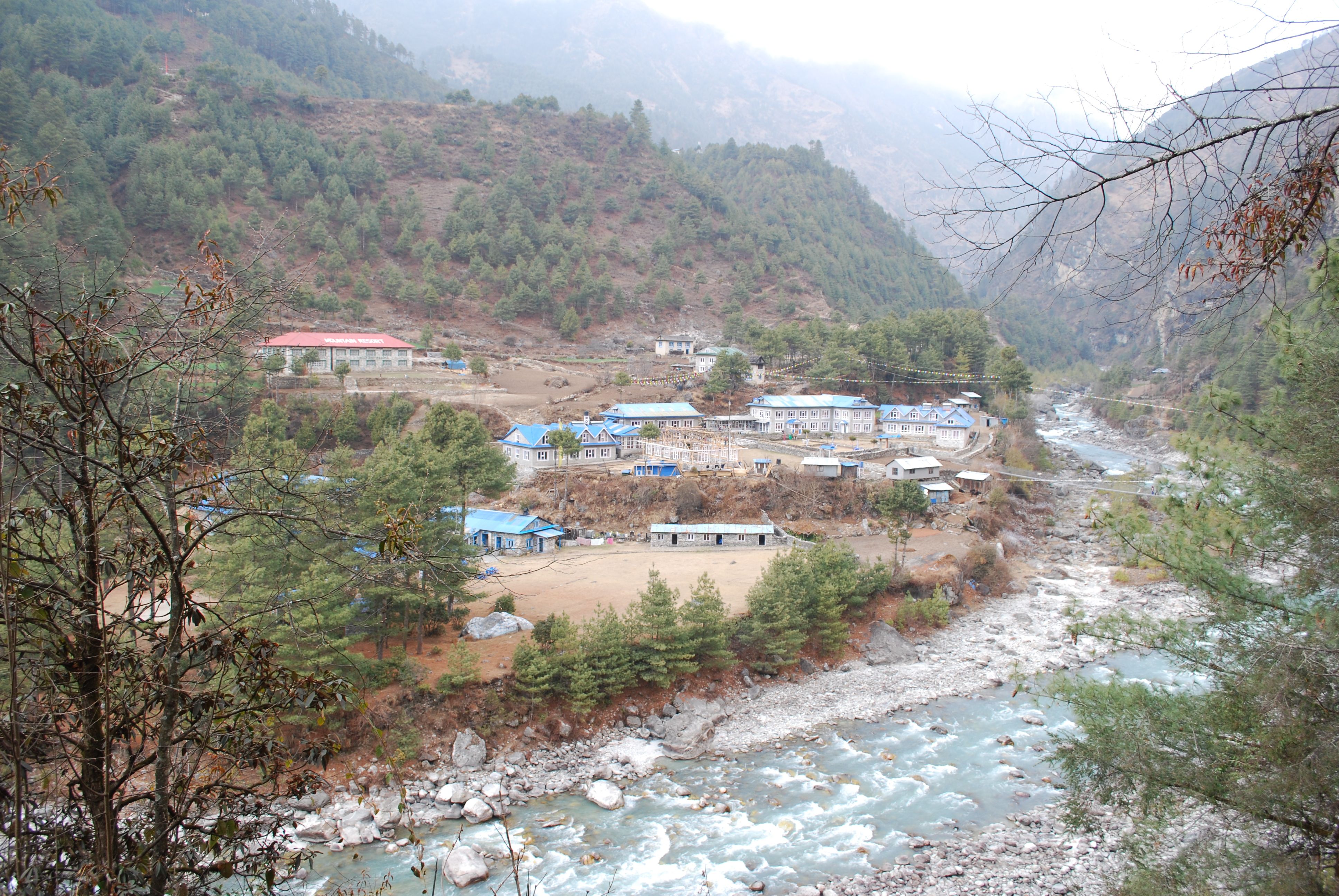
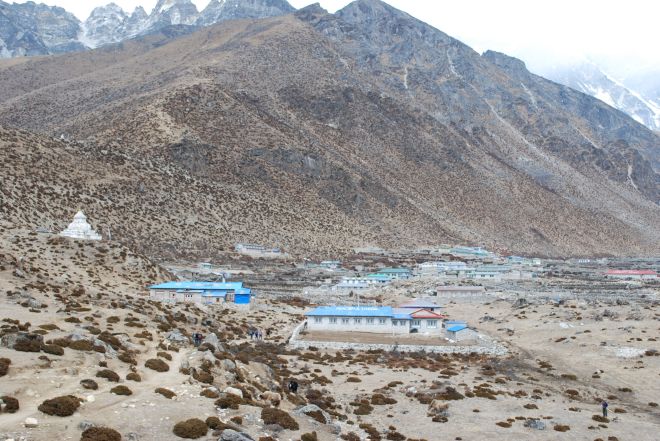
We were encouraged as we approached the village of Dingboche, knowing that we would have two days here to rest and acclimate. By this point, nearly everyone in the group is feeling some symptoms of the high altitude: whether it’s headaches, achy joints or popped capillaries.
DSC_0035

But, generally, we’re still in pretty good spirits.

Day 4: Namche Bazaar to Tengboche

Tengboche, Nepal
12,687 feet above sea level; 60% oxygen

Chapatti and peanut butter is my new breakfast staple.

Only several days into the trek and I’ve already gotten tired of the food of Nepal. The country’s national dish is dahl baht — a bland concoction of rice, steamed vegetables and lentil mush.

No thanks.

Ascending toward Base Camp, eating has taken on a whole other purpose though. We eat because we must. There is no meat on the teahouse menus and even vegetables are of questionable quality. Dishes revolve around potato, noodle and rice — there is little culinary experimentation up here. And the bland food isn’t helped by the fact that higher altitudes cause gases in the stomach to expand, reducing appetite.

So, it was with excitement that chapatti, a simple, unleavened bread, with a smear of peanut butter really hit the spot. It would become my breakfast of choice for the rest of the trek.

Leaving Namche, the route was unbelievably beautiful — the Dudh Kosi was far below and Thamserku, Kantega, Ama Dablam, Lhotse and Everest rose in front of us. From here, we really could begin to appreciate the amazing magnificence of this setting, dwarfed at nearly 14,000 feet by six out of ten of the tallest mountains in the world.

DSC_0035

DSC_0035

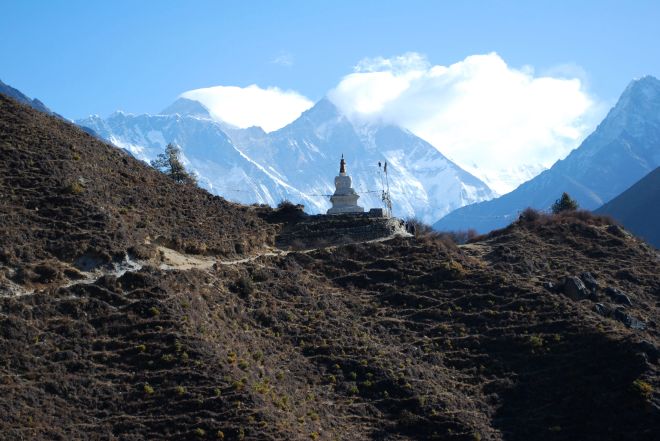
A lone stupa sitting on the mountainside provided a scenic resting spot to take in the views.

DSC_0035

DSC_0035

DSC_0035

DSC_0035

We trekked for 6 miles through woods, rhododendron forests, mani walls, chorten and water-driven prayer wheels. Crossing suspension bridges, we arrived at the base of a steep and dusty ascent and fueled up on egg chowmein at a small riverside restaurant.

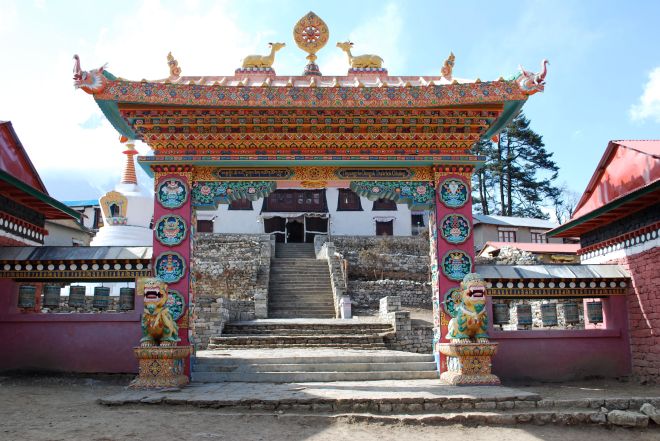
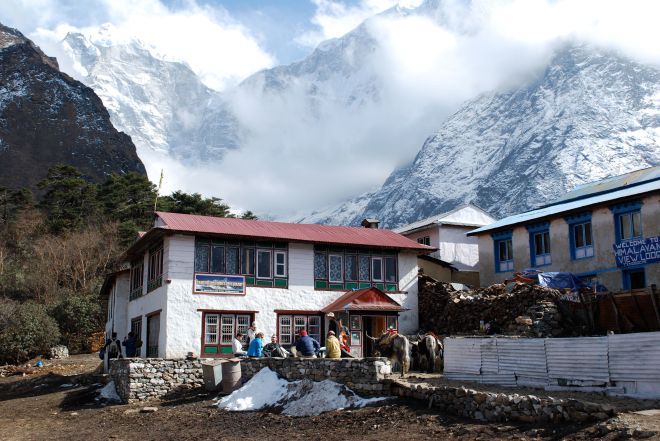
The ascent up to Tengboche rivaled that of the ascent to Namche but we felt better acclimated and prepared to tackle it. Still, we were quite tired when we finally rolled into our teahouse, Tashi Deleck, but were absolutely blown away by the setting of the famous Tengboche Monastery, which we visited shortly after setting our bags down.

DSC_0035

DSC_0035

DSC_0035

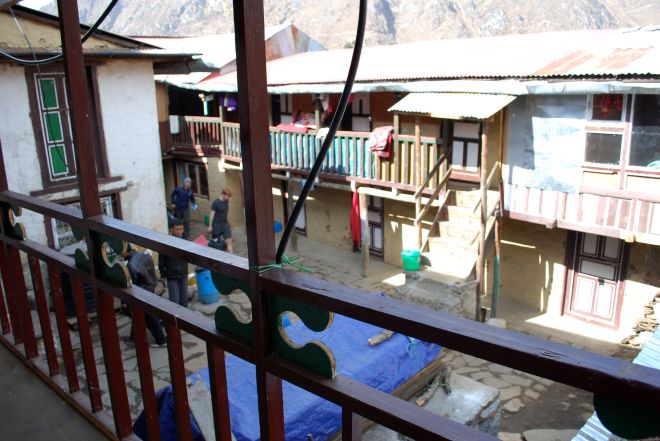
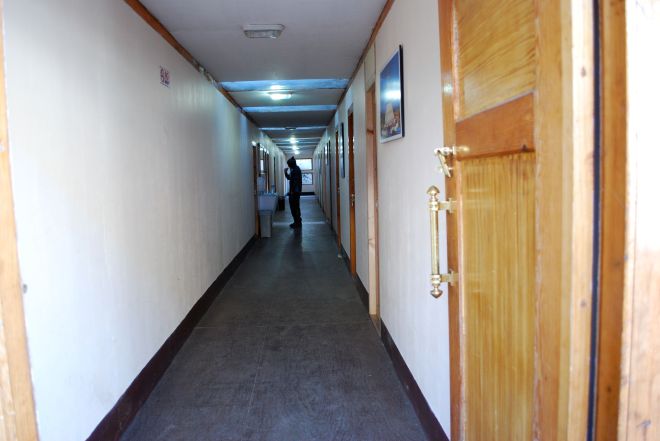
Unfortunately, the teahouse didn’t come close to matching the imposing scenery and as darkness and the thermostat fell, we began to nervously anticipate the evening. Our rooms had no blankets and were only moderately protected from the elements. There was no indoor toilet and the sink consisted of a tub of water in the courtyard.

DSC_0035

DSC_0035

DSC_0035

We filled our Sigg bottles with boiled water and took them into our cocooned sleeping bags. Wearing three fleeces, it wasn’t nearly as cold as I’d thought it would be.
That is, until the time came to get up in the pre-dawn morning.

Day 3: Acclimatization in Namche

Namche Bazaar, Nepal
10,308 feet above sea level; 64% oxygen

Ten hours later, the answer had popped into my head. The sunlight was streaming through my windows and the air was cold enough to see my breath. In the near distance, awe-inspiring mountains soared into clear blue skies. My headache was gone. And my appetite was back.

So, why trek to Everest?

Not just to push myself — physically and mentally — on what is considered to be one of the most challenging treks in the world. But to experience and to see the Himalayas and Everest itself, this unspoiled sliver of land that has for years drawn in mountaineers and other adventurers.

What was so intoxicating about this place?

The Upper Khumbu is a region of dazzling light and immense spaces. According to the local Sherpa people, Khumbu is a sanctuary for Buddhists in times of trouble — the hidden valley will reveal itself to those in need — which many say accounts for that somewhat magical feeling that permeates it.

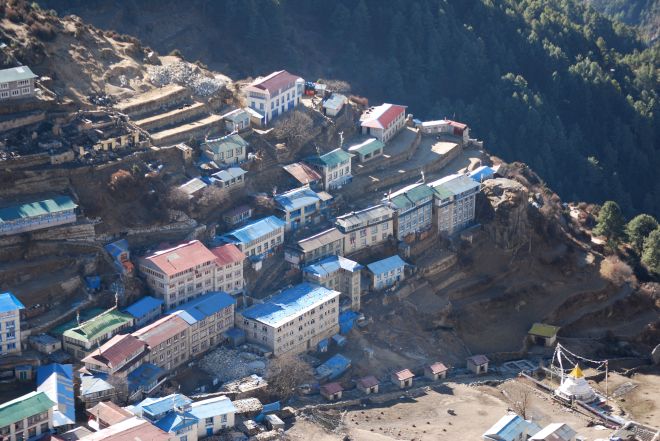
As part of the acclimatization process, we planned to spend an additional day in Namche Bazaar, a village carved into the mountainside. Dawa recommended that we heed the oft-given advice of hiking high and sleeping low, so with daypacks we began the steep 3-hour ascent to Sengboche.

DSC_0035

DSC_0035

At the Everest View Hotel, the “highest hotel in the world” (according to the Guinness Book of World Records), we had views of the surrounding valley — both where we had come from and where we were headed. A dirt airstrip, more ominous than that at Lukla, offered its own entertainment as we attempted to catch our breath after climbing to 12,500 feet.

DSC_0035

DSC_0035

From here, we peered downward back into Namche as well as north — toward the towering Himalayas and imposing Everest — where we would continue our trek tomorrow.

DSC_0035

DSC_0035

DSC_0035

It was a slow walk back to the teahouse during which our guide, Dawa, explained how he had grown up — and come to love — the mountains that we were now hiking in.

DSC_0035

DSC_0035

DSC_0035

Back in Namche, we walked around the crowded village with its trekking shops, lodges, bakeries, Internet cafés and even an ATM. We laughed thinking how its rupees were hauled from Lukla on the back of a yak — like just about everything else here. Prices of goods certainly reflect this “tax.” A map of the region, a pen and small tub of toothpaste cost me about $10 USD.

Bottled water here is about $1.25. As we ascend, the prices of everything — including the essentials like water — will soar three to four times of what they are in Namche.

With late afternoon, clouds began to envelop the village. Curled up in my sleeping bag, it was time to break out my book for this trip: Into Thin Air.

Several chapters in, it became apparent that it might not have been the best choice.

Day 2: Lukla to Namche Bazaar

Namche Bazaar, Nepal
10,308 feet above sea level; 64% oxygen

My toes woke up tingling this morning.

To counteract the effects of high altitude, many of us are taking Diamox, a prescription drug that increases acidity in the blood. In turn, this forces the body to increase respiration and hydration, both of which help mitigate some of the most frequent problems associated with acclimating: headaches, loss of appetite and sleeplessness.

But it’s not without side effects: tingling extremities and frequent urination. Neither of which are much fun but when balanced with the benefits, make sense.

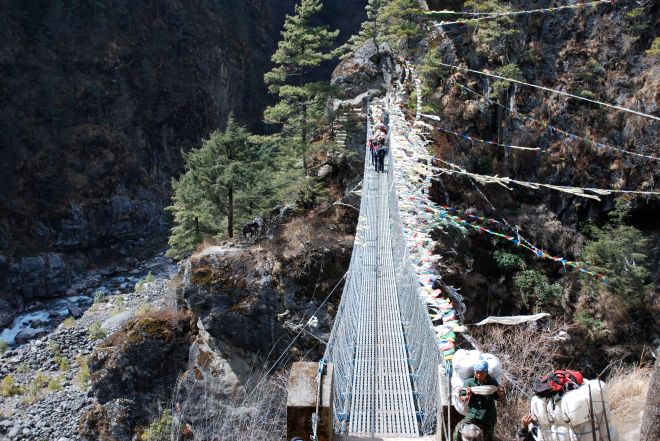
We set out this morning after a breakfast of toast, jam and black tea. The trail crossed the river on a long, swaying bridge that then led us along the smooth-stoned river bed to Benkar. From here, we crossed the Dudh Kosi again to its east bank on another suspension bridge and then had a short climb through the forests to Monjo.

DSC_0035

DSC_0035

DSC_0035

The trail then banked steeply for an exhausting climb. Here, ascending over 1,000 feet an hour, we began to feel the effects of altitude. The walking turned slow and steady — any faster and we were left sucking air on the side of the trail.

DSC_0035

DSC_0035

Strangely, during our frequent breaks, we were quick to recover. Literally, within 30 seconds, we were breathing normally again. Clearly, it wasn’t the physical exertion but the lack of oxygen that was making us pant.

DSC_0035

Six miles later, we arrived in Namche, the administrative capital of the region. Most of us were absolutely beat. The altitude was starting to take a particularly hard toll on me. I’d developed an uncomfortable headache that even several liters of water failed to calm.

DSC_0035

DSC_0035

Our teahouse, Camp de Base, was basic yet comfortable with private rooms and running water (a real luxury, we would learn).

DSC_0035

DSC_0035

Later, lying in my sleeping bag with a splitting headache — unable to get down dinner and with the smell of the squat toilet wafting into my room — the inevitable question popped into my head.

Why the hell were we doing this?

Day 1: Lukla to Phakding

Phakding, Nepal
8,700 feet above sea level; 73% oxygen

Back at the airport at 5:30 a.m. this morning felt like a case of Groundhog Day. To make matters worse, another soupy layer of pollution hung thick over the city as the sun attempted to rise.

So, it came as little surprise when the first delay announcement came. While the tension rose, there was also cause for some relief: the cause was poor weather in Kathmandu. Indeed, Dawa confirmed that the skies were clear in Lukla.

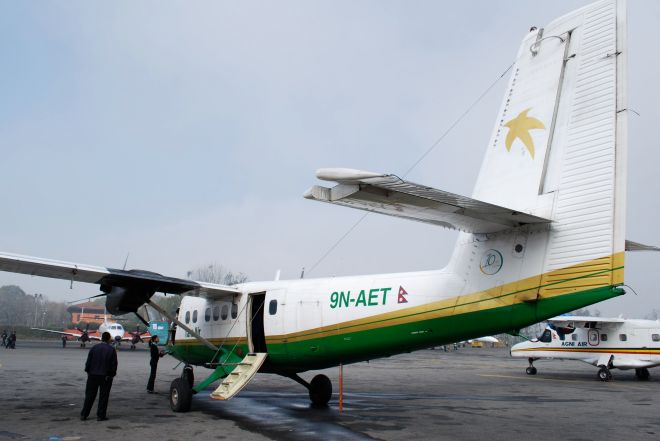
By 10 a.m., the sun had burned off the fog and we were called to board our small aircraft, a Twin Otter designed to land and take-off on short runways. There were just enough seats to hold our group and 90 minutes later, we erupted into applause as our wheels lifted off.

DSC_0035

DSC_0035

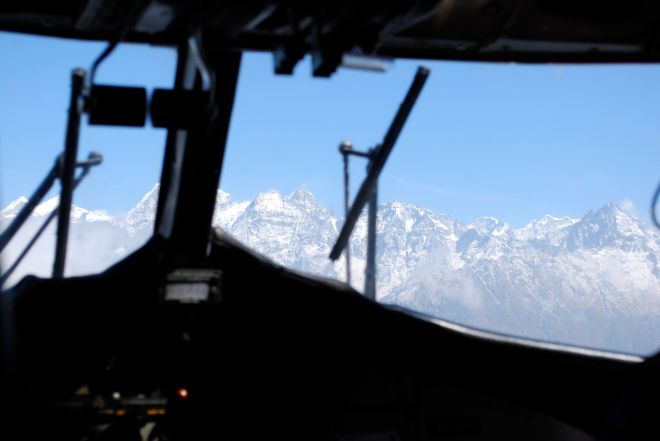
Inside the non-pressurized cabin, we ascended to 12,500 feet for the 45-minute flight. After passing the tin towns on Kathmandu’s outskirts, we soared over terraced farms at the foothills of the Himalayas. Off in the distance, we then spotted a narrow, upwardly sloped runway carved into the mountainside.

DSC_0035

DSC_0035

Having watched the wild videos of landings into Tenzing Norgay Airport, the approach into Lukla did not disappoint. The runway is a mere 1,700 feet long, with one side 180 feet higher than the other.

Needless to say, it was not the least stressful landing that I’ve ever experienced.

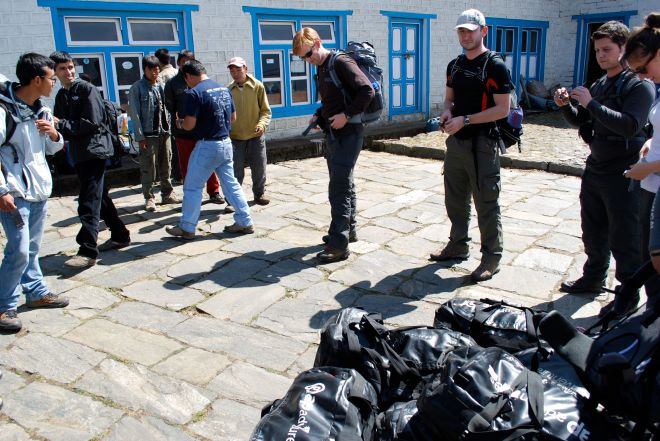
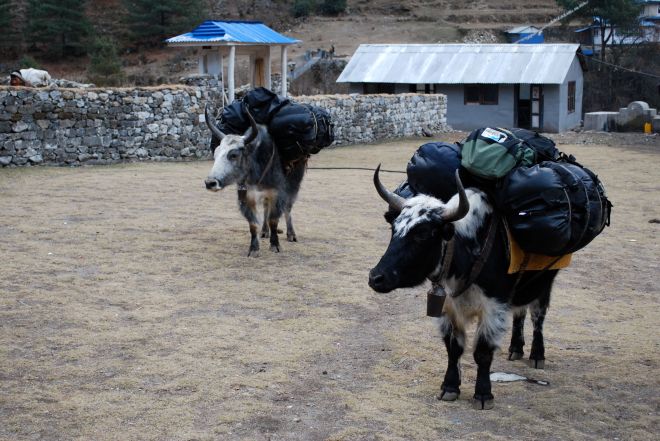
Safe on the ground, now 9,366 feet above sea level, we handed over our bags to our porters — three zobkyo (pronounced like “joekay”), a mixed breed of yak and cow — retied our hiking boots and prepared to start our trek to Everest Base Camp.

DSC_0035

DSC_0035

DSC_0035

Heading through pine and cedar woods along the Dudh Kosi Valley, the steep trail initially descended a steep flight of stone steps.

In this part of Nepal, there are no roads. The trail we were now following was essentially the Himalayan Highway. We would follow it through several dozen villages from Lukla for about 40 miles to the base of Mount Everest. The highway is subject to its own traffic: human porters and yak caravans carrying tremendous loads of building supplies, food, drinks and other goods.

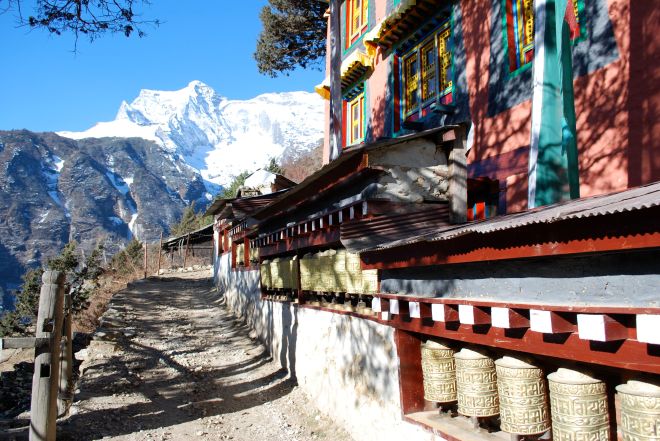
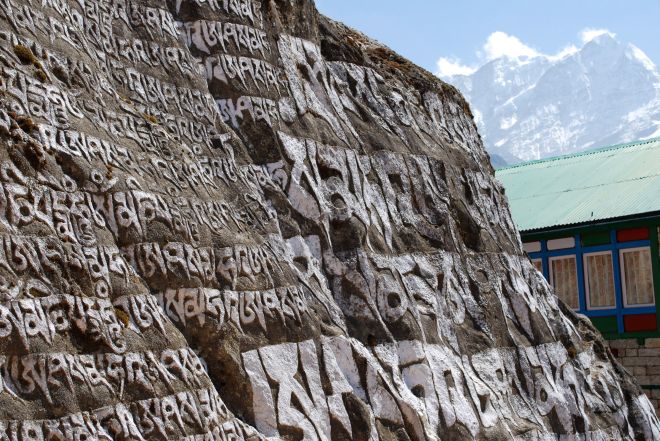
We passed through the small village of Cheplung. The trail was lined with rocks engraved with Buddhist carvings, pearl white stupas and colorful prayer flags flapping in the breeze. There was the near constant sound of bells tied to the necks of yaks and zobkyo.

DSC_0035

DSC_0035

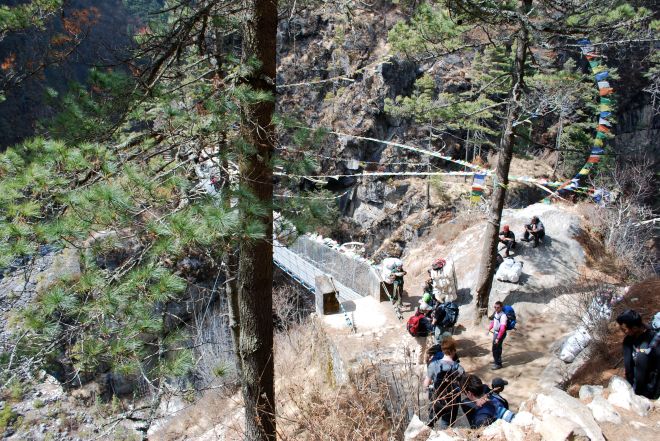
The skies were clear as we soaked in the magical scenery. We crossed several suspension bridges over gushing, crystal clear glacial water.

DSC_0035

After about 3 hours and 3 miles, the Sunrise Lodge & Restaurant, in the small village of Phakding appeared. These simple teahouses offer basic rooms and foods; they are not the reason for visiting the Himalayas. But they do offer a place to recharge and refuel on the trek.

DSC_0035

With a big day in front of us, we settled in for an early evening. Little did we know that our 8 p.m. bedtime would be the latest of the entire week.

Delay at Durbar

Kathmandu, Nepal

Except for the occasional burning garbage fire, the city was nearly pitch black when we set out for the airport this morning at 5:15 a.m. Some of that could be attributed to the early hour; but Kathmandu’s overloaded electrical grid necessitates frequent power cuts, often for up to 18 hours a day. Without generators, darkness sets in.

At the tiny domestic terminal, we settled into some stiff plastic seats while the smell of an overflowing lavatory drifted into the waiting area. We were originally scheduled to depart on a Tara Air flight at 6:15 a.m., which given low-hanging smog in Kathmandu and overcast conditions in the mountains, was quickly delayed.

7 a.m. became 8 a.m. which became 9 a.m. Soon, the city weather cleared but the weather in Lukla remained poor.

Safety has been — and continues to be — an issue when flying into the Himalayas. Most recently, there was a crash in Lukla just two years ago. The country’s aviation authorities have taken a very cautious approach to flying into the mountainous area, so while we grew frustrated as the hours ticked away, we also understood that little could be done.

At 1 p.m., the garbled announcement came over the loudspeaker: “All flights to mountain canceled.” Crushed, we grabbed our bags and navigated the chaotic streets back to our hotel.

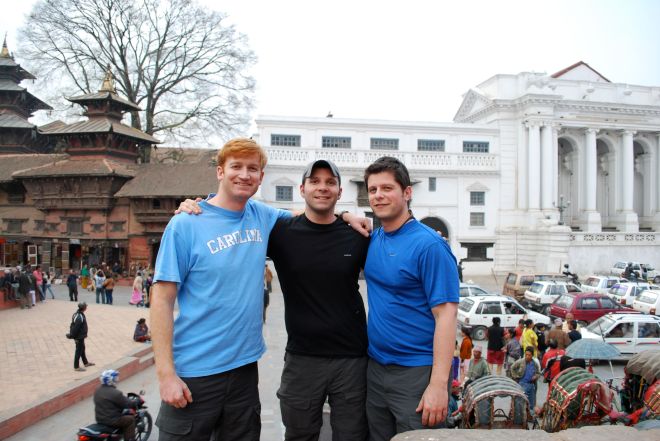
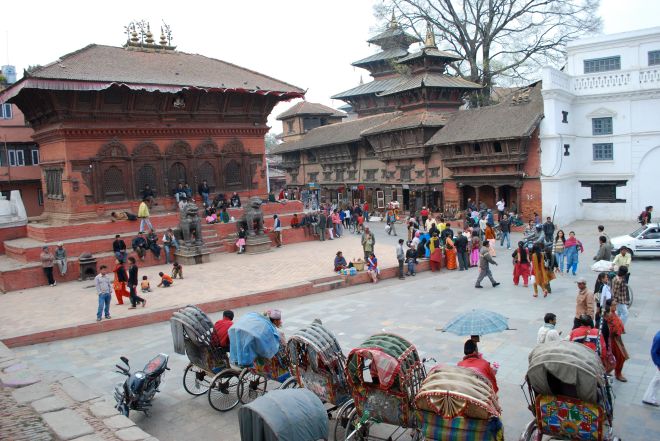
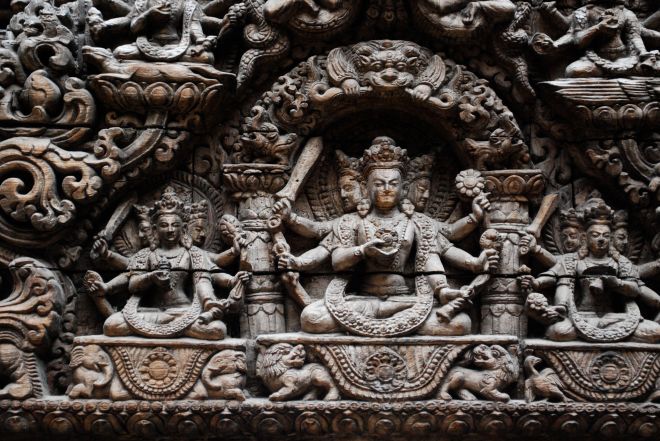
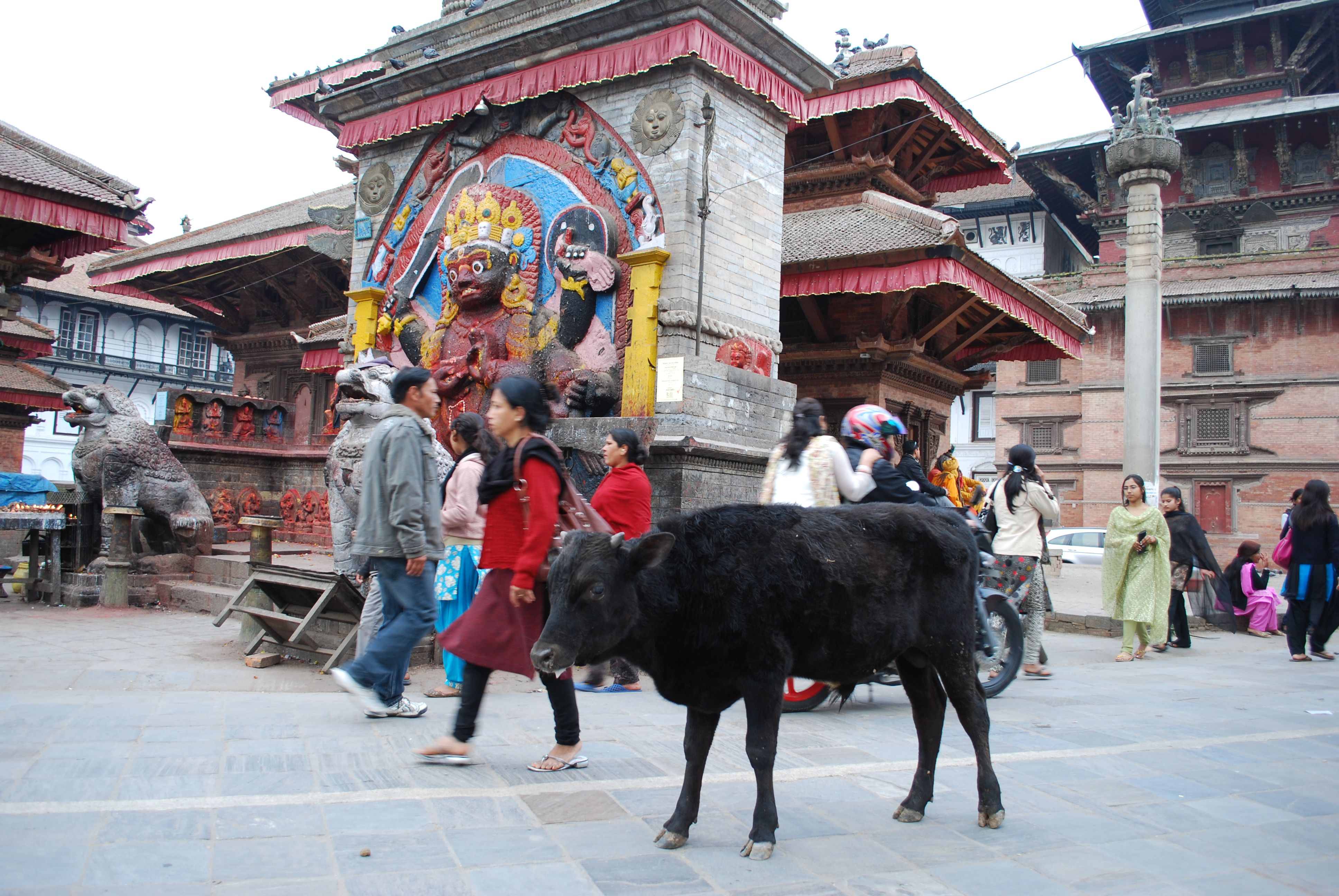
After some Thai food and a couple of Everest beers to commiserate, we walked to Durbar Square, the traditional heart of the old town that once served as the palace residence of the royal family. The entire area, a Unesco World Heritage site, is comprised of temples that date back to the 17th and 18th century.

DSC_0035

DSC_0035

DSC_0035

DSC_0035

DSC_0035

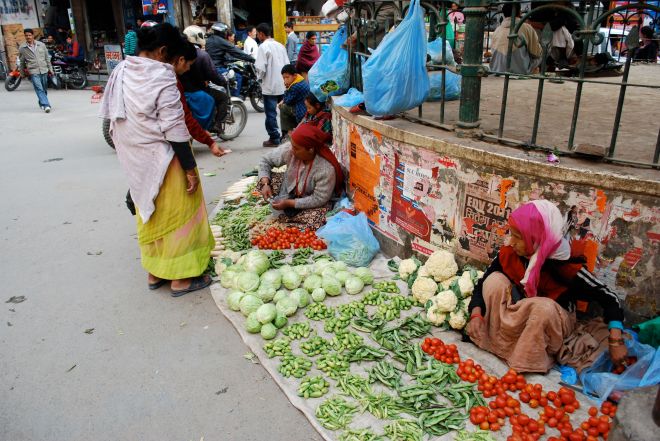
Surrounding streets were brimming with vendors selling smoked fish, banana leaves and marigolds. As the city’s biggest tourist attraction, we were actually pleasantly surprised by the lack of touts — certainly there were some begging children and the harassing guide offering his services, but for the most part, we were left alone to enjoy our time there.

DSC_0035

DSC_0035

DSC_0035

DSC_0035

Back at the Manang, we watched as the skies rapidly darkened and a monsoon with pelting hail and howling winds blew through the city.

We hoped that this would the last of our weather woes.