Mario Batali comes to town with Tarry Lodge

Rye, New York

Readers of this blog know of my respect for Bobby Flay, whose show, Throwdown!, is one of my favorites. But what of those other Iron Chefs? Not wanting to neglect them, and upon hearing that Mario Batali had set up shop in Port Chester, we set out to visit Tarry Lodge last night.
dsc_0071

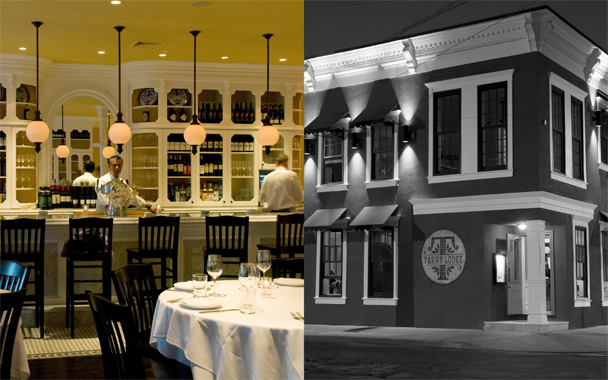
The lodge itself is over a 100 years old; it once housed a speakeasy and then, for more than 50 years, was a local, family-owned Italian restaurant. A fire gutted the place in 2005, the building went on the block, and Batali, along with his partner Joe Bastianich, bought it. They completely renovated the place, and today — with its carrera marble bars and subtle modern design — almost resembles a chic Italian-style inn.
rs-firsttaste-tarrylodge608

My Grandma had never heard of Batali, which means she also didn’t understand why we could only get a reservation at 7:45 p.m. on a Monday. When we arrived, the restaurant was packed and the bar bustling, but we were greeted promptly and brought to our table on the first floor. The ambiance and decor meant nothing if the food didn’t taste good — so we placed our order and got to the matter at hand.

First up was a prosciutto, tomato, mozzarella and arugula wood-oven baked pizza. It had a thin crust and was generously covered in delicate slices of prosciutto. There was a bit much sauce, but it certainly gave a similar pizza at Cafe Milano, which truly is amazing, a run for its money.

dsc_0059

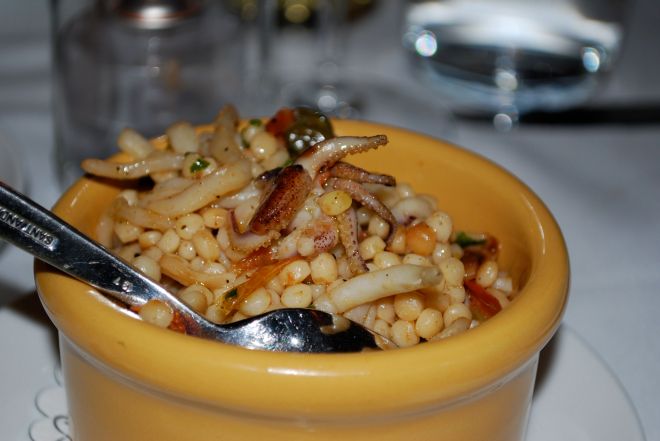
Our appetizers were up next; we split servings of the eggplant caponata, marinated calimari and a gorgonzola, walnut, cranberry salad. The eggplant was cooked perfectly — not too mushy — and we thought the flavors of the seafood dish worked well together.
dsc_0061

dsc_0064

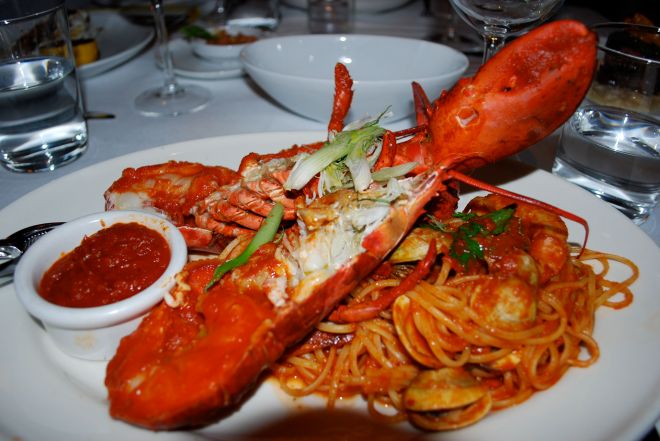
On Monday nights, Tarry serves up a Lobster al Diavolo special; it’s a 1-pound lobster with a spicy marinara sauce over a bed of linguine with shrimp and clams. The presentation was great and the sauce was delicious; but lobster in a shell served over pasta was difficult to eat. And the cracker wasn’t much help. A bib might have been nice, too.
dsc_0065

Still, the flavor was solid and the serving size was just right. Last, we split a super-rich chocolate “cupcake,” with a scoop of pistachio ice cream and crystalized citrus. Exactly 1/4 of a piece was just the right amount of sweet to finish the meal.

dsc_0068

All in all, Tarry Lodge is solid. Perhaps the best part of our meal were the small antipasti — mixing and matching, one could literally just have a dinner consisting of them. The contorini of grilled asparagus with sheep’s milk ricotta was also delicious.

The wine menu, drawn from Italy, perfectly complemented the meal. And Tarry’s prices were surprisingly reasonable, with appetizers under $10 and entrees around $20.

Seems like my boy Bobby Flay has some competition from Mr. Mario.

Oprah’s favorite chocolate chip cookie

Rye, New York

I’m on a mission to taste the best of the best. I’ve recently knocked pad thai and hotdogs off the list — although not in the same sitting. This afternoon, it was on to dessert, which could mean only one thing: chocolate chip cookies at Levain Bakery.

The New York Times said that Levain may have “the largest, most divine chocolate chip cookies in Manhattan.” Zagat declared them number 1 in their “cookies” category this year. At last count, over 230 people had offered up rave review on Yelp. And even Oprah has paid a visit.

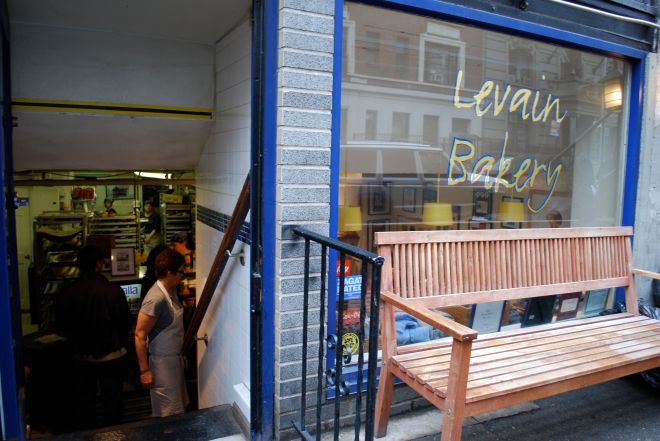
We followed our noses to West 74th, as the intoxicating smell of freshly baked cookies wafted down the street. If it weren’t for the crowd gathered outside, it would be easy to walk right by Levain — which sits in a tiny subterranean space down a flight of stairs. Inside, a team of bakers man their Kitchen-Aids, pull sheets out of the oven and work frenetically to replace the tasty treats as fast as they’re being eaten up.

dsc_0052

dsc_0053

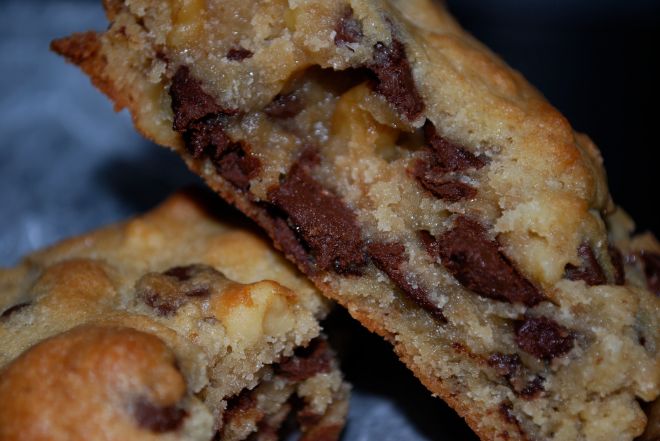
The signature chocolate chip walnut cookie was $3.75. But it was a monster — more like a scone — and basically the equivalent of three normal sized cookies. Still warm, it was gooey, crunchy and rich; the middle was a little undercooked. In other words, just perfect.

dsc_0055

dsc_0058

Lesson: Never doubt Oprah when it comes to baked goods.

A birthday at Magnolia

Chapel Hill, North Carolina

Last night, as a belated birthday present, Charlotte took me for dinner at Magnolia Grill. This critically acclaimed spot in Durham has won a laundry list of accolades: the 11th best restaurant in America (Gourmet), best chef in the Southeast (the James Beard Foundation) and best pastry chef (Bon Appétit).

Our reservation was for 9:15 p.m., but when we arrived about a half hour early, the hostess promptly seated us. The interior has a nice Southern bistro feel to it — the peach walls are offset by dark wood floors and a comfy red banquette. A pig sculpture sits in a window.

While looking over the menu, we had a strong whiskey apertif and some warm, freshly baked bread. What makes Magnolia so delicious is the seasonality of its dishes — this is not a menu that changes weekly or monthly. In fact, chefs Ben and Karen Baker change it daily.

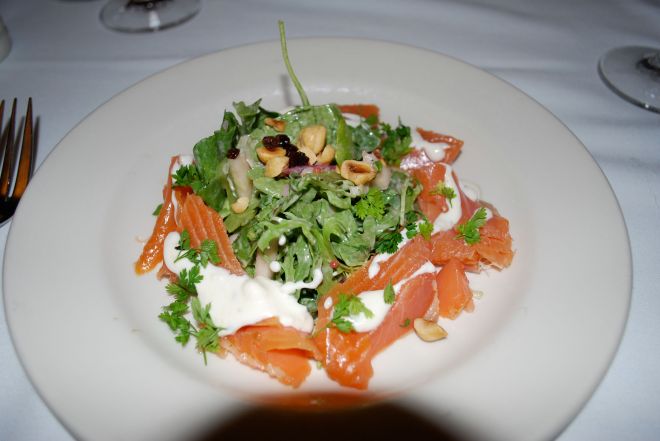
First up were our appetizers. Mine was a trout salad with roasted macadamia nuts, slivers of Granny Smith apple, chopped parsley and dried currants. It was topped with a light horseradish cream sauce that contrasted with the smokiness of the fish and sweetness of the fruits. Charlotte opted for the sweet potato bisque with Carolina shrimp and a ginger-Meyer Rum Chantilly. “Creamy, sweet with a hint of spice,” she said. “Amazing.”

dsc_0040

dsc_0038

Next were our entrees. My grilled Berkshire pork rib chop was cooked perfectly. It sat on a bed of southern greens (with hunks of ham) in a creole mustard jus. Charlotte’s cornmeal-crusted Snead’s flounder in Meyer lemon-olive oil sauce with toasted pistachios, fingerling potatoes with escarole & pickled sultanas was “delicious.”

dsc_0048

dsc_0044

For dessert, we split a piece of chocolate angel food cake with a chocolate ganache, freshly whipped cream and a crystallized citrus glaze.

dsc_0049

We’ve had dinner at some of the most highly reviewed restaurants in this area — including Elaine’s, Crook’s Corner and Lantern. Magnolia Grill, however, really takes it to the next level. The food was delicious yet unlike at some other spots, didn’t make us feel like we needed to be rolled out of the restaurant in a wheelbarrow.

The service was prompt and professional. Our waitress “saved” Charlotte the last piece of flounder and even helped us figure out where in D.C. we could score a bottle of her favorite wine.

Needless to say, we’ll be back.

Of hikes and hotdogs

Chapel Hill, North Carolina

Although there was a slight bite in the air, we didn’t have a cloud in the sky this morning. After so much rain here recently, we had to get outside and take advantage of the weather.

But, where to go?

A Google search helped me find a comprehensive listing of Raleigh-Durham-Chapel Hill hikes on Trails.com. It was in alphabetical order — and the first, the American Tobacco Trail, caught my interest. The ATT is a “rails to trails” project, in which old railroad tracks are converted to relatively flat hiking, biking and equestrian paths.

It was about a 25-minute drive through the rolling countryside, but we found the entrance in Apex, parked and then hit the trail, passing swamps, forests, cantering horses and, this being North Carolina, the occasional driving range (“Watch for golf balls next 300 yards,” read a sign).

dsc_0034

With the sun bearing down, we pushed on and triumphantly reached the 3-mile marker. On our return, we passed a timid turtle that seemed to have lost its way.

dsc_0034

dsc_0034

To celebrate our achievement and negate any positive health benefits associated with the 6-mile trek, we drove to downtown Raleigh for a visit to the Roast Grill. This tiny joint was recently featured on Man vs. Food, as host Adam Richman set a new record by wolfing down 17 of their classic hotdogs smothered in chili.

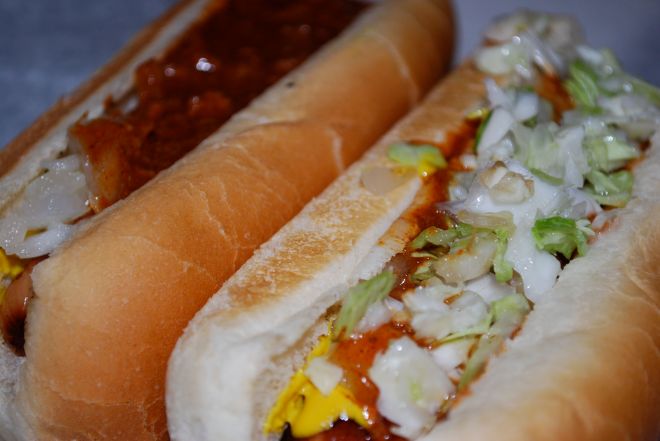
The line snaking onto the street was our first indicator that this dinky, simple place that has been around since 1940 — and today is run by George Poniros, the original owner’s grandson — knew what it was doing. The Grill has just one item on the menu: its hotdogs, which are charbroiled on a burner and then covered with onions, some mustard, a simple slaw and top-secret chili.

dsc_0034

dsc_0034

The dogs were burned nicely on the outside, plump and juicy on the inside. Buns were steamed warm. The chili was the perfect consistency and texture, onions added an additional bite while the slaw cooled it all down.

dsc_0034

The real beauty, however, might have been the simplicity of it all. There’s no ketchup available here. Nor fries or onion rings.

Just simple, and delicious, hot dogs.

The best pad thai in America

Washington, D.C.

One of my favorite shows on television is Throwdown! with Bobby Flay. Each episode, Flay identifies a chef who makes the best specialty food — from buffalo chicken wings to muffalleta sandwiches — and then challenges him or her to a “throwdown.” It pushes Flay to step outside of his grilling comfort zone while allowing some unknown, but highly qualified local cooks, a shot at beating an Iron Chef (on Food Network, no less).

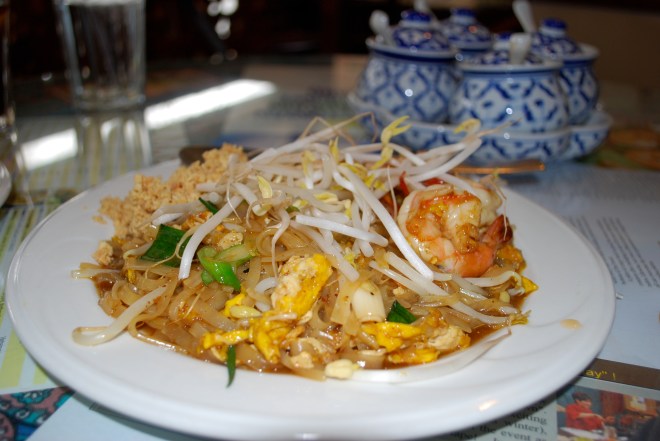
A couple weeks back, Flay visited Thai Basil to take on Chef Nongkran Daks during a pad thai throwdown. As a fan of spicy, southeast Asian foods, this episode was one of my favorites. So, when we learned that Thai Basil was actually in Chantilly, Virginia — about a 25 minute ride from D.C. — we knew where we’d be having lunch today.

Thai Basil sits in an unpretentious strip mall not far from Dulles Airport. The decor inside is simple; a couple of conical hats line the walls, local newspaper articles boasting the restaurant’s accolades sit beneath the glass tabletops. But we hadn’t come for the atmosphere; we had come for the pad thai. After a couple of appetizers, including Som Tam, a crispy shredded papaya salad with spicy chili-lime dressing, we geared up for the real deal: the shrimp pad thai.

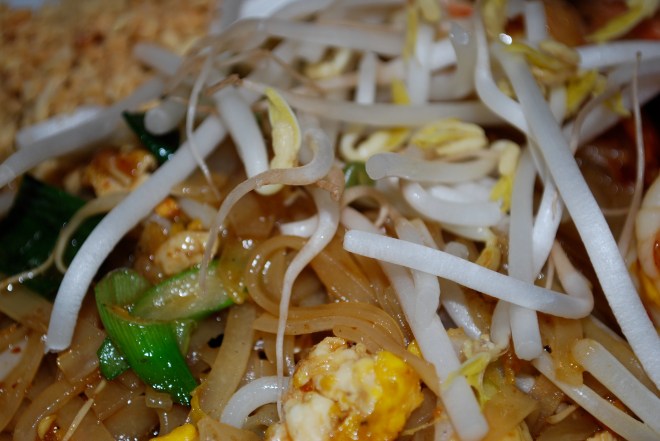
We agreed that the noodles were cooked perfectly and the sauce was a delicious balance of sweet, sour, spicy and tangy. The lime added a nice citrus flavor and the peanuts and bean sprouts offered some additional texture. Served with a hot sauce sampler, it was just perfect.

dsc_0009

dsc_0009

dsc_0009

dsc_0010

I’m no restaurant critic, but I’ve ate at my fair share of Thai restaurants — including those in Thailand. And, I’ve got to say, Nongkran knows what she’s doing.

Her pad thai is the best I’ve had.

Recovery & the return home

Torres del Paine National Park, Chile

Yesterday was the culmination of one of the most physically demanding experiences of my life. Over four days, we completed the W circuit — about 50 miles — in gale force winds, horizontal rain and the occasional snow shower. It was trying, it was difficult. And it was absolutely amazing.

Last night’s dinner — pea soup, home-made gnocchi and a marshmallow soufflé — really hit the spot. But after expending so many calories, we woke up this morning starving. We fueled up on granola and eggs and then boarded a van. Today was a recovery day, allowing us to give our legs a rest while cruising around to those parts of the park we had not yet gotten a chance to see.

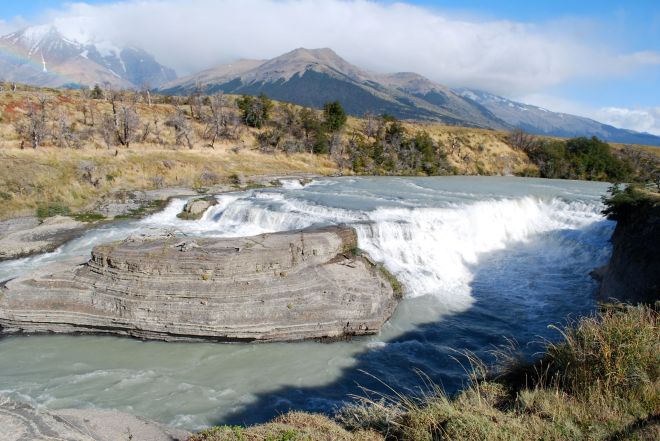
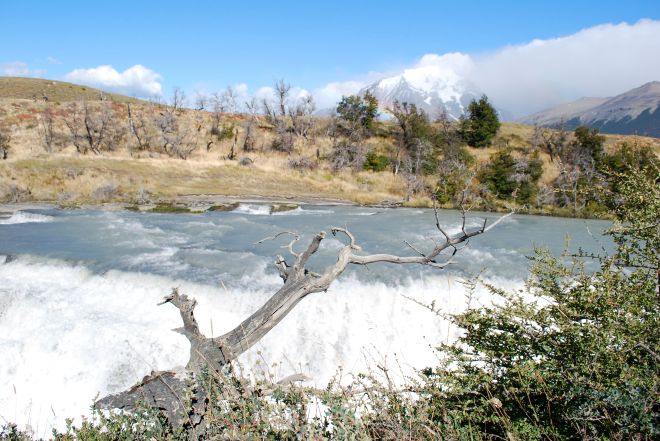
Our first stop was the Paine Waterfall, which was overflowing with glacial runoff.

dsc_0235

dsc_0235

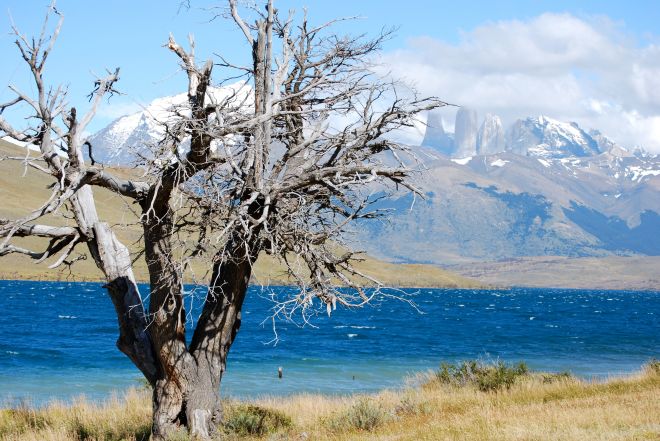
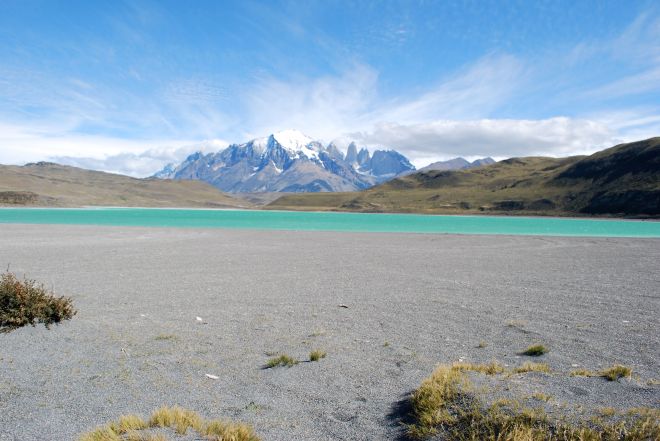
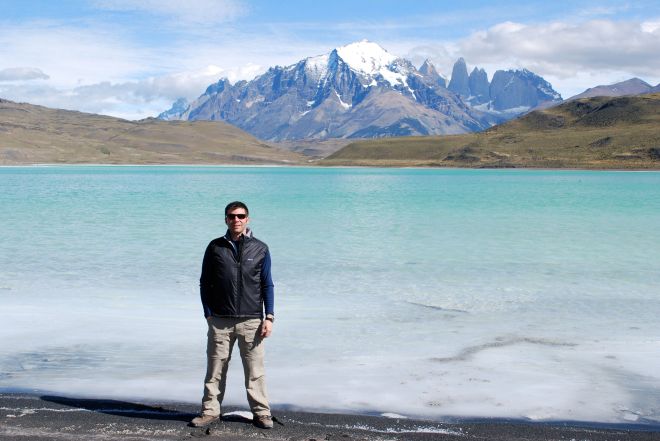
Afterward, it was a short drive to Laguna Azul, a lake named for its vibrant blue color. The strong winds turn what should be a placid pond into a churning ocean.

dsc_0235

dsc_0235

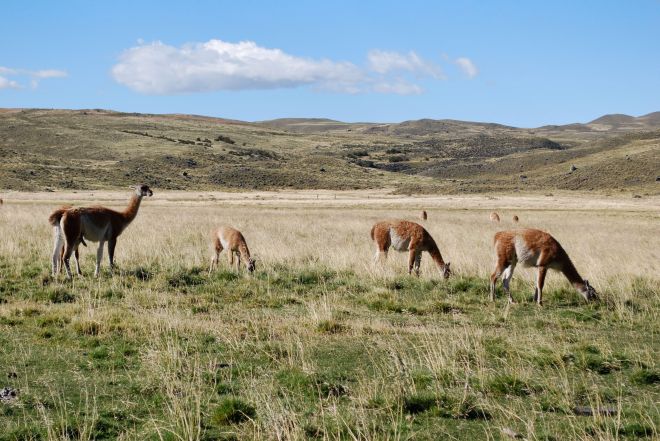
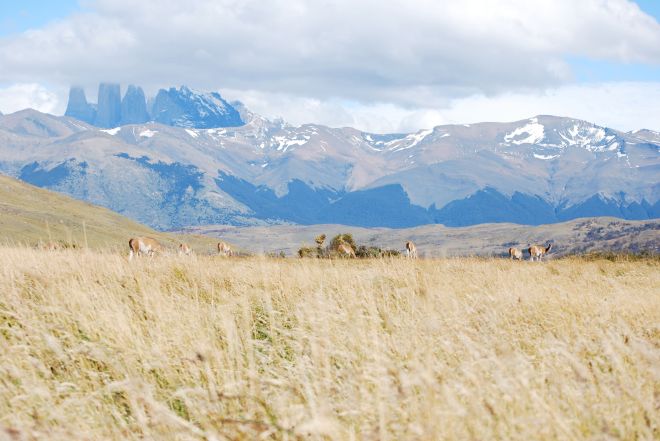
Herds of guanacos feed off of the grasslands that lead to the lake’s shores while the Torres sit imposingly in the background.

dsc_0235

dsc_0235

The van shuttled us to Laguna Marga, whose calcium formations give the body of water a power plant green color.

dsc_0235

dsc_0235

We stopped for lunch at a nearby marsh, where birds walked the shores, guanacos playfully galloped by and small and colorful wildflowers dotted the arid plains.

dsc_0235

dsc_0235

Back at the EcoCamp, we rested, packed and enjoyed the amazing weather. That evening, we were treated to a farewell lamb asado. Tomorrow, we will return to Punta Arenas for another overnight at Cabo de Hornos and dinner at Remezon.
On Monday, I’ll head back to the States on a 24-hour, four-flight trip, via Puerto Montt, Santiago and Atlanta. It should be exhausting.

But if it were easy to get to a place as spectacular as Patagonia, it wouldn’t be nearly as special.

The mighty Torres del Paine

Torres del Paine National Park, Chile

We had gazed at them since our arrival in the park – and this morning, after Hernán removed a monstrous thorn from my foot, we set out for the Torres, those awe-inspiring towers of granite that rise above all else. The sky was clear and it looked like it was shaping up to be another beautiful day. “We have to be ready for anything though,” Hernán cautioned.

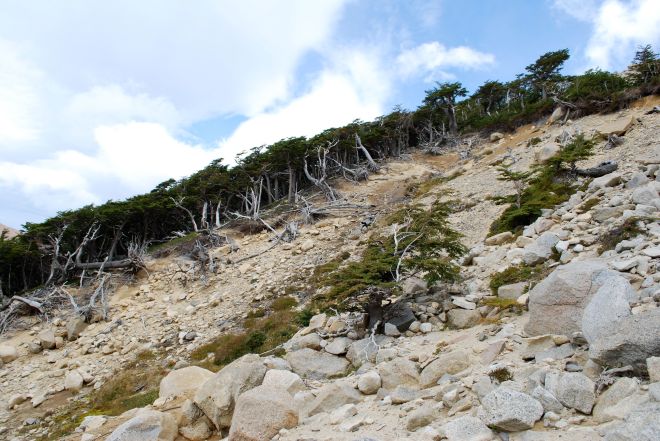
Hiking from the EcoCamp, we connected with the winding uphill path to Ascencio Valley — the valley that supports the eastern face of the Towers’ base. Dry mountain spots, beech forests and small rivers were passed as we made our way along the scenic route.

dsc_0789

dsc_0789

dsc_0789

dsc_0751

At a rest point about 3 hours in, the group was broken into several teams, based on speed and condition. The last several days had begun to take their toll on some members. Burt’s knee was also bothering him but he remained determined to making it to the summit.

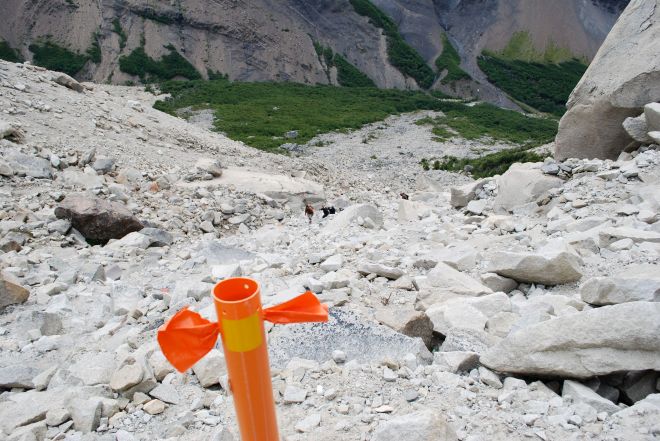
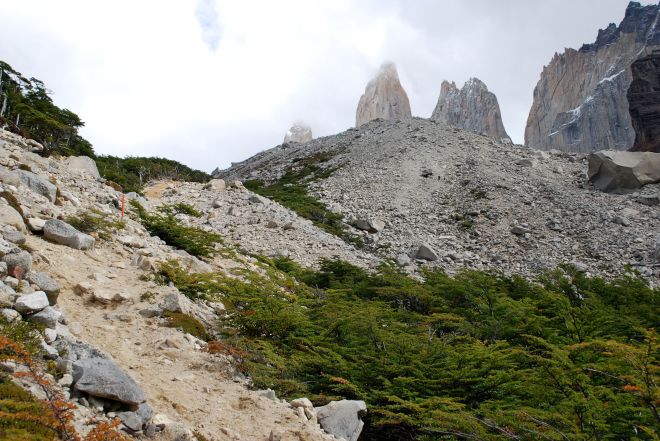
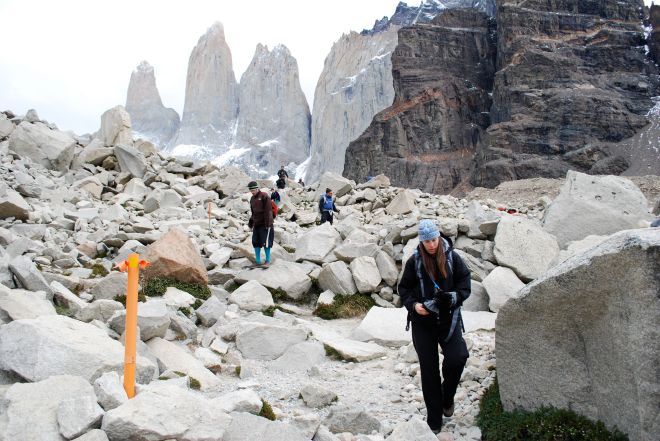
Our final challenge of the trek was the moraine, a steep mountain of stones and boulders. Here, you can see the “trail,” marked by orange rods — as well as a shot (taken level) that provides some perspective on the angle we were hiking at.

dsc_0789

dsc_0789

And then, slowly, suddenly, they came into view.

dsc_0789

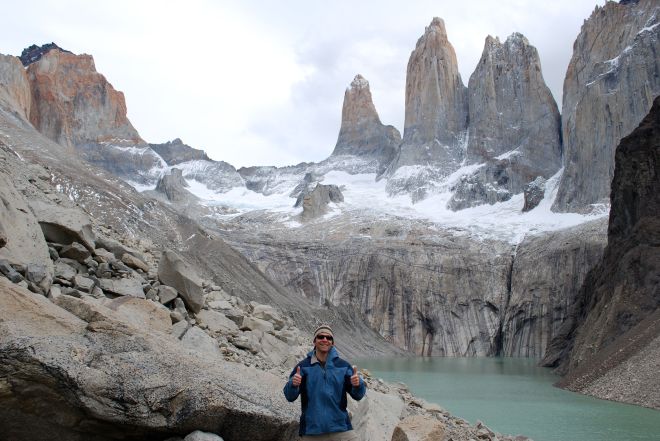
My lead group, sweating and panting, hit the peak in 28 minutes, a good 15 minutes before any of Hernán’s past groups. It usually takes a solid hour, he said. Before us was one of the most magnificent sights that I’ve ever witnessed.

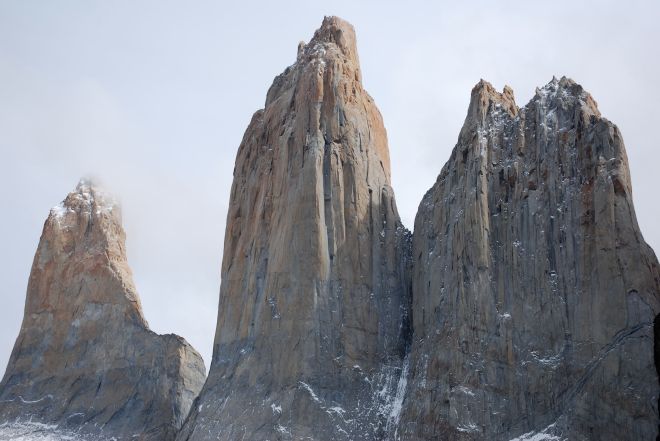
Three gigantic granite monoliths — the remains of a great cirque sheared away by the forces of glacial ice — stood beautifully before us. And in front of these famous Torres del Paine sat a vibrant glacial lake. We observed 5 minutes of silence, simply taking it all in.

dsc_0774

dsc_0789

dsc_0789

More than half the time, the Towers, which rise almost 10,000 feet, are hidden in clouds. Yet we lucked out today, and even had some sun to partially illuminate the rock wall.

dsc_0789

On our way back down the slippery slope, we kept the Torres in our rear-view mirror. It was simply hard to take our eyes off of them.

dsc_0778

At the EcoCamp, we rested and waited for the others to return. Two hours later, Burt was back. Hopped up on ten Advil, he had made it with his bum knee — but now, was not feeling great. Perhaps the best way to demonstrate this trek’s toll on us is through a visual representation. Here is Burt three days ago, upon our arrival. Look how happy he is!

dsc_0789

And this is Burt upon his return.

dsc_0793

Was it all worth it? As our Canadian friends from Ushuaia would say: you betcha.

Onward to Grey Glacier

Torres del Paine National Park, Chile

When the alarm rang at 6:30 a.m., most of us were already up. It had been a terrible night’s rest; the sleeping bags had been confining, our room hot and the fellow hiker we were sharing a room with had snored away like a jackhammer. All ingredients for morning grumpiness.

Peering out of the window from my top bunk was a sight even worse — thick clouds and rain. We fumbled around in the dark and pulled on some still damp clothing. The refugio power kicked on at 7 a.m. and we finished packing up before a terrible breakfast of instant coffee, rubbery eggs and cornflakes with dehydrated milk. We were not happy.

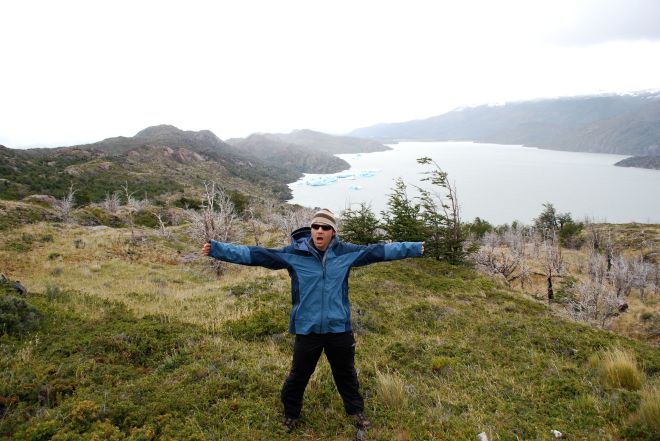
As we set out along the shores of mountain-lined Lake Pehoe, the rain momentarily picked up. Prepared this time around, my GoreTex pants kept me dry. And then, just as suddenly as it had begun, it was gone. The rest of our hike was dry and relatively easy — just 11 kilometers. At certain points, winds off of Grey Glacier, which was our destination, topped 90 kilometers per hour. A gust was enough to make you wobble, if not completely knock you over.

dsc_0633

dsc_0633

dsc_0633

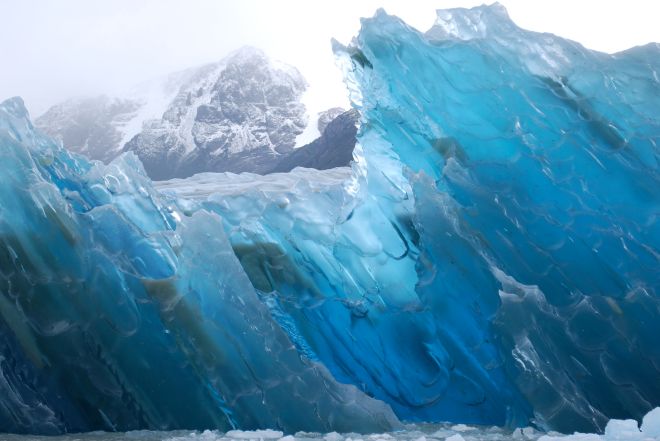
A few hundred yards from the glacier, we had lunch before boarding a zodiac that would take us to the Grey II boat for a closer look at this massive (27 kilometers long and 6 kilometers wide) piece of ice. Even after witnessing Perito Moreno, it was an impressive sight.

dsc_0633

dsc_0633

The boat navigated the iceberg filled waters so that we could get a closer look. Pisco sours (with hunks of glacier ice) in hand, we headed to the upper deck.

dsc_0633

dsc_0633

Earlier in the day, another boat had dropped a dozen tourists off to walk the moraine. A huge piece of the glacier had calved off, filling the water with massive pieces of ice — and preventing the boat from retrieving its passengers. As our smaller zodiac zipped off to shore to rescue the stranded hikers, we realized why we had moved in such close proximity to the glacier, which provided an opportunity to snap some great, detailed shots.

dsc_0633

dsc_0633

Our boat turned around and headed south. Suddenly, the wind picked up, turning the placid lake into a rough ocean in the blink of an eye. We were soon engulfed in rolling swells and stomachs. Not fun. After reaching the lake’s other end, the zodiac whisked us to the shores of Grey Lake. Gale-force winds whipped up the beach’s small stones and pelted us in the backs.

dsc_0633

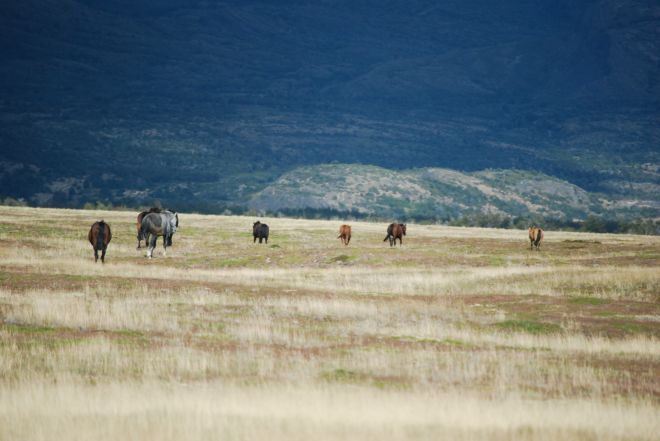
The drive through the park back to EcoCamp was almost dream-like. The sun pierced through thick clouds, playfully lighting Los Cuernos. Horses roamed golden fields. Waterfalls overflowed with glaciar runoff. “Just one more photo,” the reverend called numerous times from the backseat as our van pulled over and we all fruitlessly attempted to capture this beauty on film.

dsc_0633

dsc_0633

dsc_0633

We were beyond thrilled to be back in our dome and treated to a dinner of pumpkin soup, beef stir-fry with rice and key lime mousse. It was comforting to have returned here when rest and food were of the utmost importance.

Because tomorrow we were tackling the greatest challenge of all.

Stepping into the Valle Frances

Torres del Paine National Park, Chile

We were warned that today would not be easy. In fact, it would very well our most difficult. “Twice as far and twice as strenuous,” Eduardo told me during the morning’s briefing. That might have been an understatement.

The challenging trek would take us deep into the Valle Frances (French Valley), a steep trail that goes to the very heart of the Paine Massif. The day’s hike was also said to be one the most beautiful stretches of the W circuit. We fueled up on a breakfast of eggs and coffee and began trekking along the lake beneath a huge Patagonian rainbow.

dsc_0633

dsc_0633

dsc_0633

The first leg was difficult but we settled into a moderate pace and by the time we arrived at Mirador Italiano, a camp at the foot of the valley, we were all feeling well. As we turned upward, the trail became increasingly difficult and the weather temperamental, as rain moved in off of the nearby glaciers. We reached the first lookout where gusts of winds almost knocked us over.

dsc_0633

dsc_0633

dsc_0633

After lunch, the group split up. Those who wanted to move forward to the next camp did so with Hernán. The other two guides would take us brave folks past Mirador Britanico to the second lookout. It was another 14 kilometers roundtrip. “Jonathan, this must be your hundredth time doing this, right?” we inquired. “No, only my fifth,” he said. “The weather, it’s always bad. No views.”

Our pace picked up considerably. To keep up with our guide, we often broke into a jog — which was difficult when much of the hike involved scrambling over boulders. As we climbed higher, the weather worsened and the temperature dropped. At the peak, breathing deeply, snow began to fall. And alas, there were no views.

dsc_0633

dsc_0633

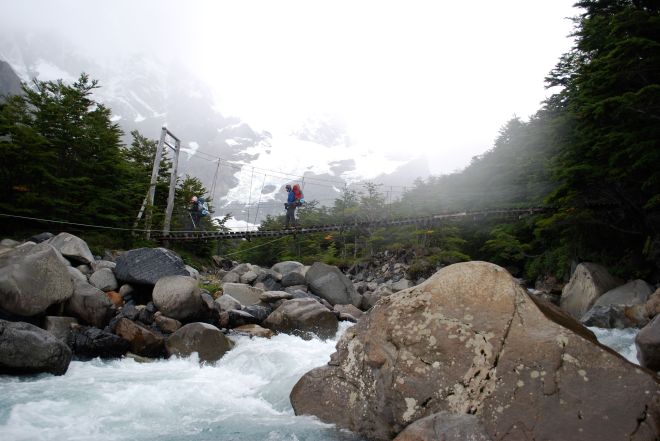
We headed back down, precariously scrambling across boulders that had become slippery with the precipitation. Crossing the French River on a hanging bridge (only two hikers allowed at a time), we descended through an undulating terrain of mixed grassland and light forest on the final 2-hour leg.

dsc_0633

About 15 minutes into it, the skies opened up. For the next 90 minutes, pouring, horizontal rains drenched us while winds whipped through our clothing. By the time we arrived at Refugio Paine Grande, on the banks of Lake Pehoe, we were completely soaked, completely freezing and completely ready for bed.

dsc_0633

dsc_0633

We dried off and met at the bar for a round of Austral cervezas. All together, we had hiked 27 kilometers in some terrible conditions. Downstairs, we wolfed down some cafeteria-quality slop before heading back to the bunks.

dsc_0633

dsc_0633

And, in what was another flashback to summer camp, lights were out at 9 p.m.

Warming up in Los Cuernos

Torres del Paine National Park, Chile

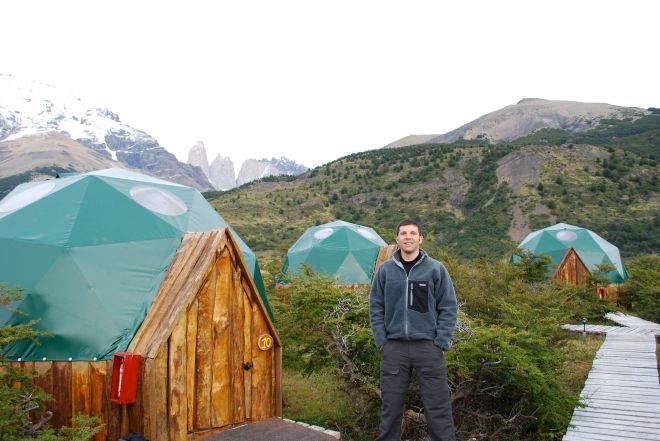
“Wait, it’s so cold right now. I can’t get out from underneath my sloth skin,” Burt announced this morning. Indeed, the thermostat outside of our dome read just 30 degrees and our breath was visible. The double thermal sheets and top fur blanket — or “sloth skin” — had done a surprisingly good job of keeping us toasty overnight. But now, getting out of bed was a chore.

After a quick shower, we made our way down to breakfast: freshly baked bread, some solid scrambled eggs and a bowl of granola with yogurt. Today, Hernán told us, would be an “easy” hike of 13 kilometers — a “warm-up,” he said. We looked out of our dome at what was shaping up to be a beautiful day and thought about how lucky we had been with the weather. Common were stories of visitors to this park who saw nothing but sideways rain for four or five consecutive days. Hopefully our luck would last.

dsc_0819

We started our hike along a curly trail that ran alongside Lake Nordenskjold. Crossing rickety bridges, stone-jumping through creeks and meandering along winding paths provided an amazing introduction to the park.

dsc_0819

dsc_0819

dsc_0819

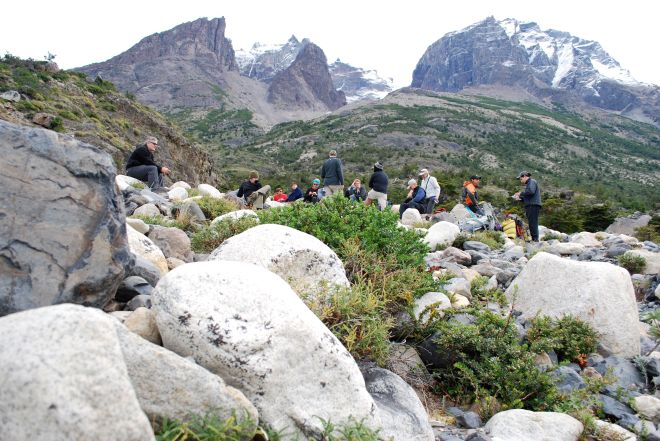
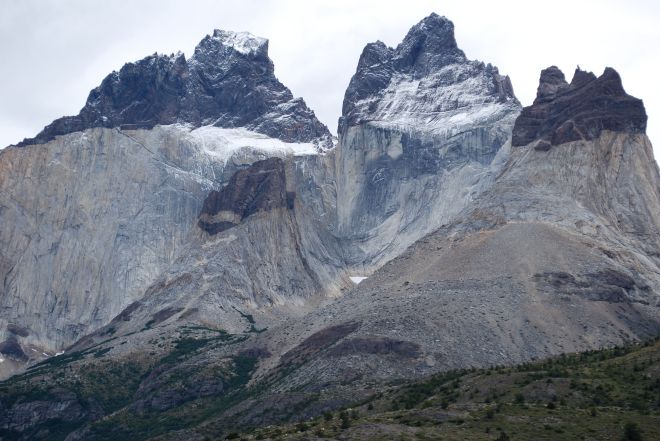
The group stopped for lunch on some rocks at the base of Los Cuernos (the Horns), sharp tusks of black sedimentary peaks that are one of the park’s focal points.

dsc_0819

dsc_0819

dsc_0819

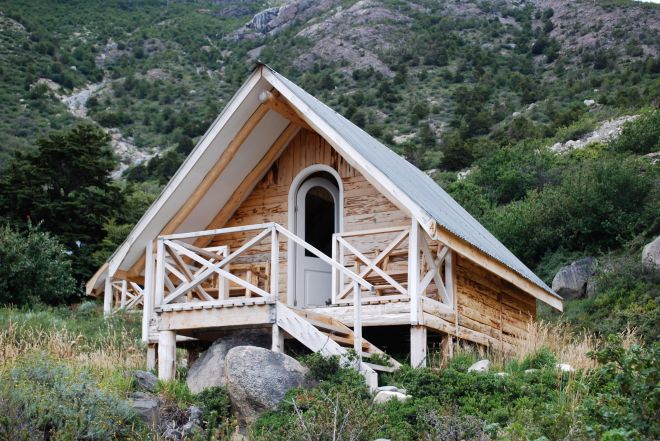
Another few hours brought us to Refugio Los Cuernos, a camp alongside the lake. We were assigned Cabana #4, put down our bags and promptly took a 3-hour siesta.

dsc_0819

dsc_0819

dsc_0819

Dr. Jim woke us up for dinner, which was simple yet tasty: tomato soup, a well seasoned chicken breast served with quinoa and a blondie for dessert. Afterward, a bunch of us congregated on one of the cabana’s porches. We had brought some Jack Daniel’s in a plastic Pepsi bottle, which we broke out and passed around for swigs. The whole scene reminded me a bit of summer camp.

Except we were in Chile. In Torres del Paine National Park. On the banks of Lake Nordenskjold. In the middle of absolutely nowhere.

It was an exhilarating feeling.