In which mulled wine warms my soul

Prague, Czech Republic

Our alarm either didn’t go off or we slept through it. Either way, we had a late start this morning. The day before Christmas is more religious and important here in Europe, so much of the city, attractions and restaurants were closed. That provided a good excuse for a coffee and muffin at the Starbucks overlooking the Old Town Square and the Astronomical Clock, an absurdly mechanical spectacle with figurines that come alive every hour on the hour. “That’s an intense clock,” an Aussie sitting next to us said as dozens of tourists gathered and the clock struck noon.

dsc_0102

We walked a few blocks to Josefov, the city’s former Jewish ghetto. The Nazis purposely left several synagogues and the cemetery intact here — what they said would become part of the “museum of an extinct race.” We visited the Old-New Synagogue, which completed around 1270, is Europe’s oldest working synagogue.

dsc_0117

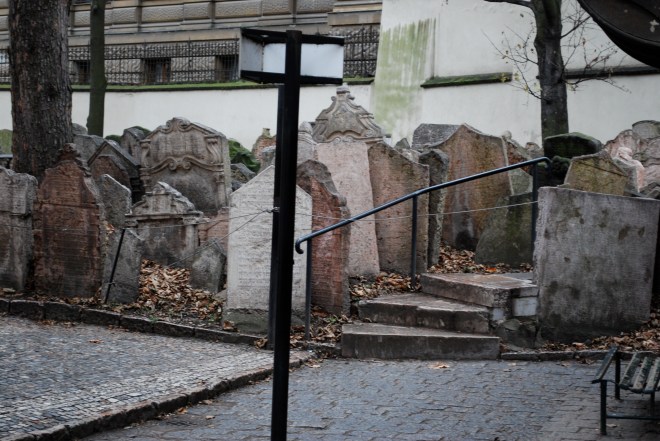
Outside, we peaked through the wrought-iron gates into the Old Jewish Cemetery, Europe’s oldest surviving Jewish graveyard. Built in the 15th century, its crumbling 12,000 stones are in complete disrepair. The small site is said to contain about 100,000 graves, piled in layers due to lack of space.

dsc_0115
dsc_0111

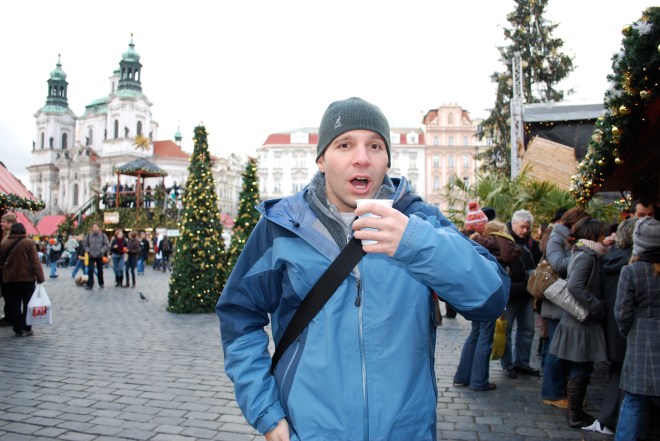
With a light rain falling, we walked back over the Manes Bridge and up to the Castle. It was largely quiet inside as we retraced our steps from yesterday. A hotel map guided us to Novy Svet, a picturesque cobblestone lane said to be the most beautiful in Prague. To reward ourselves (and warm up) we had a cup of hot mulled wine at a small, family-run café there.

dsc_0121

Petrín Hill is one of the highest points in the city. Since we were nearly at its 318-meter peak, we pushed onward (or upward). Unfortunately, the weather turned sour, which spoiled the view. Our walk home was interesting — having lost the paved trail, it involved mud, dead rabbits and hobos living in sewer drains. We were back inside by around 16:30 and after a visit to the fitness center, got ready for an early dinner.

dsc_0131

The hotel had recommended Luka Lu, a Croatian restaurant just a few blocks away. It was strangely decorated (the highlight being a baby doll hung from the ceiling) but the home-cooked food was simple and authentic. We both opted for non-pork dishes — chicken stuffed with gorgonzola and spinach, a nice steak grilled medium — with a large caesar salad to start.

For dessert, we made one last trip to the Christmas Market. The trdelndelík (sugar donuts) were just too good not to have one more. We wondered if perhaps Crate & Barrel or Williams Sonoma might sell trdelndelík kits before packing up for our trip to Vienna tomorrow.

Defenestration in Prague

Prague, Czech Republic

Our hand-written weather forecast card placed on our bed during last night’s turndown service said to expect snow and highs around 3 degrees Celsius today. But when we opened the curtains this morning, we found only partially cloudy skies and temperatures considerably warmer. Perhaps luck would be with us.

We opted against the Mandarin’s 24-euro breakfast and instead walked down the street for a quick egg sandwich at Bohemia Bagel. Our first stop of the day was the Prague Castle, the largest castle in the world, according to the Guinness Book of World Records. It’s 570 meters long and an average of 128 meters wide, covering an area of about seven football fields.

dsc_0032

Our tickets allowed us entrance into essentially all of the complex buildings, including the grand St. Vitus Cathedral, whose foundation stone was laid in 1344. One of its last doorways was completed 1953, making for one long, 600+ year construction project.

dsc_0064

dsc_00361

Next, we checked out the Bohemian crown jewels and other artifacts in an exhibit called Story of Prague Castle. Just next door was the Old Royal Palace, one of the oldest parts of the castle, dating from 1135. We entered into Vladislav Hall, a vast, cavernous space used for banquets, coronations — even indoor jousting matches — that has recently served as the backdrop of the swearing in ceremonies of Czech Republic’s presidents. Our favorite tidbit though: it has also been the site of several defenestrations, that is, the throwing of people out of windows.

dsc_0062

We warmed up inside the Convent of St. George, which now houses an art collection from the National Gallery. Directly adjacent is the red-bricked Basilica of St. George. On our way out, we visited Golden Lane, an alley lined with colorful cottages that once housed the castle’s goldsmiths. Today, it houses tourist shops hawking soap, t-shirts and other crap. We passed and instead made our way to the castle’s entrance for another tourist spectacle: the 12 noon changing of the guard ceremony.

dsc_0056

The walk down the castle steps wasn’t nearly as bad as the walk up, and offered a sweeping view of Prague.

dsc_0027
dsc_00301

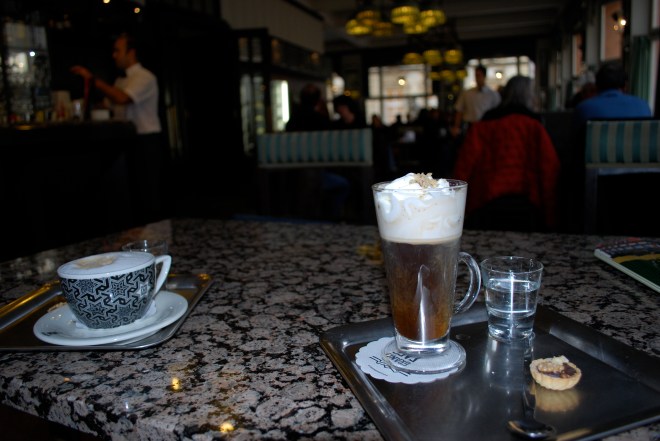
We crossed the Manes Bridge and cruised through the Stare Mesto neighborhood to Grand Café Orient, the city’s only Cubist café with a retro and authentic feel to it. The ham and cheese baguette and goat cheese salad was solid — as was the Kavi Grand Orient, a potent coffee beverage with espresso, Bacardi, Kahlua and whipped cream.

dsc_0089

The café is housed in the House of the Black Madonna, whose top three floors contain the Museum of Czech Cubism. It’s a modest collection of paintings, sculptures and some really sweet furniture.

With the sun starting to set, we made our way past tubs filled with carp (sold live for the traditional Christmas Eve dinner) toward Wenceslas Square, once a medieval horse market. Its wide boulevards are now lined with department stores and shops. We checked out the Christmas Market, which was much of the same, before walking back to the hotel.

A perfect day in Prague wouldn’t be complete without beer, so after resting and changing at the hotel, we took the #22 tram a couple of stops to Pivovarsky Dum, a local microbrewery. The New York Times told us that there would be no chance of getting a table, but we went anyway.

There wasn’t much English being spoken when we arrived and the brash maitre de curtly informed us that the wait would be an hour, but we stuck it out — ended up waiting only 20 minutes — and were rewarded for our perseverance. A sampler of the pub’s brews included banana, vanilla, coffee, wheat, light and sour cherry. They were all really good and complemented our beef goulash and roast pork and potato dumplings well. We felt very Czech.

For dessert, we took the tram to Café Savoy, a recently restored café originally built in 1893. With glowing crystal chandeliers overhead, we had a glass of port and split a piece of chocolate cake. Right next door was Olympia, which was good for one last night cap, a glass of draught beer and shot of becherovka, a potent mixture that kept me warm for the entire walk home.

Hitting the road again

Prague, Czech Republic

“In order to pursue leadership positions beyond the creative realm, I need a broader understanding of how companies operate. Part of this involves gaining the necessary quantitative and general business management foundation that I have had only a limited, informal exposure to.”

This is from my application essay last year to Kenan-Flager Business School. My case for admission at the time was pretty straight-forward: with no formal business background, I sought the fundamental quantitative skills, knowledge, and network that were critical to successfully starting and growing my own business. It’s safe to say that after only a semester at UNC — one that has included ten courses, including macro and microeconomics, financial tools, corporate finance, business strategy, marketing, operations, statistics, organizational behavior and financial accounting — I’ve taken a big step forward in building that foundation.

It’s been a whirlwind and immersive four months, but one in which I’ve learned a great deal, met some fantastic people and started working toward achieving that post b-school goal. It’s also been an exhausting semester, making my winter break trip to Central Europe — a ten-day jaunt to Prague, Czech Republic, Vienna, Austria and Budapest, Hungary — a real treat.

After a taxi and bus ride, we arrived at Dulles last night a little before 9 p.m. for our Air France flight to Europe. We checked in, struggled to put our bags on the scale and then went in search of Five Guys nourishment at the airport’s new B Terminal. Our hearts were nearly broken when we learned that one of the locations was closed so we trekked to the A Terminal for Little Cheeseburgers, Freedom Fries and A&W Root Beer. It was a solid final meal on American terra firma and provided the necessary fuel for the 20-minute walk back to our gate, just as our flight was boarding.

We found our seats near the rear of the plane, listened to safety instructions in French and were soon airborne en route to Paris. Strong trans-Atlantic headwinds, the captain said, would make the flying time just around 6 hours. It was enough to have a couple complimentary Heinekens, watch Pineapple Express and catch a few hours of sleep.

A short layover didn’t provide the time we’d hoped for a Parisian coffee and croissant. Instead, Charles de Gaulle was kind of a mad house, with long holiday lines at the security checkpoints. Bleary eyed, we boarded Air France flight 1982 and after an uneventful 90 minutes, were wheels down in Prague at 15:02, a few minutes behind schedule.

Our bags were some of the last on the carousel and we found it strange that there was no customs or immigration checkpoint to pass through. Not even a passport stamp. A quick cab ride brought us to our first hotel of the trip, the Mandarin Oriental, opened two years ago in the city’s Mala Strana (Little Quarter) neighborhood, in the shadow of the famous castle. It’s a beautiful place partially housed in a restored 14th century convent, with radiant heated bathroom floors, exceptional service and all of the amenities you would expect in what has been said is Prague’s most luxurious hotel.

dsc_0006
dsc_0008

Our room, #106, overlooked the monastery’s old courtyard. We hit up the rain shower, bundled up and then made our way to the Charles Bridge, a Czech landmark. Built in 1400, the bridge is lined with 30, mainly religious, statues of saints and bishops.

dsc_0091
dsc_0093

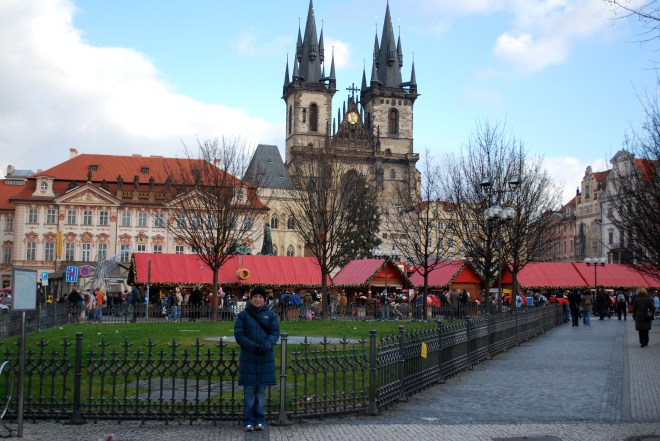
A walk through a maze of streets on the other side of the Vltava River brought us to Old Town Square, one of Europe’s biggest. The mood at the annual Christmas Market was festive. Food and crafts stalls circled around a huge tree, while a tuba band played a rendition of Rudolph and the spires of the Church of our Lady Before Tyn soared overhead.

dsc_0077

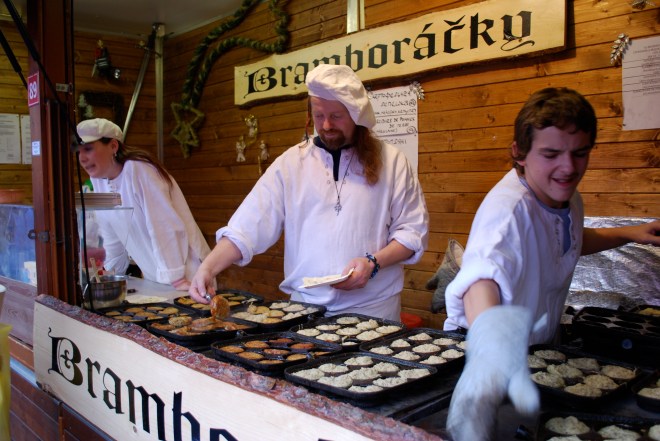
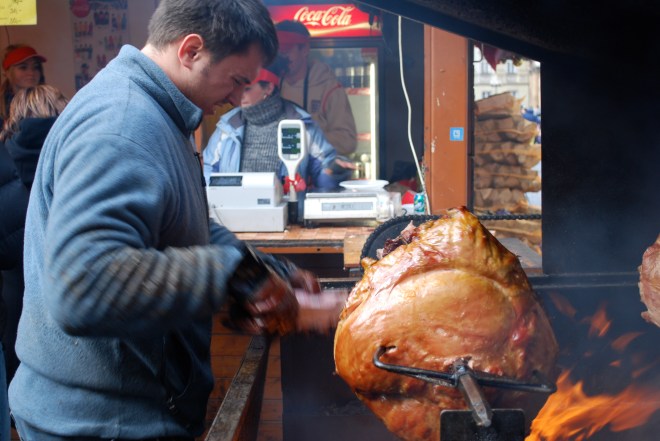
For dinner, we sampled some traditional Czech dishes: klobasa v baguette (sausage with mustard on a baguette), bramborácky (dank garlicky potato pancakes) and trdelndelík (sugar donuts cooked over open coals), all washed down with a couple glasses of hot mulled wine. Very delicious.

dsc_0086
dsc_0088
dsc_0085

Exhausted from our day’s travels, we headed home, climbed into our exceptionally high thread count sheets and hit the sack.

Life outside of the bubble

This is cross-posted at the Kenan-Flagler blog, where I’m also now contributing.

I’ve often heard business school described as “living inside of a bubble.” It’s said that the first-year experience is so demanding and all-encompassing that life revolves around the same activities, people and places. Students go to class, meet with study groups, grab lunch in the cafeteria, hit the gym, have dinner or drinks with friends, head home, do work and hit the sack.

Rinse, repeat, rinse, repeat.

In some ways, my first three months in Chapel Hill have followed a similar rhythm. There is so much to juggle, so many opportunities to get involved, so many interesting and smart students to work with, that you almost forget that there is life beyond McColl’s walls. Not to say that this is necessarily bad. In fact, the strength of the community at Kenan-Flagler, fostered in part by this bubble, is one of the reasons that I’m here. But it’s also important to occasionally take a step back and experience life outside.

An opportunity to do so came at the beginning of this mod, the Sunday before classes began. I’d read about the North Carolina State Fair — one of the largest fairs and agricultural expositions in the Southeast — and had to go check it out. We drove the 20 minutes to Raleigh, parked for $5, bought our tickets and headed inside to the overwhelming sights, sounds and smells.

With growling stomachs, we first hit the Wisconsin Cheese Shack and ordered up some fried cheese sticks with a spicy ranch dipping sauce. The verdict: Delicious.

img_0174

Next, we wandered through the Midway, filled with carnival games and rides before shelling out a dollar to see the World’s Smallest Woman (who indeed was small — the world’s smallest, not so sure).

img_0179

Our last stop were the agricultural expos, filled with livestock, fruits and vegetables all competing for the blue ribbon. This 8 pound monstrous sweet potato was even bigger than the ones they sell at Whole Foods! (Joke.)

img_0181

We ended up spending around three hours at the fair, taking it all in. The drive back to Chapel Hill was refreshing. We had experienced the fantastic people, place and culture that make North Carolina such a unique and cool place to live.

And we realized that yes, indeed, there is life outside of the bubble.

And I’m back!

Day of return
Rye, New York

The skies were overcast and a light rain was falling this morning, the perfect excuse to lazily sleep in. After packing for what seemed like the millionth time, having some breakfast downstairs and then checking out of my apartment, it was time to hit the streets for a few last hours of sightseeing.

Having spent the last five weeks in Asia, it’s hard to say exactly how many temples I’ve seen. On this, my last day, why not visit one more? The Man Mo, the oldest in Hong Kong, was a short MRT ride away, its air chokingly thick with the fragrant smoke of incense burning from its ceiling. Some are so large that they are said to continue burning for 3 weeks.

The temple is on Hollywood Road, with its antiques shops and trendy boutiques, in the Central District. My backpack is already bulging with everything that I’ve bought the last several weeks so although tempting, it was a lot of looking and not a lot of buying.

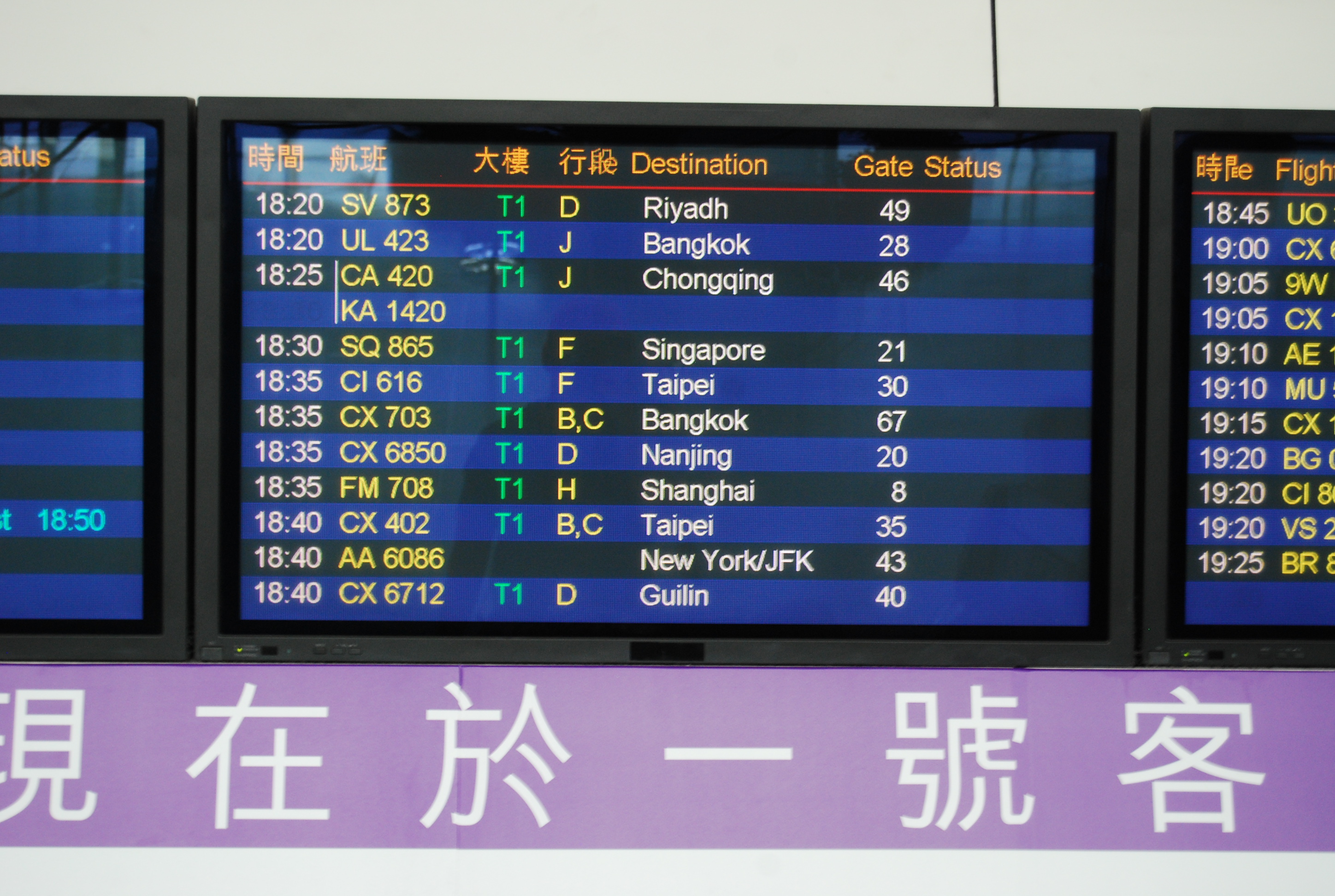
I’d really wanted to take the funicular to the top of Victoria Peak but the clouds were heavy and it didn’t seem like it would be worth it. So, instead, it was back to the hotel for an hour of downtime before hopping on the Airport Express.

Cathay Pacific checked me in quickly to an aisle seat with no neighbor. Score! Browsing afterwards through the shopping mall that is Hong Kong International Airport, a hunger pang struck. That wouldn’t be a problem. My last meal in Asia? Burger King.

We boarded our Boeing 777-300ER at 6:15 p.m. and shortly after settling in, were hurtling down the island runway. How does one pass time on a 15-hour, 8,068 mile flight that crosses the North Pole? As the skies outside the window went from dark to light to back to dark, we staid off boredom by:

  • Watching: Charlie Wilson’s War, Vantage Point, Charlie Bartlett (4.5 hours)
  • Reading: International Herald Tribune, Newsweek, New Yorker (3 hours, cover to cover)
  • Sleeping: What else was there to do? (5 hours)
  • Eating: Even on economy, Cathay dishes up two decent dinners with a glass of Malbec from Argentina (.5 hours)
  • Looking: Go through and organizing 3,145 trip photos (1.5 hours)
  • Writing: This blog post (.5 hours)

A little before 10 p.m., we began our approach from the north to New York’s JFK Airport, following the Hudson River and passing right over White Plains. As the city drew closer, its familiar lights sparked beneath me. Mom and Dad met me just outside of Terminal 7, International Arrivals. It was great to see them both.

This has been a remarkably long day of travel, thirty-four hours all together. It began Monday morning at 4 a.m. in Hong Kong and ended at 1 a.m. Tuesday in New York. I’m exhausted, yet with the time difference, I’m strangely ready for a croissant and cup of coffee.

Tomorrow morning, I’ll awake in a familiar bed, in a familiar home, in a familiar town, surrounded by familiar people (and pets). There will be nothing on the itinerary. And you know what? After 80 days of crisscrossing the globe, I’m not sure that I’ll mind.

It’s good to be home.

The last supper

Day 80
Hong Kong

We overslept this morning and then had to race to the airport for our flight to Hong Kong. Our taxi driver kept his hand on the horn and did a formidable job of getting us there in about 25 minutes. The agents were still at their counters when we arrived — although they were wrapping up — so we checked our bags, passed through security and immigration and made our way to the gate.

Wheels were up on our Cathay Pacific flight 766 (my 20th) at around 11:30 a.m. Somehow, they assigned me a bulkhead seat, so the next two hours were primarily used to catch up on sleep. We passed over some of the many islands that make up Hong Kong and then landed on the secluded runway at around 2:30 p.m., having lost an hour en route.

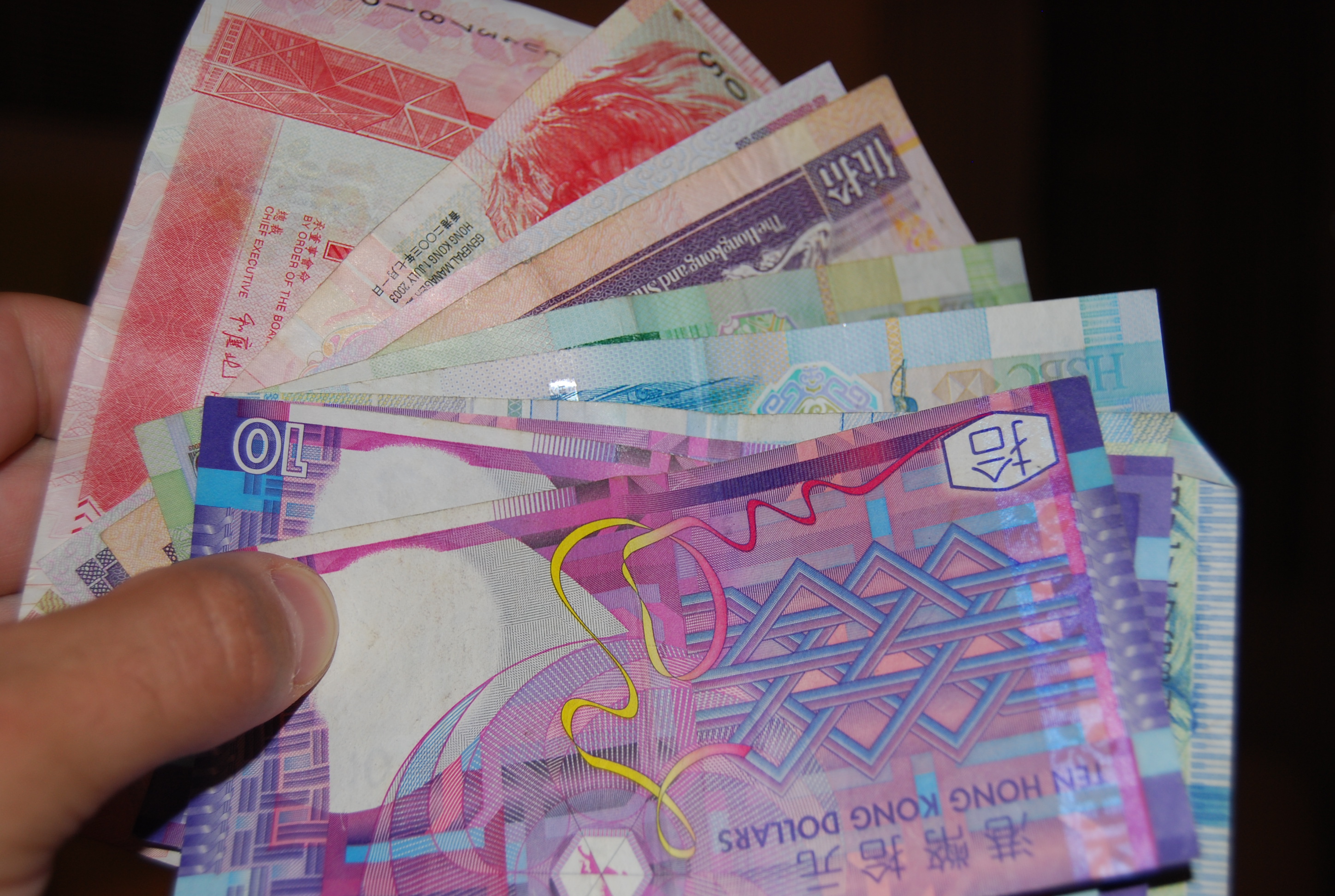
After passing through the thermal imaging station to check for sickness, we stamped in and got our backpacks. Here, Burt parted ways as his flight bound to New York was leaving in a couple of hours. Wanting to get rid all of my leftover foreign currency, a Travelex caught my eye and exchanged for me some really cool and colorful Hong Kong dollars.

The Airport Express dropped me off at Hong Kong station, which was only a short taxi ride to Causeway Bay, the central area in which I’m staying. Along the way, we passed this billboard, which on day 80 of this trip around the world, was pretty weird and coincidental.

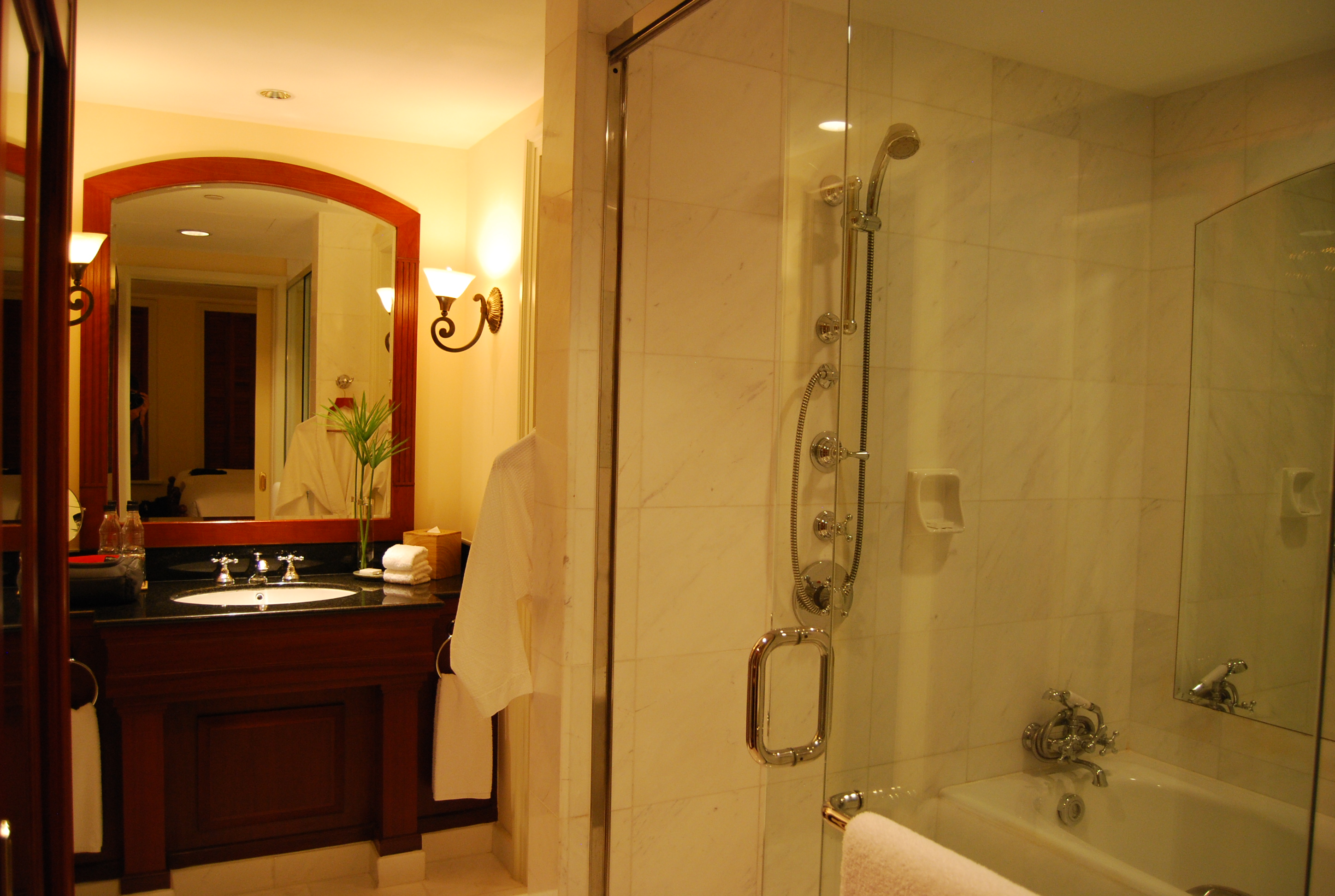
Jia, is a Philippe Starck designed apartment hotel, the first of its kind in Hong Kong. The trendy furnishings in my studio apartment reminded me of home and got me even more excited to return.

After a final supper of noodle soup at Mak’s Noodle, the famous shop just down the street, it was time to explore bustling Hong Kong by night. Passing countless shops and skyscrapers, my destination was the Star Ferry, which has been shuttling passengers between Hong Kong and Kowloon for over a century. Taking the boat across Victoria Harbor afforded some great views of this neon metropolis — as well as the historic clock tower — as the clouds dramatically rolled.

Wanting to get a a solid evening of rest, it was an early final night for me. Hopefully, there will be some time tomorrow afternoon to see the sights before my Cathay flight across the Pacific — thus completing my around the world trip — departs at 6:40 p.m.

Rockin’ machine guns in ’Nam

Day 79
Saigon, Vietnam

One could get used to living like this. The Park Hyatt is easily one of the nicest hotels I’ve stayed at over the last 80 days. English dominates the television channels, the pillow-topped beds make waking up nearly impossible and the carerra marble bathroom, with its rain shower and plush robes, sure beat this one.

This is a comfortable retreat from the energetic streets of Saigon, this country’s largest city. After reading about the 3 million motorbikes, we were prepared for chaos, but instead found Saigon the opposite. The streets are wider, the buildings taller, everything a little bit more Western. We love it here.

Shunning a $25USD breakfast at the hotel, we grabbed a cup of iced Highlands Coffee before haggling with a taxi driver to bring us to the Cu Chi tunnels. We finally found our man for 800,000 dong ($50USD) and were off on the 60-kilometer trip to Ben Dinh, a town located along the banks of the Saigon River.

The Cu Chi tunnels, which at one point stretched from Saigon to the Cambodian border, played a key role during the war — the Viet Cong used them for supplying the resistance against the U.S.

After a short propaganda video (sample line: “Like crazy batch of chickens, the Americans fired into women and into schools.”), we set out to explore the area. The tunnels themselves were up to 10 meters below ground and absolutely tiny. After one look, we pretended to crawl through them and moved on.

On display were various weapons and bamboo traps used by the Viet Cong — they looked absolutely brutal.

There was also a destroyed U.S. tank that had been disabled by a mine.

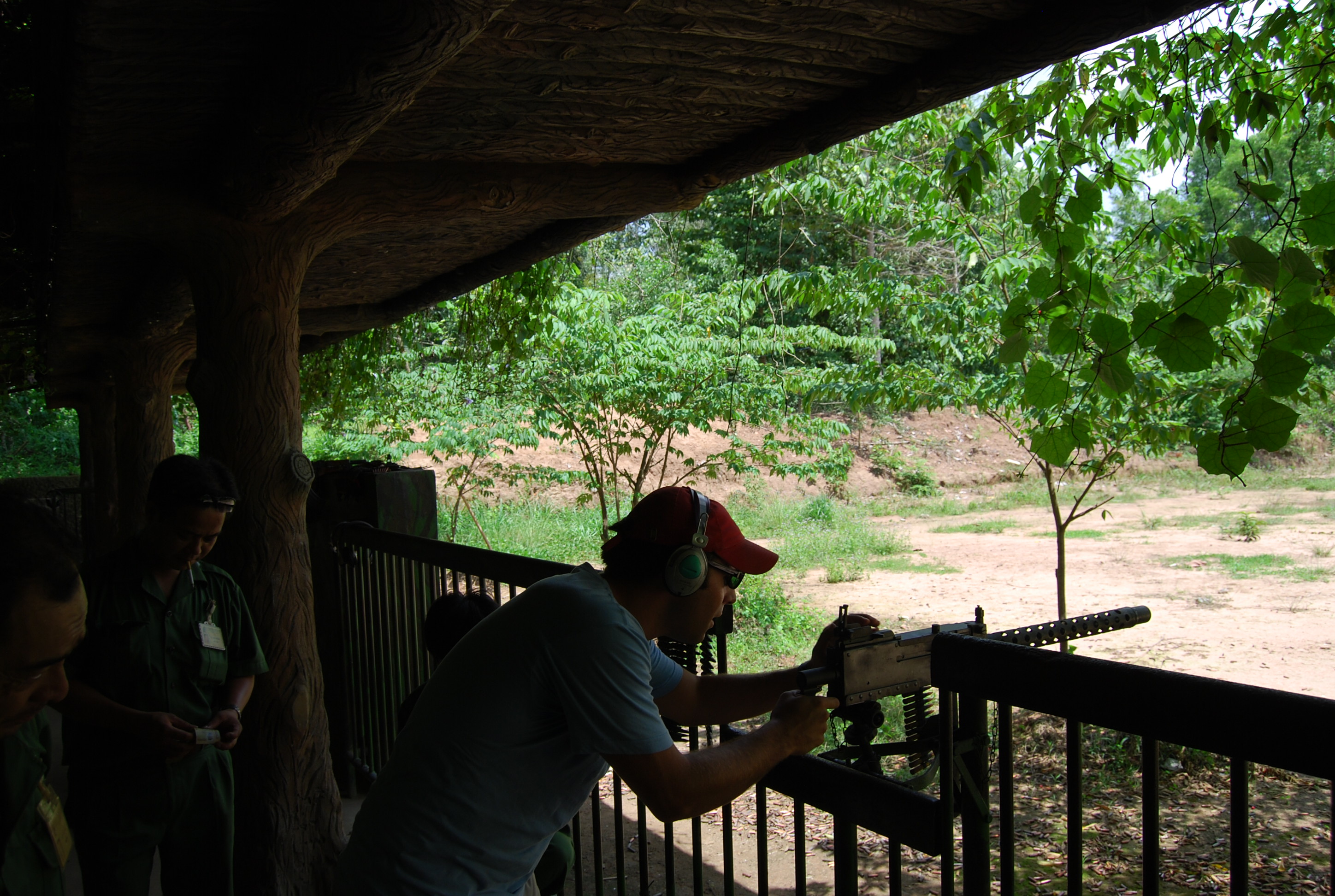
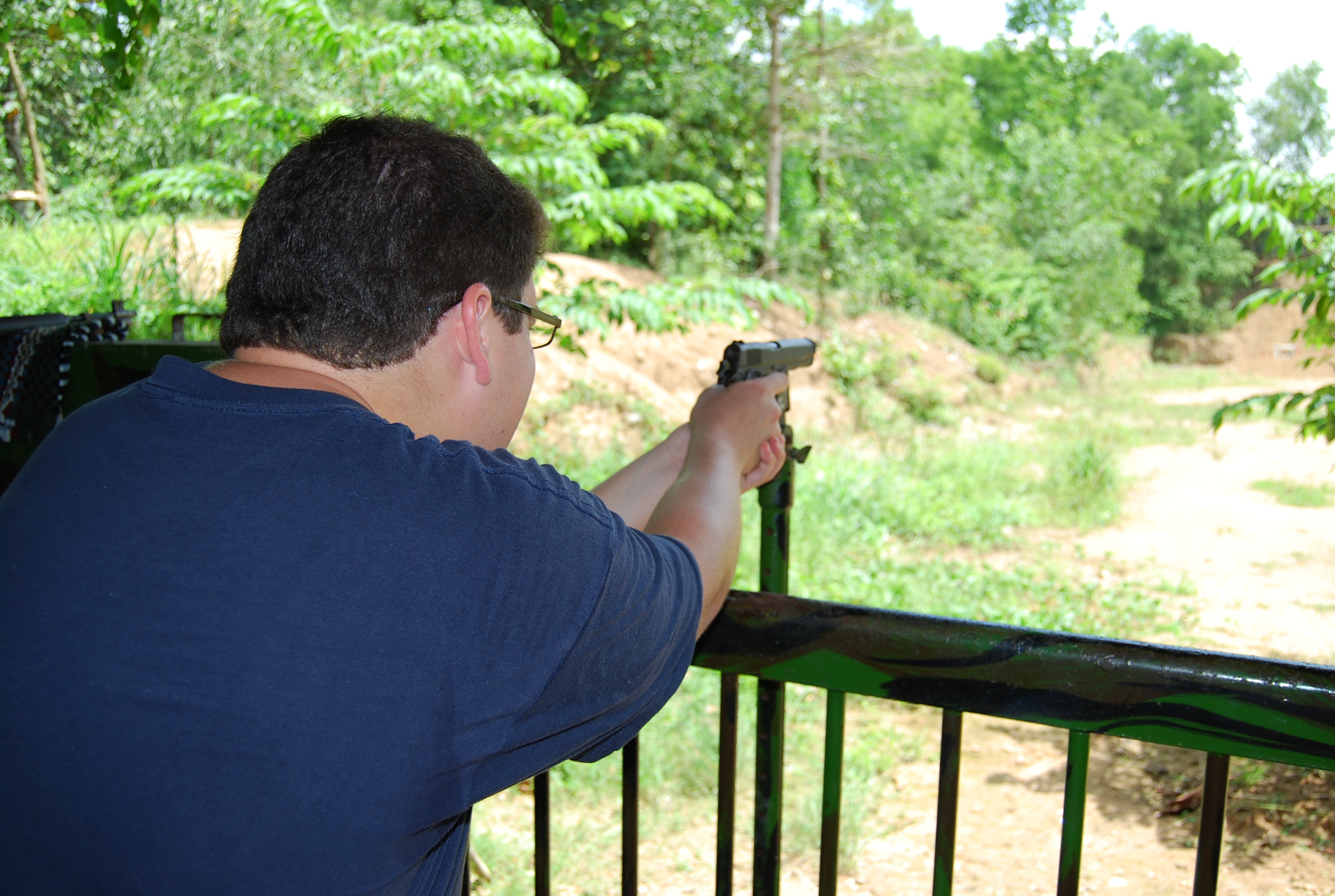
It was hard to walk through these exhibits and not feel something for the tens of thousands on both sides who lost their lives in this conflict. As we neared the end, we heard gunfire and came upon a full-fledged military firing range. Although it wasn’t cheap ($1USD per round), we plucked down $100USD for a chance to fire an AK47, M2 Machine Gun and M1911 Pistol.

Burt shunned the ear protection while they gave me a pair of old headphones. Neither of us could hear much afterwards.

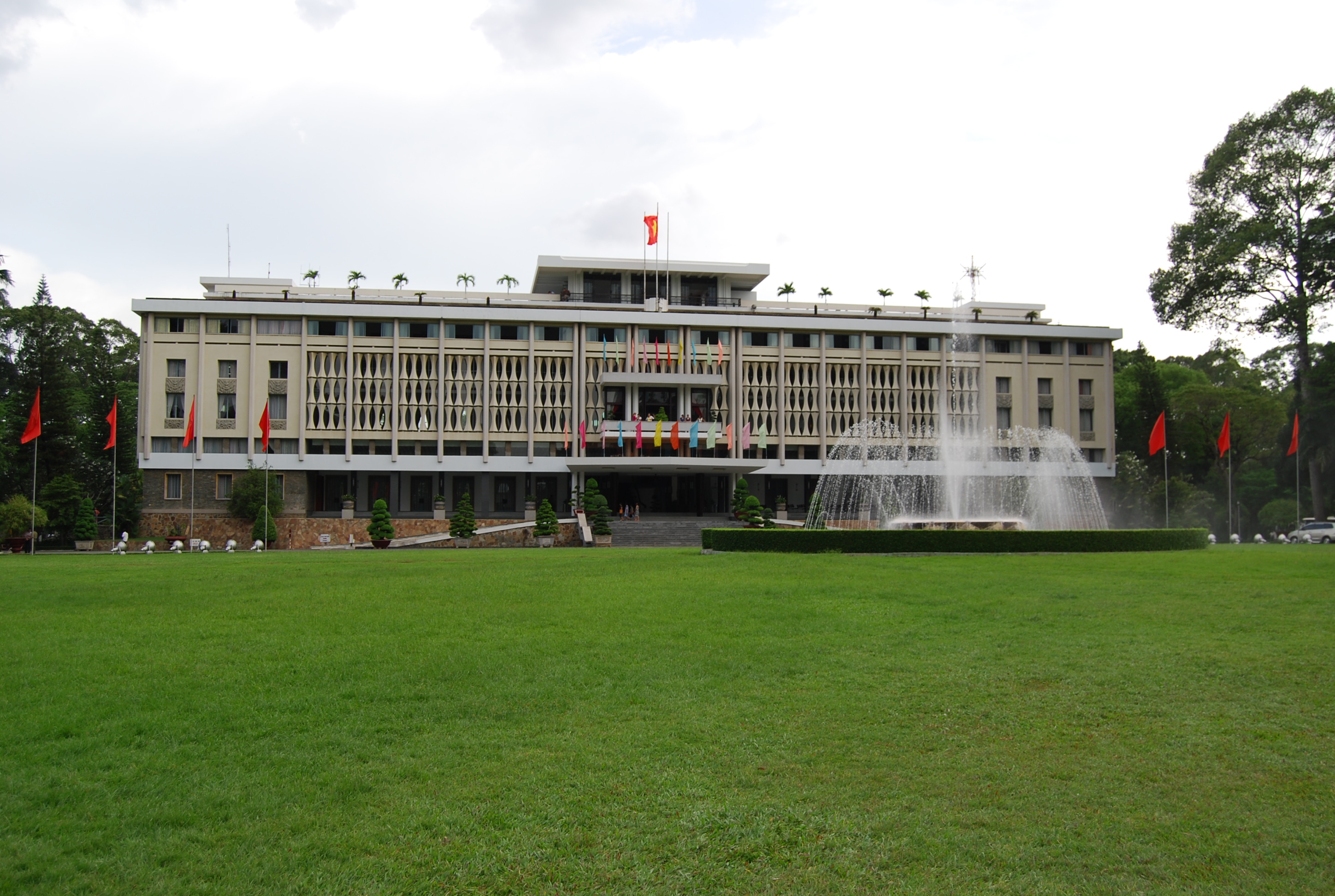
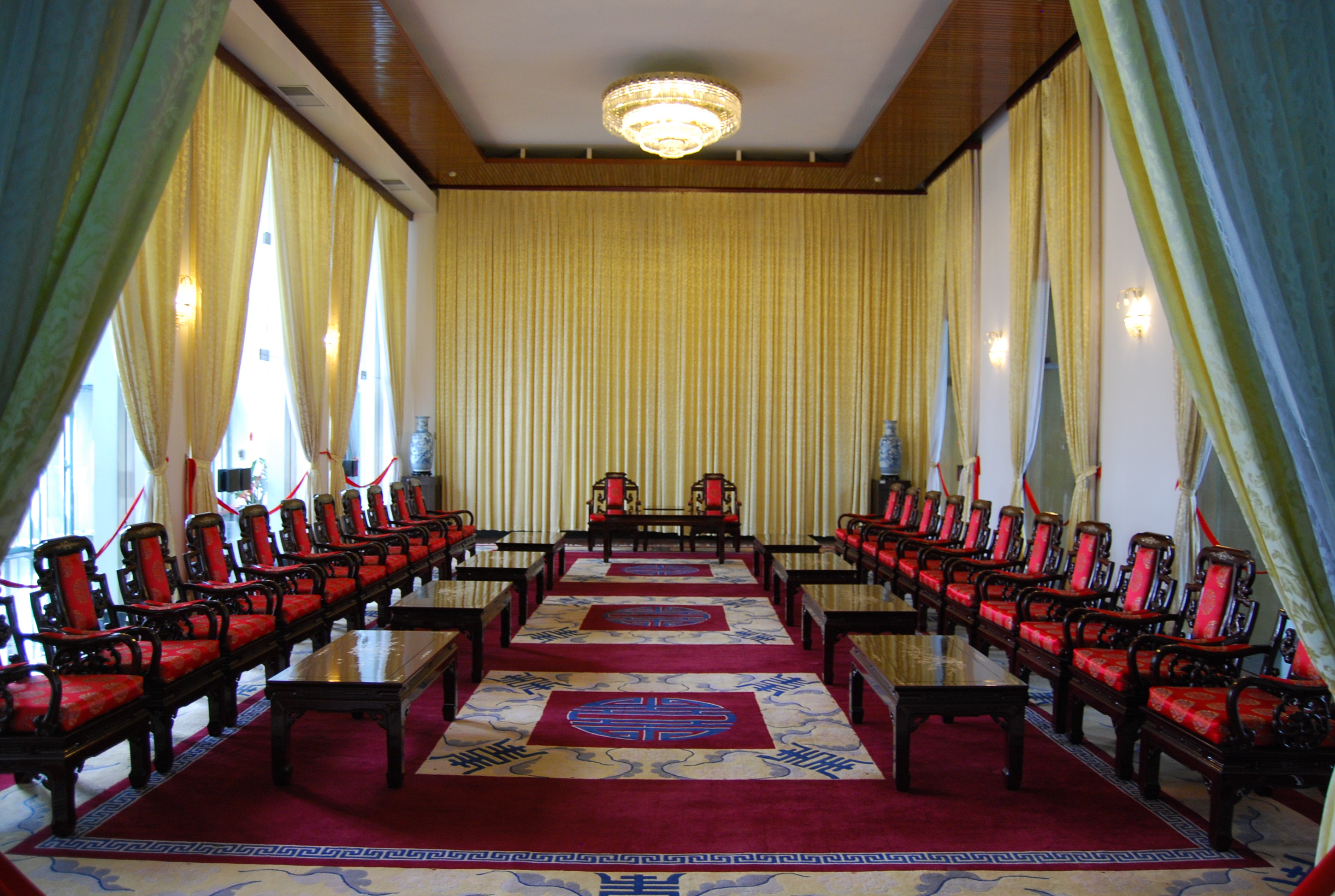
We had recovered by the time our driver dropped us off at the Hyatt. With a couple of hours to spare, we walked past Notre Dame Cathedral en route to the Reunification Palace, built in 1966 to serve as South Vietnam’s government headquarters.

It had a cool retro feel to it, as nothing has changed since the communist tanks rolled in on April 30, 1975 — the day of Saigon’s surrender.

This being our last night in Vietnam, we threw on some polo shirts and went downstairs for dinner at Opera. The open-air kitchen served up a delicious bean dip with freshly baked bread, the perfect starter before fried calamari, Greek salads and a wood-oven baked pizza. It was just what we needed before a big night out on the town.

On the road to Hue

Day 78
Hue, Vietnam

With so little time and so much ground to cover in this country, we hired a car today to bring us to Hue, about 3 hours north of Hoi An, in order to see the countryside and a couple of important sights before flying to Saigon this evening. After another delicious breakfast, we climbed into our Ford sedan and kicked off the day by visiting My Son, an ancient city that dates back to the 4th century.

The ruins are some of the best preserved in Vietnam — since the Cham people were one of the few, if only, to build with stone, not wood, which stood up to the harsh climate — and are another Unesco World Heritage Site. Passing chili peppers drying on the side of the road and mile after mile of rice paddies, we arrived in the lush valley at the base of Cat’s Tooth Mountain and set out along a dirt path. It didn’t take long for us to come across My Son, whose impressive brick structures were (quite amazingly) not built with any mortar.

No one else was around, so we basically had the place to ourselves. Well, us and the sun.

We hopped back in the car and continued onward to Hue – which has a few a Unesco sites of its own. The Ford handled the windy roads well although our driver wasn’t the friendliest fellow. He also strictly and strangely abided by the speed limit, which we’re not sure anyone else in this country does. We got passed by bicycles – not motorbikes – several times and bowed our heads in embarrassment.

A little after 1 p.m., we arrived in Hue, the capital of Vietnam from 1802 – 1945. The sun was reaching its peak as we disembarked at Thien Mu Pagoda, which founded in 1601, is one of Vietnam’s most iconic structures. Overlooking the Perfume River, it’s a peaceful — and largely deserted — spot, especially with the tremendous heat coming from above.

Drained from the weather, we asked our driver to bring us to La Residence, the chic boutique hotel that my parents will be staying at during their upcoming trip to Asia. Housed in the former French Governor’s house and surrounded by beautiful and lush gardens, the restaurant served up a delicious (and crust-less) chicken club sandwich and plate of crinkle fries. We were happy.

Happy enough, at least for the time being, to brave the sun again. We walked through the Citadel and Forbidden Purple City, a kind of Diet Forbidden City that was completely demolished by the U.S. in the late 60s. Reconstruction is underway, but for the time being, there isn’t much to see — besides a lot of other tourists.

Afterwards, we drove at exactly 35 kilometers/hour (the speed limit) to the Tomb of Tu Doc, a Vietnamese emperor in the 19th century, set among pine trees and overlooking a small lake. Hopefully, his power wasn’t correlated with the size of his throne, which looked small enough for a 2-year-old.

Whether it was the heat, lack of sights or general trip fatigue, we found Hue a pretty passable city. Now in this home stretch of my trip, I’m finding it more and more difficult to enjoy and really appreciate what I’m doing — so much of my thinking is revolving around my return to the States. But in this case, it didn’t really seem to matter as Hue offered little, and we’d much rather have spent an extra day in Hoi An.

Our car dropped us off at the tiny Hue International Airport — where international flights go to from here is anyone’s guess. We waited until the counter agents arrived to check us in and then played a couple games of Uno! (Marc: 3; Burt: 1). By the time we got on the propeller, it was past 8 p.m., about 90 minutes later than we’d been originally scheduled to depart.

After our somewhat scary Vietnam Airlines flight from Hanoi, neither of us were very excited about our trip. Alas, it was much better — although quite slow: 325 miles in 2 hours. Wheels were down on this 19th flight of mine at close to 10 p.m., and after grabbing our backpacks, we found a metered taxi to whisk us to our penultimate home, the beautiful Park Hyatt Saigon.

Ignoring the tailor touts

Day 77
Hoi An, Vietnam

The Ha An was even more impressive in the daylight. Our room overlooks the French-style courtyard and the onsite café has a legit and delicious breakfast buffet — the best I’ve had since Mykonos. After gorging ourselves on eggs, fresh baguettes and fruit, we stopped at the desk for a map of Hoi An, a charmingly small town of 75,000 on the banks of the Thu Bon River.

Hoi An Old Town, which dates back to the 16th and 17th century and basically encompasses most of the town, was designated a Unesco World Heritage Site about 10 years ago. Most of the sights in town can be accessed with a single ticket, so we bought a pair, a couple of bottles of water and started walking around.

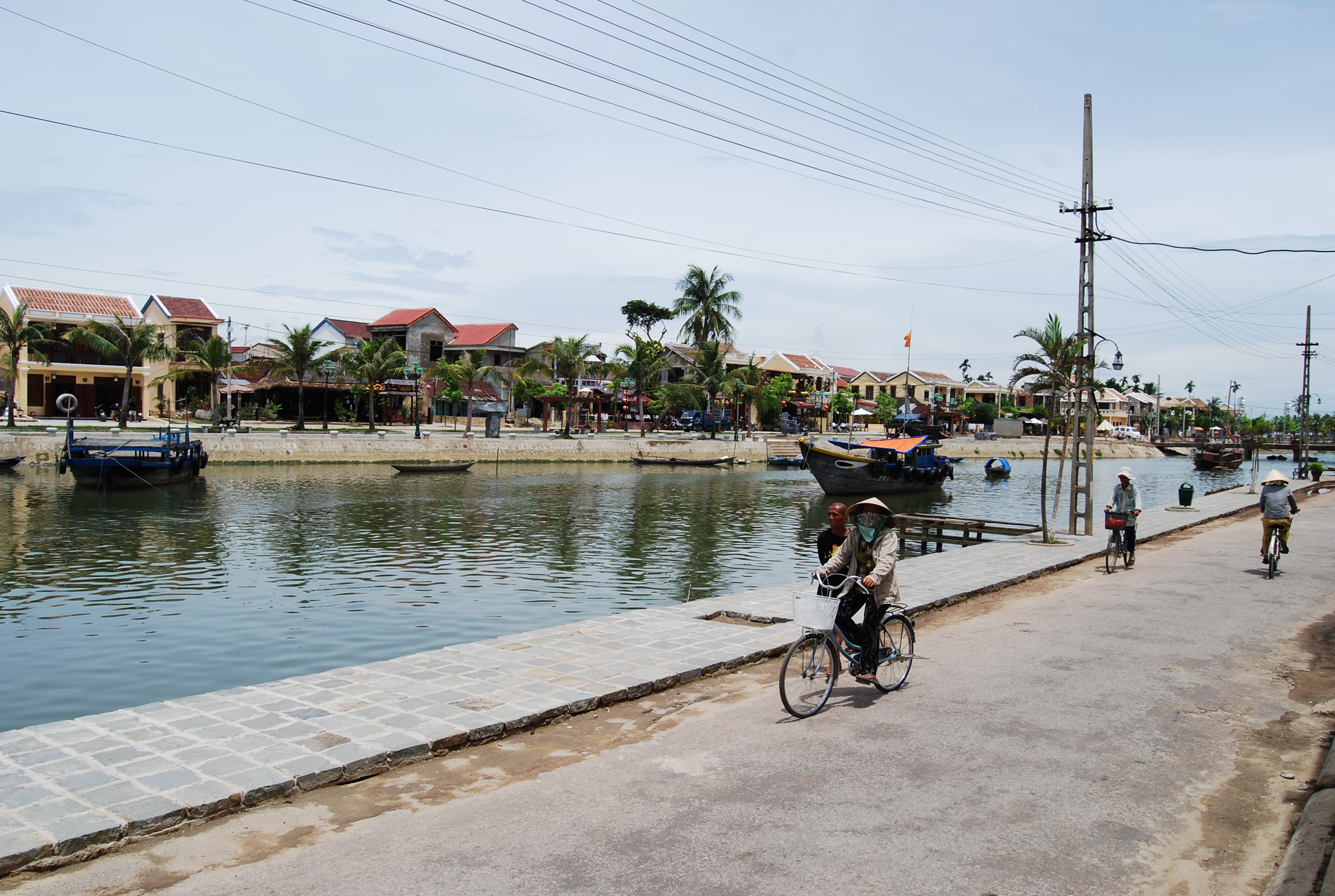
We visited the Assembly Hall of the Fujian Chinese Congregation, a community meeting spot that later became a temple, the Tan Ky House, a preserved home occupied by seven generations of the same family, and the famous Japanese Covered Bridge, but weren’t terribly impressed with any of them. For us, just roaming the narrow streets, haggling with vendors in the market and checking out art galleries along the water were the highlights.

Hoi An is also well known for its 200 tailors, whose touts and constant “Hellooooo’s” can get beyond irritating. We’ve heard mixed things about the quality of the custom-made clothing often produced here in just a couple of hours so decided against have anything made up. Others at our hotel had bags full of what they claimed were perfectly copied skirts, suits and shirts.

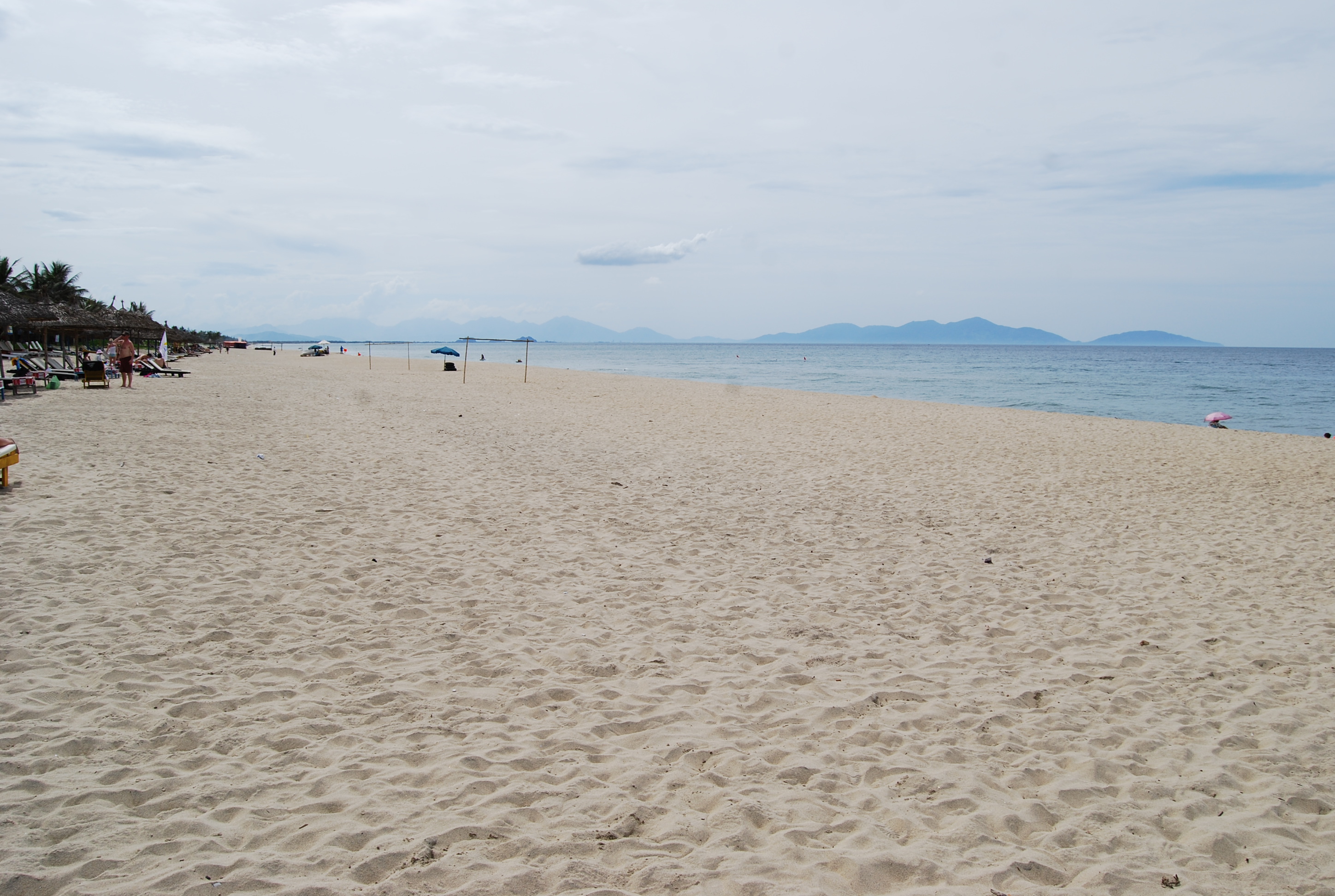
The town really heats up in the afternoon, so we retreated to our hotel for bathing suits and then hopped into a taxi to Cua Dai Beach, a beautiful stretch of sand on the South China Sea. This beach runs for miles north to Danang, where it’s known as China Beach, what was once a hang-out for American soldiers during the war. We paid for some beach chairs under a palm-thatch hut and took in the surroundings.

There were a number of relentless hawkers on the beach selling crappy jewelry, fruit and lots of tourist junk. They walked the line between amusing and annoying, although more often were the latter. We went for a couple of dips in the sea to cool off before chowing down on a fresh seafood lunch. The grilled calamari and shrimp spring rolls were delicious. The skies turned overcast so we packed up and returned to town, where after some intense bargaining, walked away with some cool souvenirs.

At the hotel, we packed our backpacks before having dinner at Brother’s Café, what is said to be the classiest joint in town. Burt’s red snapper cooked in a banana leaf put my grilled beef with chili and lemongrass to shame. After a drink overlooking the scenic waterfront, we walked back across the street to the Ha An and hit the hay.

Burt + beating cobra heart = SuperBurt

Day 76
Hoi An, Vietnam

We awoke at 7 a.m. feeling remarkably refreshed after what may have been the best night’s sleep of this entire trip. After all of the lightning last night, it didn’t even end up raining and the boat sat peacefully through the evening in a secluded lagoon. Our scrambled eggs and fresh fruit for breakfast up on deck was about the food as much as it was the setting: the thousands of lush limestone karsts rising above the early morning mist.

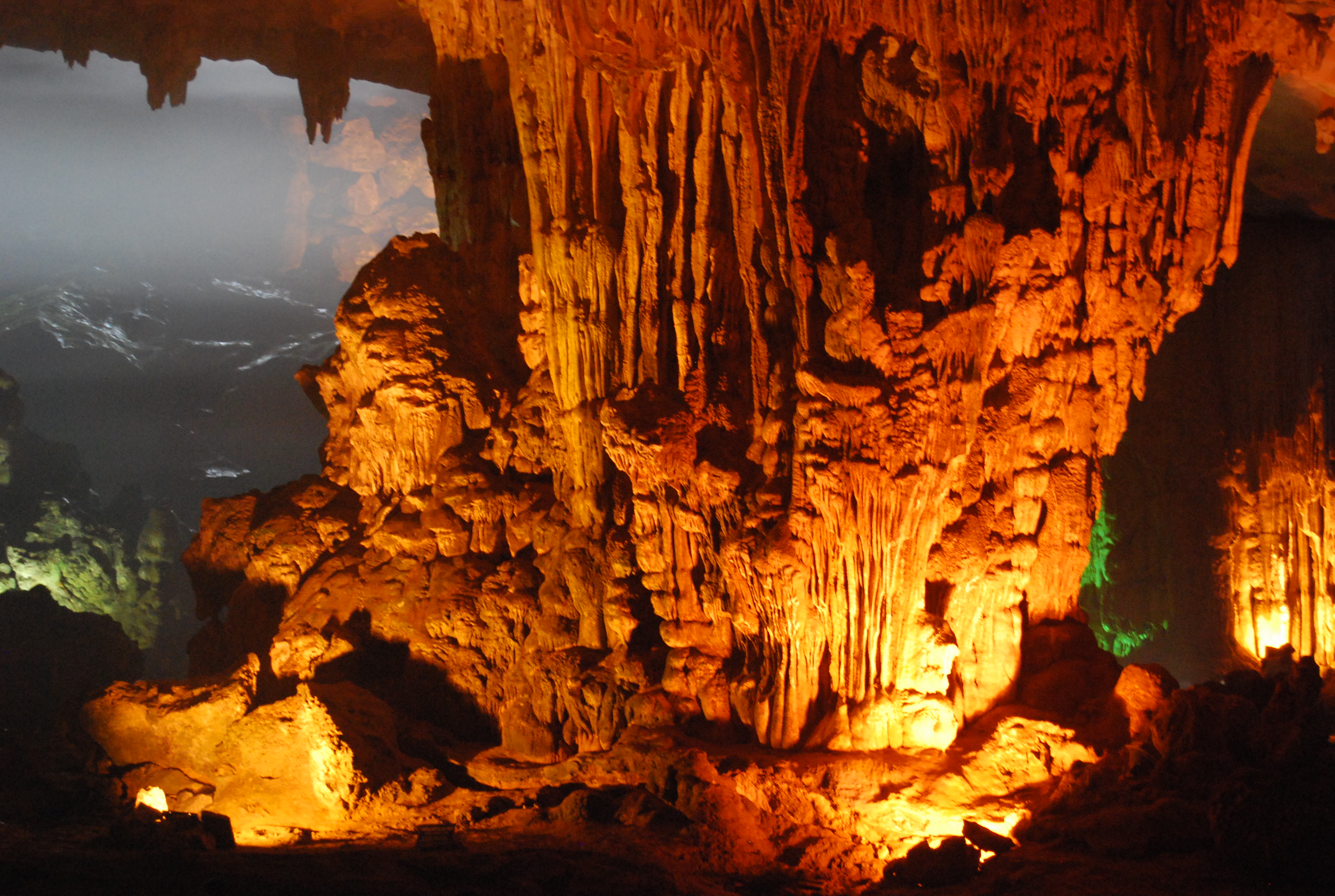
Our captain picked up anchor about an hour later — and although our boat was the only one in Halong Bay with working sails — cranked the engine to reach our next destination: Sung Sot Cave, on the island of Bo Hon. This is the largest and grandest of the many caves that dot the Gulf. This “Cave of Surprises” as it is known was a huge and cavernous spot, lit to accent its many defining features, and packed with day-tripping and screaming Vietnamese tourists to break the creepy silence.

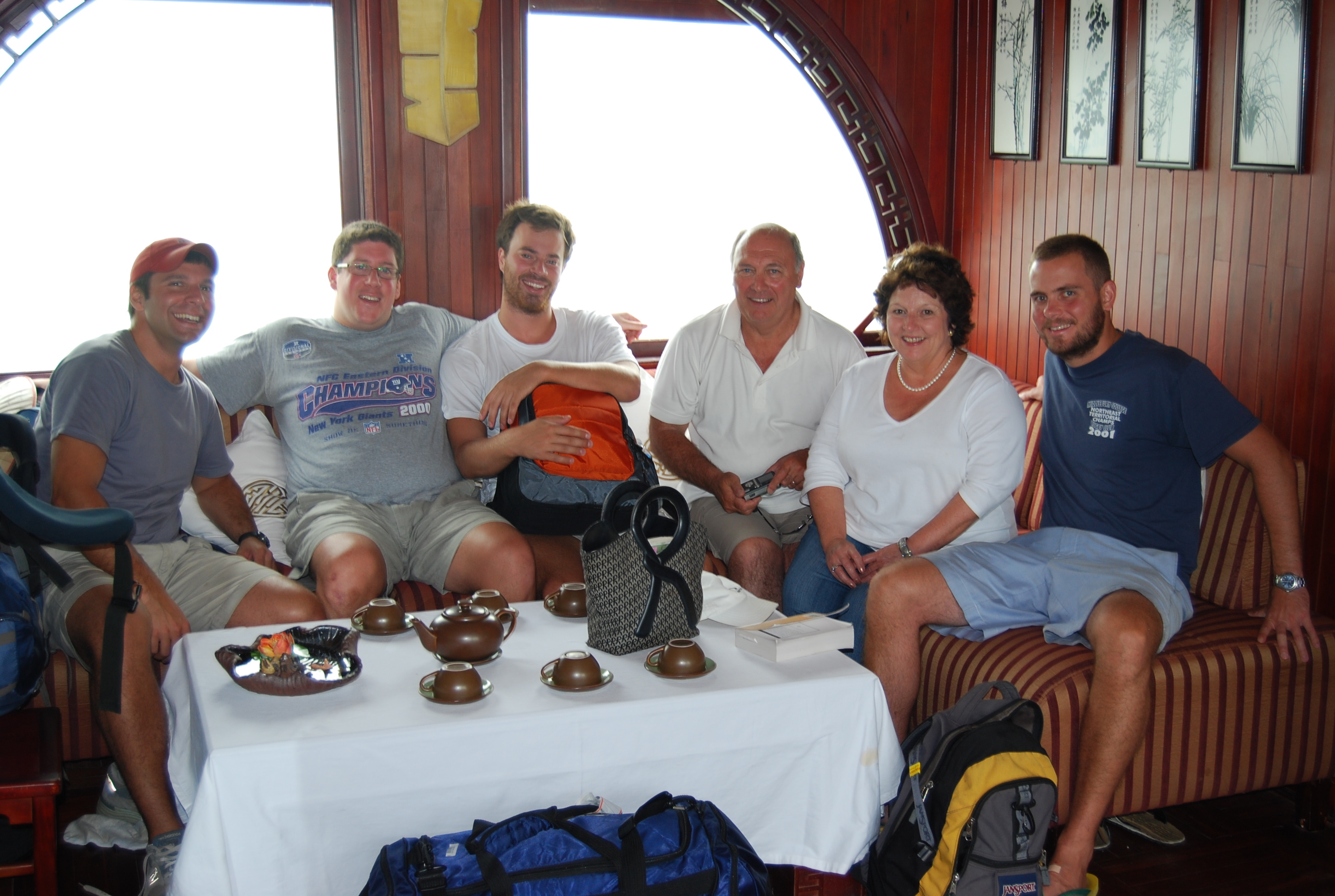
With one last swim under our belt, we made our way back to mainland. After a solid lunch – the food was good, eating downstairs in the air conditioning, even better – we snapped a group shot with our foster-parents, Richard and Esme. We’ll miss their supervision! (Just kidding.)

The transfer back to Hanoi was a bumpy and long 3-hour ride. We made the obligatory stop at the arts village/tourist rest area/sweatshop where most of us sat in the air conditioning of the jewelry showcase. The motorbikes of Hanoi start appearing en mass shortly thereafter — a sign that Hanoi was close. After arriving, our hotel informed us that our Vietnam Airlines flight to Danang, originally scheduled for 6:40 p.m., had been delayed, so we had a couple of hours to kill.

Burt had recently watched an episode of the Travel Channel’s Bizarre Foods. On a visit to Vietnam, host Andrew Zimmern had eaten a beating cobra heart (believed to bring strength and good health) and Burt was feeling particularly inspired. We hit up Google on the lobby computer and found Le Mat, a snake village just a couple of kilometers from downtown.

Our taxi driver navigated the clogged streets and about 20 minutes later dropped us off at a nondescript alley. “We’re here?” we asked. He just nodded, so we jumped out and were soon mobbed by Vietnamese. Using a lot of pointing and gesturing, along with some half-English, we were able to somehow find a cobra and negotiate a price (400,00 dong, or about $25USD). Here’s our little friend.

We were both really scared at this point, as the snake was vicious looking and generally trying to attack anyone or anything that it saw. With his hand clenched around its head, the handler told us to follow him down the street into a small courtyard. A crowd gathered, tensions grew and Burt debated backing out. Before he could say anything though, a knife was taken to the cobra and its still beating heart was ripped out.
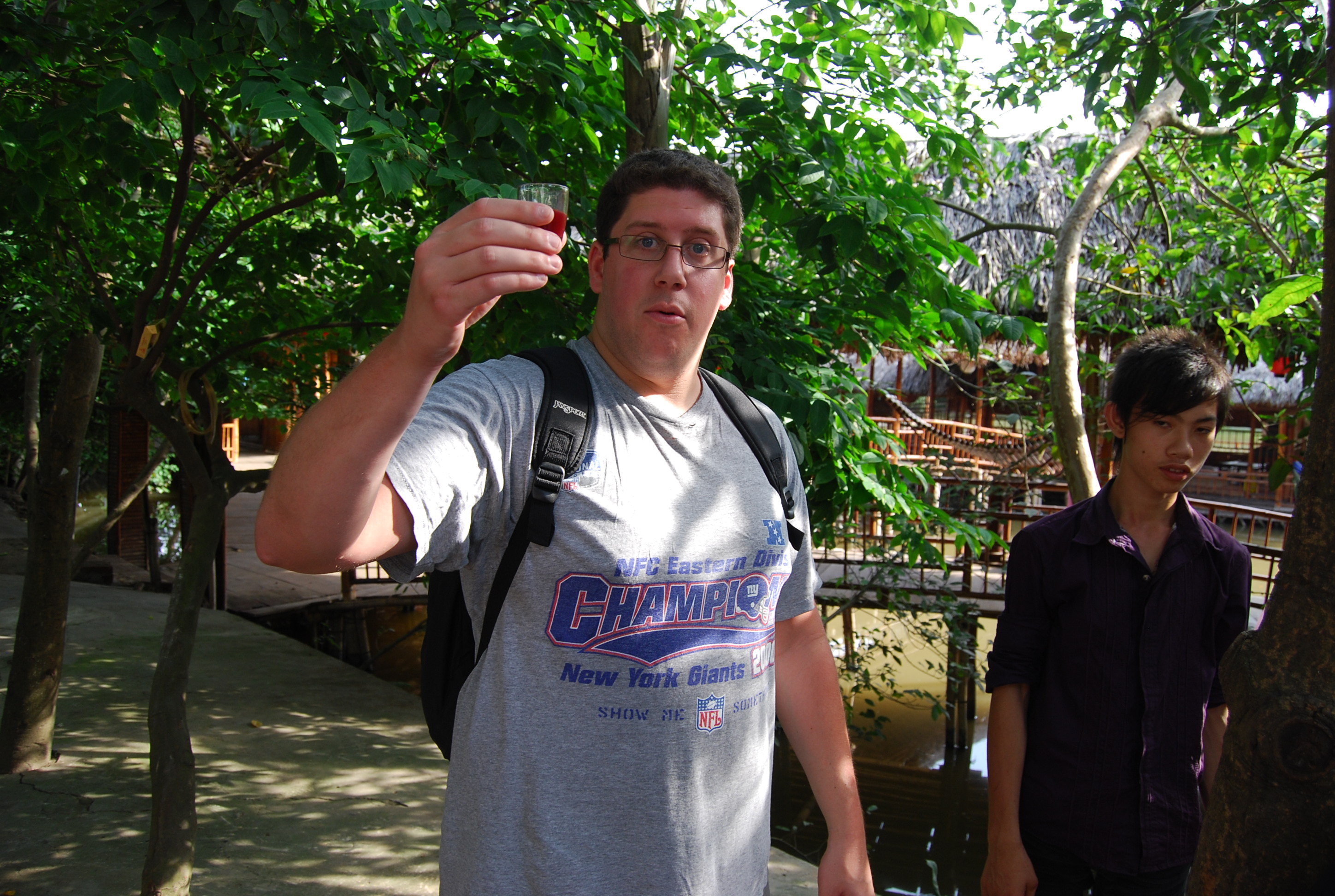
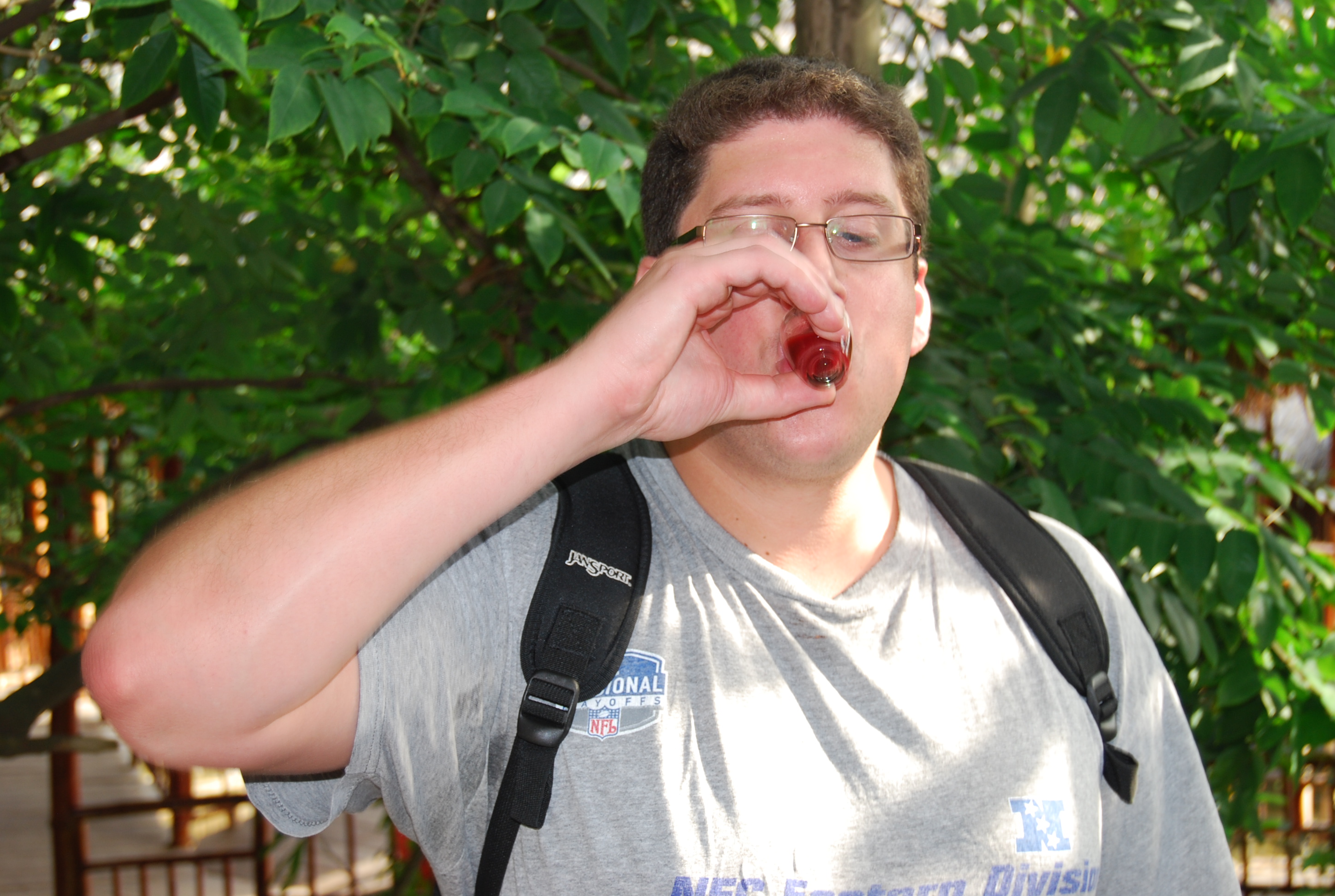
They drained some of the snake’s blood into a glass of rice wine, mixed it all up and then poured Burt a shot, with the heart floating on top. Bottom’s up!

In one gulp, it was gone. And then, reality reared its ugly ahead — albeit momentarily.

“Now bile,” one of the women said. “Bile?” Burt replied with hesitation. “Good for stomach,” she said, before placing an unidentified organ in another shot of rice wine and handing it over. With a group of curious gawkers, there was no backing down, so Burt caved and offered a cheers.

Last up was the remaining glass of blood. But this was perhaps too much. And after one sip and a slight gag, the glass was back on the table and we were ready to get the heck out of dodge.

Before we could go though, this Vietnamese guy had to express a newfound respect for the unknown American who had come into his village as a boy — and was now leaving a man! A really strong one, too!

We sat down at a tiny bar nearby for a few Viet Ha draught beers (the cheapest in the country, at 4,000 dong or $.25 cents a glass) and recapped the last 30 minutes. “I’m feeling great right now,” Burt said. “All it tasted like was booze. Salty, bloody booze.” It wasn’t inspiring — think I’ll stick with the Bombay.

After picking up our bags at the hotel, a transfer brought us to the airport, where we had noodles for dinner and Burt proceeded to tell everyone of his feat of courage. Surprisingly, our flight to Danang was aboard a monster jet, which felt like we should be traveling a whole lot further than one hour south. As we approached for landing, a huge thunderstorm broke out of the sky, rocking the plane with turbulence. Burt glanced at me.

An announcement in Vietnamese crackled over the loudspeaker. A garbled English translation sounded like we would be circling until the weather cleared. With lightning flashing outside of our windows and an occasional loss in altitude, it wasn’t the most comforting of situations, although we did eventually (and successfully) reach terra firma.

Despite the two hour delay, our van transfer to Hoi An was still waiting for us. With a rain falling, we set out for the 45-minute ride and promptly slammed into a passing motorbike. With the way people drive here, we were surprised it hadn’t happened sooner. Our driver looked at his girlfriend in the front seat, they both laughed, and we continued on our way.

We pulled into the Ha An Hotel at around 10:30 p.m. and could immediately tell that this would be a nice place. The rooms, filled with fresh cut flowers, were immaculate and spacious — and the provided shampoo, clearly home-concocted and offered in little clay jars, worked wonders.

Exhausted from caves, cobra hearts and commuting, we didn’t last more than 15 minutes before promptly falling asleep.