Unraveling the mystery

Day 75
Halong Bay, Vietnam

On any extended visit to Hanoi, a visit to mysterious Halong Bay, with its 3,000 limestone islands jutting into the Gulf of Tonkin, is a must. Although we got a taste of this beauty while on the beaches of southern Thailand, we had heard such rave reviews of this Unesco World Heritage Site that we booked an overnight tour aboard the Lagoon Explorer that left this morning.

A 3-hour transfer, which included a stop at either an arts & crafts village or a sweat shop, brought us to Halong City, an overdeveloped eyesore, where we were quickly herded onto the boat. The crew welcomed us aboard the highly lacquered replica junk boat, at which time we realized that there were only four rooms, of which we would have three. The last was taken by a great Aussie couple — who actually didn’t seem to mind being with a bunch of young American guys.

After being treated to a delicious seafood lunch, we picked up anchor and began our tour through the emerald and tranquil waters of the Gulf. We passed through some amazing coves while sweating profusely on deck.

Several hours later, we were desperate for a swim. At Cua Van, a floating village, we were given the opportunity to go kayaking — nothing like 100-degree weather to make you appreciate a post-exercise dip.

Around 6 p.m., we moored for the night in a placid lagoon. Thankfully, the sun gave us some respite and we had the chance to hang out on deck again and take in our pretty spectacular surroundings.

Being on a boat like this in Vietnam in late June certainly gave Aswan a run for its money as the hottest day of my life. And, although the clouds infringed on our sunset, we happy obliged if it meant cooler weather.

We gathered everyone up for a big pre-dinner game of Uno! (of which your author was victorious) and then chowed down on some barbecued meats and seafood. The food was quite good. After dessert, an obscene lighting storm rolled in and we sat outside debating what might happen if our mast were struck. The humidity was still pretty unbearable, so we retreated to our air-conditioned sanctuaries for some sleep at around 10 p.m. — perhaps my earliest bedttime in 75 days.
Pilgrimage to the pagoda

Day 74
Hanoi, Vietnam

We didn’t really know what we were getting ourselves into after signing up for a private trip to the Perfume Pagoda, a complex of Buddhist temples and pagodas about 2 hours south of Hanoi. Last night, the receptionist told me that the trip would leave at 8 a.m. “It’s hot, you leave early” she said. Of course, we slept in this morning and didn’t get rolling until 10 a.m., for which we’d pay the price.

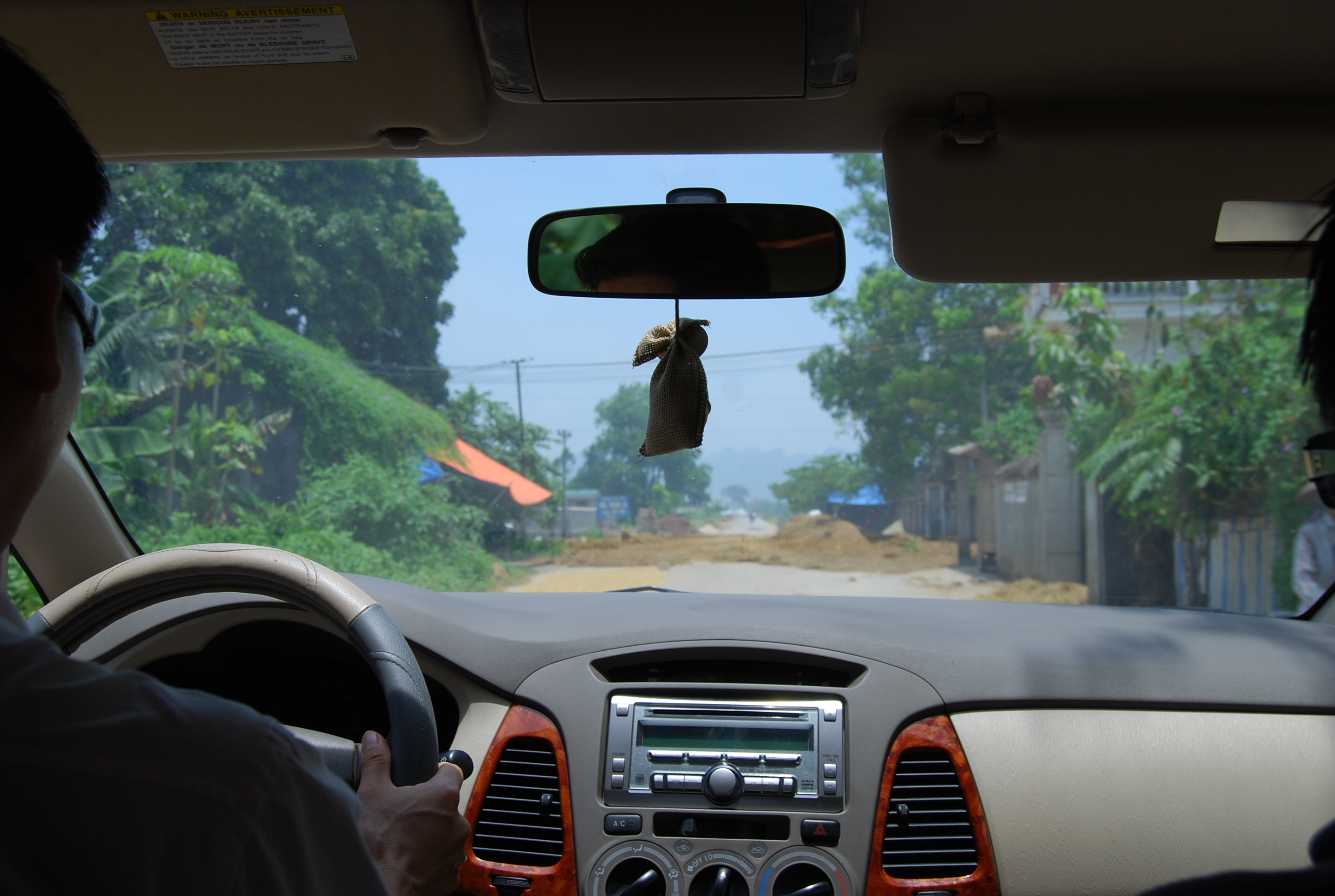
Traffic was horrible getting out of town. An accident — one of 30 daily, according to our guide, Zoom — created a monster gridlock that set us back another hour. Today was also the peak of the bi-annual rice harvest here, so the streets of the countryside were filled with drying plants, creating an obstacle course that delayed us even further.

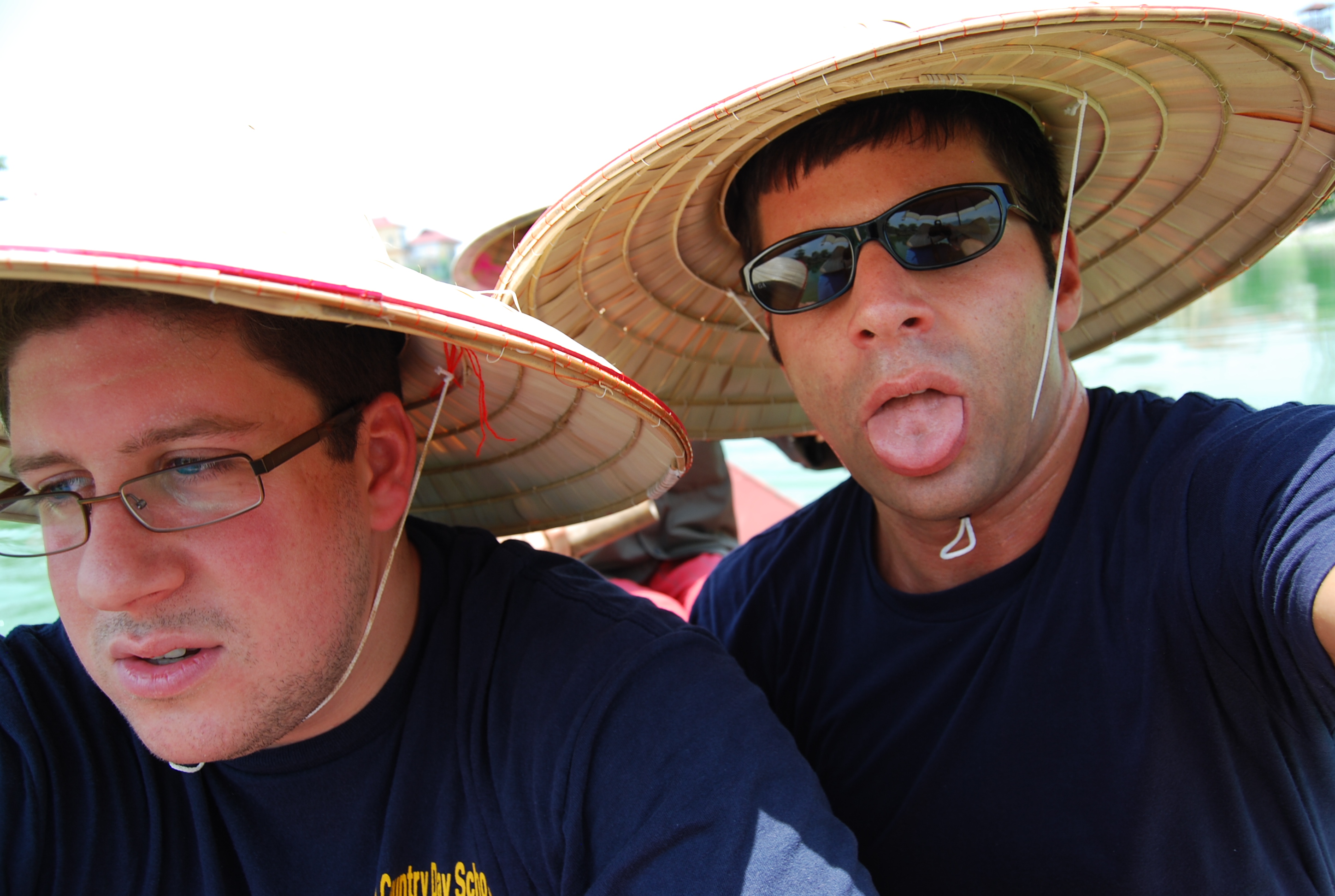
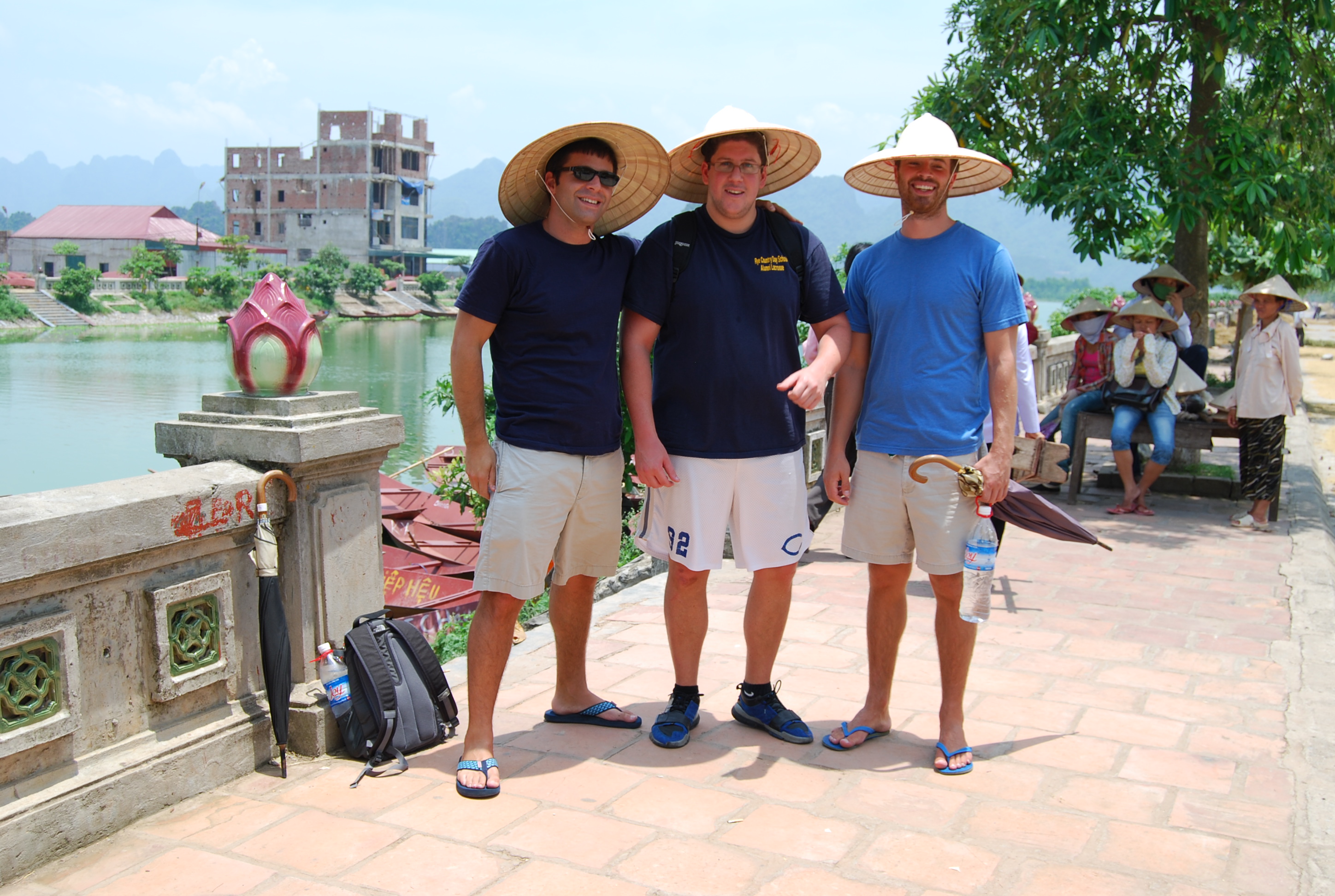
By the time we arrived in the town of My Doc, it was close to noon and the sun was at its highest peak. The air was thick with humidity. It couldn’t get much worse until we learned that we’d now be treated to an hour’s boat ride, paddled by a poor Vietnamese woman who looked out on the empty river — then looked back at us and cursed our arrival. At least the weather gave us an excuse to buy these really dope conical hats.

Properly sun-screened (for you Grandma!), the four of us squeezed onto a tiny boat and squatted uncomfortably in our seats. Zoom gave us some umbrellas to shield us from the sun. Then, the serious sweat started.

We would later agree that we sweat more in the next several hours than we probably have in our entire lives. If you have also ever tried squatting for 60 minutes (why you would, I’m not sure), you know how terribly uncomfortable it can become — with limbs falling asleep and aching backs. Needless to say, by the time we reached the shore, we were somewhat delirious from the heat and the squat.

Just when it couldn’t get any better, our guide told us that the cable car we had thought would bring us to the top of Huong Tich Mountain might no longer be running — since all the other tourists had come through several hours earlier — and we would have to walk the 4 kilometers to its peak. This was not what we wanted to hear. Luckily, a huge group of Korean tourists had arrived a couple of minutes before us and they warranted the cable car being turned on for one trip. We rejoiced and hopped on board.

At the peak of Huong Tich was the most sacred temple of the Perfume Pagoda. It was built into a cave in the 15th century and is visited each January through March by millions of pilgrims. The cave was a remarkable place, and not just because it was so cool that you could see your breath. Zoom explained all the shrines to us and then invited us to rub a dollar bill on a special rock for prosperity and take one drop of water to our bodies for good health.

The experience was almost transformative — with our body temperatures lowered to normal, we found this a remarkably peaceful and tranquil spot — that made the entire journey worth it. (We think.)

We took the cable car back down and then had lunch before visiting a few of the other surrounding temples. Zoom was able to charter us a motorboat back to the mainland, so we avoided another hour of squatting in the sun. Our driver returned us to the Elegance by around 6 p.m., where we took the most amazing showers, relaxed and then packed for tomorrow morning, when we leave for Halong Bay.

Good morning, Vietnam!

Day 73
Hanoi, Vietnam

With humidity inching towards 100 percent, Hanoi was a complete swamp this morning. We couldn’t let that stop us from seeing the city though, so after all becoming millionaires (16,000 dong to $1USD exchange) we hired a guide and driver (with a well air-conditioned car) to show us around. Our first stop was the Ho Chi Minh Mausoleum Complex, which like Mao in Beijing, is considered a holy site. Vietnamese queue by the thousands to see Uncle Ho in his glass sarcophagus — except from September to December when his body is sent to Russia for “restoration.”

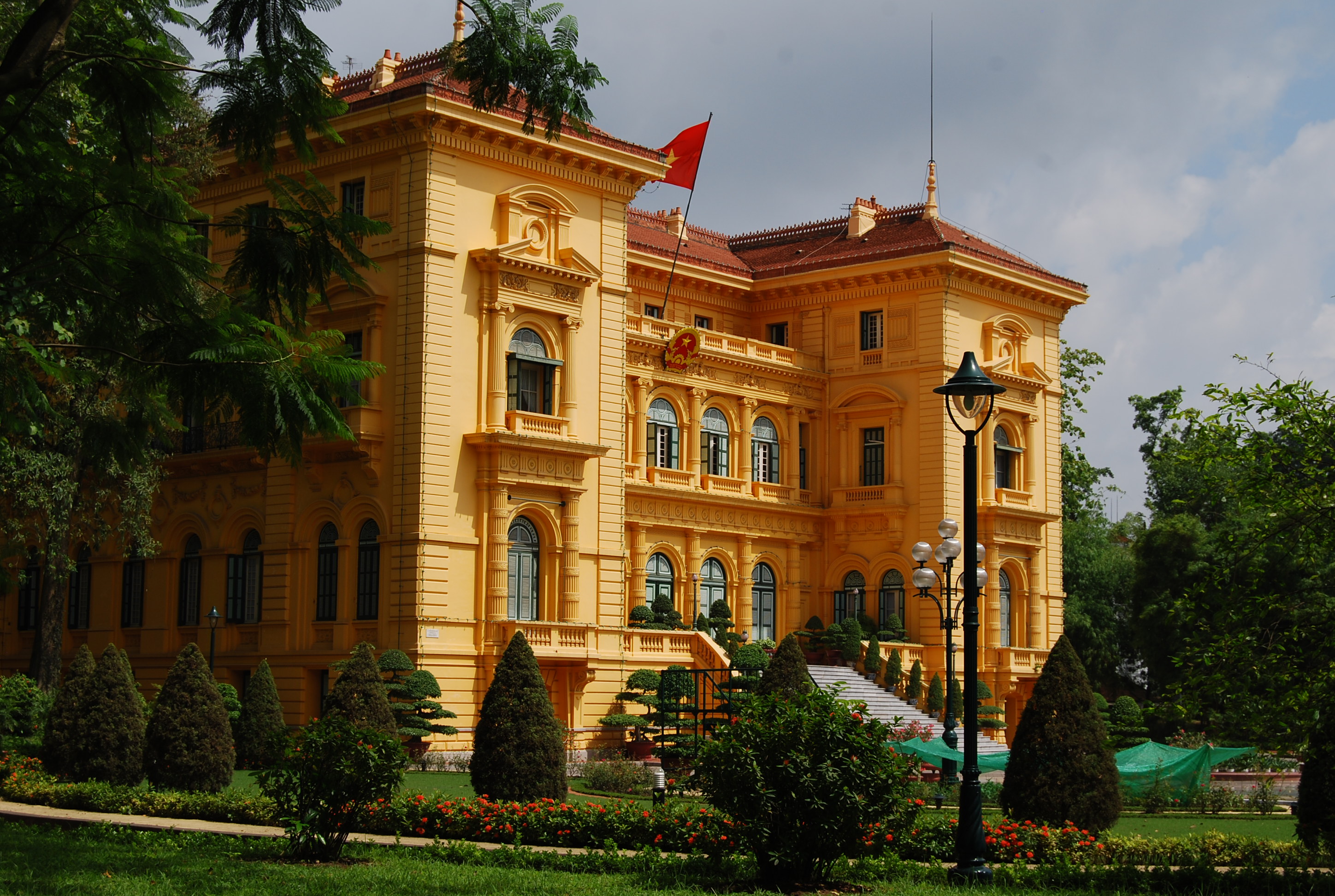
Afterwards, we visited the somewhat strange Ho Chi Minh Museum, filled with exhibits singing the former Communist ruler’s praises. The complex grounds had a few other sights within walking distance, including the One Pillar Pagoda and the impressive Presidential Palace, a grand building constructed in 1906 and used by the French during occupation that stood in stark contrast to the simple stilt house we saw that Ho later ruled from.

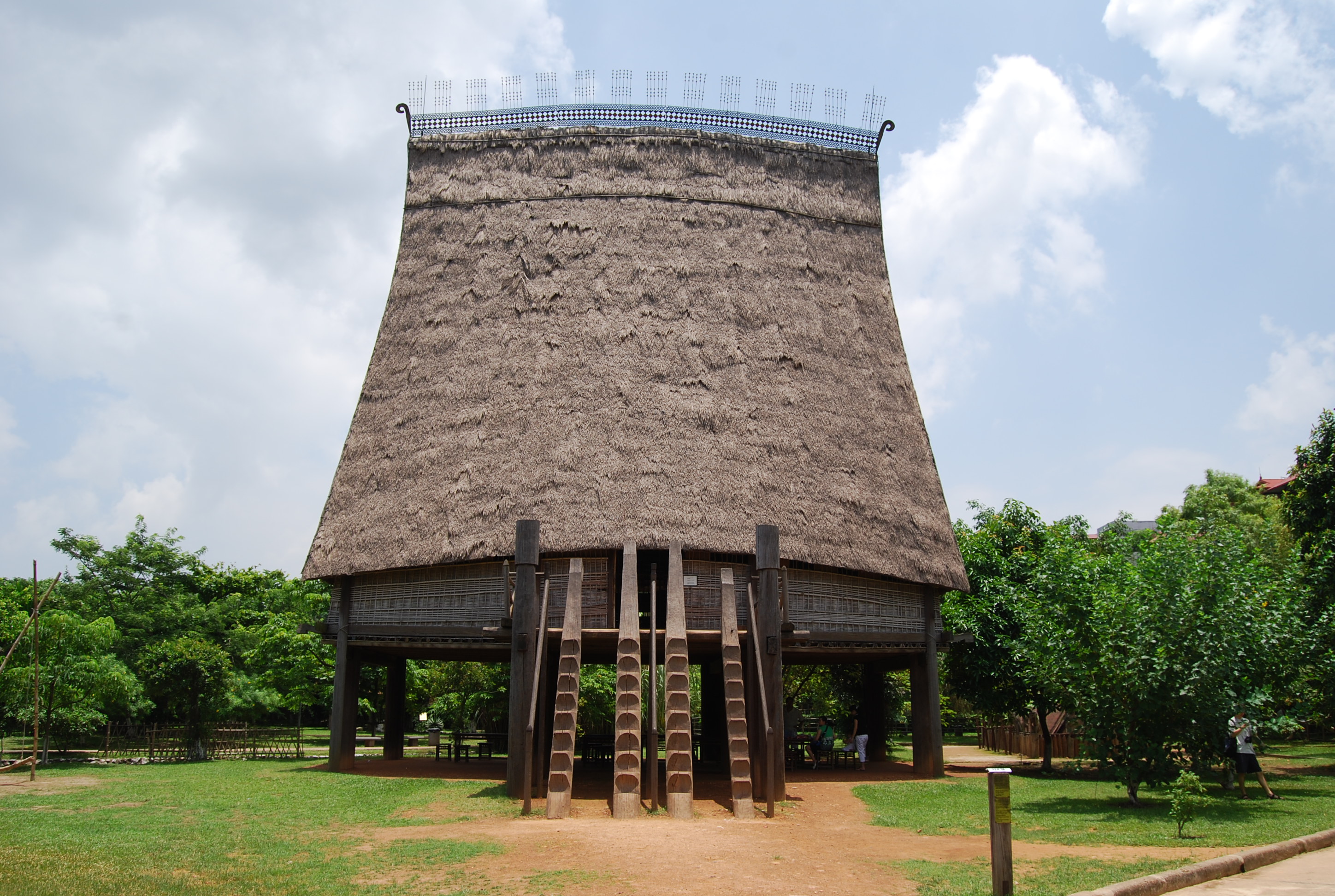
We loaded back into the car for a short drive to the Vietnam Museum of Ethnology, which introduced us to the country’s 54 ethnic groups. Our favorite was the Bahnar, who had this really sweet traditional communal house where we were served a cup of steaming tea (exactly what we wanted in 95 degree heat).

Next stop after a quick noodle lunch: the Temple of Literature (Van Mieu), built and dedicated to Confucius in 1070 and later established as Vietnam’s first university (nowhere near as solid as UNC).

It would be impossible to come here and not visit Hoa Lo Prison, ironically nicknamed the “Hanoi Hilton” by U.S. POWs during the Vietnam War. We saw John McCain’s flight suit and toured the wretched facility, which was originally built by the French to detain Vietnamese. Afterwards, our guide took us to the Ngoc Son Temple, a meditative spot that sits on an island in the middle of Hoan Kiem Lake.

With our jam-packed day complete, we headed back to the hotel to rest. Our tour included a traditional water puppet show later that evening, but we couldn’t find the motivation. Instead, after struggling again to locate an open restaurant, we were ripped off by another taxi driver before making our way to the Hanoi Hilton — the real one — for drinks and air conditioning.

Of monks and Mirabelle

Day 72
Hanoi, Vietnam

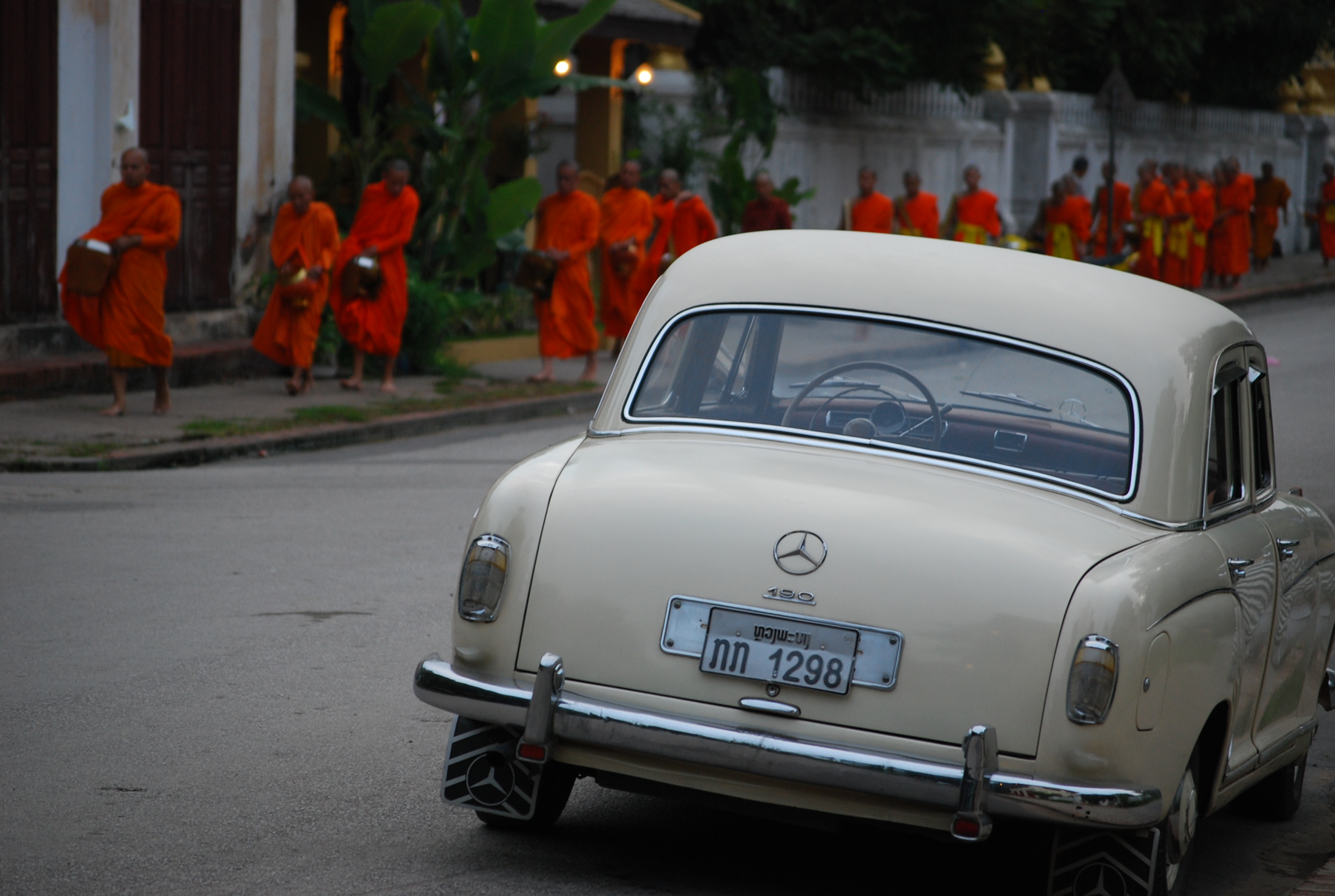
A little after 5:30 a.m. this morning, the Tak Bat procession started. Without fail, as dawn breaks each day, the monks of Luang Prabang arrive by the hundreds from the town’s surrounding Buddhist temples to collect their daily alms. There are lines of big monks and “mini-monks” (not my expression) as they wait to receive sticky rice and small cakes — their food for the day.

In their burnt-sienna robes, the monks yield to traffic yet don’t say a word. They are focused and they are solemn. Soon the town is awash in color, complementing the quickly rising sun. And, just as quickly as they are here, they are gone.

This is a part of life in Luang Prabang. While it has become something of a tourist attraction, today was blissfully free of those interfering in a religious ceremony for a new Facebook profile photo. The government of the People’s Democratic Republic of Laos has also taken steps to protect this. A memo in our hotel room says: “Observe the ritual in silence, and contribute an offering only if it is meaningful for you and you can do so in a respectful manner.”

We got back to the hotel, rested for a couple of hours and then met Phet, our tuk-tuk driver from yesterday. He brought us to the town of Ban Ean, about 30 minutes away, where we boarded a boat headed down the Nam Khan. Yesterday, our captain belched a BeerLao burp before firing up his rickety engine. Today, our captain couldn’t even get the engine to start. Guess drunk is better than incompetent. Luckily, our destination was downstream, so we had a leisurely float in the baking sun.

After a short walk, we arrived at Tad Sae waterfall, a beautiful and secluded spot, with clear water gushing over many levels of limestone. There, we met Mirabelle, our beast of burden who would be showing us around.

The ride was, well, slow. It was pretty cool to sit in a basket on top of a gigantic elephant in the middle of the jungle. But, at the same time, Mirabelle didn’t seem too happy with her job — after a couple of minutes, we really just wanted to set her free. The guys who run the park would’ve been heated if we pulled a Prison Break, so we could only feed her some pineapple plants and wish her well.

Phet brought us back along the bumpy road to the Apsara, where we showered and rested up. With no other planes at the Luang Prabang airport, our Lao Airlines (motto: “You’re safe with us”) flight to Hanoi was delayed about 90 minutes due to a “technical problem.” We gladly allowed the maintenance men to work their magic on our tiny propeller while playing several super competitive hands of Chinese Uno! and drinking our final BeerLaos. For the record, Derek romped me, 4 – 1. The series is to be continued.

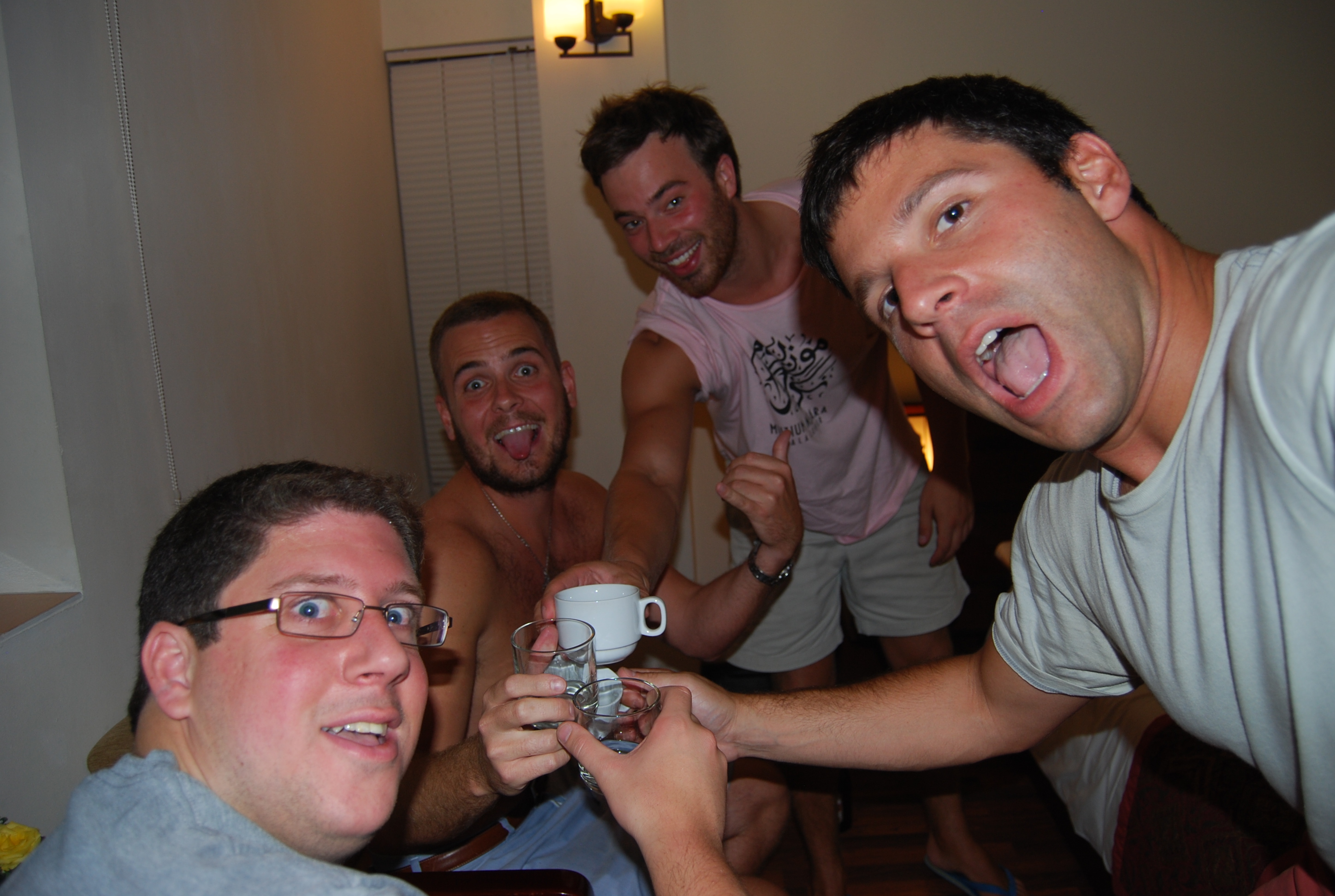
After touching down in the People’s Republic of Vietnam at around 7 p.m., a transfer brought us to the city’s Old Quarter and our hotel, the Hanoi Elegance 2, where we were cheerfully reunited with Burt and Andy. This warranted opening our Lao whiskey wine for a toast.

Burt had gotten rid of his Rangers playoff beard from Dubrovnik and Andy had shed some of his facial hair from Siem Reap. I’ve debated growing a beard, but after watching all those who have furiously scratch themselves all day, am now firmly against it.

We took a cab through this wild city, which at times felt like one big motorbike race. There are four million people in the capital of Vietnam and there might be as many vehicles. Forget about traffic laws or lights. Along the way, our driver sideswiped a BMW, whose owner was less than happy. We got to the restaurant, but it was closing for the evening, so with no clue of where else to try, we hopped into another cab and somehow ended up at a decent place.

After dinner, we raced around in tuk-tuks trying to find a bar but weren’t really feeling any of our destinations. When we asked the drivers to bring us back to the hotel, they had no idea where it was — even when we showed them its location on a map. Ninety minutes later, we’d finally found our way and arrived back at the Hanoi Elegance, whose lobby was now strangely filled with parked motorbikes. (Can we escape them?)

Hanoi is certainly one of the crazier destinations I’ve been to. A well-traveled friend of mine recently remarked, “It’s places like that city which make you happy to get home.”

Cooling down in Laos

Day 71
Luang Prabang, Laos

After ten hours of sleep, we awoke this morning feeling particularly energized and ready to find our way around this city. Sitting on the porch at around 8 a.m., we began sweating — while the temperature here is only in the low 90s, the humidity so deep in the jungle is much higher. Our egg breakfast at the hotel was decent and we met our tuk-tuk driver, Mr. Phet, who would be taking us around for the day.

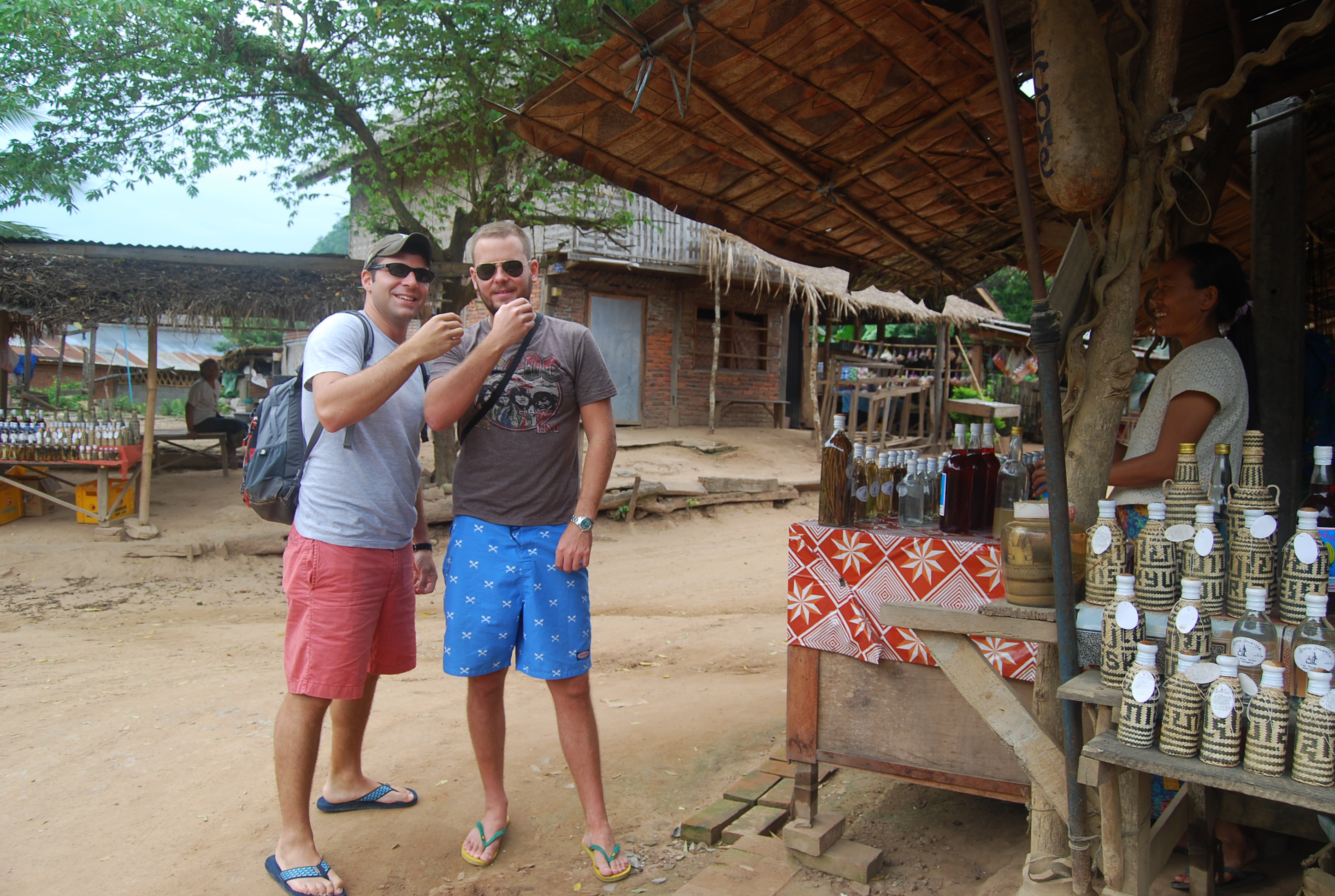
We made a quick stop at the town’s only ATM, which almost made me a millionaire — the exchange rate here is 8,500 kips to $1USD. Afterwards, we were off to the Pak Ou Caves, about 25 kilometers away. En route, Phet stopped at Son Hai, a small village known for its home-brewed hooch. Although it was about 10 a.m., we couldn’t turn down a taste of Lao rice wine/whiskey — especially since it was 11 p.m. back home! It didn’t top Johnny Walker but it had a bite (50% alcohol) and we bought a small bottle for later consumption.

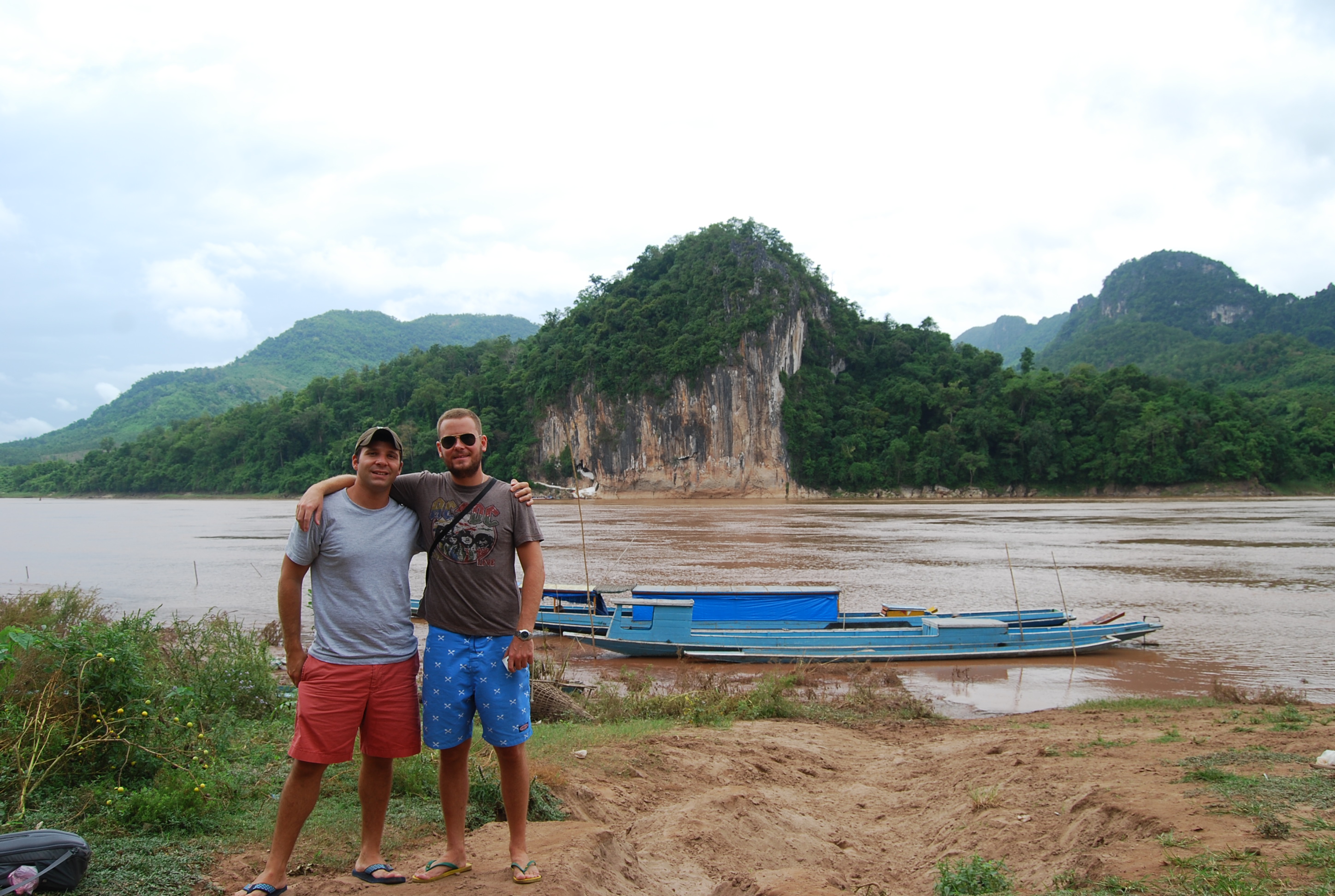
“We’re in the middle of nowhere right now,” Derek said as our tuk-tuk turned onto another dirt back-road. And he was right. I’ve traveled the world and have never felt this isolated while driving to the Pak Ou, two caves in the lower part of a limestone cliff. We snapped a photo before hiring a boat to take us across the Mekong. Our driver chugged a BeerLao, burped and we were off.

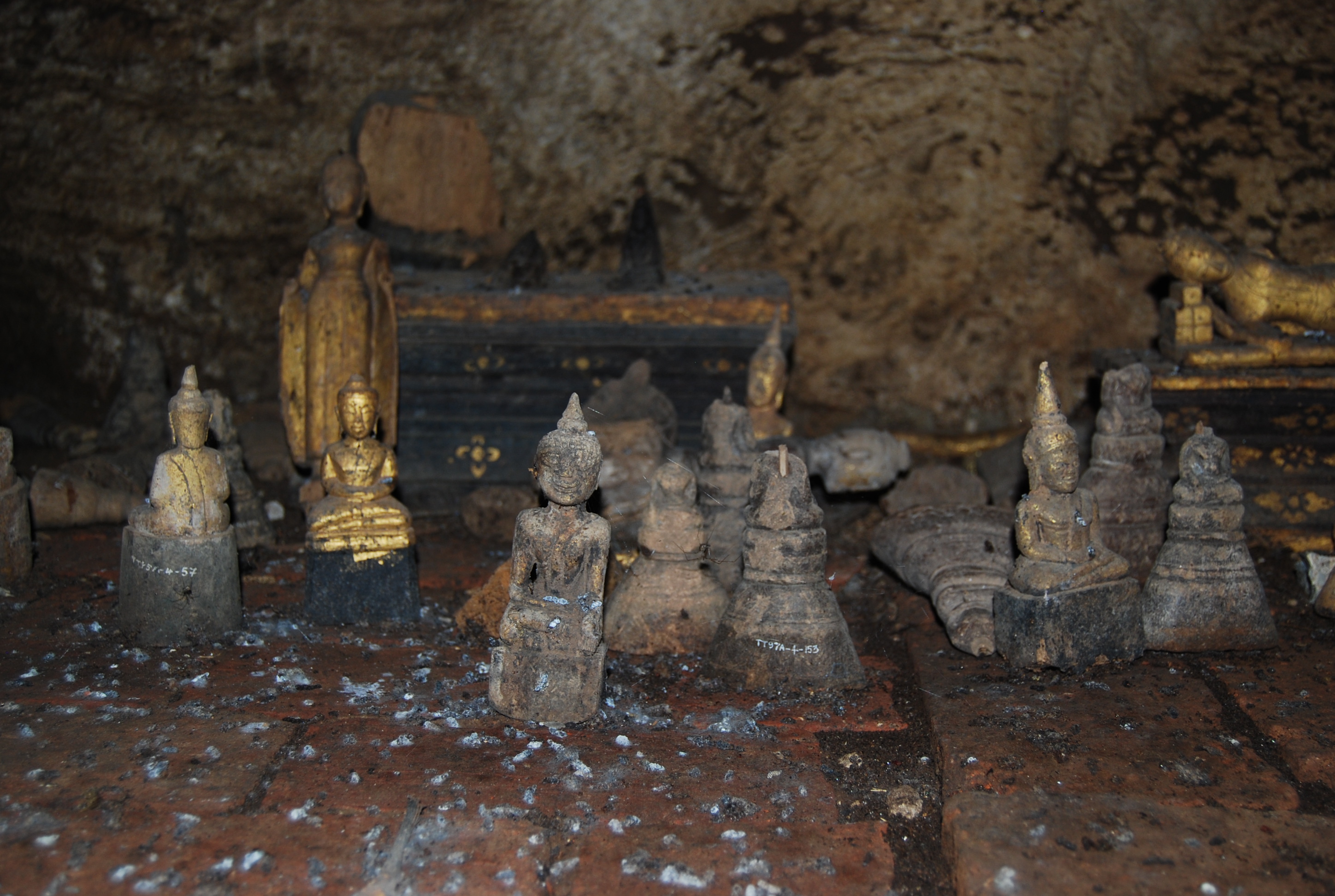
These caves are a religious shrine, where some 4,000 Buddha statues have come to die. They are big and small, some are wood, others metal, in various states of decay. It’s a solemn and peaceful spot overlooking the Mekong.

We hiked to the top cave and were assaulted by small children trying to sell us bananas, small birds in cages and crickets (no idea). One hit Derek with a stick before we cautiously walked into the pitch-black ether to see some of the oldest Buddhas.

On our way back onto the boat, a misstep almost landed me in the muddy Mekong. Luckily, the water only reached my knees and infection was kept at bay. Phet drove us back to the hotel for some lunch, where we changed for our afternoon activity, Tat Kuang Si.

Located about 30 kilometers south of town, this is a many-tiered waterfall that flows over limestone cliffs into cool turquoise pools. Jumping in was actually quite cold, we haven’t felt this chilly outside of our air conditioning in weeks, if not months. Here is the obligatory Vineyard Vines promotional catalog shot.

Afterwards, a Lao lady threw down a serious challenge for me to jump off a tree. Here’s to representing the U.S.A. Woot!

Our tuk-tuk returned us to the Apsara, where we rested up before dinner and hitting up the night market. Anticipating an early morning, we were tucked into bed shortly thereafter.

We have a winner

Day 70
Luang Prabang, Laos

It was a welcome sight to arrive at Siem Reap’s tiny airport this morning and see that our Vietnam Airlines flight to Laos would be aboard a jet, albeit a small one. Flying from deep in the jungle to deeper into the jungle, we feared a tiny propeller but instead got a Fokker 70 (whatever that is). The trip took about 90 minutes; for most of it, there was little to see besides mile after mile of thick foliage. We touched down on Luang Prabang’s short runway at around 2:30 p.m. and realized, holy cow, we were in Laos!

After buying a visa and collecting backpacks, our transfer was waiting to take us to the Apsara, what has been called Luang Prabang’s most chic hotel. It fits the bill, with an Asian décor, large and comfortable rooms and huge bathrooms. Walking to the town’s main drag, we passed monks in saffron robes and immediately felt the quiet and slow-paced way of life in Laos’ former capital. Luang Prabang is Unesco World Heritage listed, so trucks and buses are banned from the entire city; the multiethnic people here also lend to its relaxed pace.

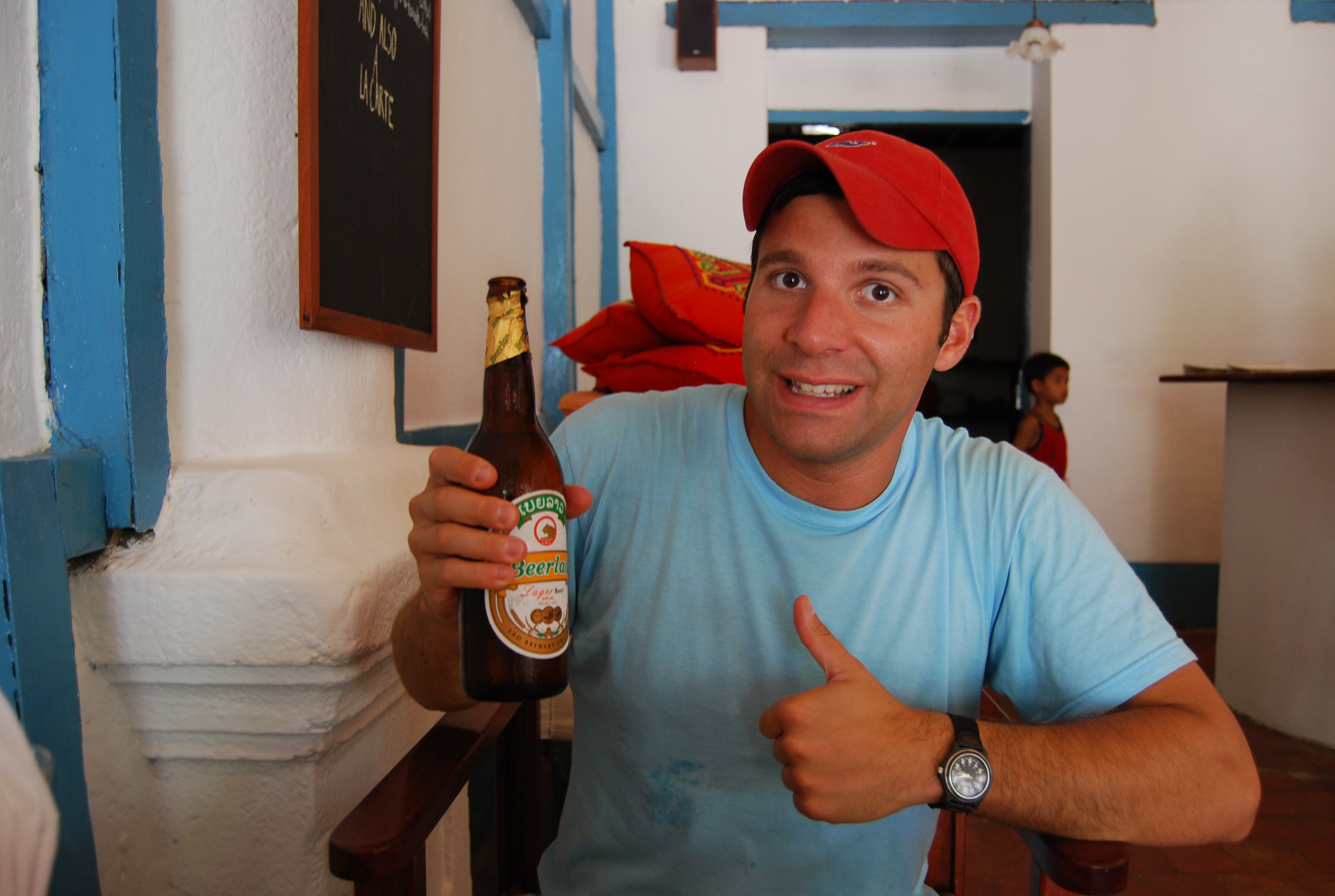
We popped into a French-owned café for sandwiches and ordered this nation’s acclaimed beverage, BeerLao (killer website). Most everyone I’ve told about coming to Laos has raved about this tonic, it is said to be the best beer in Southeast Asia. And you know what? We have a winner.

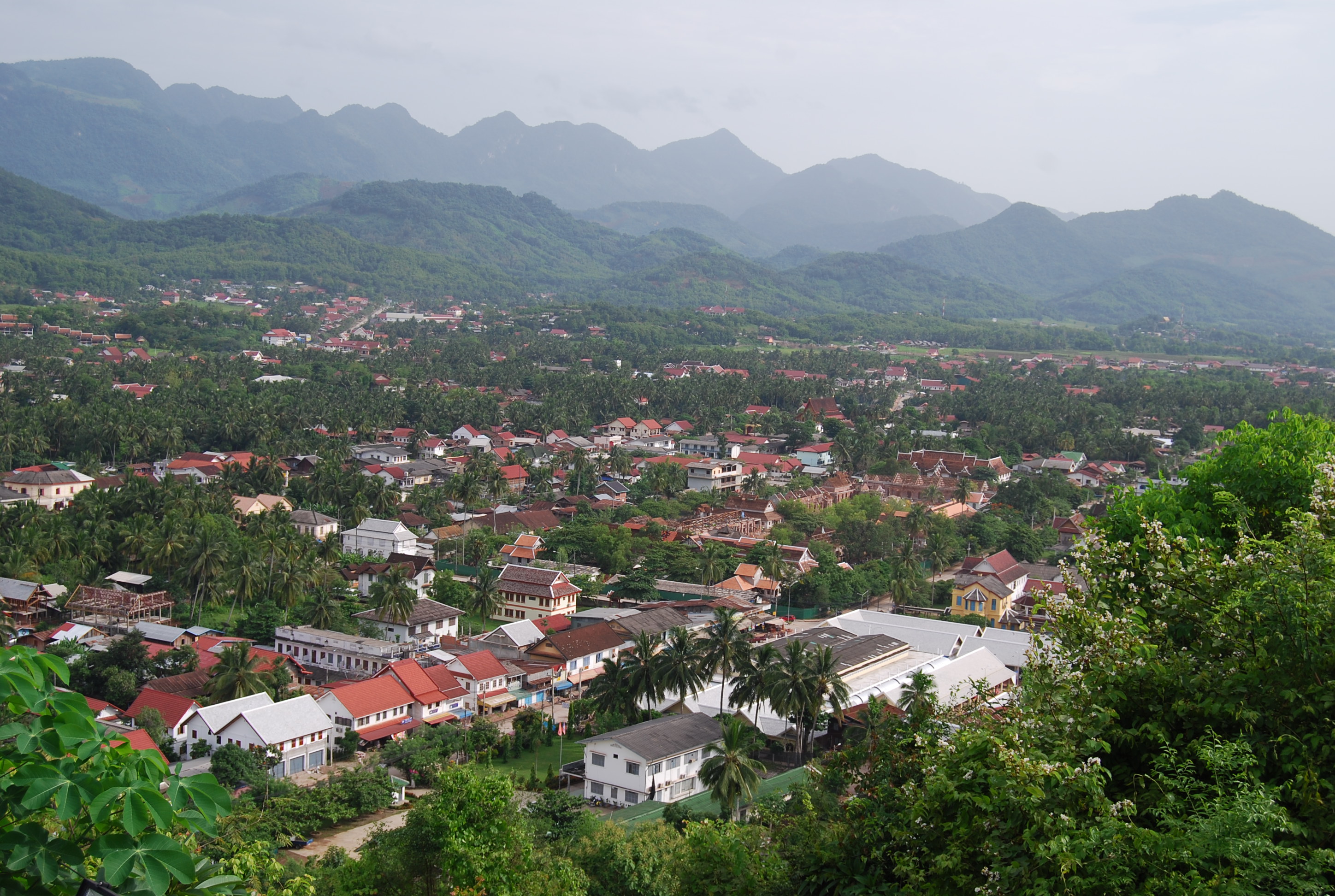
With hopes that the Brickskeller would give me my BeerLao fix back home, we slowly climbed the slopes of Phu Si to visit the temples at its peak. From there, we were afforded some great views of Luang Prabang, bordered on one side by the mighty Mekong River and on the other by a tributary, the Nam Khan.

As could be expected, there were also some giant Buddhas, reclining Buddhas and Buddha footprints in the hill’s many shrines.

Melting from the hike, we made our way back to the hotel to shower up and have some dinner. Luang Prabang isn’t known for its nightlife — in fact, there’s an 11:30 p.m. curfew — so we used the opportunity to catch up on some much needed sleep.

Putting it all in perspective

Day 69
Siem Reap, Cambodia

The FCC is a beautiful hotel and the dinner we had at Hotel de la Paix was one of the best I’ve had this entire trip. But $135USD rooms and $70USD prix-fix meals are not the norm in Siem Reap. This morning, we set out to see the real Cambodia, and it was an eye-opener unlike any other.

After a breakfast of toasted granola with a baked Nashi pear, house-made yogurt and a cup of Illy coffee, we met our driver for the short ride to Chong Khneas, a floating village about 20 minutes from Siem Reap that sits at the mouth of Tonlé Sap, the largest freshwater lake in Asia. Every year during the wet season, the Mekong River backs up and reverses it flow; as a result, Tonle Sap — or simply, Great Lake — floods, swelling from 2 meters deep and 2,500 sq kilometers to 10 meters deep and 13,000 sq kilometers.

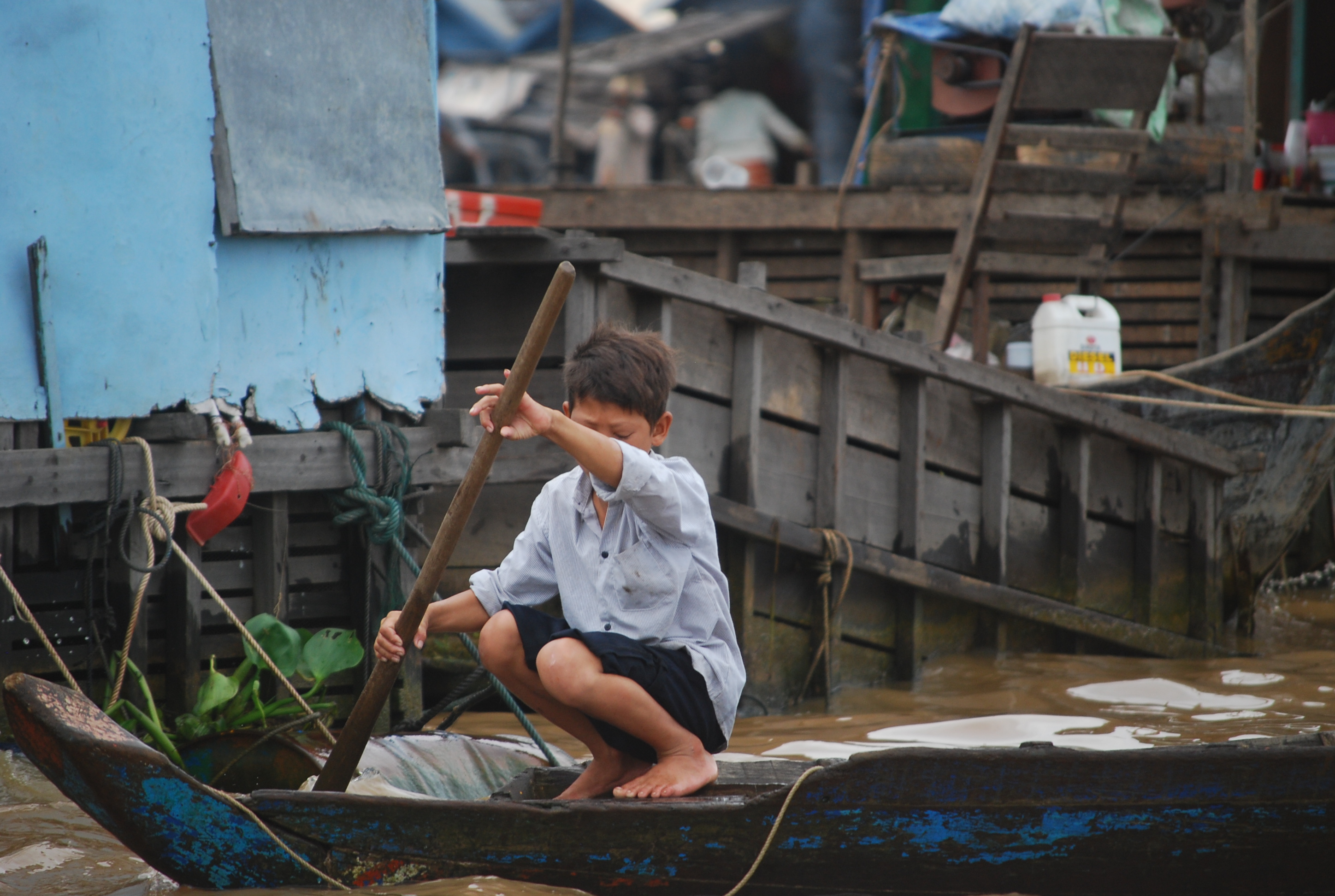
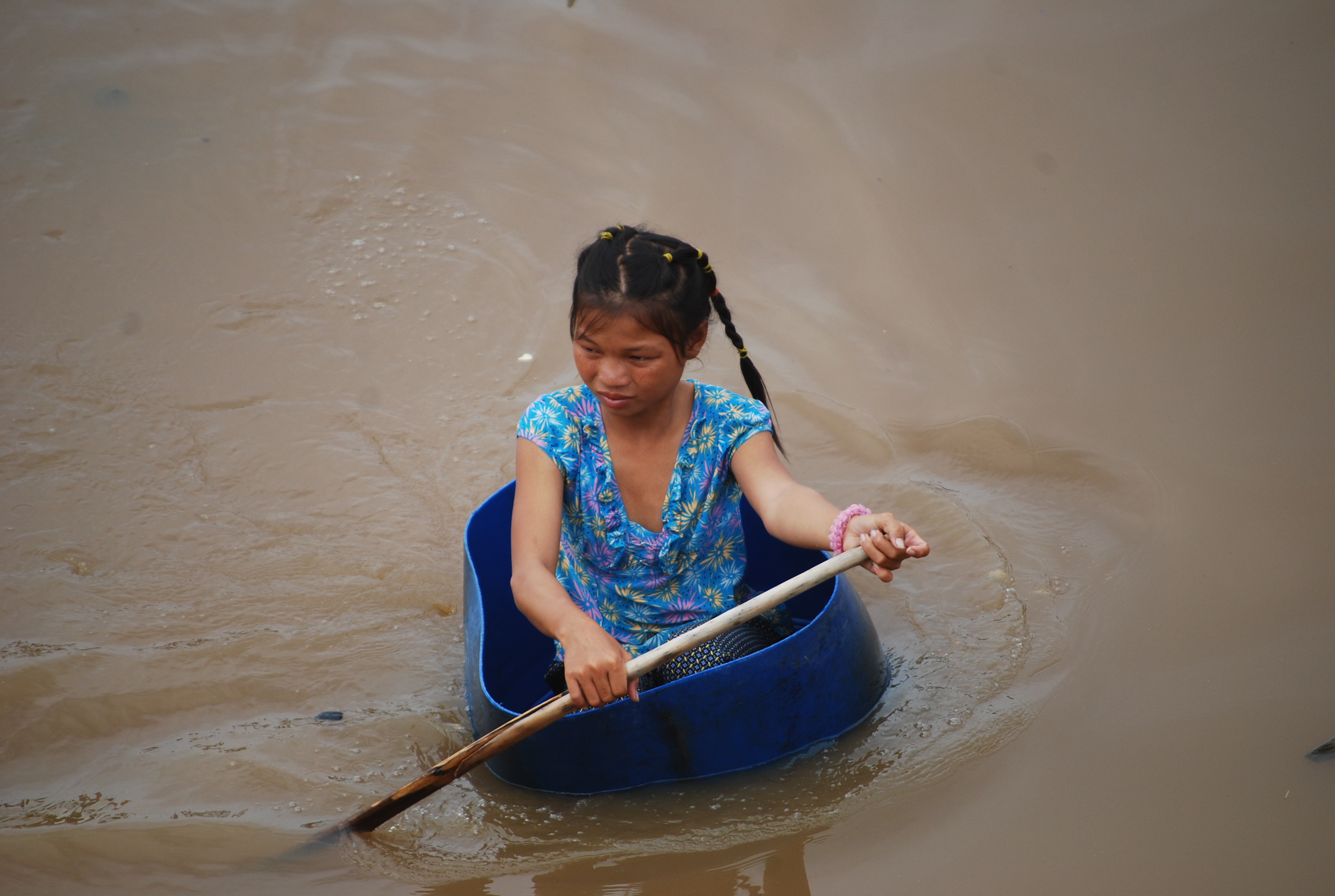
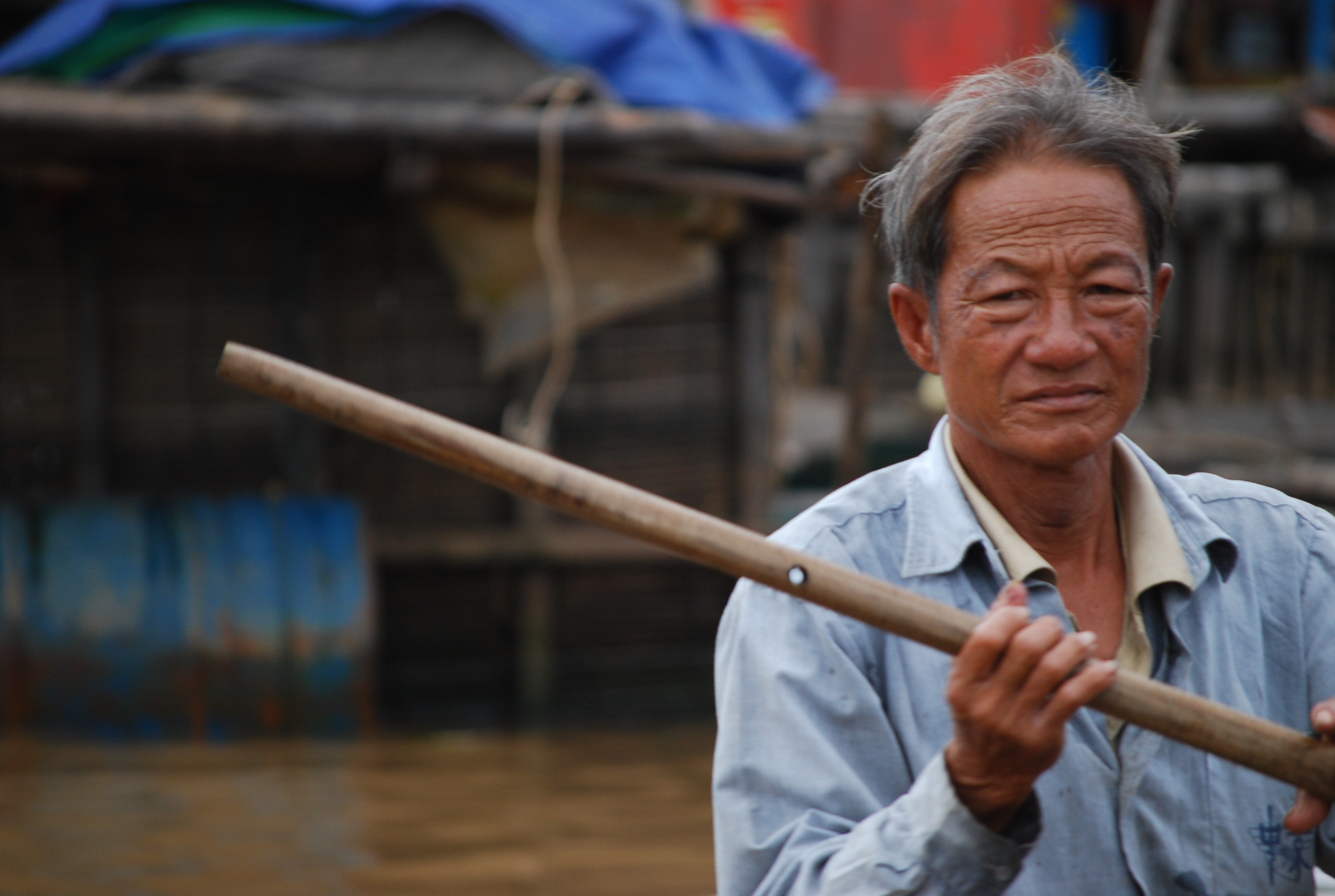
The people who live on the banks of this flood plain have adapted their lives accordingly: homes sit on stilts, although most everything — from schools to basketball courts to stores — have been placed on boats.

Cruising down the river and guided by a 17-year-old boy with broken English, we witnessed the daily life of the 300 families who call this area home.

There was a woman gutting a fish while a hungry cat looked on and a young girl carrying her infant sister. An older man swung in a hammock while his wife cleaned the dishes.

Watching boats of gawking tourists pass, it all felt a little voyeuristic. At the same time, it was fascinating to see how these Cambodians live, how little they have — and yet how much dignity and self-respect they maintain. These people are poor, but they do not beg. You can see in their eyes that they are proud of who they are.

A rain started falling and our guide told us that we had to return to the launch point as there was a possibility that our car might get stuck in the mud. Back inside the air conditioning, we passed smiling kids sitting in ramshackle huts who waved goodbye.

We were back at the hotel by 11 a.m. and realized that we likely could have spent just one full day here in Siem Reap — a morning at Angkor Wat and afternoon at Tonlé Sap. While we were tempted to switch our flight to Luang Prabang from tomorrow, the hassle didn’t seem worth it. So, after Andy left for Hoi Ann, we reentered the tourist bubble and got complimentary foot massages at the spa, had cheeseburgers for lunch and relaxed at the pool.

Still, it was hard to escape the images of poverty and squalor that we saw this morning. You never fully appreciate how much you have until you see the way in which much of the world lives.

The magnificent temples of Angkor

Day 68
Siem Reap, Cambodia

With some of the world’s most significant sights — the Great Wall of China, the Aya Sofya and the Pyramids of Giza — already under my belt, my expectations for the Temples of Angkor, not only the symbol of Cambodia but also what many consider the eighth wonder of the world, were high. But our sunrise tour of this astounding architectural feat did not disappoint.

We met our guide a little after 5 a.m. and made the short drive to Angkor Wat, commissioned by the powerful King Suryavarman II in the early 12th century as the holy capital city. The overcast skies didn’t take away from the dramatic picture of this temple reflecting off its moat.

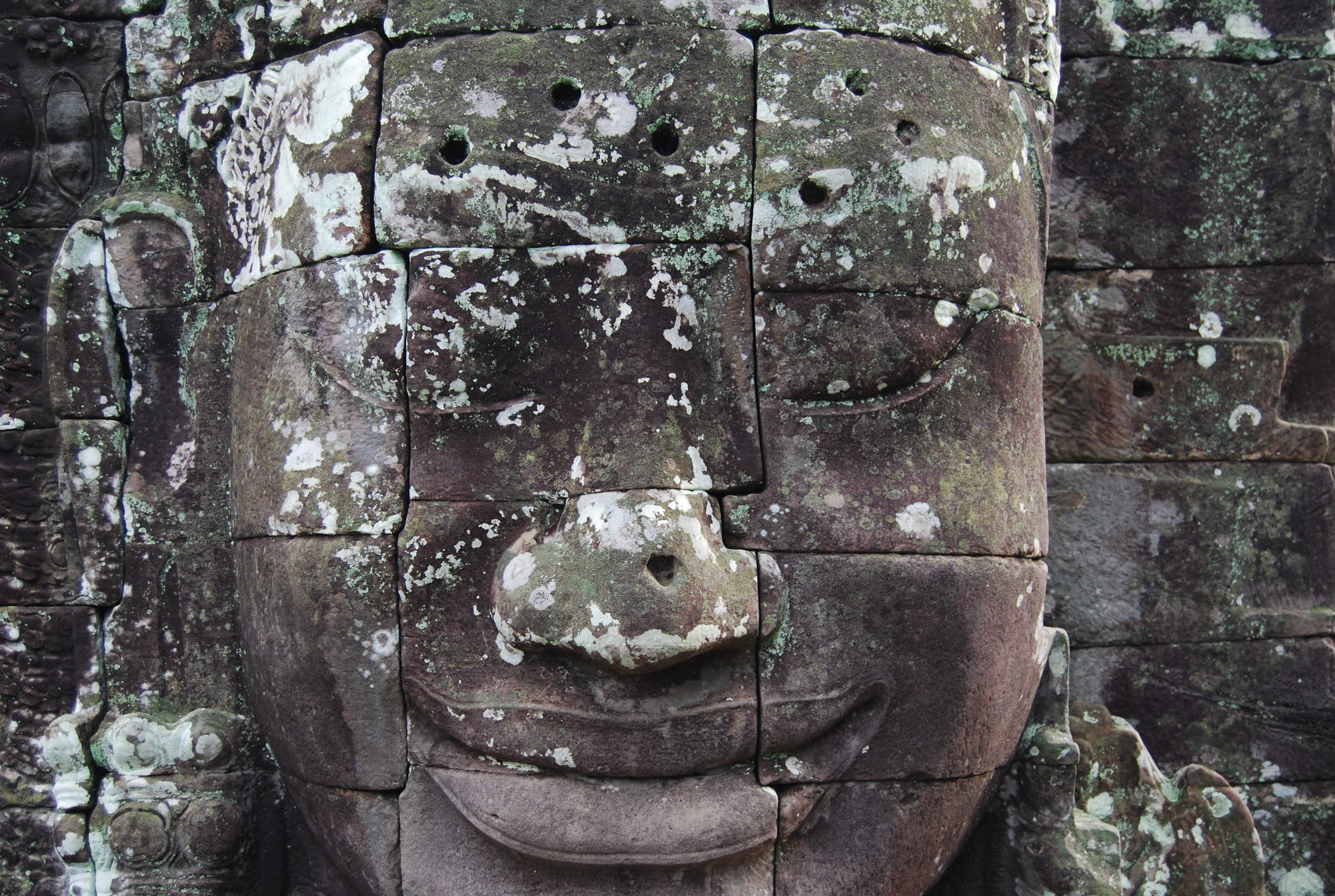
Our next stop was Angkor Thom, a walled compound built by King Jayavarman VII (1181 – 1219) as his royal palace. Not having to battle the crowds, we found the Bayon, the King’s state temple, even more impressive than Angkor Wat. There are 54 towers here with 216 carved faces.

We walked past the Terrace of Elephants, an intricately carved wall, en route to Ta Keow, a half-completed 10th century temple that was abandoned after it was struck by lighting. We climbed the well-worn stairs up a very steep incline and then slowly made our way back down.

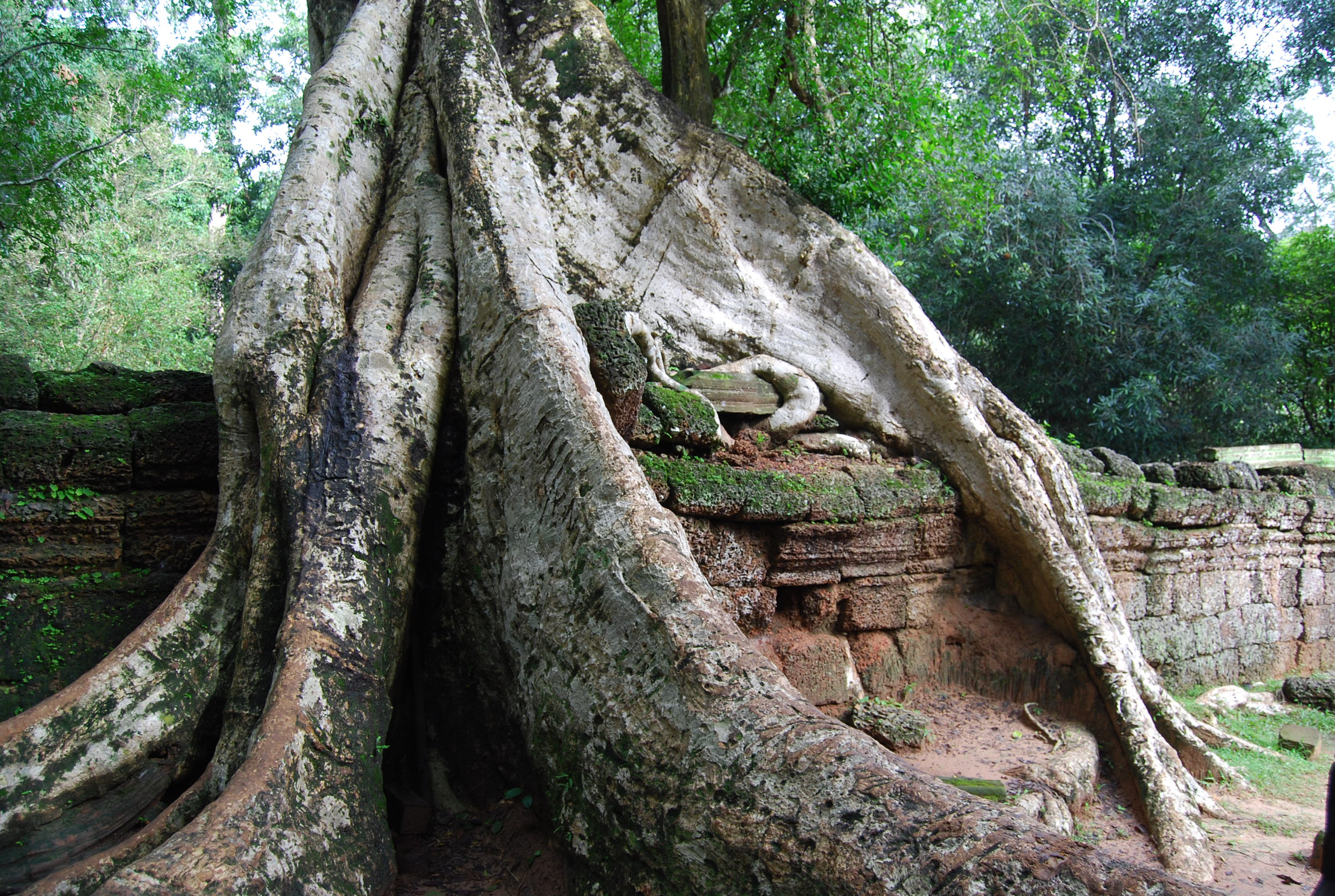
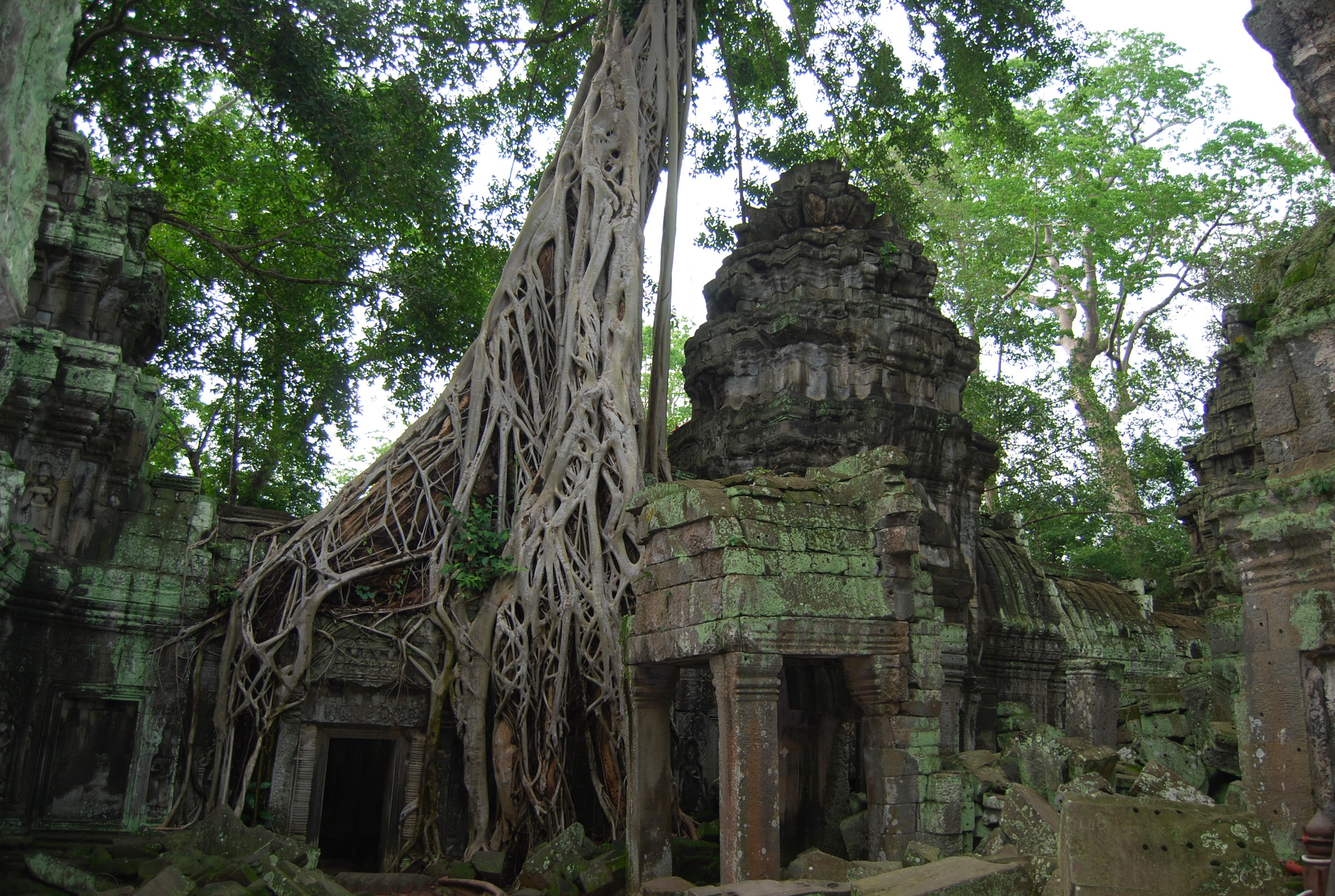
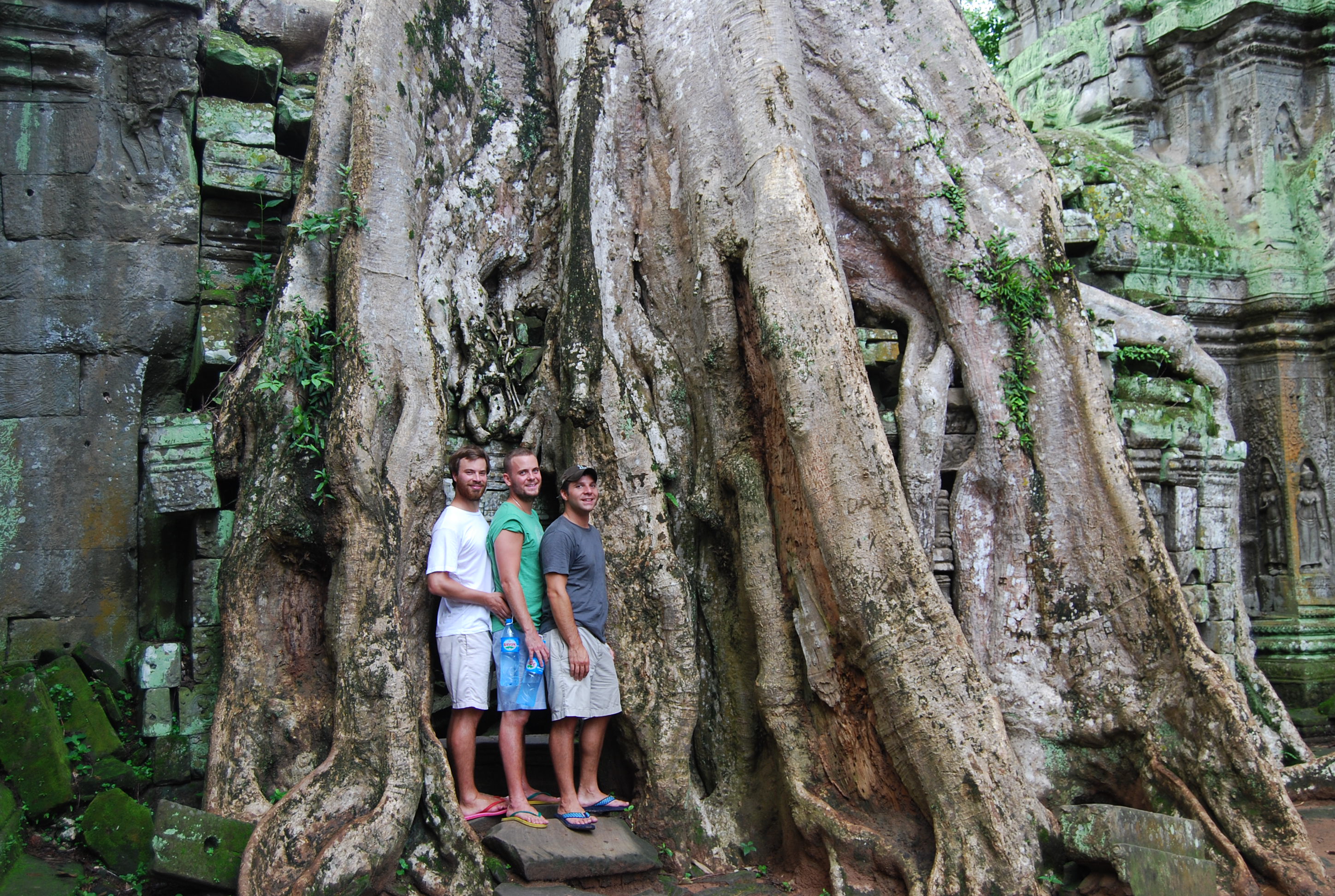
Ta Prohm was coined the Tomb Raider temple after Angelina filmed a portion of her movie of the same name here. Built in the 12th century, it has been taken hostage by tremendous spung trees whose gigantic roots grasp its pillars and walls.

For us, it was the most dramatic and amazing spot, and therefore warranted an obligatory prom photo.

By 11 a.m., the sun had burned off the morning fog and our shirts were drenched. We had the car bring us back to the hotel where we ordered a couple of club sandwiches for lunch, napped and hung out at the pool.

Later, we made our way back into town to visit the Psar Chaa, an old market, as well as Psar Kandal, the central market. Both had goods for sale that ran the gamut — from mini Angkor Wats to live eels. We passed on both before having some dinner at our favorite spot on Pub Street, the Red Piano. Our motivation for a post-dinner beer was sapped after a rain started, so we grabbed a tuk-tuk and headed back for bed.

In the home stretch: country #12

Day 67
Siem Reap, Cambodia

Appropriately enough, there was a light rain falling as my 14th flight (Silk Air 633) on this trip around the world passed over flooded fields on its approach to Siem Reap. It has been about two weeks since my last flight, and besides the captain’s warning that visibility on the ground was limited, the two-hour ride from Singapore’s gleaming Changi airport was uneventful.

We touched down at 3:55 p.m. local time, having gained an hour en route. As most passengers queued up to purchase their visa, I’d bought an e-Visa online (recommended) and breezed through immigration, where my transfer was waiting.

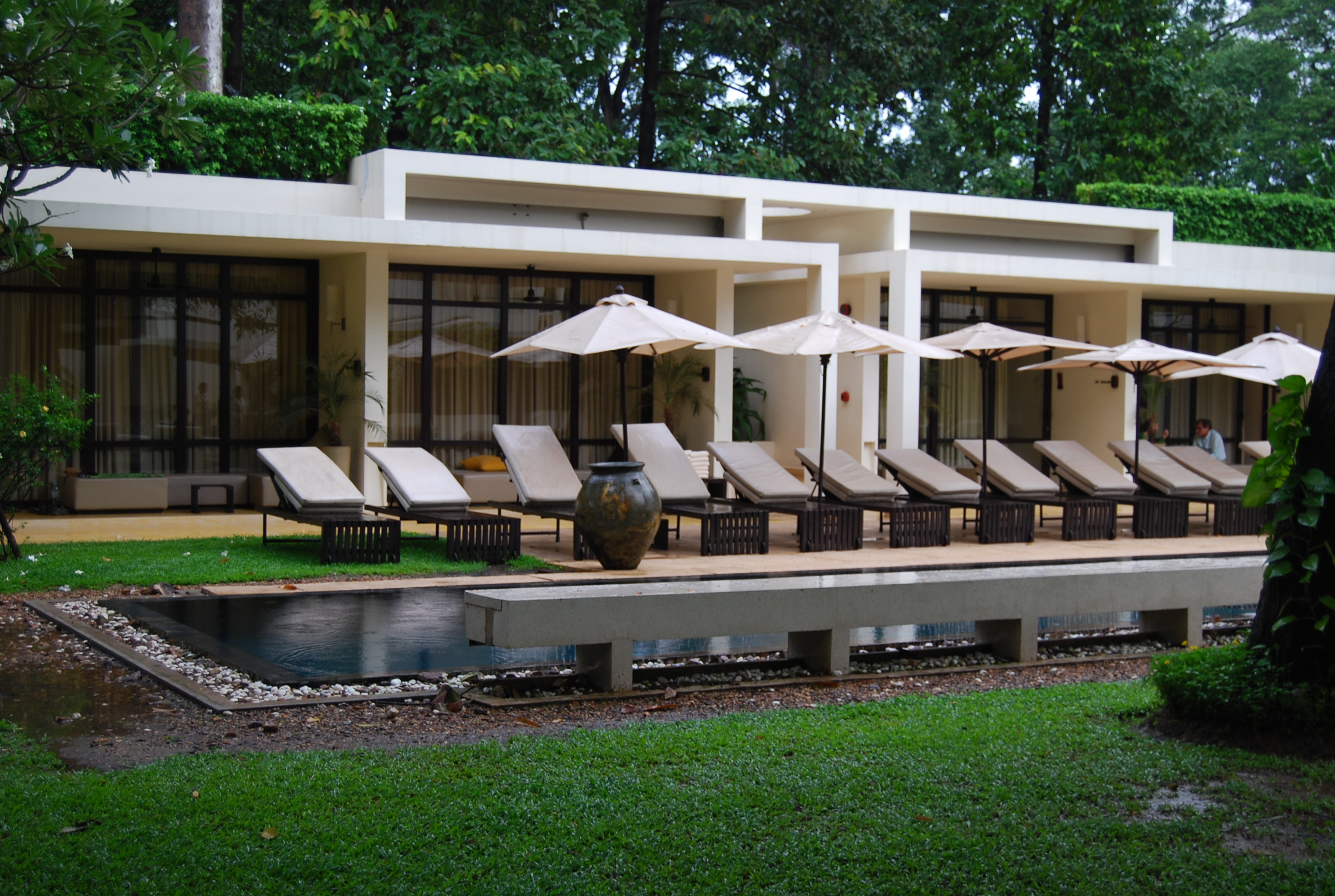
We’re staying at the FCC Angkor, a luxurious art deco boutique hotel overlooking the Siem Reap River, with fantastic and courteous service. After three weeks of complete garbage, can you imagine my happiness after arriving and seeing a rain shower and infinity-edge pool? Finally.

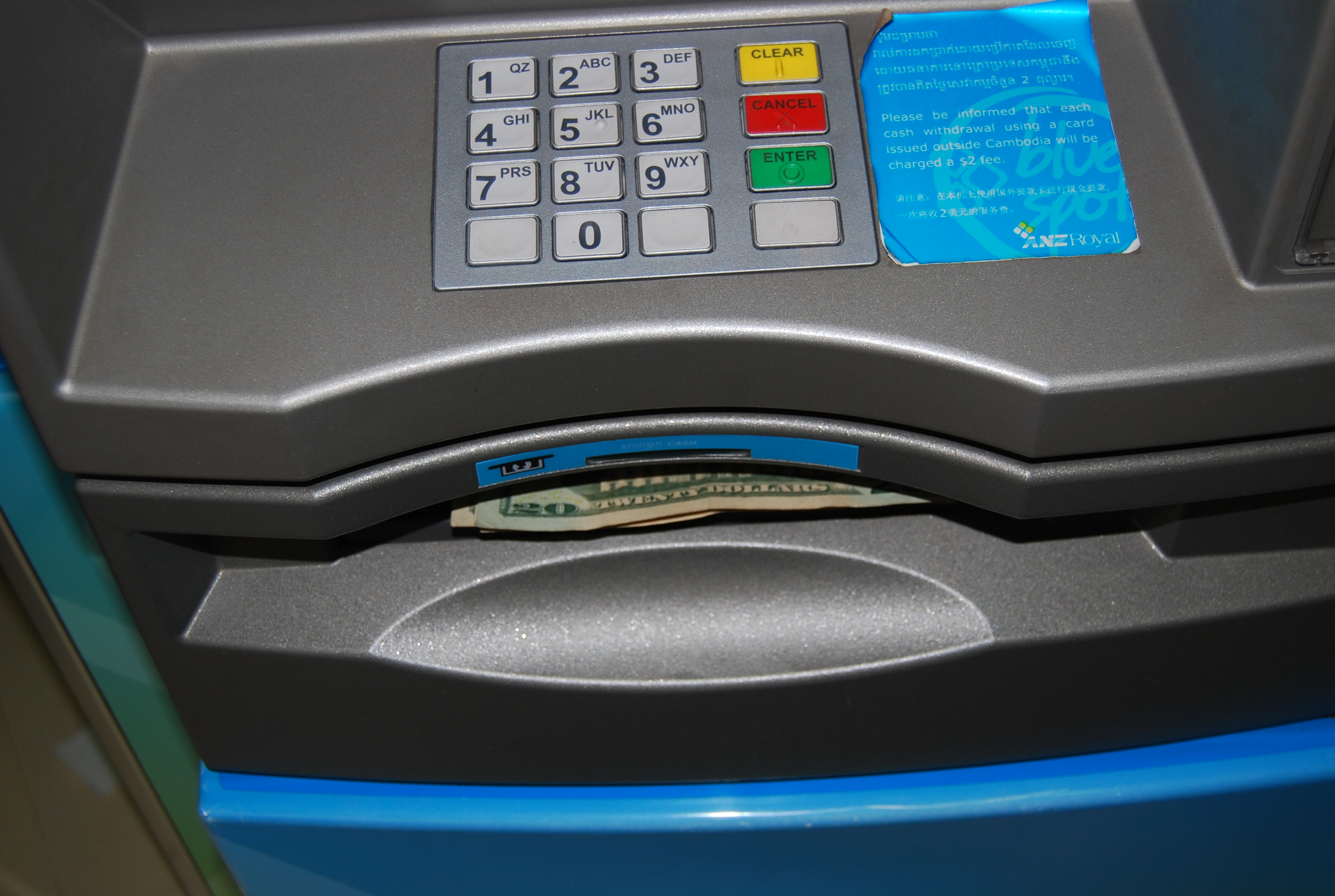
Derek and Andy got here from Bangkok about a half hour later and we caught up in our room (#9, “Aloe Vera”) before heading into town. Siem Reap feels like one big dollar store — everything, from rides in a tuk-tuk to a bottle of water or a massage, is a buck. With a 4,000 riel to $1USD exchange rate, the U.S. dollar is basically the official currency here; even the ATM’s spit them out!

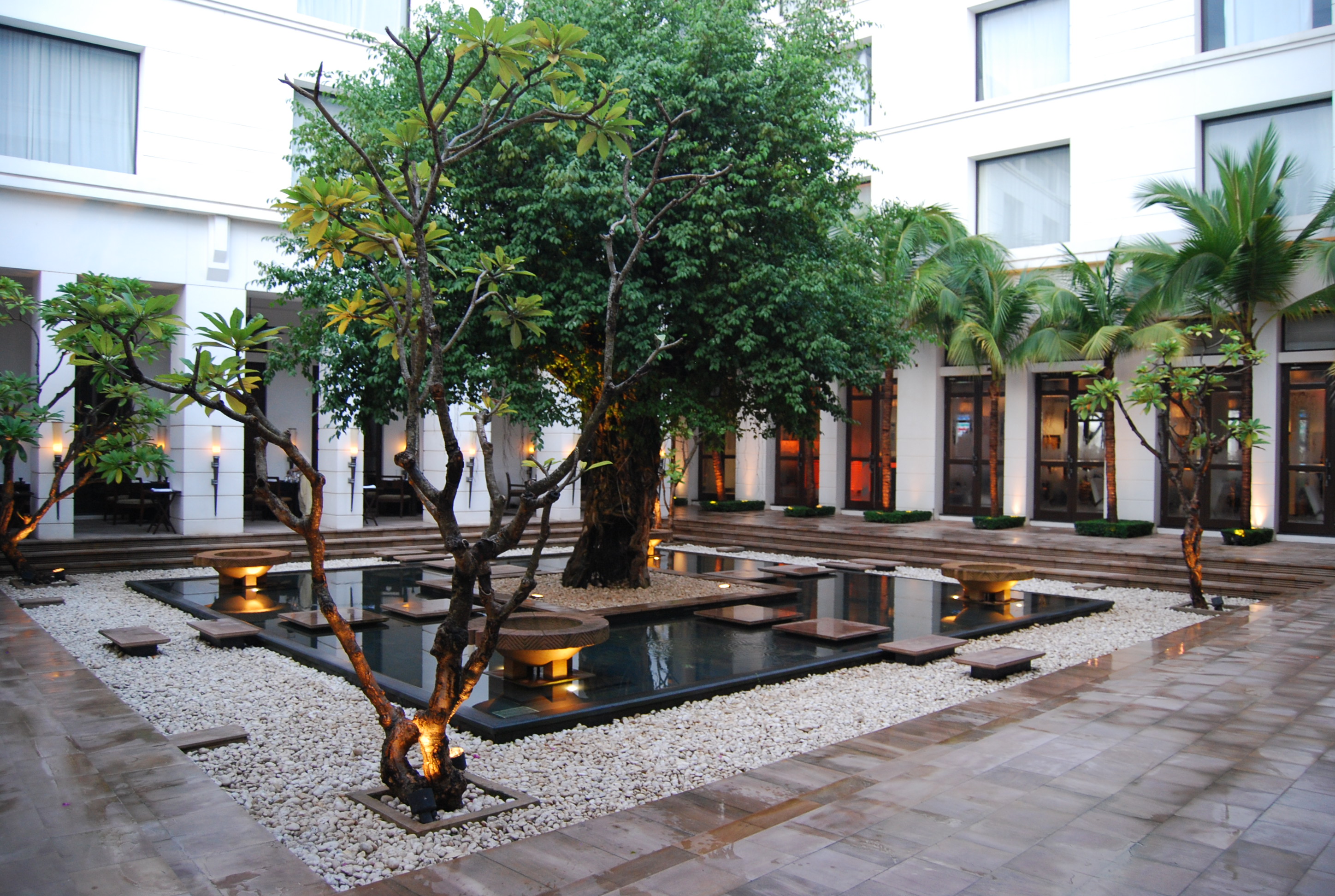
While walking around, we spotted the Hotel de la Paix, a brand-new hotel that Andy had read about. It was a super trendy spot and we returned later for dinner at Meric, whose 7-course set traditional Khmer menu and wine pairing was matched only by the setting (served on a swinging bed overlooking a beautiful courtyard).

Beat from a long day of travel and dreading our 4:45 a.m. wake up call, we grabbed a tuk-tuk back to the hotel and hit the sack.

To be independent again

Day 66
Singapore

My final of three organized tours ended last night, so now seems like a good time to reflect on it. I’m a pretty independent traveler who tends to shun groups — with that said, when visiting countries like Egypt (where transportation logistics are complicated) or China (where no one speaks English), there isn’t much choice in the matter. There weren’t similar challenges on this leg of the trip, and if doing it over, I’d probably have done it alone.

While my tour guides in Egypt and China provided valuable and historical insight, my tour leader for the “Roam Malaysia” trip simply arranged accommodation and transfers, something I’d have felt more than capable of handling on my own. And doing so would have given me more freedom — so, no 1-star hotels or 24-hours of continuous travel. With that said, the fellow travelers I’ve met have been really solid and made the experience pretty enjoyable.

A few of us had breakfast at the hotel before heading our separate ways. This was my second, and final, day in Singapore, so there were a couple of other sights to check off my list. On the way down to the MRT, a sign caught my attention and got me thinking about this country.
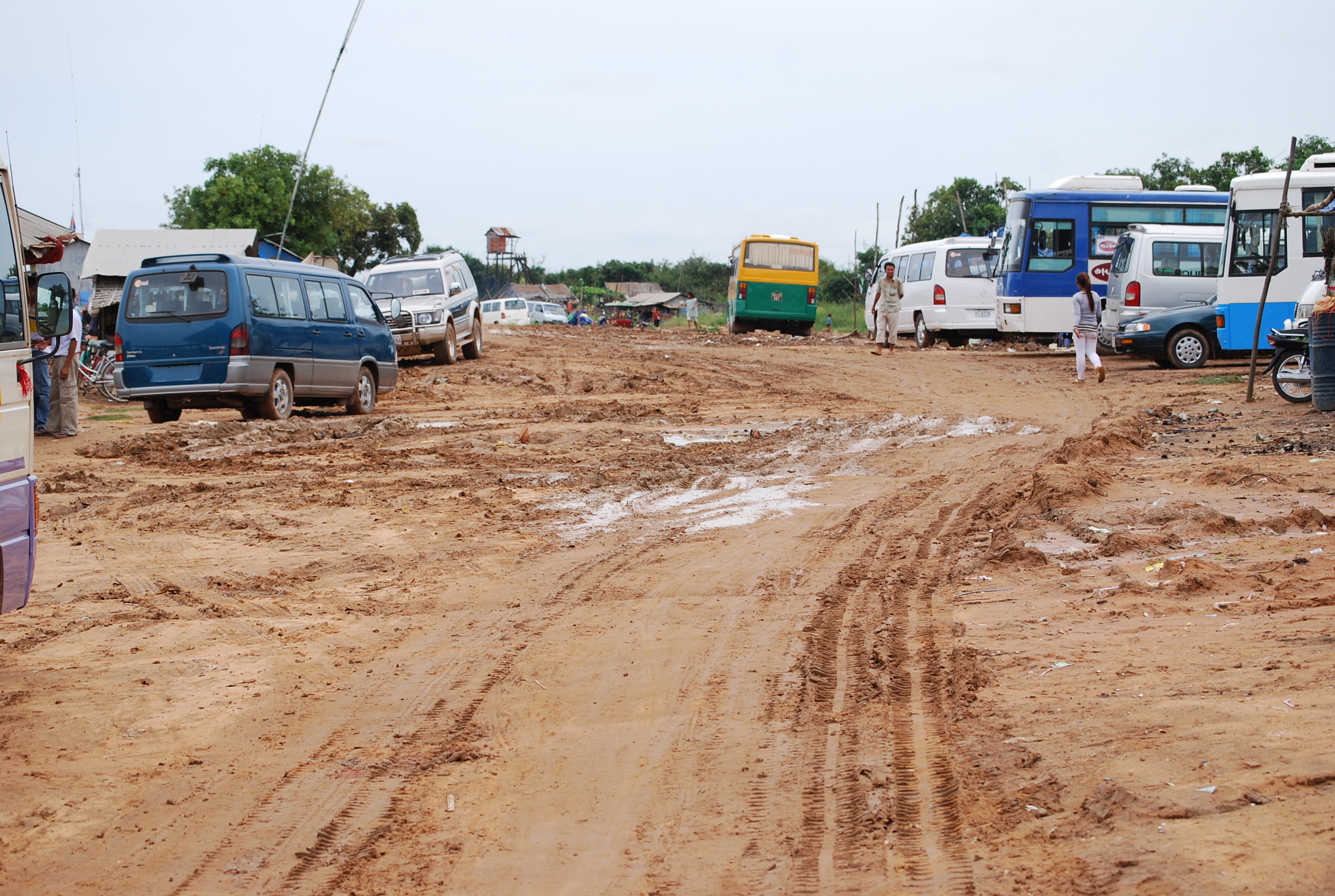
While there does to be a minor sense of paranoia instilled here, in my experience, this is not the “sterile utopia” some have spoken of. I’ve actually found Singapore to be a nice break from the rest of Asia — English seems like the first-language, the streets are immaculate and, with so little crime, you can let your guard down a little bit (while, of course, staying vigilant).

The Asian Civilizations Museum is located in a beautiful building along the Singapore River. It had some very impressive galleries on the development of trade, religion and technology in Southeast Asia. A special exhibit on Vietnam got me pumped for my upcoming visit there while interactive displays kept me interested for a couple of hours.

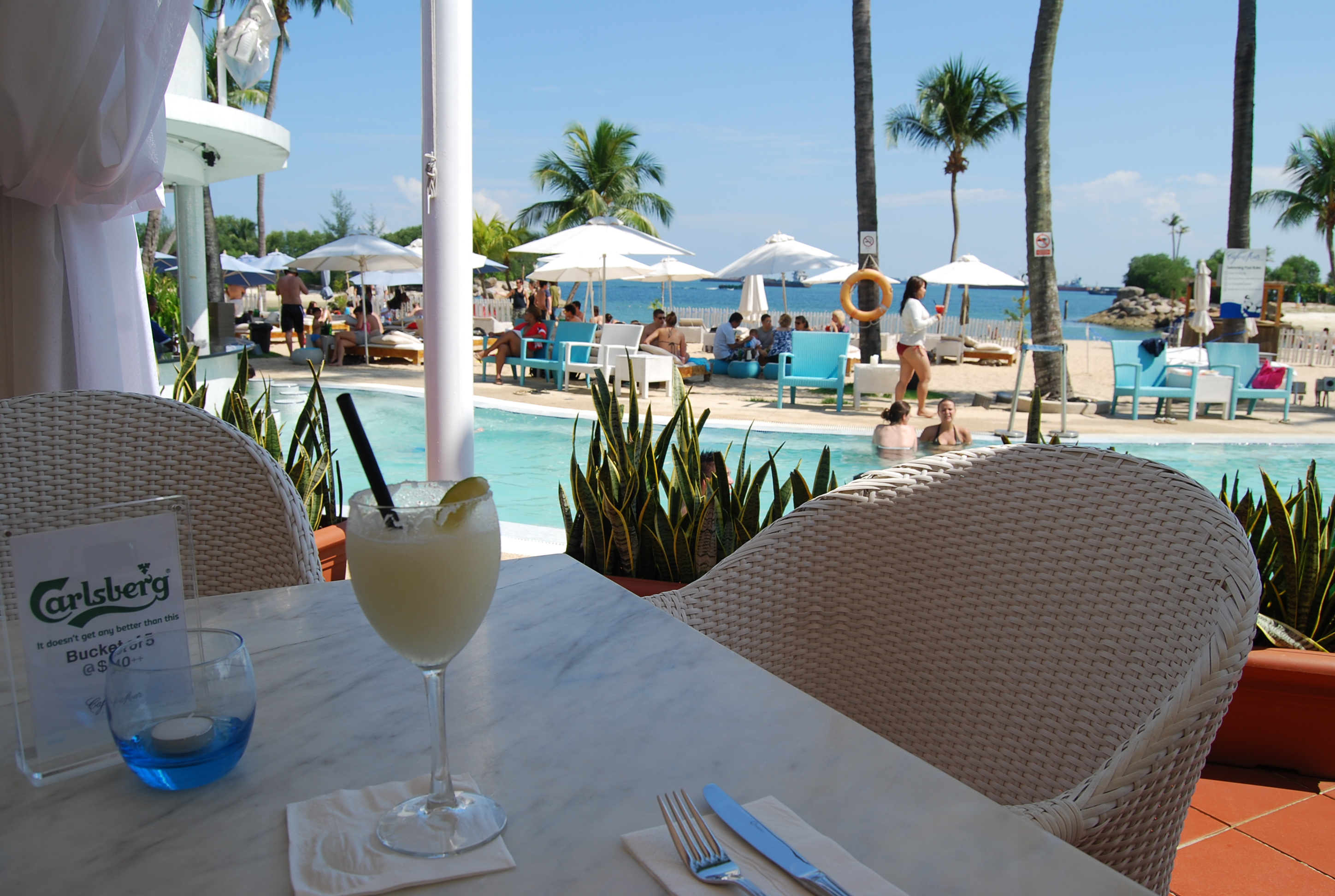
After succumbing to a couple of purchases in the museum store, it was off to Sentosa Island, Singapore’s “resort playground.” With imported sand and fake boulders, it’s a little Disney-esque, but is said to have the country’s finest beaches. The Sentosa Express brought me right to Siloso Beach, from which the thumping music of Café del Mar could be heard. This is a place trying desperately to be in South Beach, and while it fails miserably, it did serve up a mean frozen margarita as well as a salt water pool — a far better option for cooling off than the murky, and container ship-filled, Straits of Singapore.
Two other travelers from my G.A.P trip were still around, so we got dinner at Lau Pa Sat, a food hawker market that dates back 150 years. Some soup lady called me over and concocted a dumpling, noodle, bok choy and anchovy bowl of deliciousness.

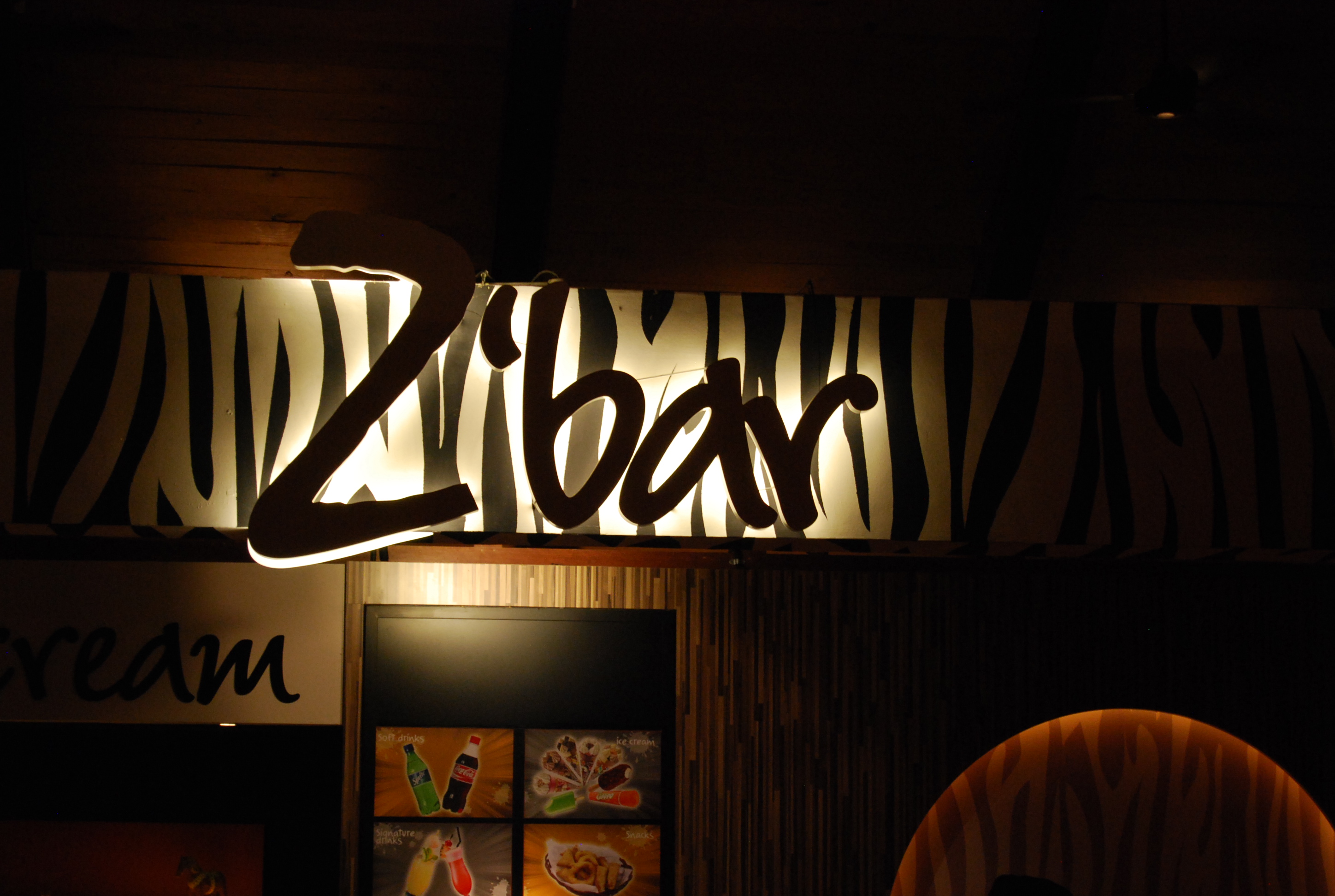
Afterwards, we took MRT and then a taxi (whose driver was falling asleep) to the Night Safari, purportedly the world’s first and only park of its kind. There are over 1,000 nocturnal animals there illuminated in a shadowy half-light — making humans largely oblivious to them. Highlights from a tram ride included an elephant with a huge tusk, lions sleeping on their backs, baby otters playing and a pair of very impressive leopards. Unfortunately, no pictures were possible, except of this bar named after me.

We headed back to the hotel, packed and then took a dose of Malarone, all in anticipation of tomorrow’s flight to Cambodia.