Introducing the Family Tree

Chapel Hill, North Carolina

As a Second Year student planning on starting a business, I’ve started to shift my academic focus at Kenan-Flagler toward those classes that will directly provide me with the tools necessary to successfully do so. One such class I’m taking now is an Entrepreneurship course offering, Innovation & Product Development, taught by Prof. Barry Bayus.

Throughout the quarter, Barry has walked us through the new product development process, providing best practices on conducting market research, identifying voice of the consumer, translating needs into specifications, brainstorming ideas and designing new products.

Concurrently, we have been working in small teams on an innovation project for mobile phone giant Nokia. The project has allowed students to directly apply all that we are learning in the classroom to a real business case.

My team has developed a product called the Family Tree. It’s a mobile phone docking unit, targeted at seniors, that integrates and simplifies communication and printing capabilities. Here’s the pitch that we developed and just sent to Finland for review by company executives.

With luck, look for the Family Tree on store shelves by next spring!

Or at least we hope so.

UPDATE: Here are the other team entries to see how we stacked up.

A walk on the High Line

New York, New York

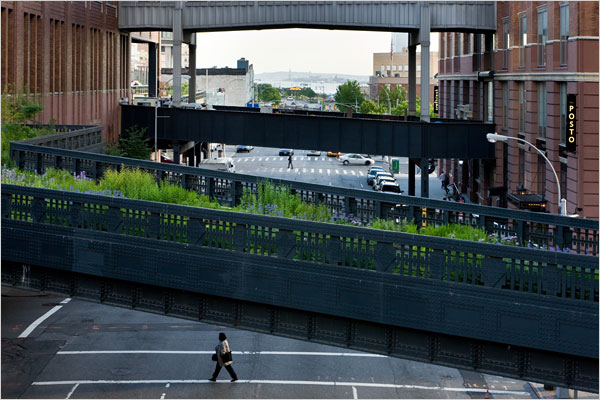
I’m always fascinated by how innovative designers and planners are able to redevelop aging buildings and urban structures into livable spaces. For example, rundown warehouses smartly converted into modern lofts. Perhaps the most recent and well-publicized development — at least in the Big Apple — has been the High Line, which opened a few months ago.

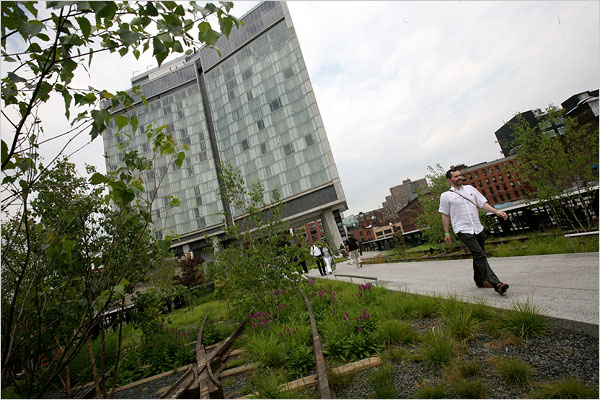
A former elevated freight railroad on the West Side built in the 1930s, the 1.5 mile section of tracks stood abandoned and unused for years. Then, in 2004, with $50 million of government support, the High Line was reclaimed. For five years, tracks were removed, pebble-dash concrete walkways were built and native trees, grasses and shrubs were planted. And then in June, the first section was revealed.

high1

high10

lineslide13

Benches with views of the Hudson River and the urban landscape have been installed. And Andre Balazs straddled the chic Standard Hotel over the High Line at West 14th Street.

lineslide5

high6

Suddenly, a space neglected for years was transformed into a hub of outdoor activity.

Only in New York.

Taste of Perilla

New York, New York

As fans of Top Chef, we are often left wondering what becomes of each season’s winner. With their much publicized editorial feature in Food & Wine, the appearance in Aspen and cash from Glad, what have Harold, Ilan, Hung, Stephanie and Hosea actually gone on to do?

Last night, we got a chance to see and taste with dinner at Perilla, the West Village restaurant — named after the tangy, mint-related herb that the Japanese call shiso — opened by the inaugural Top Chef, Harold Dieterle, following his win and subsequent celebrity in 2007.

2526688808_51e7982f3e

Inside the skinny New American restaurant, diners sit at zebra wood tables and red leather banquettes lit by Tolomeo chandeliers. Dieterle designed the place as a neighborhood spot but judging by the crowds — and the fact that a Saturday night reservation is recommended three weeks in advance — it’s clear that Perilla continue to benefit from the stardom of its chef.

dining_bars_perilla01_grid_3

We arrived on Jones Street at 8:45 p.m. and were shown to our table near the back. After ordering a reasonably-priced bottle of Cava Brut, we decided to split Dieterle’s signature dish: spicy duck meatballs with mint cavatelli, water spinach & quail egg. It did not disappoint, as the egg added to the richness of the sauce and balanced the spice of the meatballs.

3026316205_217123df8a_o

I’m not one to typically order chicken while out to dinner but Perilla’s roasted speck-wrapped organic chicken — served with salsify, asian pear, walnuts, tatsoi & pomegranate molasses — was delicious. The smoky speck (basically a German prosciutto) went well with the sweet molasses; and the crunch of the bed of walnuts added an interesting texture.

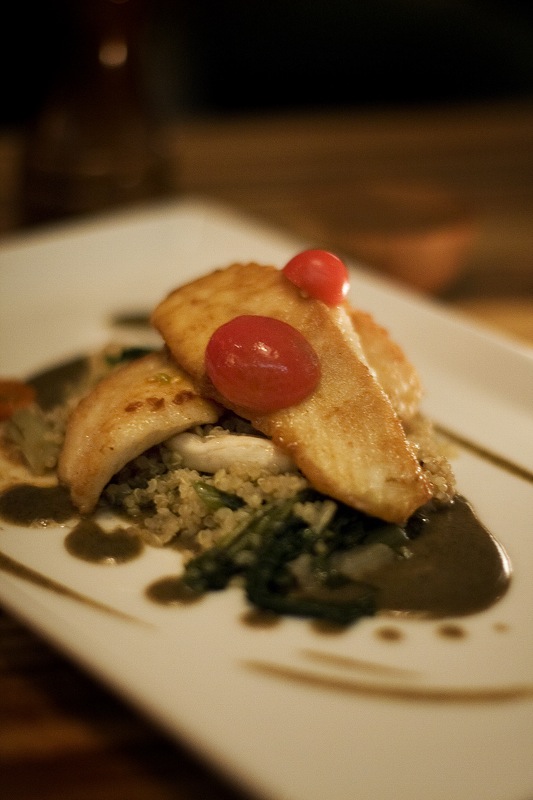
Charlotte’s sauteed trigger fish was also a hit. Served with heirloom tomatoes, quinoa, wood ears, sweet & sour eggplant-basil sauce, the John Dory-like fish was cooked perfectly.

3026316305_94dfab1c8d_o

For dessert, we couldn’t resist s’mores, an amazing reinterpretation of a campfire classic. The chocolate bar was replaced by a dark mousse and topped with toasted marshmallow & crispy graham cracker. As if that wasn’t decadent enough, there was also a scoop of chocolate gelato.

dscf43281

Our server was friendly, attentive yet non-obtrusive. And we really enjoyed the lively atmosphere which was buzzing but not deafening.

So, what do Top Chefs do in their post-reality television lives?

If they’re anything like Dieterle, they open pretty darn good restaurants.

Inside the Harpoon Brewery

Boston, Massachusetts

It sounds like every MBA’s dream.

After a boozy summer tour through Europe, spend the second year of business school not sitting with recruiters but writing a business plan to launch a brewery. Obtain a liquor license, hire a couple of friends and start what will become the single largest craft brewery in New England.

Dream? Make that a reality for the founders of Harpoon. Twenty years later, their brewery continues to operate full-tilt at the same waterfront location in downtown Boston. A big fan of their beers, including the flagship IPA, we stopped by today for a tour and $5 tasting.

An energetic guide — your typical bearded, kind of hippie beer enthusiast — explained the brewing process which wasn’t nearly as complicated as one would think. In fact, there are only four ingredients in beer: water, barley, hops and yeast. But it’s the recipe (that is, how the ingredients are mixed) that gives beer its unique flavor.

Harpoon doesn’t typically brew on the weekends but a flood earlier in the week had set back production. So, we were able to watch beer go through the whole process, from boiling water in huge aluminum vats to the final step of bottling into kegs.

dsc_0937

dsc_0937

dsc_0937

dsc_0937

At the tour’s conclusion, we got to the matter at hand: the tasting.

A bell rang and the taps opened as we sampled the IPA, seasonal, ciders, UFOs and premium 100 Barrel and Leviathan brands. The UFO White was one of my favorites — it’s brewed with orange peels and had this crisp spiced wheat beer flavor.

dsc_0937

dsc_0937

After thirty minutes, the bell rang again and the taps closed off.

Walking back to the parking lot, it was hard not to start thinking of a business plan.