Stranded in Solitaire

Swakopmund, Namibia

Today was proof that sometimes travel can be anything but enjoyable. Indeed, it can be rife with delays, frustration and a complete sense of helplessness.

Let’s start at the beginning.

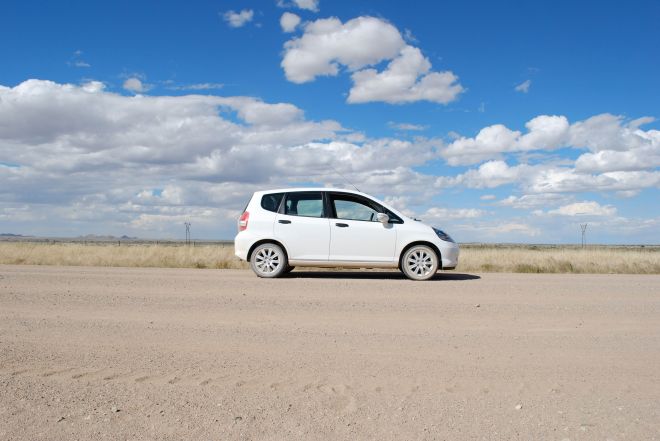
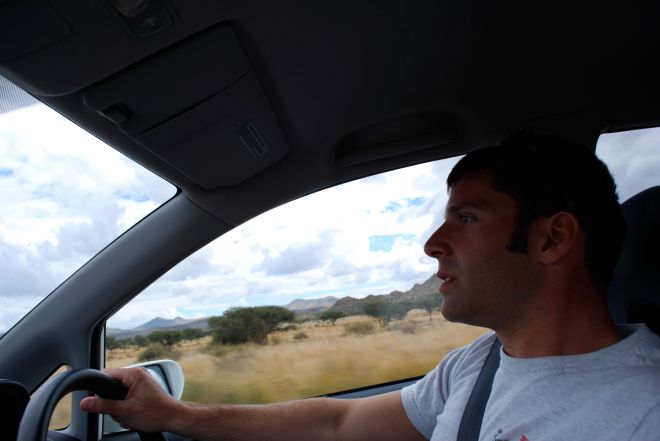
My journey from Sesriem began at 7:30 a.m. this morning. After breakfast, I loaded up the sporty Honda Jazz and set out for my second Namibian destination: Swakopmund, a seaside town on the Atlantic Ocean, about a 5 hour drive from here.

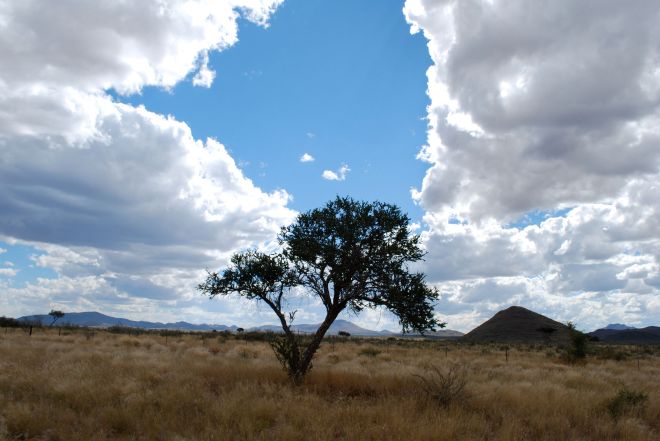
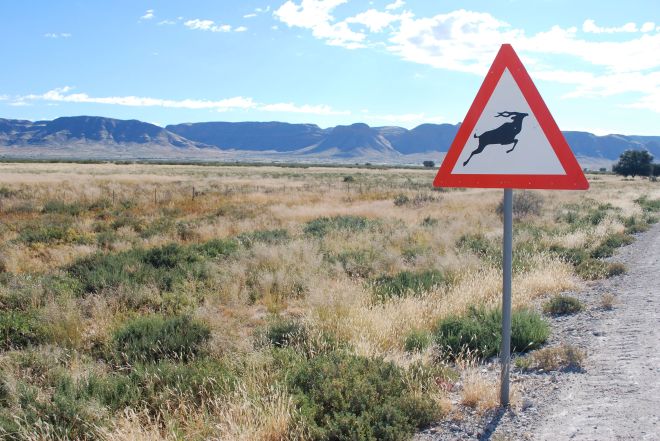
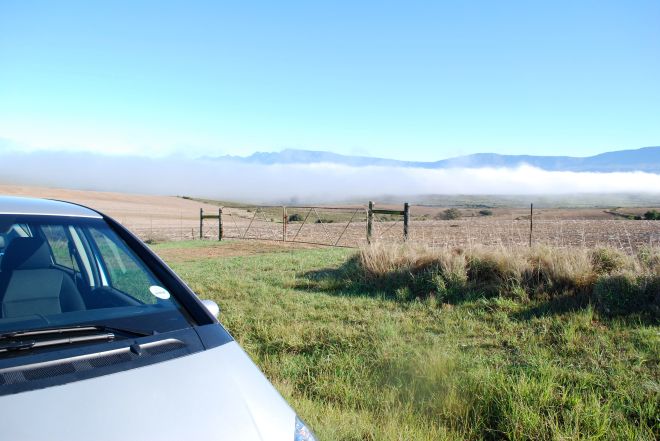
A little after 9 a.m., the check engine light illuminated on my dash. This was followed by the flashing temperature gauge. Next thing, the Jazz lost power and rolled to a stop. Getting out, I looked around. Not a person, building — heck, any sign of life for as far as the eye could see.

Awesome.

About a half hour later, a pick-up truck came barreling down the road. Thankfully, the kind German couple took pity on a mechanically inept American and pulled over. “Car troubles,” I said, pointing to my smoking heap of junk. “Can you take me?” They didn’t seem to understand a word but after conferring for a couple of seconds, opened the door.

“America?” they asked. “America,” I replied, wondering what it was about me — or the situation — that clued them in.

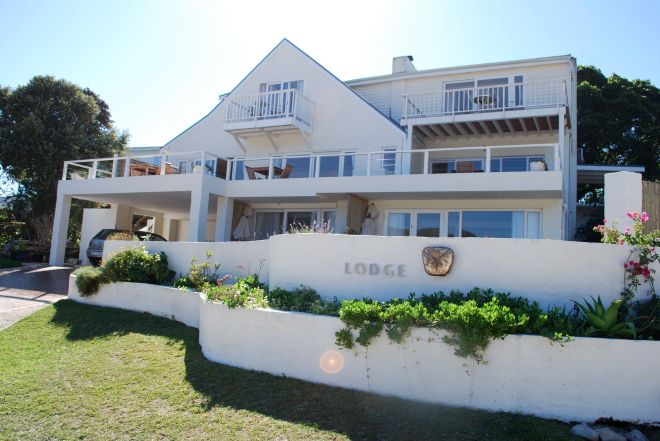
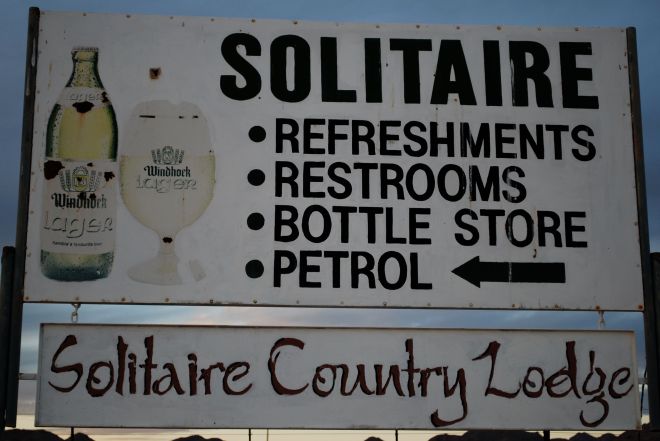
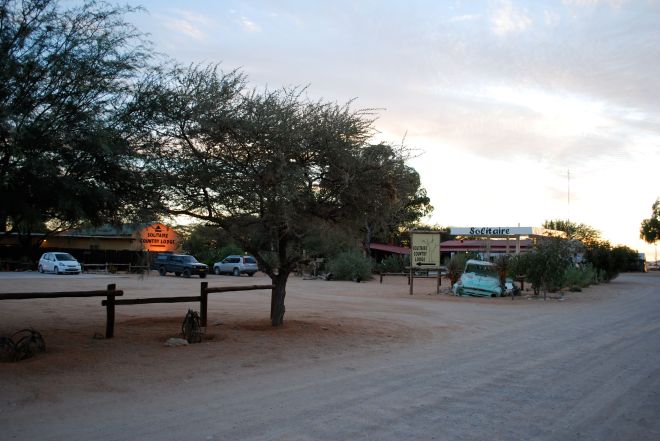
Twenty kilometers away was the town of Solitaire. My Lonely Planet said it was a “lonely and aptly named settlement” and “nothing more than an open spot in the desert.” In this case, the guidebook was right. The “town” of Solitaire consisted of a gas station, bottle store, bakery and a country lodge. Welcome to Solitaire.
dsc_0252a

Thankfully, the manager at the lodge was beyond helpful. We called up Budget, who said they would try and locate a new vehicle, and in the meantime drove back to recover the Jazz. We dragged it back to Solitaire and then got back on the horn with the car rental agency. The nearest replacement was in Walvis Bay, a three hour’s drive. With little other choice, I replied in the only way I could, “Okay, send it.”

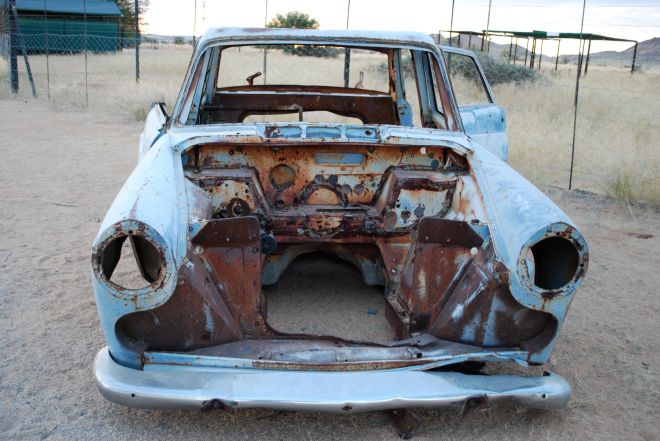
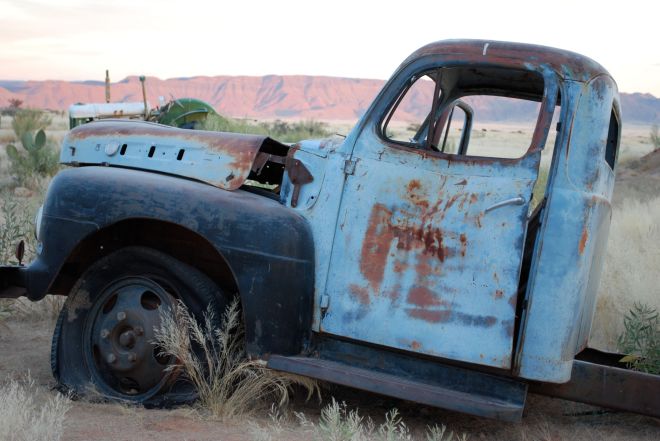
At 2 p.m., the car had yet to arrive and I’d just finished a Coke Zero and brownie from the bakery (decent). Then, the lodge phone rang. The replacement car had been in an accident en route — in fact, it had flipped over. The driver was fine. But another car would now need to be sent. I glanced around at the grounds of Solitaire, decorated with the remains of discarded vehicles. Why was this news not surprising?
dsc_0252a

dsc_0252a

Two hours later, another call. “I’m sorry sir,” the polite woman said. “But the new vehicle we have sent has broken down.” You’re joking was my reply.

A third vehicle was now coming to get me. The sun was setting over Solitaire. I’d set out this morning hoping to be in Swakop by noon — now, it was looking closer to midnight, if at all. Meanwhile, the tow truck arrived from Windhoek, allowing for a final deep breath and collective thought while sitting on the hood of the source of today’s troubles.
dsc_0252a

dsc_0252a

Namaste.

The kind woman at the lodge took pity on me and offered a room to wait in. The car finally arrived at 7 p.m.; from there, it was a slow drive in the pitch black across the Tropic of Capricorn to Walvis Bay. After dropping off the driver, it was another 35 kilometers to Swakop, which took over an hour because of a thick fog. Icing on the proverbial cake.

My new car pulled into the parking lot of my hotel at 11 p.m. “We were worried about you,” the lady at the front said.

Most of the time, travel can be an amazing experience. Not always though. When you’re on the road, when you’re in the middle of Namibia, on the African continent, well, simply, shit can happen. And when it does, there’s not a darn thing you can do about it.

But tomorrow will be another day.
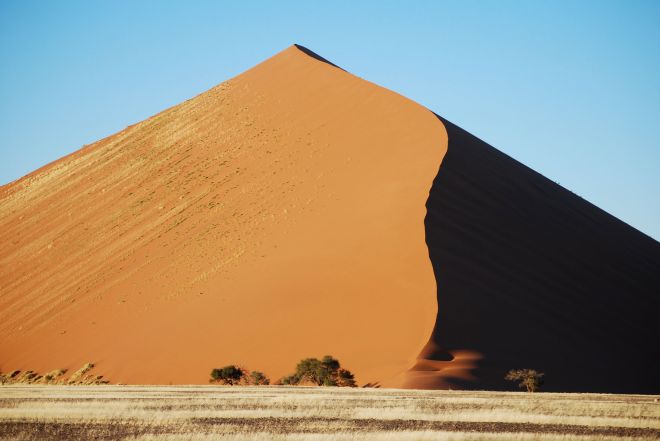
Atop the highest sand dune in the world

Sesriem, Namibia

Angola, my guide, knocked softly on my tent door a little after 5 a.m. “Good morning, this is your wake-up call,” he said politely. I’m not quite sure what my reply was.

We had a quick breakfast at the lodge before loading into Land Rovers and heading into the brisk pre-dawn. It was a short drive to Namib-Naukluft Park — one of the real advantages to staying at Kulala is that it is the only lodge with a private entrance to the park. This is all the more important when you’re trying to find just the right spot for sunrise among the dunes of Sossusvlei, an ancient pan.

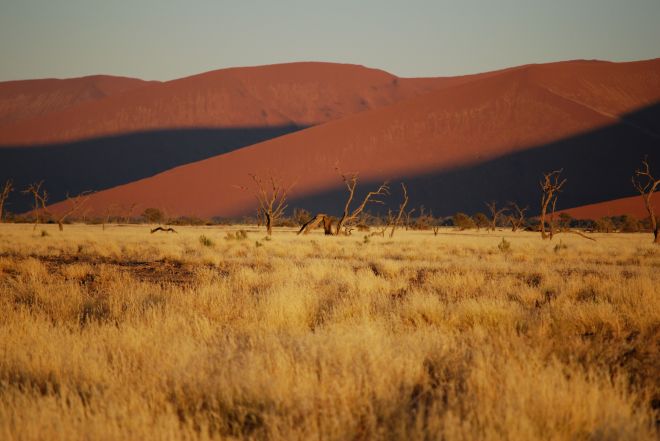
Although it’s not saying much, Sossusvlei is Namibia’s number one tourist attraction. The dunes date back millions of years and are part of one of the oldest and driest ecosystems on Earth. At some places, they are nearly 15 stories high — making them the tallest in the world.

DSC_07100

DSC_07050

DSC_06980

The early morning light was perfect. The mood was quiet and reflective as we all took in this pretty breathtaking sight.

dsc_0252a

dsc_0252a

DSC_07140

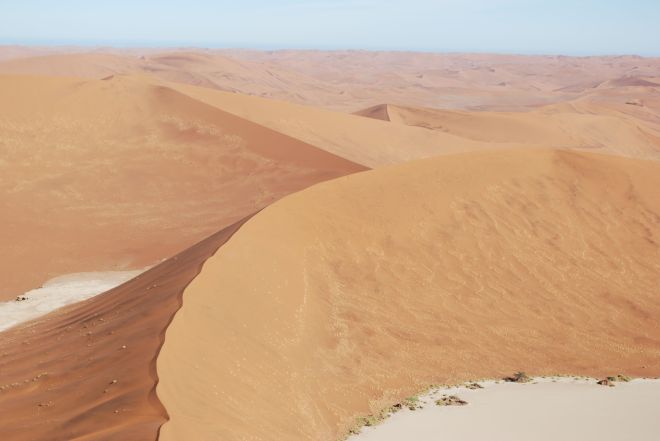
As the sun broke across the sky, we loaded back into the Land Rover, passing the touristy Dune 45 and continuing off-road to the more remote Big Daddy Dune, at 480 meters high, the tallest of them all. When we arrived, there wasn’t another group in sight. We laced up our sneakers and started the incline.

dsc_0252a

dsc_0252a

dsc_0252a

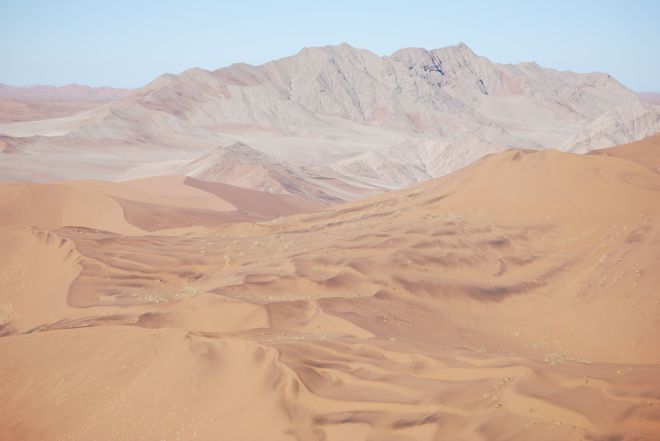
The summit offered incredible views of the surrounding dunes as well as the Atlantic Ocean some 55 kilometers off in the distance.

dsc_0252a

dsc_0252a

dsc_0252a

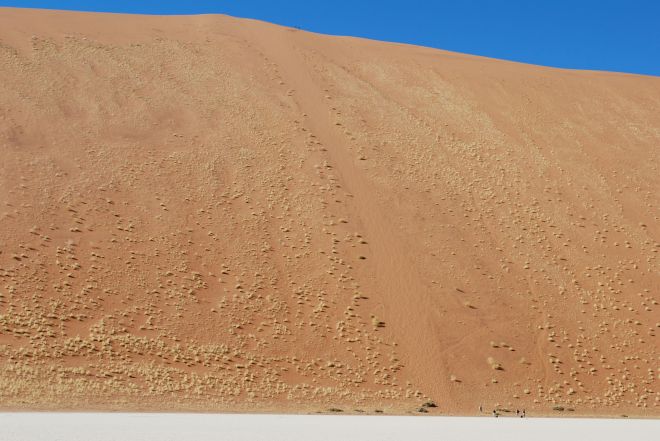
Next, the fun part: racing down, which took a good 60 seconds. You can barely make out the rest of our group at the top and bottom of the path. See them?

dsc_0252a

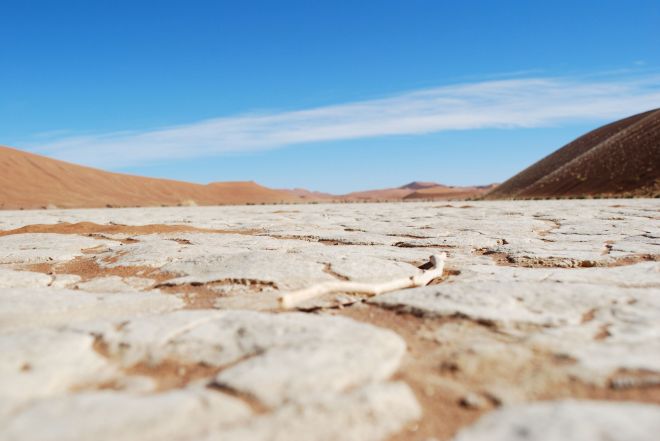
We landed in the aptly named Dead Vlei, a large ephemeral pan that has dried of water and consequently cracked under the intense heat.

dsc_0252a

dsc_0252a

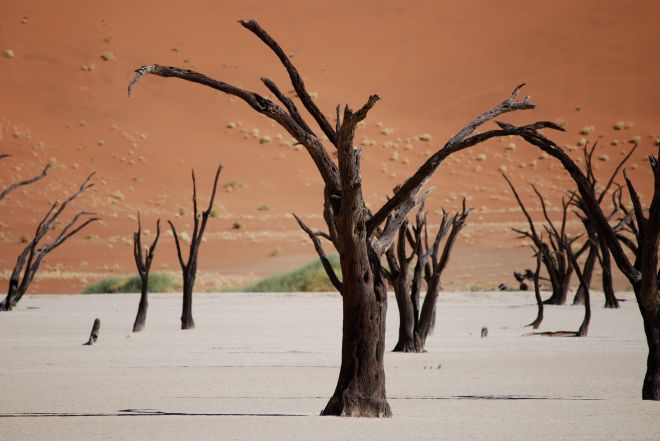
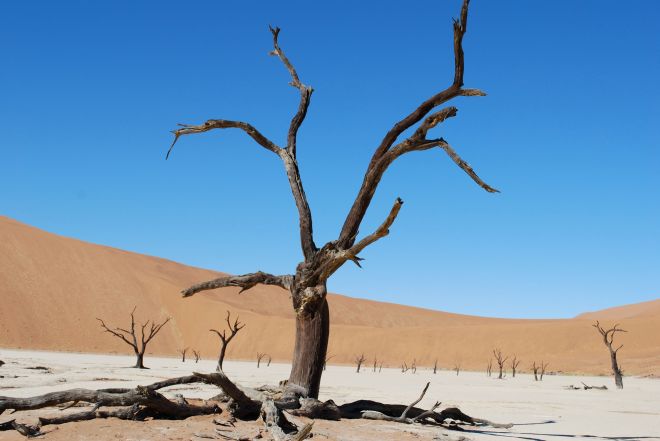
In the midst of the pan are the remains of an Acacia forest; because of the lack of humidity, these trees have been preserved in an almost petrified state for hundreds of years.

dsc_0252a

dsc_0252a

dsc_0252a

After a nap and shower back at the lodge, we took a late afternoon excursion to the 2-kilometer long Sesriem Canyon, formed millions of years ago by the Tsauchab River.

dsc_0252a

dsc_0252a

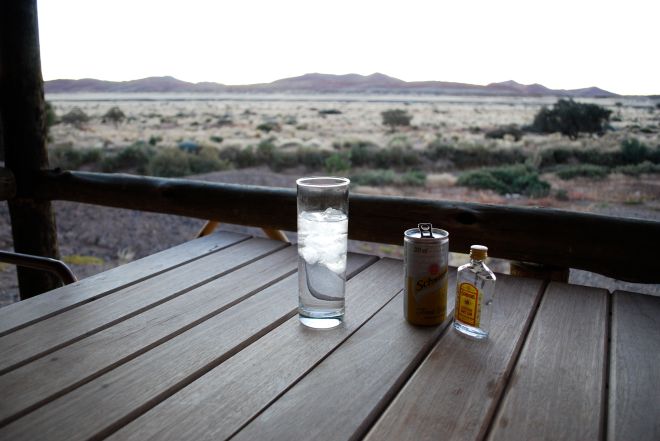
Conveniently, back at my tent, a gin & tonic sundowner was waiting.

DSC_08190

Not a Bombay, but it would certainly do.

Day of travel leads me to the middle of nowhere

Sesriem, Namibia

The 4:30 a.m. alarm this morning was far from welcomed; in fact, it was one of those which is hard to tell whether it’s a dream or not. It wasn’t. And my taxi was outside waiting at 5 a.m.

Our 6:10 a.m. flight to Jo’burg was the first of the day and wheels were down about 1.5 hours later. My connection to Namibia departed at 9:40 a.m., enough time to grab a coffee and egg sandwich (bad bagel).

It was a 2-hour flight to Windhoek (the W is pronounced like a V) but we gained an hour on the way. The South African gentleman sitting next to me was interesting to chat with; he was well-traveled and gave me some good pointers for this leg of my trip. Peering out the window as we descended into Namibia, a question popped into my head: where was, well, everything?

The airport, my friend told me, was 40 kilometers from the city, the nearest piece of flat land in this mountainous area. He also mentioned that Namibia was the second least densely populated country in the world — a fact that I’m now able to confirm having been here for only 12 hours.

A basically brand new Honda Jazz was waiting for me at Budget. It wasn’t as sweet as my Mercedes but seemed to be in good shape. Looking at all of the 4×4 and SUVs being loaded up in the car rental lot made me nervous though. “Is it okay for the gravel roads?” I asked, gesturing at my small car. “Oh yeah, gravel, no problem,” the rep said.

And with that, I was off for Sesriem, a 5-hour drive south of the capital.

dsc_0252a

DSC_0663

DSC_0662

The tarred roads were in generally good shape; the highlight of my short time in Windhoek was seeing that they called stoplights, “robots.” As in a sign that read: “Slow! Robots ahead.” Weird.

Passing through a couple of police checkpoints beyond the city, the gravel began. And from here on out, essentially the next 9 days, this is what it would be. At best, the roads were in mediocre shape. Driving suddenly became an “active” sport that required my full attention as the two-wheel drive Jazz had a tendency to drift and swerve in the loosely compacted dirt.

The lousy ride was mitigated by the vast landscape, huge Namibian sky and jaw-dropping beauty. This might be the most scenic country in the world.

dsc_0252a

dsc_0252a

dsc_0252a

When the sign for Kulala Desert Lodge finally passed, the sun was starting to set on the horizon. The nice ladies met me with a refreshing drink and cool towel and then showed me around; it is nothing short of amazing what they have created here at Kulala, in Sesriem, several hundred kilometers from the nearest city.

DSC_0793

dsc_0252a

dsc_0252a

To call the accommodation here “tents” would be a gross understatement; there’s electricity, hot water, comfortable beds. And then there are the views. Everywhere you turn. Stunning.

dsc_0252a

dsc_0252a

dsc_0252a

After showering twice to rid myself of all the road dust, it was time for dinner up at the lodge. This was followed be a nightcap at the bar and a beeline to my bed. Tomorrow would be yet another pre-dawn alarm.

Meow, meow, meow

Port Elizabeth, South Africa

My alarm rang at 6 a.m. and after snagging a couple of home-baked muffins from the kitchen, it was time to get going. Driving east along the N2, the horizon streaked with color, the sun slowly began to rise across the Indian Ocean.

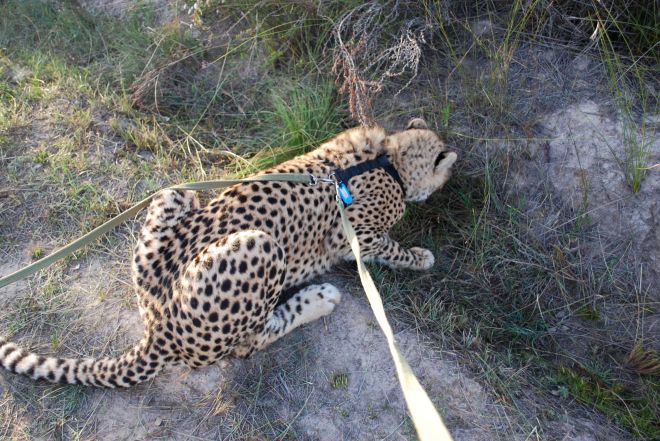
At around 7:15 a.m., my car pulled into the long driveway of Tenikwa, a wildcat reserve just outside of Plett. This morning, I’d be helping to take two of their 14-month old cheetahs, Zulu and Duma, for their exercise run. These cats, along with all of the others at Tenikwa, were born and raised here — so they are about as domesticated as wild animals can be — and serve both educational and breeding purposes.

dsc_0252a

dsc_0252a

We put leashes on them both and started down a path. Soon, the cheetahs were showing off, jumping onto tree stumps and racing around while we struggled to keep up with them.

dsc_0252a

dsc_0252a

Cheetahs are amazing animals, they have tremendous power and speed but only in short bursts. As they panted and rested, we had a chance to pet them; this was returned with loud purrs of approval. Their coats were surprisingly tough, not nearly as soft and smooth as they appear.

dsc_0252a

We gave them some water and continued on our way. Suddenly, a guinea fowl unknowingly landed in front of us and Zulu took off after it, ripping his leash from the guide’s hand. Off he went into the bush — which was also beyond the reserve’s walls. About 15 minutes later, he had been located and we all breathed a sigh of relief.

dsc_0252a

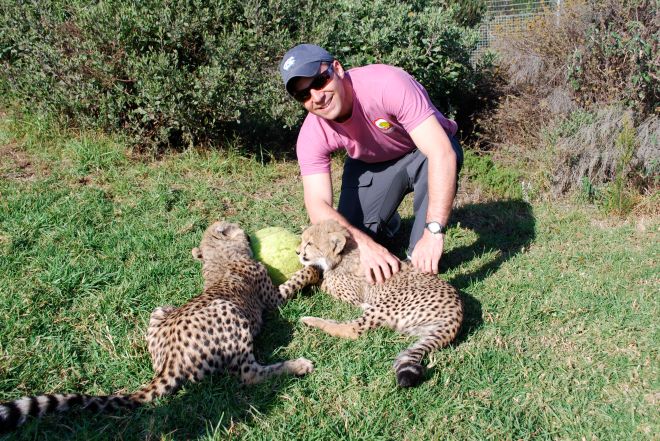
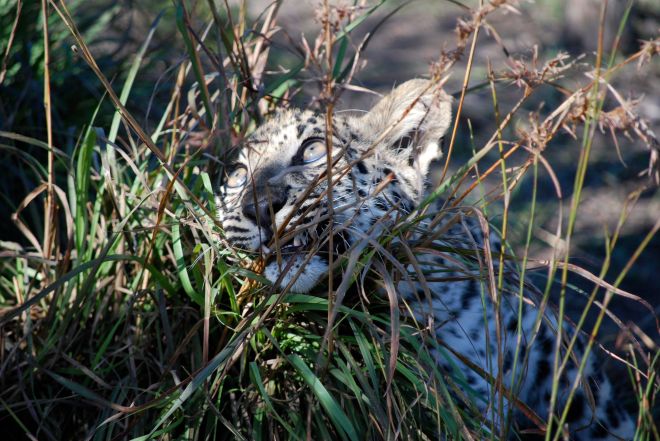
After bringing them back to their pens, we had a chance to check out some of the other cats in the park, including meercats, African wildcats, lynxes and servals. The highlights were the two awesome 3-month old cheetah cubs and a rambunctious baby leopard.

dsc_0252a

dsc_0252a

dsc_0252a

dsc_0252a

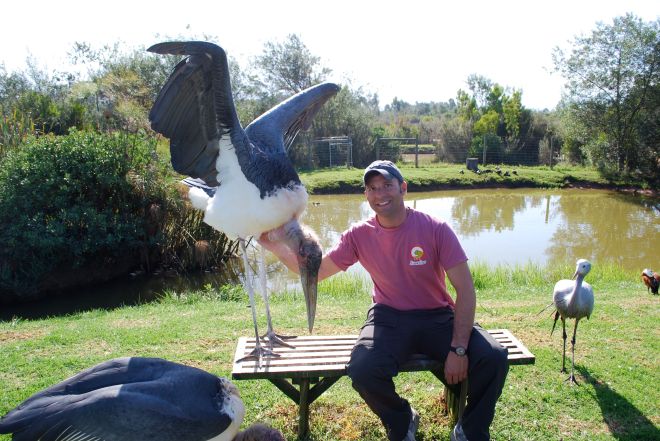
On our way back, we visited some of the birds, including this monster vulture that liked having its belly rubbed.

dsc_0252a

Continuing east on N2, the Bloukrans Bridge came into view; at 216 meters high, it is best known as the world’s highest bungee jump, which certainly was not for me. (The jump off point is right below where the truck is passing by.)

dsc_0252a

My final stop of the day was Tsitsikamma National Park. Legs were still sore from yesterday’s Robberg hike, but that didn’t stop me from venturing out on a trail that crossed the Storms River by suspension bridge and terminated at a lookout point with even more spectacular views.

dsc_0252a

dsc_0252a

A late lunch at the park restaurant — my first hamburger of the trip wasn’t half bad and held me over for the final 2 hour drive to Port Elizabeth. Hertz didn’t give me any trouble returning the car and it was a quick 10-minute taxi ride to the hotel.

PE is the East Coast’s largest city and a working port; it reminded me of Long Beach, Calif. My overpriced room at the Courtyard Hotel had views of the water, but not much else going for it.

Knowing that tomorrow I’d be up before the sun, it was an early night.

Hiking against the clock

Plettenberg Bay, South Africa

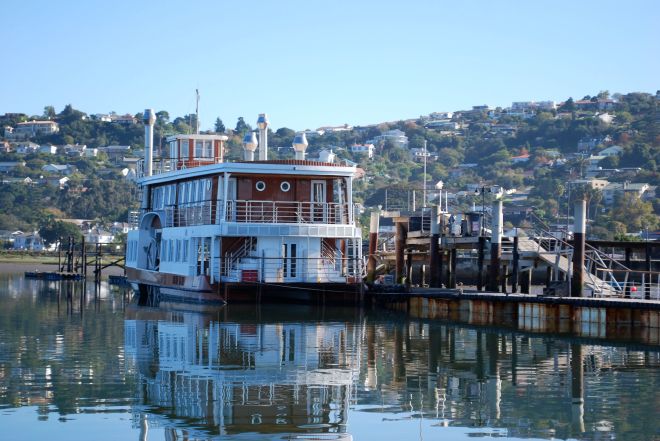
Breakfast was good this morning; the view of the sun rising over the Kynsna Lagoon, even better. Directly across from the lodge is the Featherbed, a spectacular private nature reserve, and my first stop of the day. After making my way down to the wharf and buying a ticket, we boarded a small boat for the 4-hour Featherbed Experience.

DSC_0457

We cruised the lagoon for about 20 minutes before unloading at the dock. A 4×4 took us up the hill from which their were some great vantage points.

dsc_0252a

dsc_0252a

The hike down was a couple of kilometers, the trail brought us past caves and some snakes and lizards. Waiting for us was a huge buffet lunch — salads, grilled meats, veggies, dessert. It was intense and delicious.

The boat was back on shore a little before 2 p.m. On the way, I’d read about what sounded like a few amazing trails at Robberg Nature & Marine Reserve in Pletternberg Bay — or simply Plett — a beach-side town about 25 minutes away. The reserve is on a rocky peninsula with a rugged coastline of cliffs and rocks. Next thing I knew, that was where I was headed.

The 11-km hike to the Point is the most well-known; the guard at the gate told me it typically took 4 hours. He didn’t recommend setting out at this point since some of the trail ran along the coast and as the tides rose, it could erase the path. Which meant only one thing: trail jog.

dsc_0252a

dsc_0252a

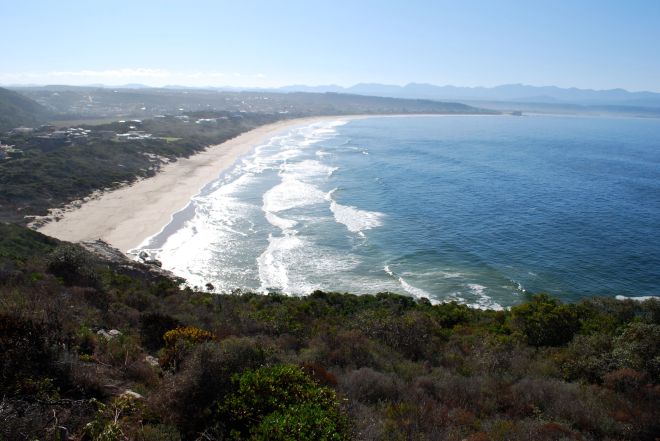
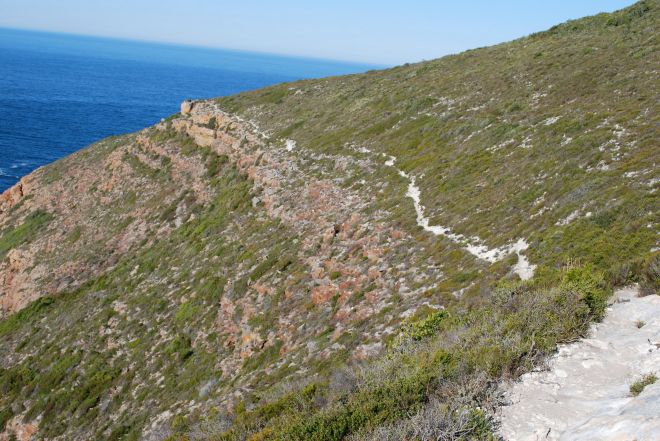
This was perhaps the first time on this trip that I was glad to be alone. I’m not sure who would have been cool, let alone enjoyed, my brisk “walk” — past inter-tidal marine pools and coastal dune fynbos. The Point was surreal: not a single other person, bright orange rocks and waves exploding into the shore line.

dsc_0252a

dsc_0252a

Hustling back and scrambling over rocks, the parking lot came into view. Sitting in the car, shirt drenched in sweat, the clock read 4:35 p.m., exactly two-hours from when I’d set out.

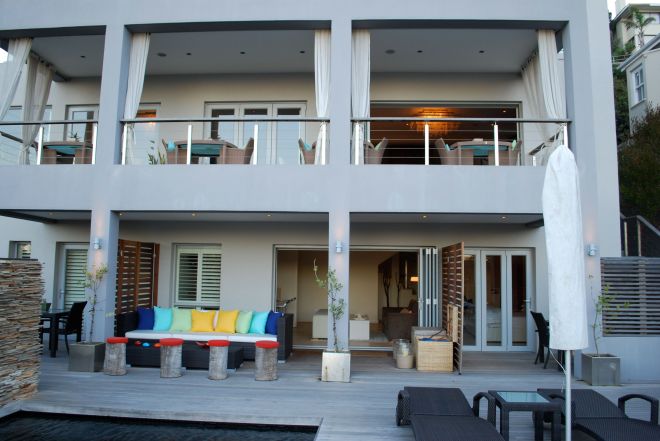
Not far was the Bay Lodge, where I’m spending the night. It’s a “luxury designer hotel” with lots of modern common space, sweeping views of the ocean, and perhaps most importantly, the first fast Internet connection since Cape Town.

dsc_0252a

dsc_0252a

dsc_0252a

dsc_0252a

Dinner was simple: two gin & tonics and a packet of cashews from the mini-bar. I’ve got to rest up. An early day awaits me tomorrow.

A surprise in Knysna Forest

Knysna, South Africa

It was a bit overcast in Swellendam this morning, not that there was much to see otherwise. After filling up my tank, it was time to hit the Garden Route. My destination: Knysna (pronounced nye-znah), a town perched between a lagoon and forests, about 2.5 hours east.

dsc_0252a

The drive took me through Mossel Bay, George, Wilderness and Sedgefield. It couldn’t have been much simpler — and I’m continuing to learn new driving rules in South Africa (like a quick flash of the emergencies after passing as a “thank you”).

dsc_0252a

It was sunny and warm in Knysna; my guest house, Amanzi Island Lodge, was located on Lesiure Isle, a peninsula accessible via bridge from the mainland. My standard room faced the lagoon and had sliders that opened out onto the deck. It felt like staying at a friend’s beach pad.

dsc_0252a

dsc_0252a

dsc_0252a

dsc_0252a

I’d come to Knysna to hike — it has the largest natural forest in Southern Africa — and Helen, Amanzi’s owner, pointed me in the right direction. First, it was to a lookout that offered great views of the town, lagoon and famous Knysna Heads.

dsc_0252a

dsc_0252a

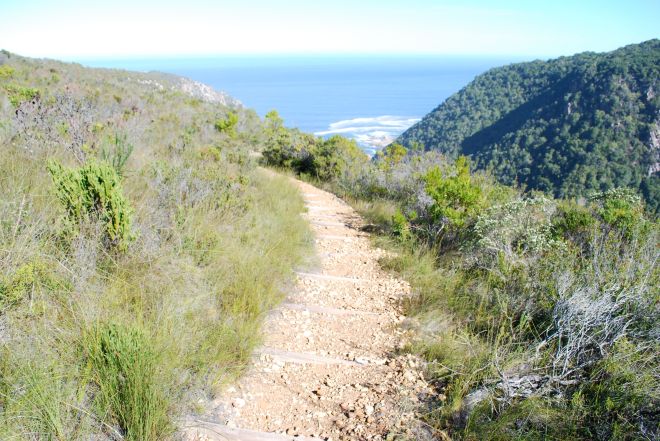
From there, it was about a 20-minute drive to Kranschoek, a meandering 9-kilometer trail that teeters along the Indian Ocean and through the forest. With the sun out and fall colors starting to come in, it was pretty spectacular.

dsc_0252a

dsc_0252a

dsc_0252a

The trail was quiet; coming into the thick forest, there was no noise, except for the waves crashing below. Then, suddenly, a high-pitched barking startled me. Unsure of what it was, I grabbed a big stick.

The noise continued and grew louder (warthog? wild wolves?). Glancing around, I spotted a family of baboons; three kids, mom and dad, none of whom seemed all that pleased to see me. They screeched and yelled. Mom took a couple of threatening steps toward me. I kept walking.

dsc_0252a

dsc_0252a

Not interested in another near-death experience, it was encouraging that they didn’t pursue me. Back at the lodge, Helen told me about Mario’s, an Italian restaurant on the waterfront. An interesting take on the Caesar salad and a penne with gorgonzola, broccoli, olive oil and garlic hit the spot.

Getting into bed, light waves of the lagoon lapped the shore.

Diving with great whites

Swellendam, South Africa

The drive to Gansbaai would take no more than 90 minutes, Katherine, the owner of Akademie, told me this morning. My trip with Shark Cage Diving was leaving at 10 a.m., so promptly at 8:30 a.m., it was time for me to hit the road. Katherine’s directions there were spot on — her time estimate, not so much.

By 10 a.m., I’d still not arrived in Hermanus, the whale watching capital of the world, and the site of a Saturday morning marathon that detoured me on rural back roads. The last half hour south to Gansbaai and Danger Point was a haul; for a good portion of it, a Jeep Grand Cherokee kept on my tail. It followed me into the parking lot at nearly 11 a.m. “Brian. Brian McFarlane,” the guy said. “Captain. Don’t worry, this boat isn’t going anywhere without me.”

Apparently, the 10 a.m. departure was South African time — meaning it wouldn’t get going until 11 or so. After signing a waiver and listing my next of kin (“Have you gone diving before?” I asked the woman handling the paperwork. “Not a chance,” she replied), we watched a brief safety demonstration, were handed bright orange slickers and were next speeding away from shore into the choppy Indian Ocean.

We settled on a spot and dropped anchor. Chum, consisting of mashed tuna (“Bloody and oily attracts ‘em,” yelled one of the first mates), was tossed into the water while the cage was attached to the side of the boat. Meanwhile, a floating seal decoy and a chunk of fish were set out as bait.

dsc_0252a

And then the wait began.

It was like fishing, Captain Brian explained, only we were fishing for great white sharks, the fiercest predator of the ocean, and instead of hooking them, we only wanted to view them in a near-death experience.

And then the wait continued.

And continued.

We attracted several sharks but none stuck around long enough for us to enter the cage. Several folks on the boat succumbed to seasickness and had to take a zodiac back to shore. Meanwhile, we moved to a different spot in pursuit of the sharks.

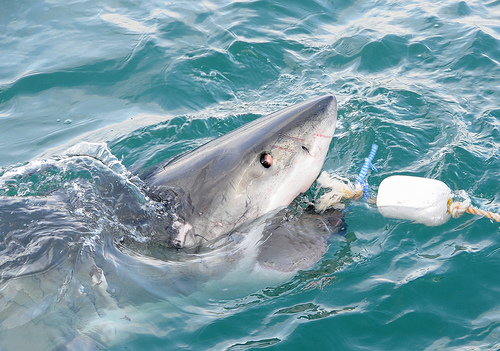
As the hours ticked by, we started to grow restless. Then, suddenly, after 4 hours at sea, came a shout, “SHARK!” A great white, nearly 10 feet in length, was swimming furiously around the boat. We quickly jumped into the cage as the bait brought the monster even closer.

Watching from underneath the water, the bait was pulled close to the cage and the shark forcefully lunged to grab it. In doing so, it somehow managed to wedge its snout in the bars of the cage directly in front of me. For a few seconds, it thrashed furiously to free itself, rocking the cage as we all hung on for dear life. Freed, he took off and we all surfaced with a scream.

dsc_0252a

dsc_0252a

dsc_0252a

dsc_0252a

Terrifying.

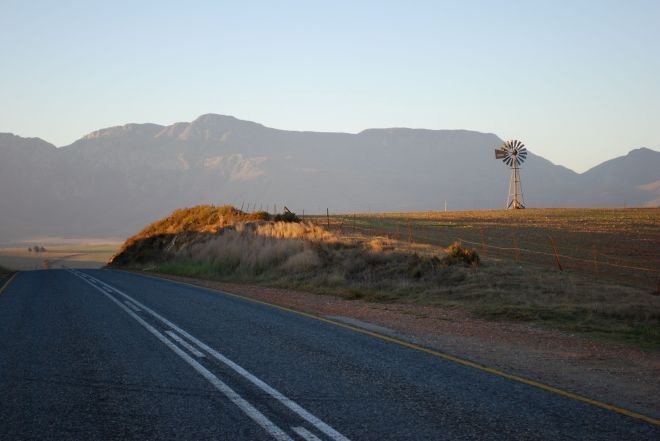
After returning to shore, it was about a 90 minute drive through the rolling countryside to Swellendam, a small town that is the gateway to the Garden Route. Much of the way, it was just me and the road.

dsc_0252a

dsc_0252a

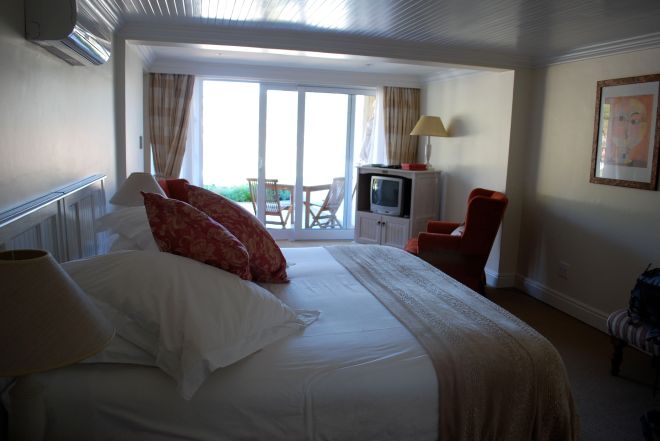
My accommodation here was at Rothman Manor, which hooked me up with Suite Africa, overlooking the pool and with radiant heat in the bathroom.

DSC_0414

dsc_0252a

dsc_0252a

dsc_0252a

It was a quiet night. The pizza place next door served up a solid Mediterranean thin crust with olives, peppers, onions, sun dried tomatoes and chicken. After, there was time to ponder my brush with death.

Fun times.

(Some of these photos are courtesy of Flickr user coessensbart who went on the same trip. Unfortunately, it wasn’t possible for me to take any while in the cage.)

Wine tour in the Winelands

Franschoek, South Africa

It occurred to me on my walk home last night how much safety in South Africa can vary from one place to the next. While in Cape Town, my guesthouse advised me to take a taxi everywhere after dark. Yet here in sleepy Franschoek, it’s no problem.

Akademie served up a delicious breakfast this morning of homemade granola, fresh fruits and honey and scrambled eggs with hearty, whole-wheat toast. Having some food in my stomach was much necessary, especially after getting picked up by Tsiba-Tsiba and arriving at our first winery, Simonsig, around 10 a.m.

dsc_0252a

It was a small group, just me and a couple of college kids from the States, as our guide Lukas explained the tasting process and began generously filling our glasses. We would be sampling about 40 wines today, he said, so drinking them all was not advised.

Simonsig was on the outskirts of Stellenbosch, which is this country’s second-oldest settlement, established in 1679. We started with some bubbly (the smaller and slower the bubbles, the better) and then moved onto the pinotage, a red blend that South Africa is well known for. It was dry, a little spicy, and had flavors of plum, oak and vanilla. After getting a “Tour of the Tanks,” we walked through the vineyards and loaded back into the van.

dsc_0252a

Our next stop was Kanonkop, probably the least impressive of the day’s wineries, before heading to nearby Glen Carlou for lunch. The ten tasting wines and delicate trout entrée was matched only by the fantastic views and great weather.

dsc_0252a

dsc_0252a

dsc_0252a

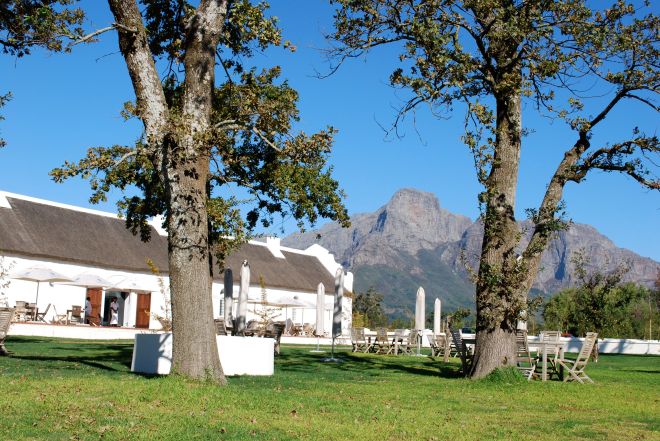
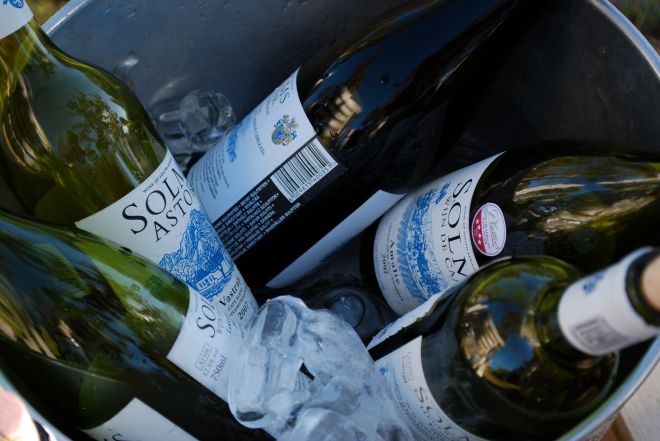
We drove back to Franschoek, stopping at my favorite of the day, Solms Delta. Established in just 2000, these wines were consistently complex and delicious and the setting dramatic. Particularly good was the Solms-Astor Cape Jazz Shiraz, a festive, lightly sweet blend that went down smooth.

dsc_0252a

dsc_0252a

dsc_0252a

dsc_0252a

Our last stop was Moreson, the smallest winery in Franschoek. We finished the day in the same way we started, with some bubbly. In this case, it was the Blanc de Blancs, a 4-star wine.

dsc_0252a

After some rest, it was time for dinner at Reuben’s, a brasserie on the main street. Unfortunately, although the ambience was authentic and the steak tasty, the service was atrocious. As could be imagined, waiting an hour for an entrée is not fun — especially after a long day on wine tour.

dsc_0252a

Exhausted, my gigantic bed back at Akademie welcomed me home.

The food and wine capital of the Cape

Franschoek, South Africa

The pitter-patter of rain on the roof woke me this morning. Traveling in the shoulder season here — those weeks in between the high and low periods — does have its advantages, like fewer crowds and reduced room rates. But it comes at one substantial risk: the weather. Thus far, I’ve been lucky but knew it was only a matter of time before the odds turned against me.

There wasn’t really any need to rush so after a late breakfast (more an early lunch) and checkout from 2inn1, a taxi took me downtown to the Avis. I’d not expected much with my rental, so you could imagine my surprise when the agent pulled around a sporty new Mercedes A200. Score.

dsc_0252a

Driving on the right side of the car and left side of the street took some time getting used to. “Empty on the outside” was the mantra — keep that passenger’s seat away from oncoming traffic. Cruising along the N1 for the 45 minute drive to the Winelands was much easier than navigating the tangle of streets and intersections in Cape Town.

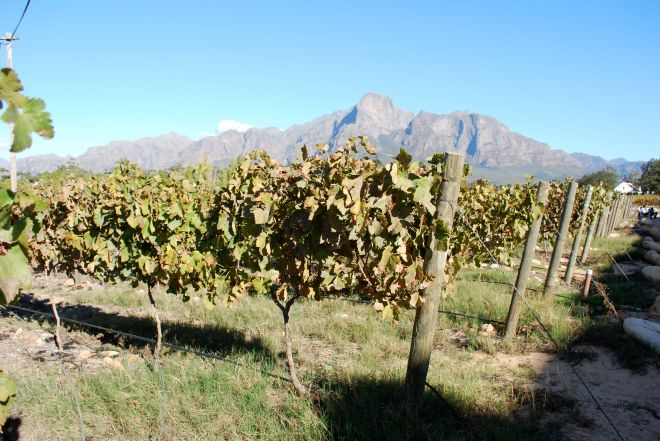
Moving north, the rain cleared as the dramatic Franschoek Valley came into view. Surrounded on all sides by rugged mountain peaks, this land — with its sand-like soil and gentle breezes — is famous for producing some of the world’s best wines. Franschoek, a one-road town lined with art galleries, small boutique stores and upscale restaurants, has been described as the “food and wine capital of the Cape.”

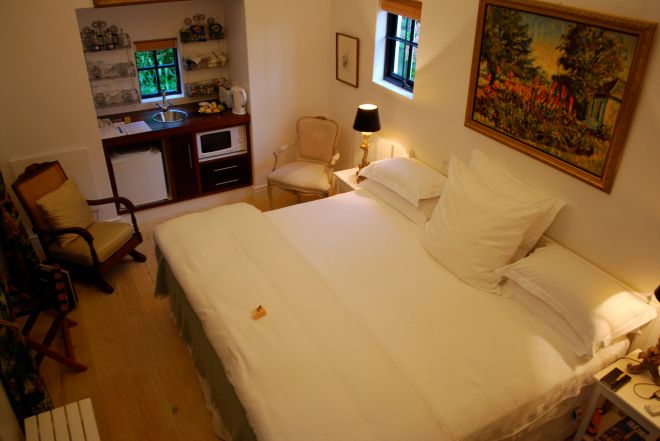
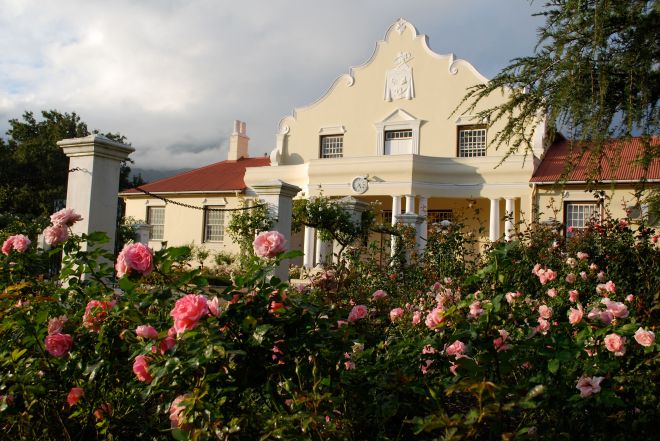
My accommodation here was at Akademie Street Guesthouse, run by the former mayor and his wife. There are three cottages on the property, I’m staying in Vreugde, whose name means “Joy” in Afrikaan. It’s a pretty spectacular place, with its own garden and plunge pool, a great porch area with outdoor heater and an enormous bed.

dsc_0252a

dsc_0252a

dsc_0252a

dsc_0252a

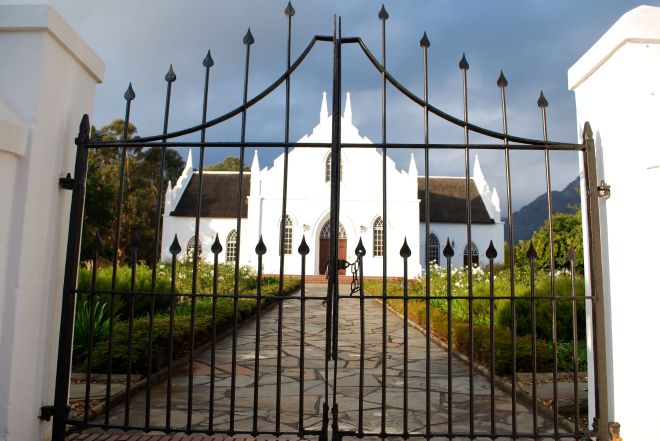
A short walk took me through Akademie’s surrounding gardens, past orange trees and the modern breakfast room attached to the main house. Afterward, strolling the quiet main drag (in stark contrast to the hustle of Cape Town), one got a sense of the history behind this town, as many of its buildings and churches from the 19th century remain unchanged.

dsc_0252a

dsc_0252a

dsc_0252a

dsc_0252a

After a short nap, it was time for dinner at the Le Quartier Francais, whose restaurant, the Tasting Room, has been rated top 50 in the world for four consecutive years. Chef Margot Janse has also been voted South Africa’s best chef. Expectations were high.

dsc_0252a

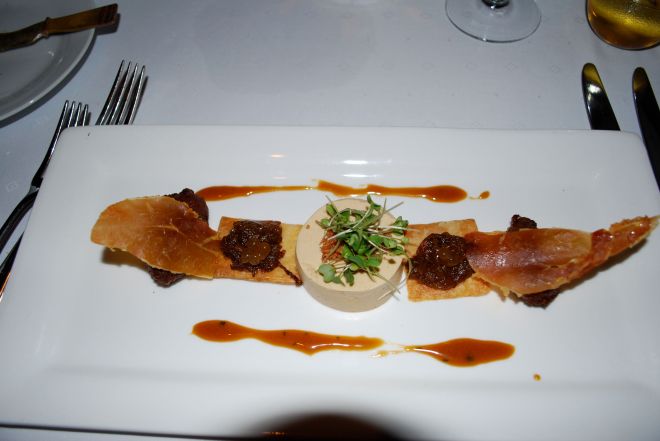
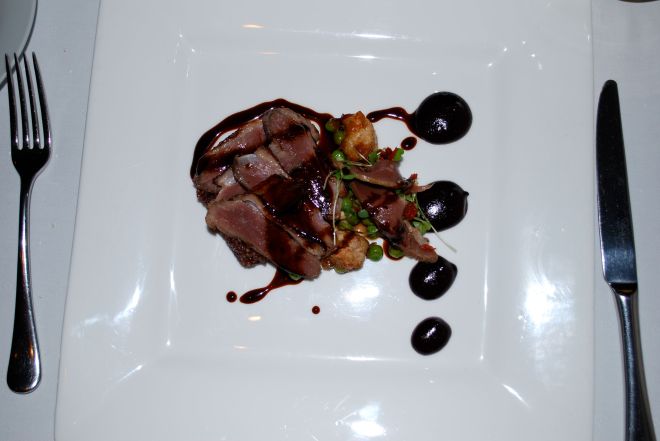
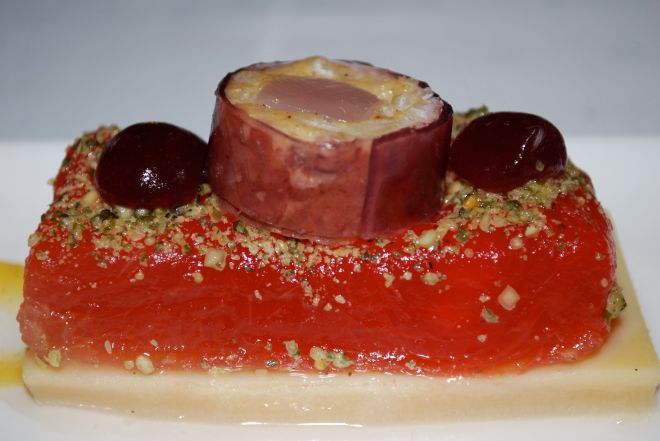
It’s a prix-fixe menu, where diners select 4, 6 or 8 of the dishes to “taste.” It is then up to Janse to decide in which order they will come as well as whether to serve them as a starter, entrée or dessert.

My first dish was what I’d termed a “sweet seafood sampler.” First, on the left, was a prawn wafer, essentially pureed shrimp in between a cookie. In the middle was a lemon-basil poached crayfish tail. Finally, the right side was a squid-ink marshmallow. This turned out to be the best dish of the evening; it was unexpected but the saltiness of the seafood was balanced by the sugar.

dsc_0252a

Next up was my least favorite dish but one that just had to be tried. It was a bacon mousse (middle), a caramelized onion and caviar croquet and banana beignet, served with rocket, maple dressing and pan-fried slices of jámon. The flavors were generally quite good but the slimy texture of the bacon mousse grossed me out.

DSC_0362

My entrée was a piece of Magret duck breast, served with cherry quinoa, prawn, goat cheese and a black pepper jus. This heavy dish was also quite good — I’d rate it my second favorite. I’m usually not the biggest fan of duck, but the breast was not too fatty and the accompanying sides went well with it.

dsc_0252a

Last up was dessert, a gingered piece of watermelon, chai spiced sushi served with berry and orange. This was just a bizarre dish — I’m not really sure what compelled me to order it as it doesn’t even sound very appetizing.

dsc_0252a

All in all, dinner was about $60USD — worth it? I’d say so, if only to sample many flavors and pairings that I’d never tasted before.

Bacon mousse, anyone?

To the Cape of Good Hope and back

Cape Town, South Africa

Erin and Sarah picked me up in the Tazz a little after breakfast and we set out for Cape Point, which is the south-western most point in Africa. Along the way, we termed the weather “manic depressive” — clear, sunny skies battled soupy fog as we made our way out of Cape Town.

Our first stop was Boulders Beach, home to a (relatively) famous colony of African Penguins that have resided there since 1982. According to an informative placard, “because of their donkey-like braying call, they were previously named the Jackass Penguin.” Cute jackasses.

dsc_0252a

dsc_0252a

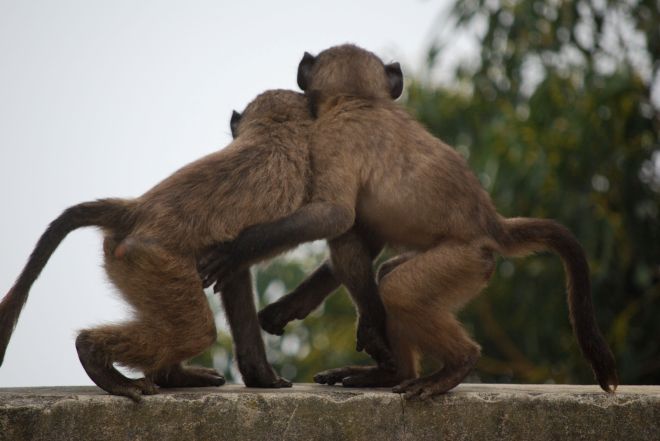
Finished with the oohs and aahs, we got back in the car and continued south to the Cape of Good Hope. Suddenly, turning a corner, we came upon a herd of a dozen baboons crossing the highway. There was more cute overload as two babies played atop a stone wall.

dsc_0252a

dsc_0252a

Once inside the park, we passed a couple of ostriches grazing and then made our way to the Cape Point lighthouse.

dsc_0252a

From the summit, one is said to see the Atlantic Ocean in the west and the Indian Ocean in the east. Unfortunately, with the thick clouds rolling in, we saw neither.

dsc_0252a

The Tazz took us even further south to the terminus at the Cape of Good Hope, and after patiently waiting our turn, we snapped the obligatory tourist shot.

dsc_0252a

Returning on the west coast, we passed through the small fishing towns of Scarborough and Soetwater before arriving in Noordhoek, where we had lunch at the Food Barn, a restaurant I’d read about in the New York Times.

dsc_0252a

DSC_0303

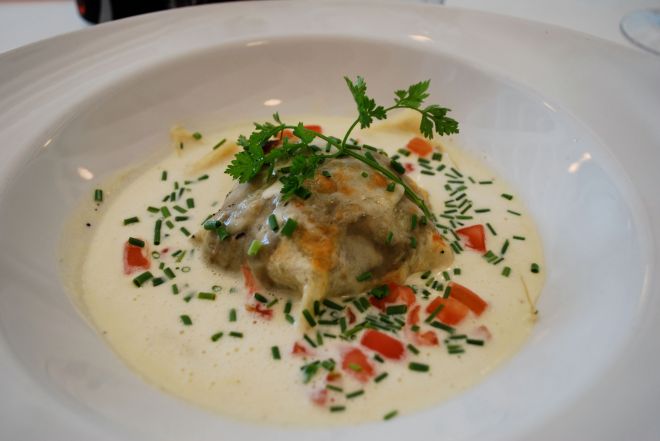
All of its ingredients are sourced within 30 miles. We split a wild mushroom, fresh herb and ricotta open ravioli, served with fontina and black truffle.

dsc_0252a

Next, the rack of lamb in an herb breaded crust with caramelized onions and black olive Tatin and rich basil jus hit the spot.

dsc_0252a

We were stuffed from lunch so headed to Camps Bay, an upscale beach-side town on the other side of Table Mountain, and walked along the water.

DSC_0315

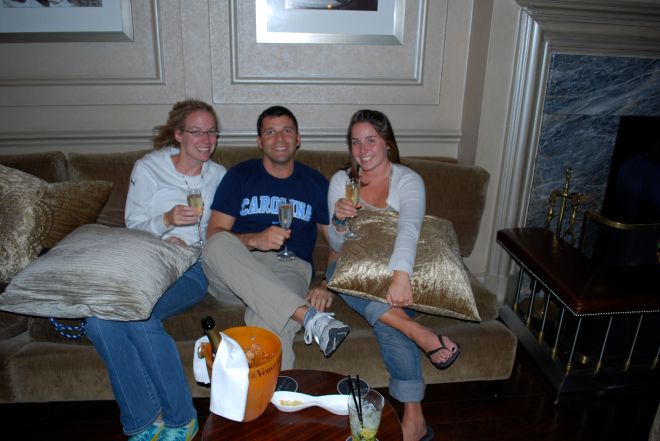
With the sun setting, we headed to the Mount Nelson Hotel, where anyone who is anyone stays when visiting CT. We hoped to spot some celebs while drinking champagne in Planet Bar.

dsc_0252a

DSC_0322

After a couple of drinks, we continued the night at Ginja & Shoga, which received a Top 10 Eat Out Johnny Walker Award. Unfortunately, my Johnny Walker black label was anything but — which led to a confrontation with the bartender who was blatantly filling up top shelf bottles of booze with the crap well. He eventually comped us everything.

Onward we went, hitting the bars of Long Street and staying out far too late while drinking beers and playing foosball with locals.

It doesn’t get more South African than this.