A police convoy, minus the protection

Day 41
Aswan, Egypt

Without working phones in the room, our wake-up door-knock came this morning just before 3 a.m. Running off about 4 hours of rest, we assembled half-asleep in the hotel lobby to board our bus to Abu Simbel. Since a string of terrorist attacks about a decade ago, the Egyptian government has required that all visitors to this village — home to the Great Temple of Ramses II — travel in a police-escorted convoy that departs each morning at 4 a.m.

We arrived at the assembly point about 15 minutes later and joined an ever-growing line of tour buses. The police gave our van a quick look and wrote down our license plate number. This is the last we would see of them. In reality, these mandated convoys serve little purpose — without any protection, they are nothing more than moving targets that leave every day at the same time and follow an identical predetermined route. It could even be argued that the convoys are actually more dangerous, as bus drivers demonstrate their machismo and push their vehicles as fast as they can go.

Around 4:30 a.m., we boarded our van and were instantly part of a 30-bus race through the streets of Aswan. Our driver has to be given credit for his somewhat defensive tactic, especially when navigating the sand-dune covered roads beyond the city center. The same can’t be said for others, including the large motor coaches that roared past us at over 100 m.p.h. My spot in the “suicide seat” offered a good vantage point after the sun came up, watching the Sahara whiz by.
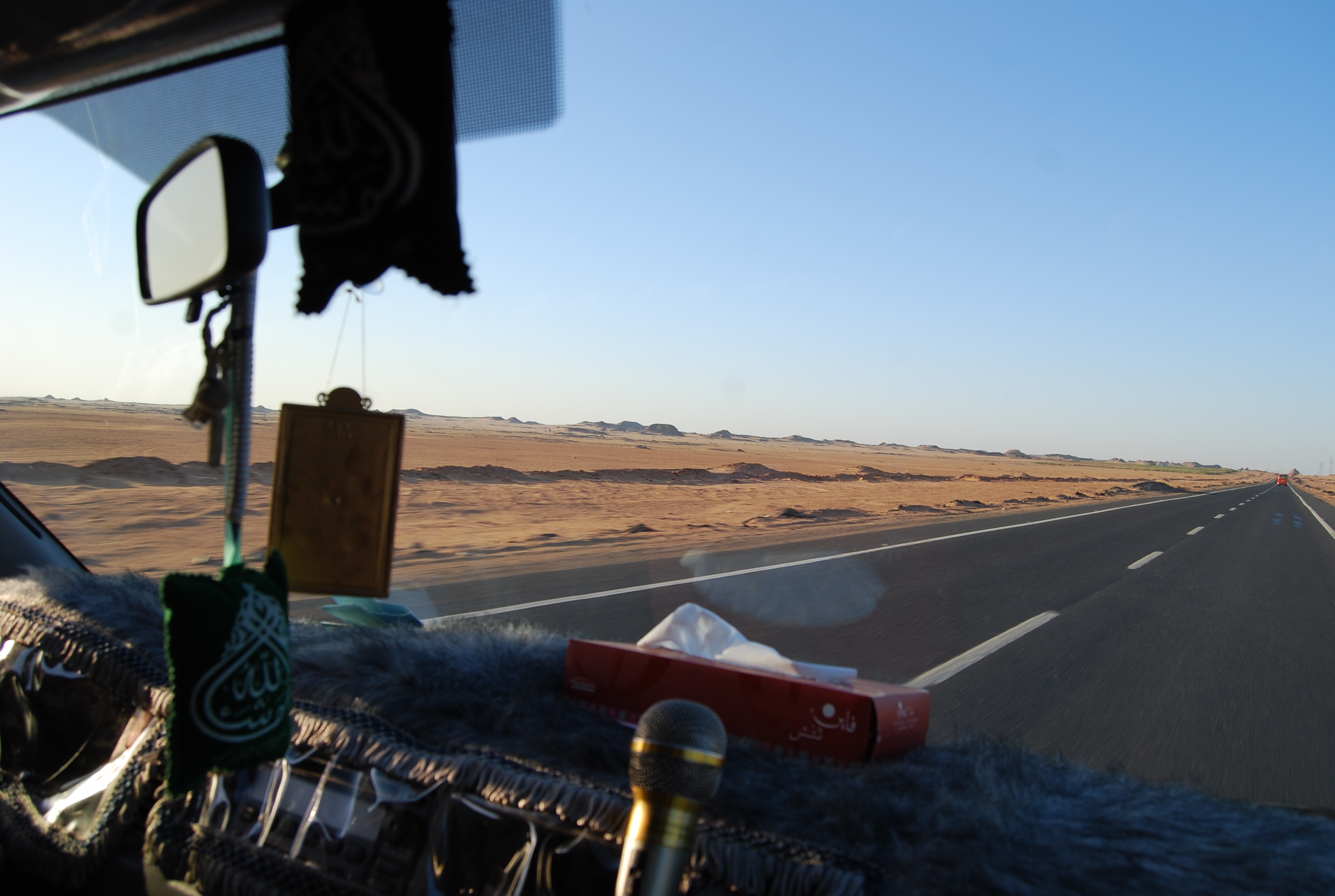
Three hours and several military checkpoints later, we finished in about 7th place at Abu Simbel (at one point, we were in first — if this were Amazing Race, I’d be devastated), bought tickets and hustled to the Temple. We somehow managed to get down there before all the big tour groups, and for just a couple of minutes, had the whole place to ourselves.
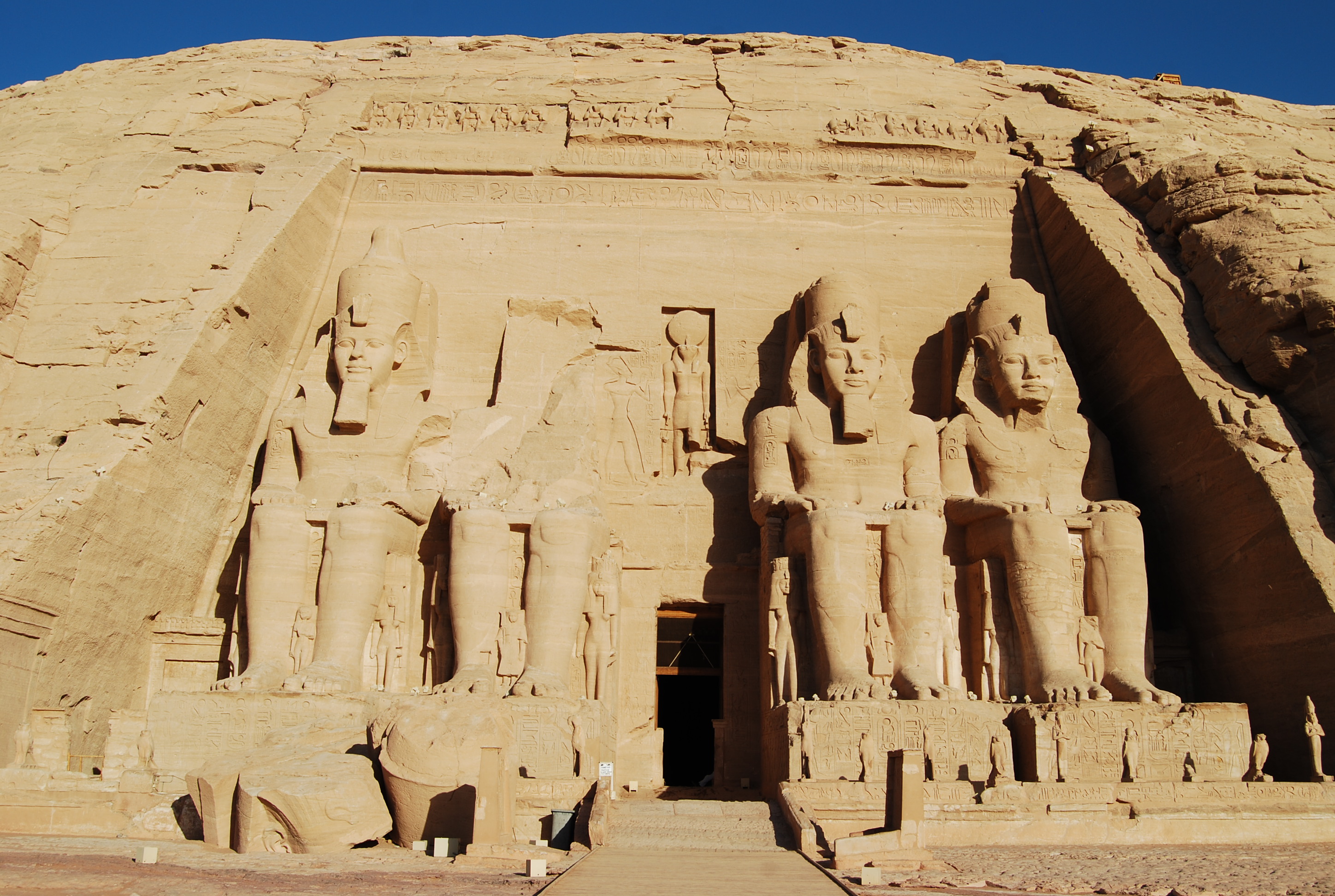
The Great Temple of Ramses II was built into the mountainside on the west bank of the Nile River between the years of 1274 – 1244 B.C. This had to have been a tremendous feat of engineering at the time, each statue is about 20 meters high and carved from a single block. We walked deep into the darkness and found the sacred sanctuary. On two days of the year, February 22 and October 22, when Ramses was born and assumed the throne, the sun shines in such a way that the inner-most chamber is flooded with light. It is pitch black on every other day.

Next door, Ramses built the Temple of Hathor, a comparatively smaller sanctuary for his wife. The intricacy and size of its design are equally as impressive.

At 9:30 a.m., with the sun starting to rise and the mercury quickly following, we got back on the bus for our trip back. It’s hard to say if the return ride was just as harrowing — most of us were immediately sound asleep. We had the rest of the day to walk around the Aswan markets and rest at the hotel; with temperatures here well around 100 degrees fahrenheit though, the latter was much more appealing.

Tonight, our last in this city, we have a nice group dinner planned. Tomorrow, we take our felucca for a day’s sailing trip up the Nile to our next stop, Luxor.

Egyptian adventure onward!

Day 40
Aswan, Egypt

Besides arriving over three hours late, our overnight sleeper train to this city of about half a million was actually quite comfortable. The tracks followed the Nile River the entire route — when dawn broke, the importance of this water source in Egypt became crystal clear. On our right were irrigated farms, lush with vegetation. And, on our left was the arid desert, completely desolate of life.

Aswan, a city perched on the east bank of the Nile, is the last major stop in this country before the Sudanese border. After arriving in the filthy train station, we grabbed our backpacks and walked to our new home: the Nuba Nile Hotel. Between fourth floor rooms, out-of-service elevators and no water pressure, it is easily the dumpiest accommodation that I’ve had in 40 days. It certainly does not qualify as a 3-star hotel (per Intrepid’s promise) — and has me longing for bygone days.

Without anything we could do about it, we hopped on a small bus and headed to the High Dam, which was responsible for creating Lake Nasser, the world’s largest man-made lake. Afterwards, we took a boat to Agilika Island to see the Philae Temple, which looks straight out of Indiana Jones.

It’s an amazingly well-preserved place and walking through it with our guide, we essentially had it to ourselves.

We returned to the port and boarded a small motor boat for an introduction to the Nile, the world’s longest river. Its waters are crowded with cruise ships, small day boats, canoes and feluccas, the Egyptian sailboats that we’ll be taking on Wednesday. Hamdi, a Nubian elder, pointed out the significant monuments lining its banks and also explained how the High Dam displaced his village — before taking us on a tour of Elephantine Island, where they have now resettled.

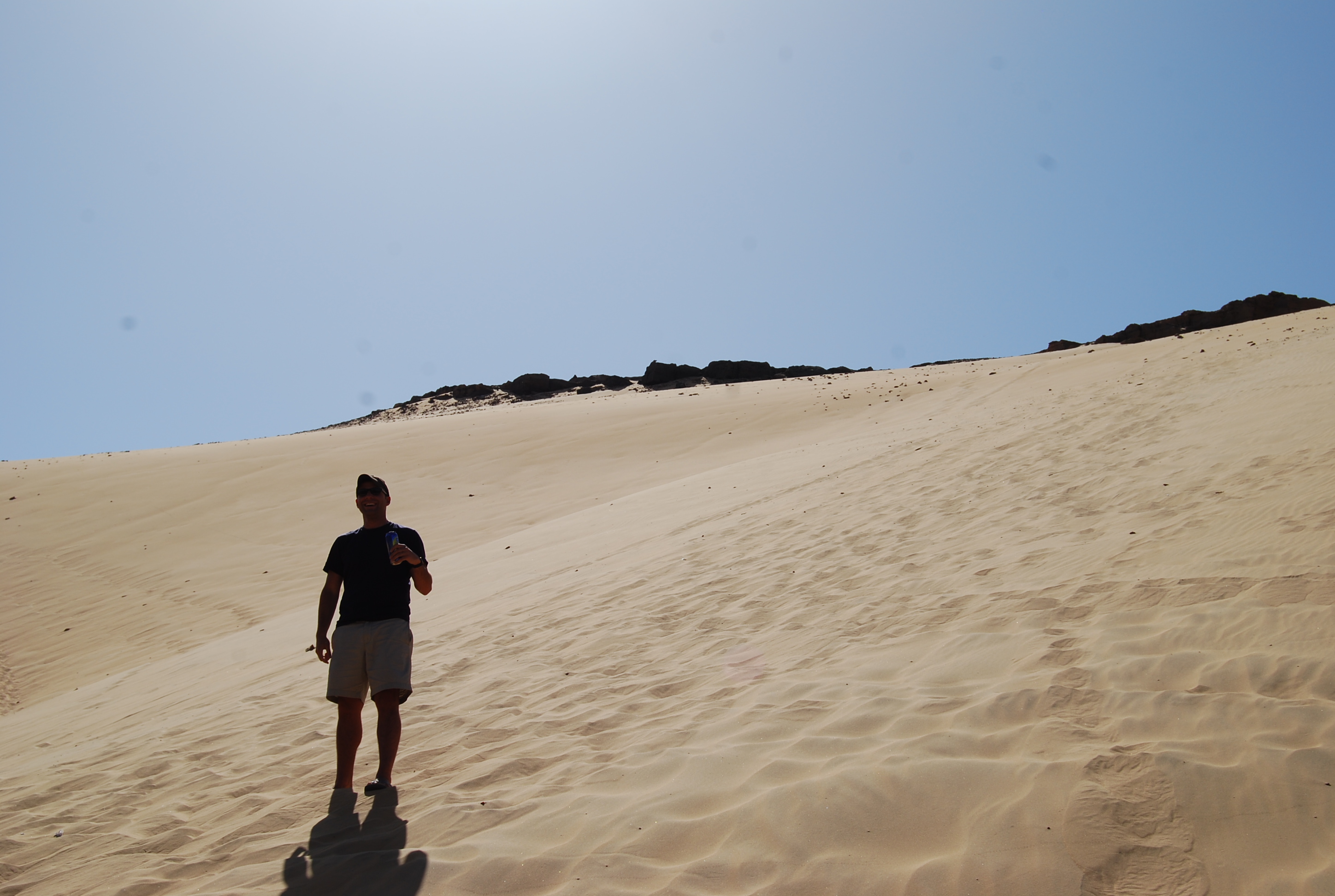
We docked where the world’s longest river meets the world’s largest desert (the Sahara). After climbing a dune, it was time to pop open a refreshing, locally-brewed Stella beer.

A camel ride brought us to the Monastery of St Simeon, said to be one of the best-preserved of the original Christian strongholds in Egypt. Oscar provided a bumpy, yet spit-free, ride.

Exhausted, we returned to our lovely abode to rest up. We leave tomorrow morning at 3:30 a.m. on an escorted police convoy to Abu Simbel, home to the Great Temple of Ramses II.

The remaining Wonder of the World

Day 39
Giza, Egypt

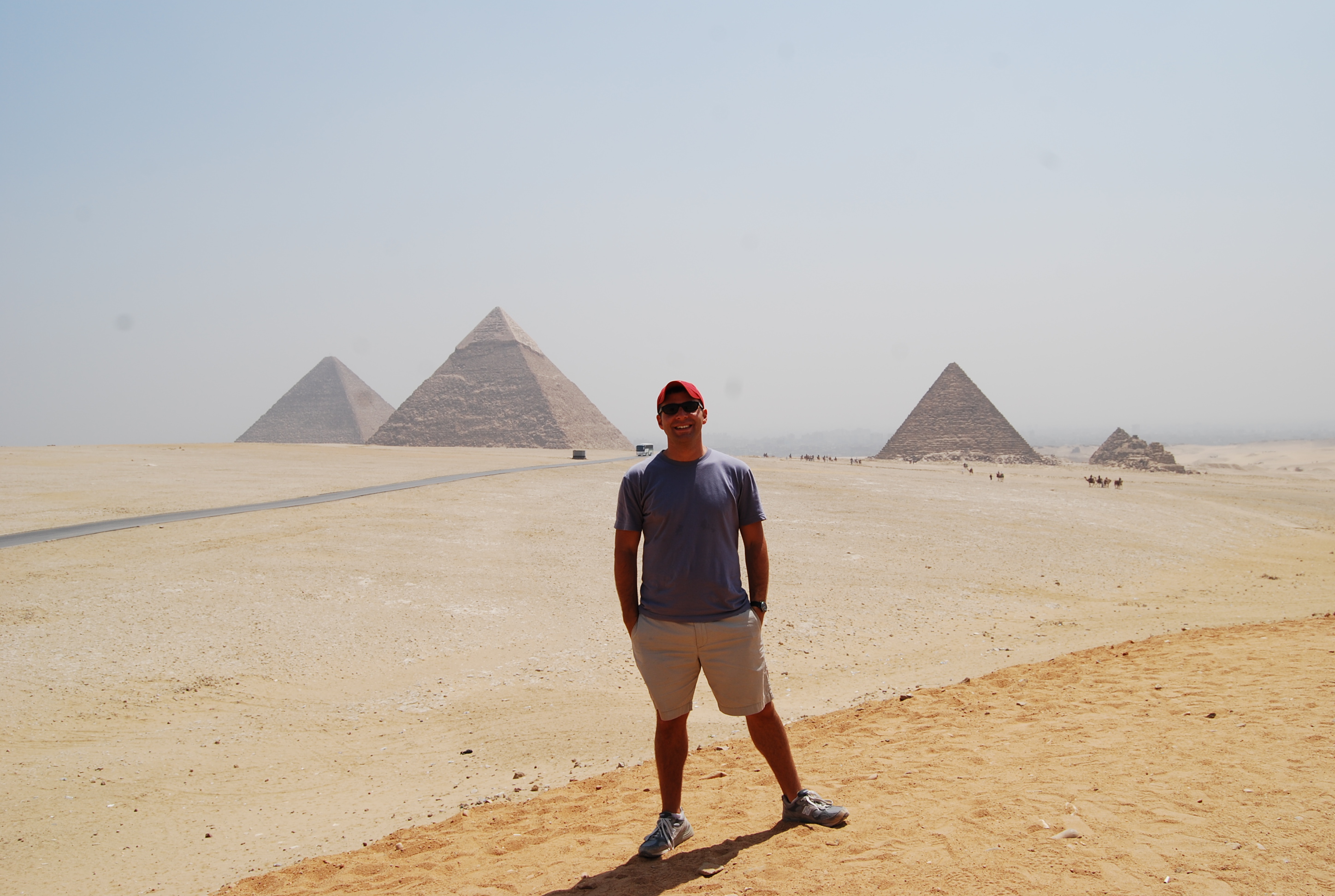
We were up early this morning for the half hour drive to the east bank of the Nile River to see this country’s star attraction: the Great Pyramid of Khufu and the surrounding eight pyramids that comprise the complex. Most people don’t realize this but the pyramids are not in the empty surrounds of the Sahara Desert. Instead, they’re found in Giza, a squalid suburb of Cairo, with filthy streets, decrepit buildings and people living in squalor. So while our first glimpse of the pyramids was breathtaking, the surrounding view certainly left something to be desired.

As one would imagine, Egypt’s largest tourist attraction was mobbed with tourists and those hopping to make a buck off of them. While it was hard to ignore the touts of the camel and horse rides, it took only a face-to-face with the Great Pyramid, built in 2570 B.C., with its 2.3 million blocks, each weighing between 1 – 11 tons to really knock my socks off. Look at the size of these things!

We found some relief at the Pyramid of Khafre, the second largest pyramid at Giza. Some of its limestone covering remains at the peak and a claustrophobia-inducing walk through a tunnel to the tomb provided an inside perspective on how precisely these pyramids were built.

A panoramic vista from above showed the three largest pyramids. It’s hard to tell because of the air pollution, but the city of Giza sits off in the distance.

Our last stoop was the Sphinx — which was much smaller than I’d imagined. I’m not sure if that was because of expectations or because we had just finished touring the massive pyramids. It was no less amazing to see in person though, with the Khafre Pyramid looming behind it.

After a quick lunch, we visited the acclaimed Egyptian Museum. Habitually under-funded and rarely renovated in over a century, it feels more like a warehouse filled with an astonishing 120,000 relics from around the country. With the dizzying number of exhibits and few signs in English, we were thankful to have Hany to guide us through it. Most impressive, at least for me, was seeing the findings from King Tut’s tomb. The level of preservation — for artifacts more than 4,000 years old — was astonishing.

Our overnight sleeper train to Aswan, a city 900 km south of here, leaves in about 2 hours.

A city that never sleeps

Day 38
Cairo, Egypt

My “Egypt Adventure” trip with Intrepid started this morning. It’s a small and diverse group of 12 travelers from around the world — ranging from some young U.K. solo travelers to a well-traveled New Zealand couple — with yours truly the only one representing the U.S. of A. We met our guide, Hany, who will be with us for the next 8 days. He provided some background on this city of 18 million — about how the majority of Egyptians live on less than 300 pounds, or $60USD, a month — as well as some tourist etiquette on the Art of Bargaining (even after you’ve got them down 50%, they’re still making a hefty profit) before we jumped in a couple of taxis and saw what this city had to offer.

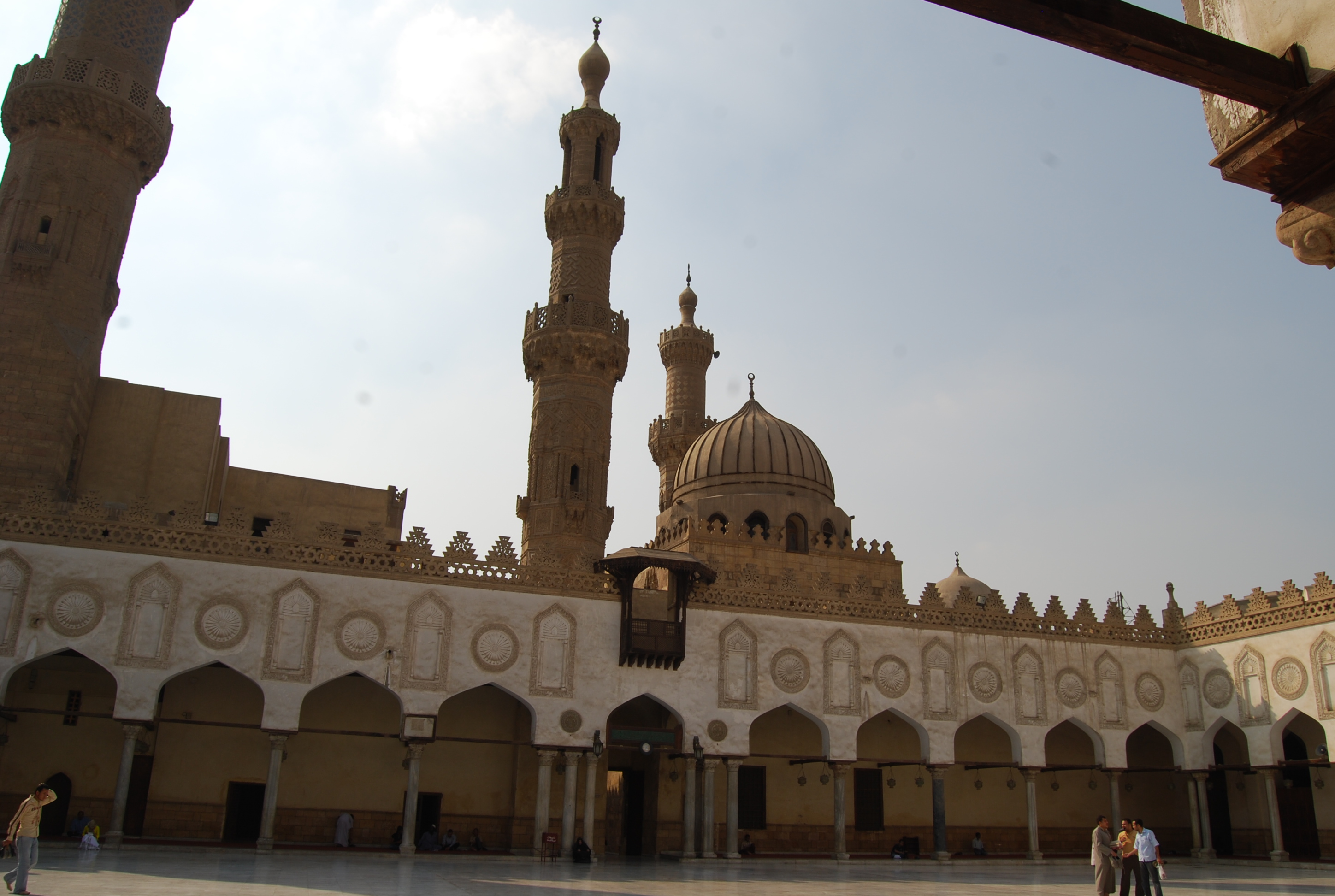
We made our way to Islamic Cairo and the Al Azar mosque, which built in the first century, is the 4th oldest in Egypt. It has since become one of the largest Koranic teaching schools in the country. As we made our way through the courtyard, the call to prayer sounded through the minaret’s speakers above us and worshipers flooded in.


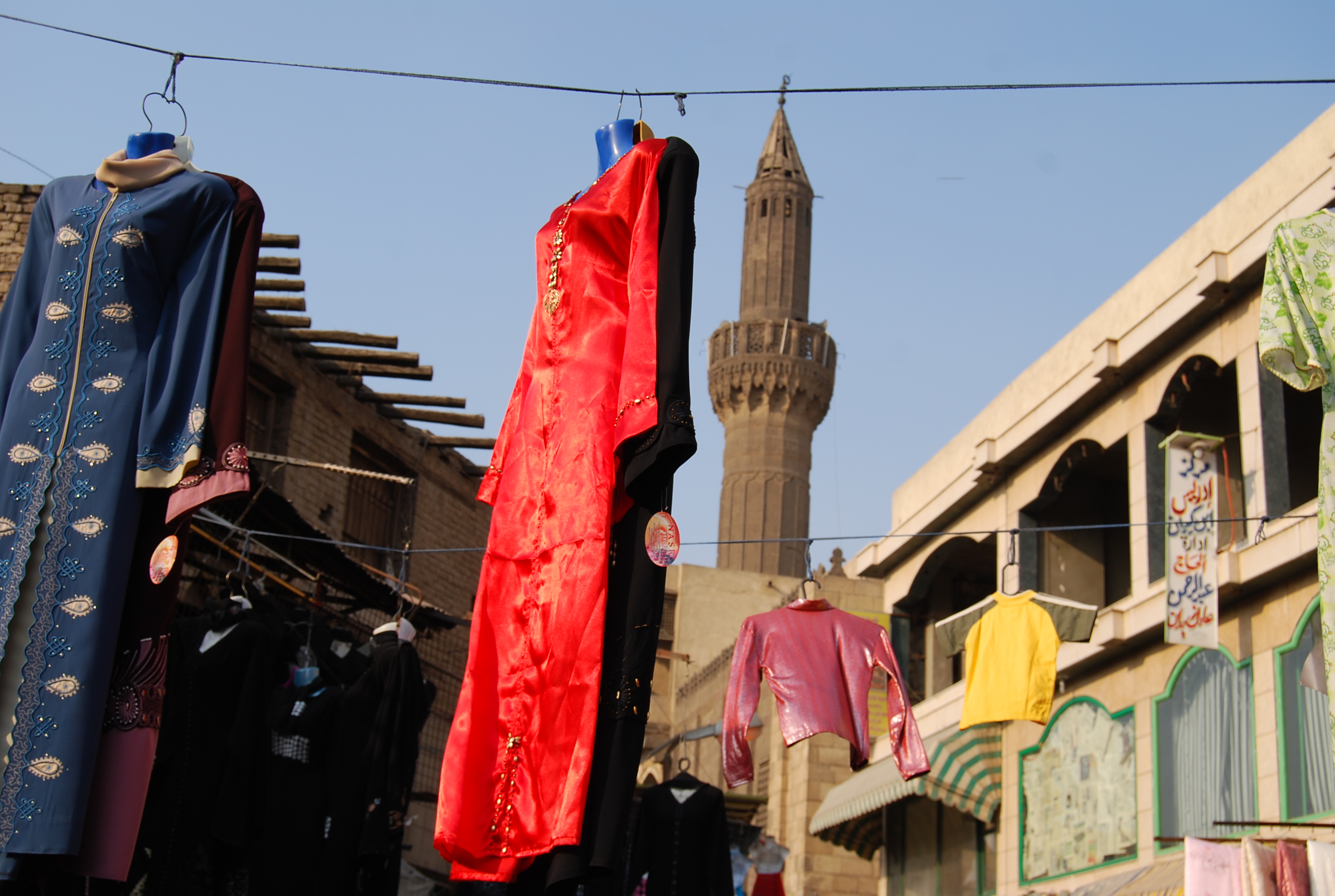
I’ve seen markets in Morocco and markets in Turkey. Are the markets in Egypt much different? Not really. Enterprising Egyptians will sell anything and everything — from hand-picked cotton to cotton shirts and living rabbits to slaughtered chickens. The Khan al Khalilli is the city’s largest “tourist” market with plenty of pyramid paperweights and pushy shopkeepers grabbing you by the arm to pull you into their stores (which may very well also have been Made in China).

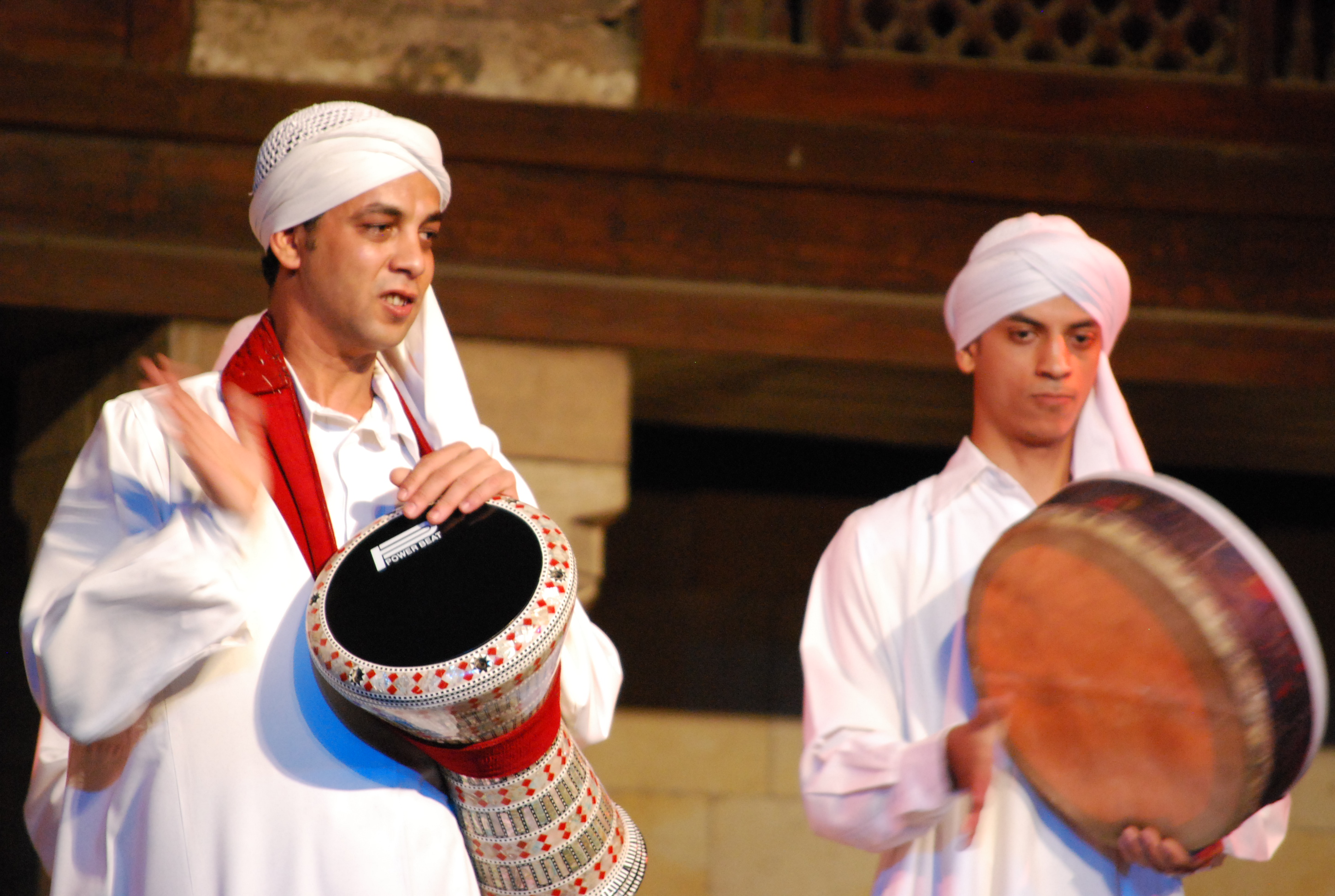
Our last stop of a busy first day was to see a traditional Sufi show. This is like an Egyptian rock concert, completely deafening, with some cheesy lighting and very cool dancing.

The taxi ride back to our hotel was almost a joke. Egyptians don’t use their headlights because they want to “save energy.” It was 11 p.m. and Cairo was completely buzzing, there were hordes of people everywhere. Shops in this city seem to be organized by their merchandise type: on one street, stores were selling only car parts; on another shoes. One of my travel companions says he saw a street earlier today with just door handles — guess you never know when you’ll need a new doorknob, even after midnight.

Streets are completely filthy, garbage dumps are overflowing and the air is choked with gas fumes. Egyptians drive some of the oldest, most beat up cars I’ve seen anywhere. On our way to the Islamic quarter, we saw an ambulance with its lights and siren wailing — only it had been converted to a passenger bus (perhaps it was an express). Crazy!

Being on this Intrepid trip is a lot like being on an adult teen tour. There’s a leader, who is constantly counting heads, showing us meeting points and trying to impart some wisdom on a distracted audience. But traveling like this is worry-free, there’s no thinking about how to get from Point A to Point B or whether you’ve found a safe spot to eat lunch. It’s welcome after having traveled independently for the last 40 days — and it’s amazing how much you can enjoy and experience a place when the basics have been taken care of for you.

Back in Africa

Day 37
Cairo, Egypt

It was a stressful day of traveling — starting in Santorini, where paranoid tourists furiously pushed and shoved through an interminable line at the airport out of fears that after yesterday’s strike, the only afternoon flight off this island had been overbooked. In Athens, the far from competent counter clerk gave me a minor heart attack after she couldn’t locate my reservation until she had made several phone calls in a language that’s Greek to me (no pun intended). Then, aboard an ancient EgyptAir jet, it was hard not to close my eyes and just hope that the plane would return to its motherland in one piece.

Alas, I’ve arrived in Cairo, my sixth country on this trip around the world. After buying a visa, getting stamped in and finding my backpack, it was time to brave the fast-talking cab drivers, who were ready and waiting to take me for a ride. I’ve learned some lessons since Morocco — fares are always negotiable and never pay more than you’re supposed to. The touts came almost immediately: starting at 110 Egyptian pounds, or about $20USD. My magic number was less than half that. It took some persistence and haggling, but eventually I’d found my man, agreed on the 50 pound price and hopped in his junker black and white taxi. Patting myself on the back, we exited the airport parking lot, at which point my cabbie turned around and said, “You pay.” After an intense stand-off, grudgingly, my wallet was opened to fork over another 5 pounds for his parking — ridiculous, but guess you can’t win them all.

We drove through the somewhat controlled chaos that is Cairo traffic. Horns are constant. There literally isn’t more than a second or two without someone blasting one — either in a friendly “hello,” or more likely, a “get the hell out of my way!” Although walking through the metal detector at the entrance to the Victoria Hotel was an ominous welcome to where I’ll be spending the next two nights, the accommodations here are actually quite pleasant. The building is over a hundred years old and has what Lonely Planet calls a “faded grandeur revamped in 1970s look.” The ceilings are high and my room, #127, is quite spacious.

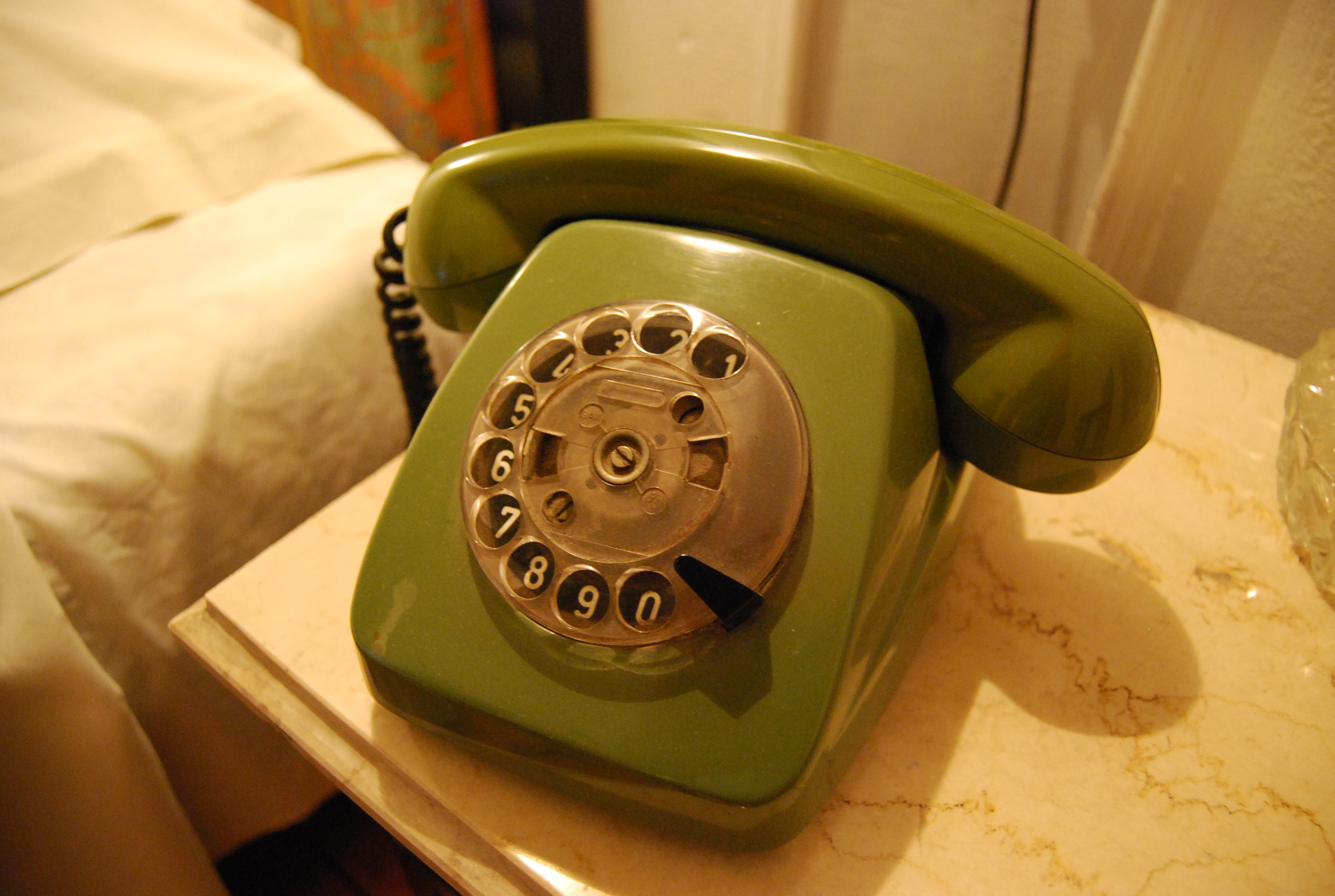
Plus, the phone is really cool and retro. These probably sell in SoHo now for like $200 bucks.

After settling in and taking a little stroll around the neighborhood (note: cross streets by tailing the locals), it was back to the hotel for some dinner and a couple locally-brewed Stella beers. My trip with Intrepid through this country kicks off tomorrow morning.

Benefiting from an airline strike, part two

Day 36
Santorini, Greece

The Greeks like striking more than they like feta cheese.

Earlier this week, an Olympic Airlines strike led to the cancellation of our flight from Athens to Mykonos. Today, an Aegean Airlines strike left me stranded on this island — preventing me from making my 2:30 p.m. flight from Athens to Cairo. Stranded might not be the right word here though. There are certainly worse things in the world than needing to spend an additional day on beautiful Santorini.

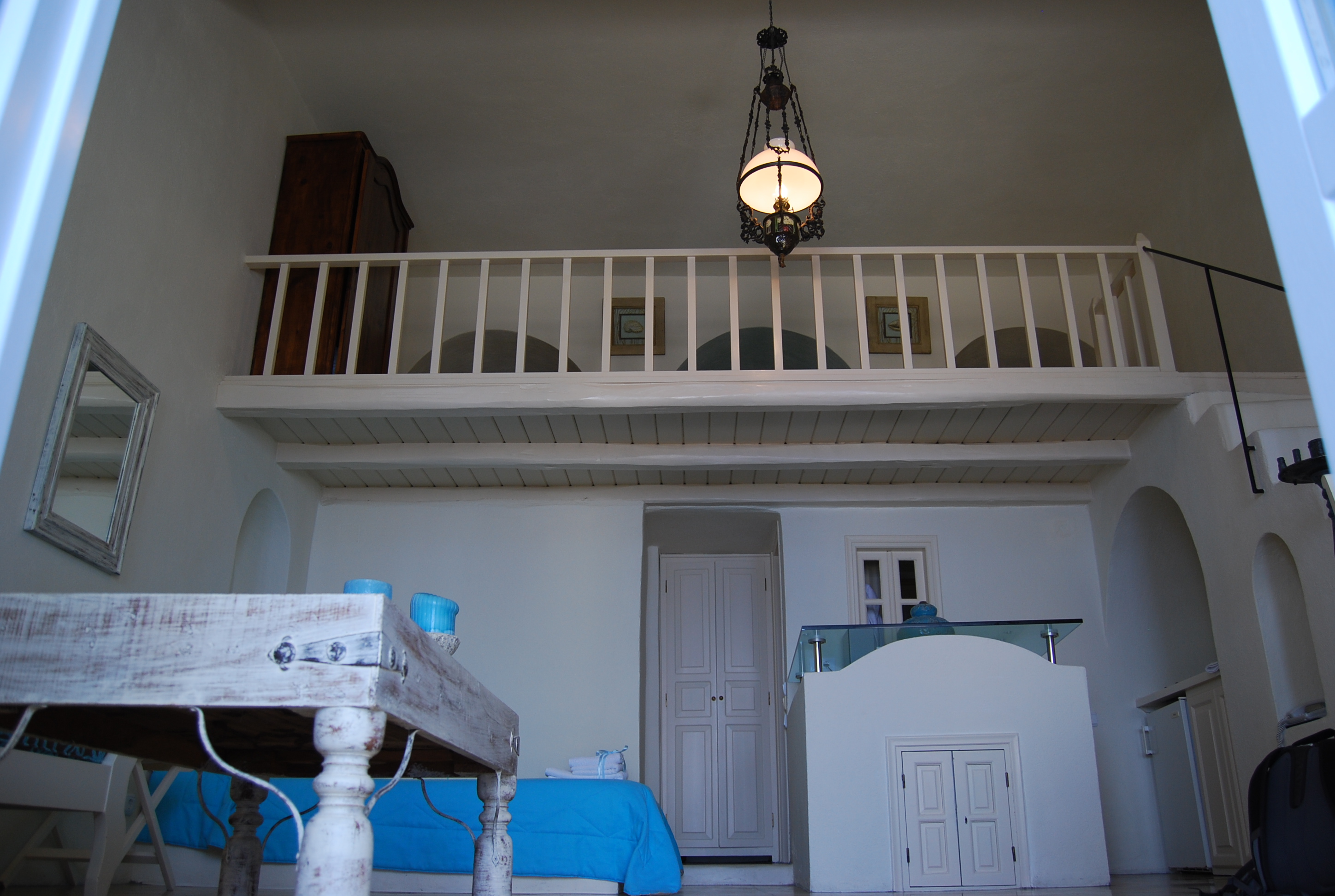
I’ve been lucky that for every strike (and there have been several), there has been a gracious and understanding hotel that can accommodate me. After learning about the flight, Enigma offered not only to put me up for the night, but also to upgrade me to their jacuzzi suite. The duplex apartment is about 50 steps higher than our last place and features an inviting tub just outside the entrance.

The best news of all? Since this is considered a “travel interruption,” my trip insurance is picking up the day’s tab. I’ll take that.

My second attempt at flying to Cairo via Athens (hopefully) leaves tomorrow at 12 noon.

Setting sail for the volcano

Day 35
Santorini, Greece

After spending the morning snooping (Dad’s word, not mine) through Fira’s shops, we took the steep cable car ride down to the Old Port for a sail around Santorini. We could have gone by donkey, or walked the soiled path like my parents did when they were here 27 years ago, but the smell kept us away.

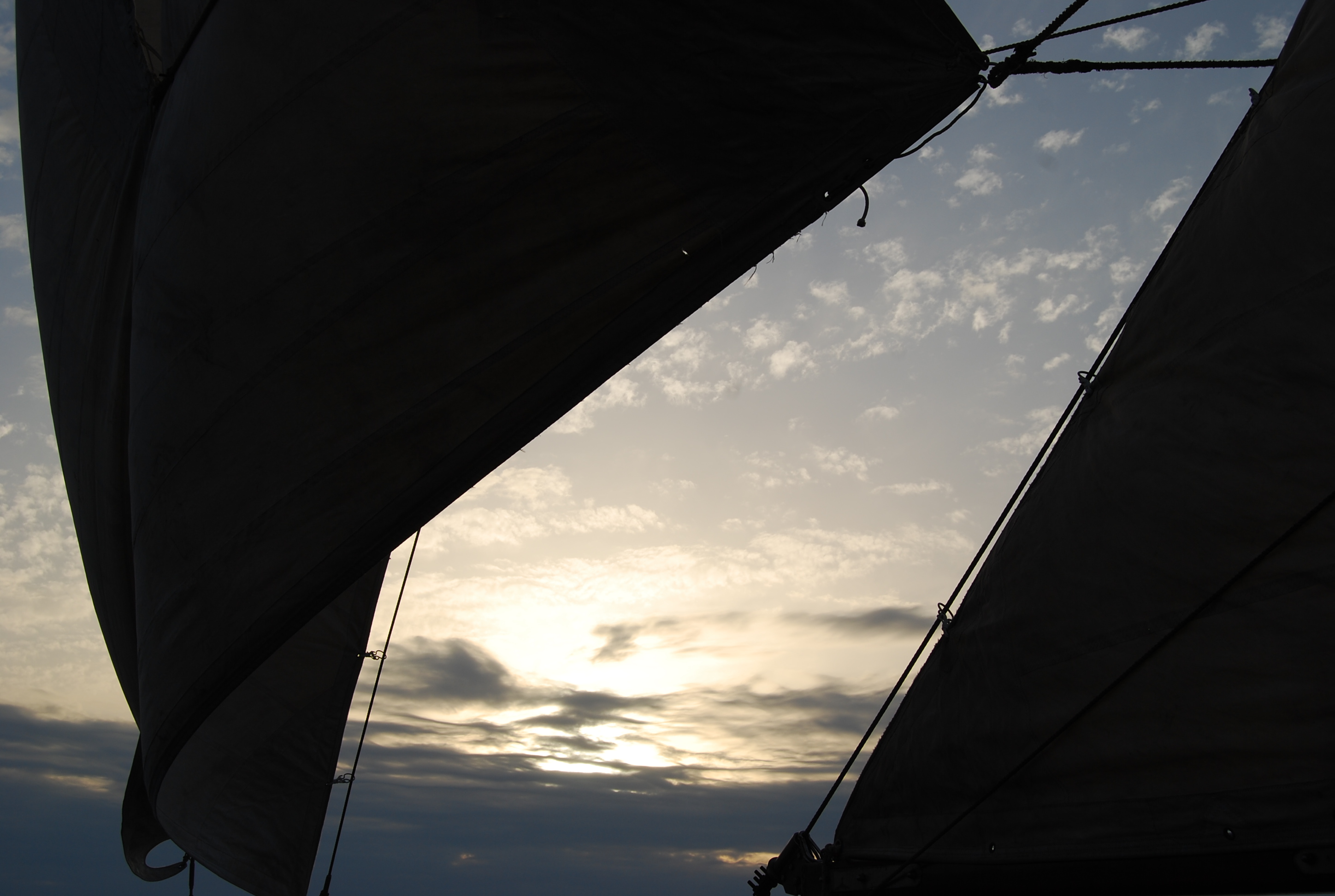
Our boat, Thalassa, was an exact replica of a schooner used in the 18th century. With only about 30 passengers on board (including a really nice young couple from Texas traveling around Europe for the month), there was plenty of space, and we soon started on our way to Nea Kameni, the port at the volcano, while Fira sat off in the distance.

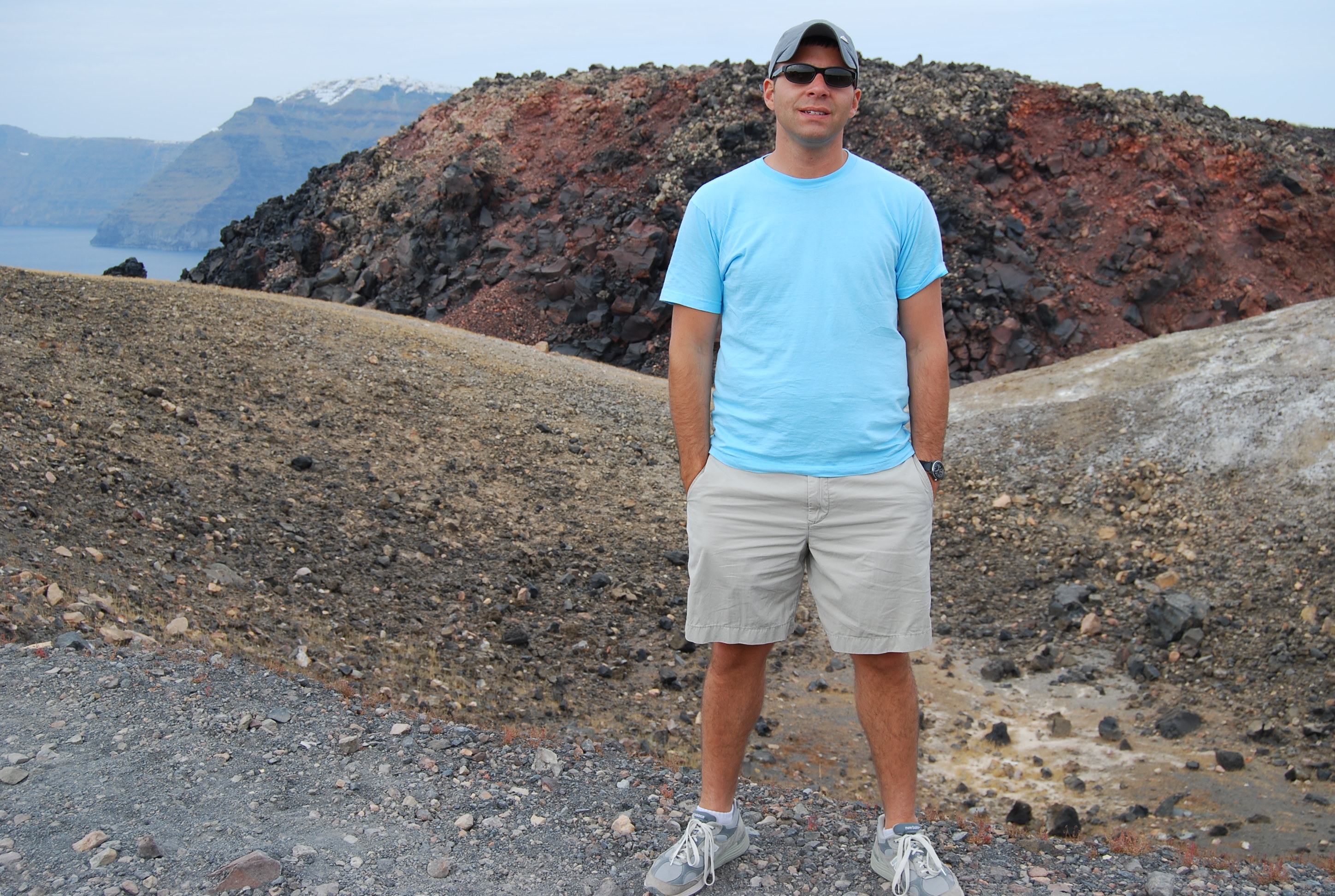
We arrived at the volcano, a desolate place with no vegetation, and hiked to the rim of a crater left by an eruption in 1940. It was a steep walk up past steaming vents, but the view of the islands and sea at the top were pretty amazing.

Our next stop were the “hot springs” on the other side of Nea Kameni. The brochure for this trip described the hot springs with quotation marks — we didn’t fully grasp why until we arrived. The hot springs are not located inland, they’re actually just heated channels of the Aegean Sea right next to the island. So, swimming in the frigid water is the only means of getting to them. There was an intense game of chicken on the boat, as everyone waited to take the plunge. After a few Aussie women jumped in, it was time. Unfortunately, in Dad’s excitement to catch his son’s amazing feat of courage, he dropped the Nikon lens cap into the sea. May it R.I.P — and may we find a replacement before the dust of Cairo ruins my camera.

Next, we sailed past Thirassia, the second largest island of the caldera complex, and whose lights we see glimmering every evening from our patio. It has a tiny port and some of the bluest water I’ve ever seen.

Finally, we made our way to Ammoudi and Armeni, small ports at the base of Oia. A multi-talented sailor pulled out a saxophone and serenaded us as the sun set.

Back at the hotel, Dad packed for his trip to the States. His bag, stuffed now with much of my clothing, is huge. The bell boy faces an ominous challenge tomorrow hauling it up the hundred steps to the lobby. My flight to Cairo, Egypt via Athens departs shortly after his.

Sesame chicken in Santorini

Day 34
Santorini, Greece

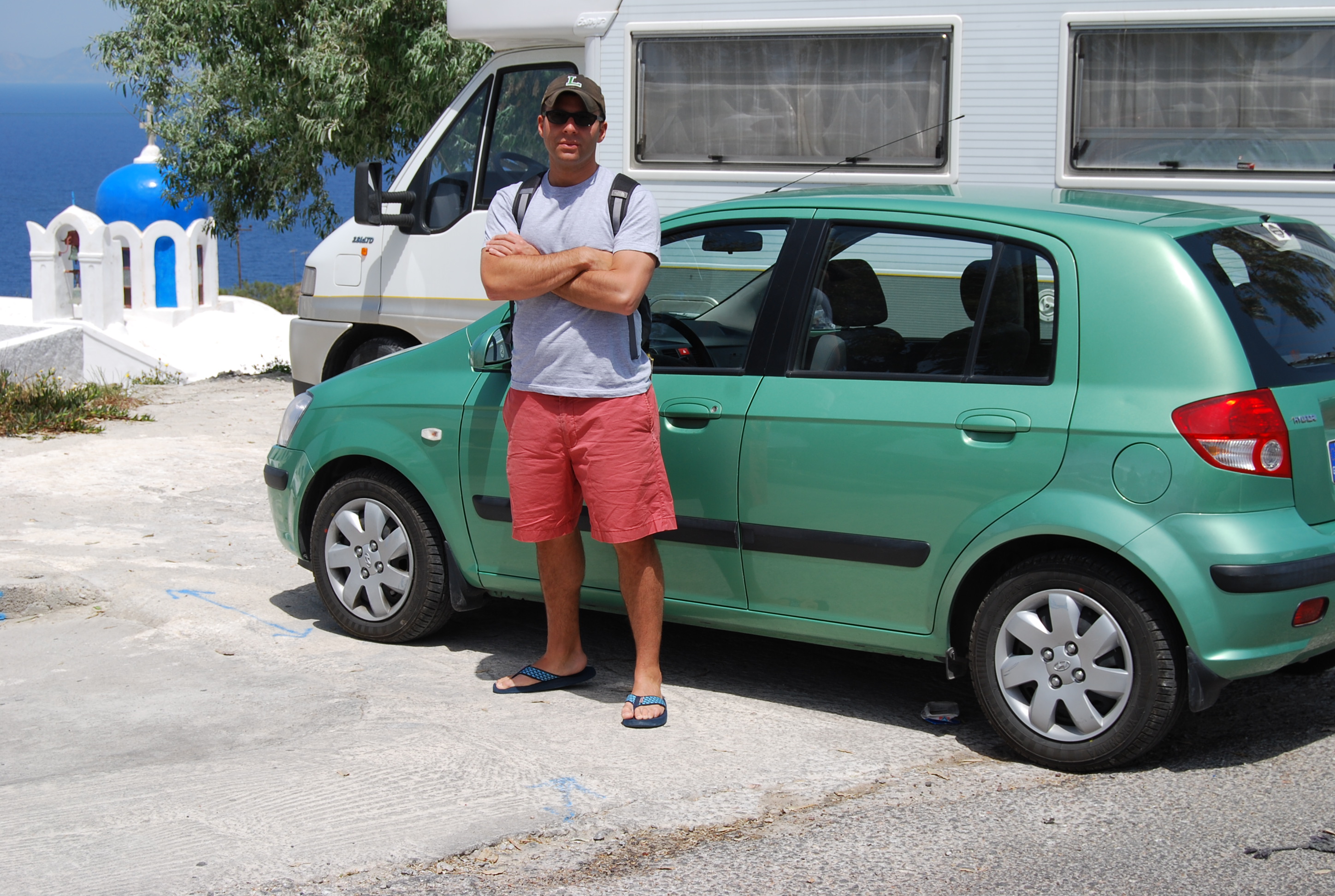
With so much to see on this small island, we opted this morning to rent a bad-ass lime green Hyundai. It was a four-door and automatic. Behind the wheel of this 4-cylinder, it became immediately clear that no Greeks would be messing with us on the road today.

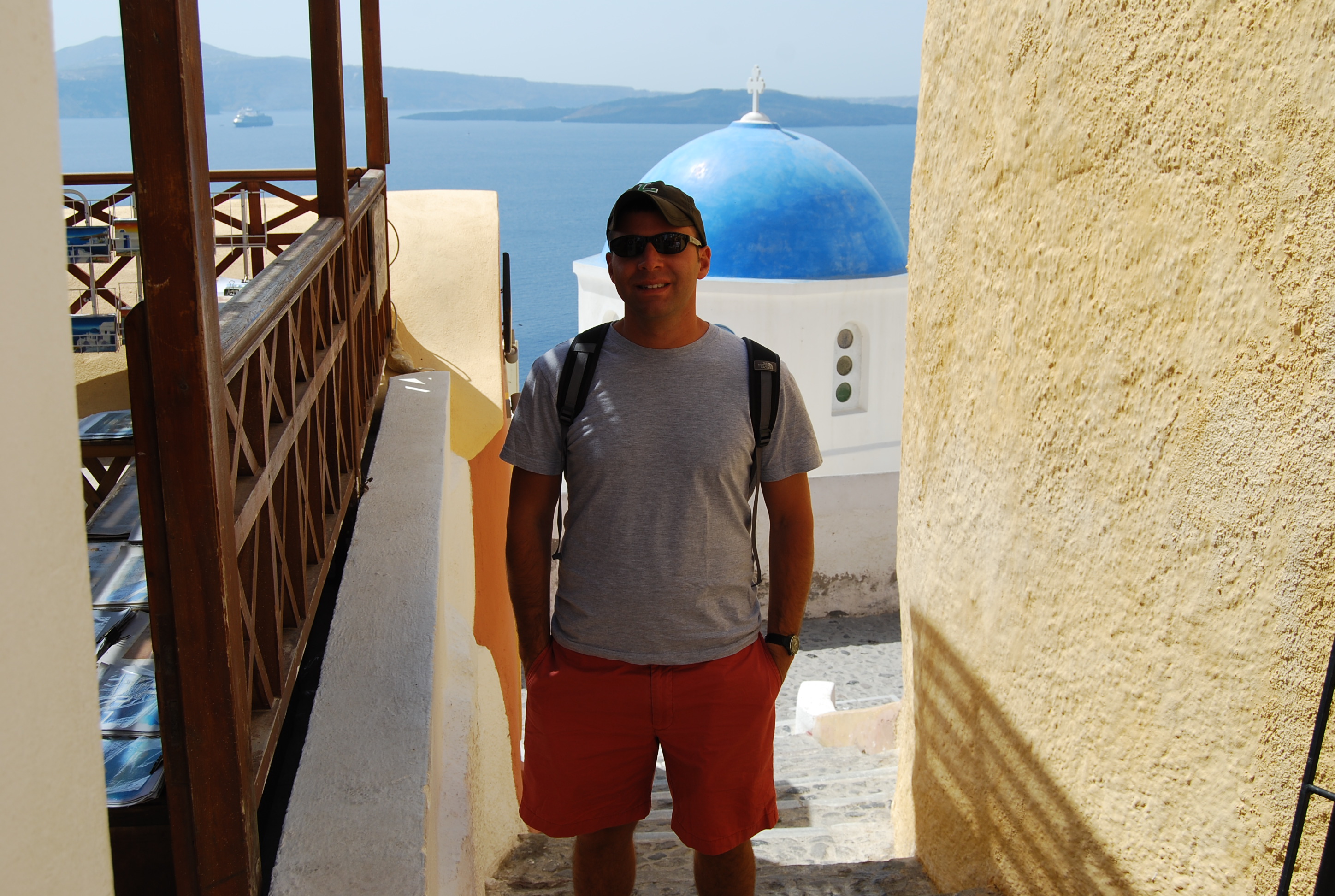
Our first stop was Oia (pronounced e-ah), a village that, like Fira, has been built precariously into the mountainside and offers tremendous views of the caldera and Aegean. It was once home to wealthy sea captains. Today, its narrow streets are lined with art galleries, jewelry stores and small shops selling unbelievable amounts of tourist schwag.

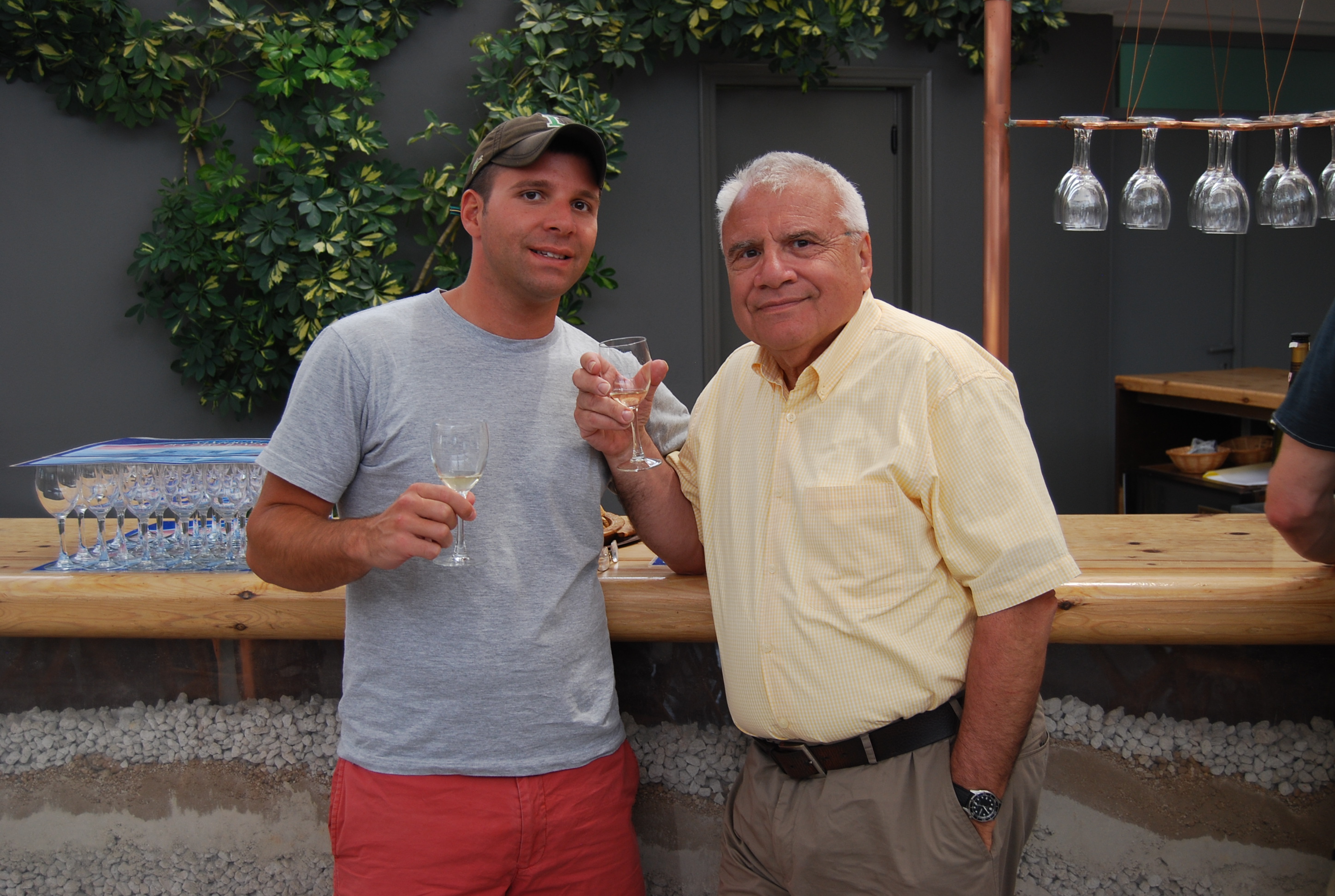
Santorini is well known for its wine, in particular a light white and dessert. We set out for Boutari Vineyard, the winery that produced the bottle we enjoyed yesterday afternoon. Five euros got us a tasting of their four varietals (two whites, a red and dessert).

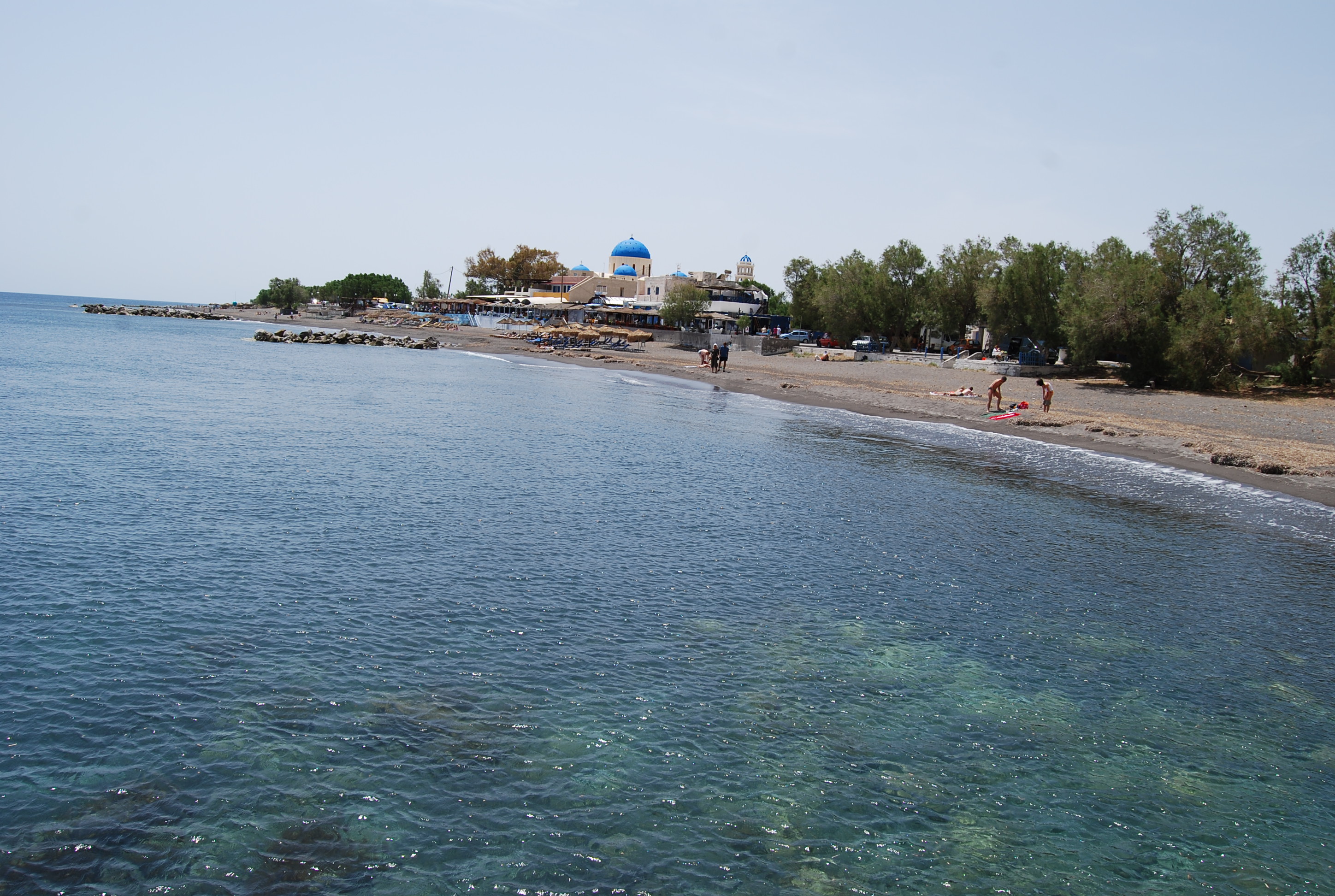
Next, we drove south towards Perivolas, where a volcanic, black sand beach runs for miles along the water.

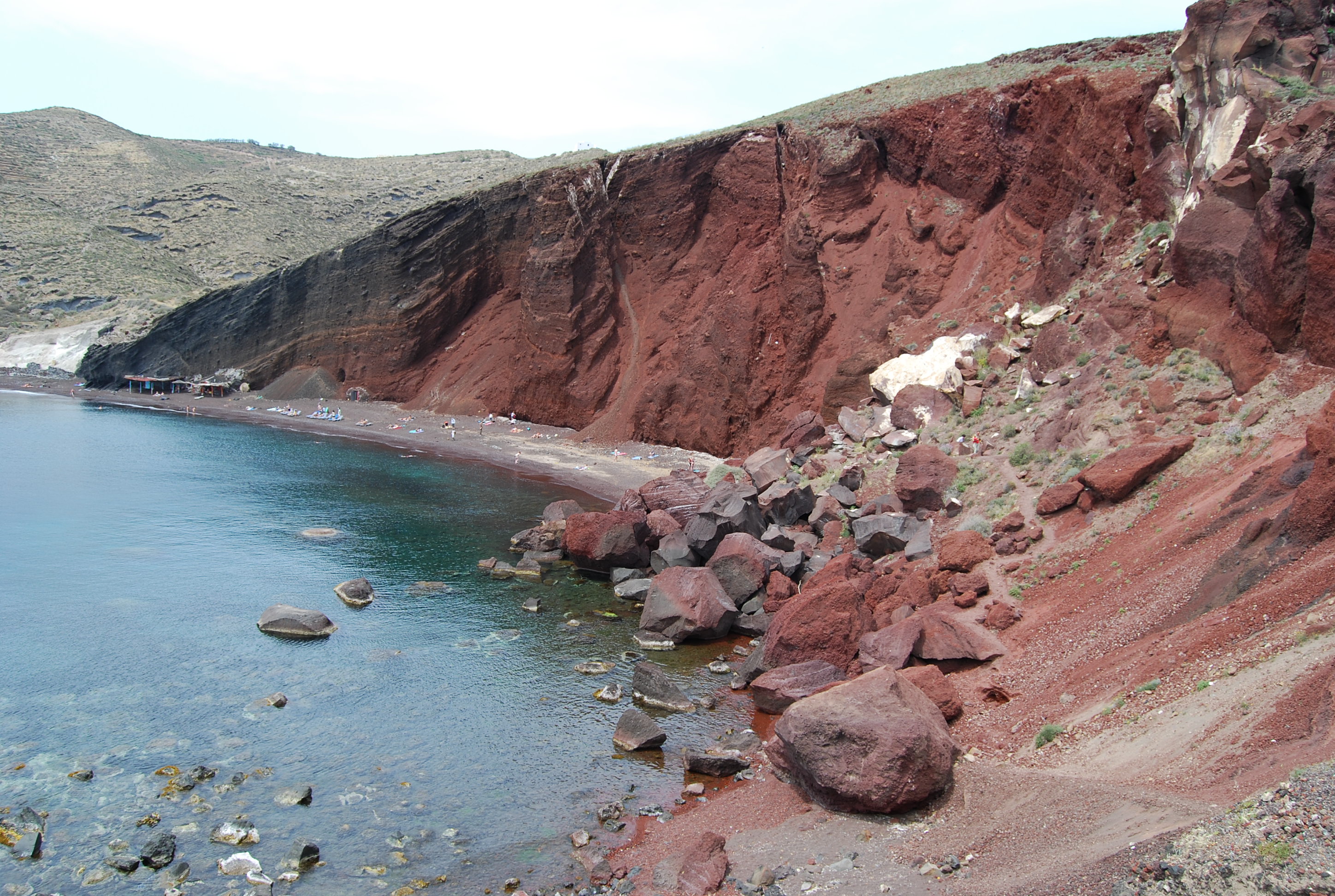
Just about 10 minutes away, in nearby Akrotiri, is Santorini’s unique Red Beach.

Our final destination was Pharos, the lighthouse on the south-eastern tip of the island. We returned the car and rested up at the apartment before heading into Fira for dinner. Greek food has been great, but after eight days and way too many gyros, souvlakis and mousakkas, we’ve started itching for something different. Walking through town, we came across China Restaurant — this is the actual name of the restaurant — and it occurred to me that I’ve not had any Asian food (Chinese, Japanese, Thai, Malaysian) in over a month. This has to be some type of record.

We shrugged, took our seats and ordered some extra spicy sesame chicken, fried rice and chicken and broccoli. It wasn’t Hai Hong and it wasn’t Meiwah, but you know what? It wasn’t half bad.

Livin’ on the (caldera) edge

Day 33
Santorini, Greece

My eighth ferry of this trip around the world left Mykonos a little before 3 p.m. — about 2.5 hours later, we had arrived here in Santorini, a spectacular island with a long and tumultuous tectonic history. Around 1650 B.C., Santorini was ground zero for what some have described as the largest explosion in the history of our planet. A series of earthquakes and volcanic activity created a 36 km high ash cloud. So much magma (about 30 km worth) was spewed that the center of this island actually collapsed, forming a caldera that the Aegean Sea quickly filled.

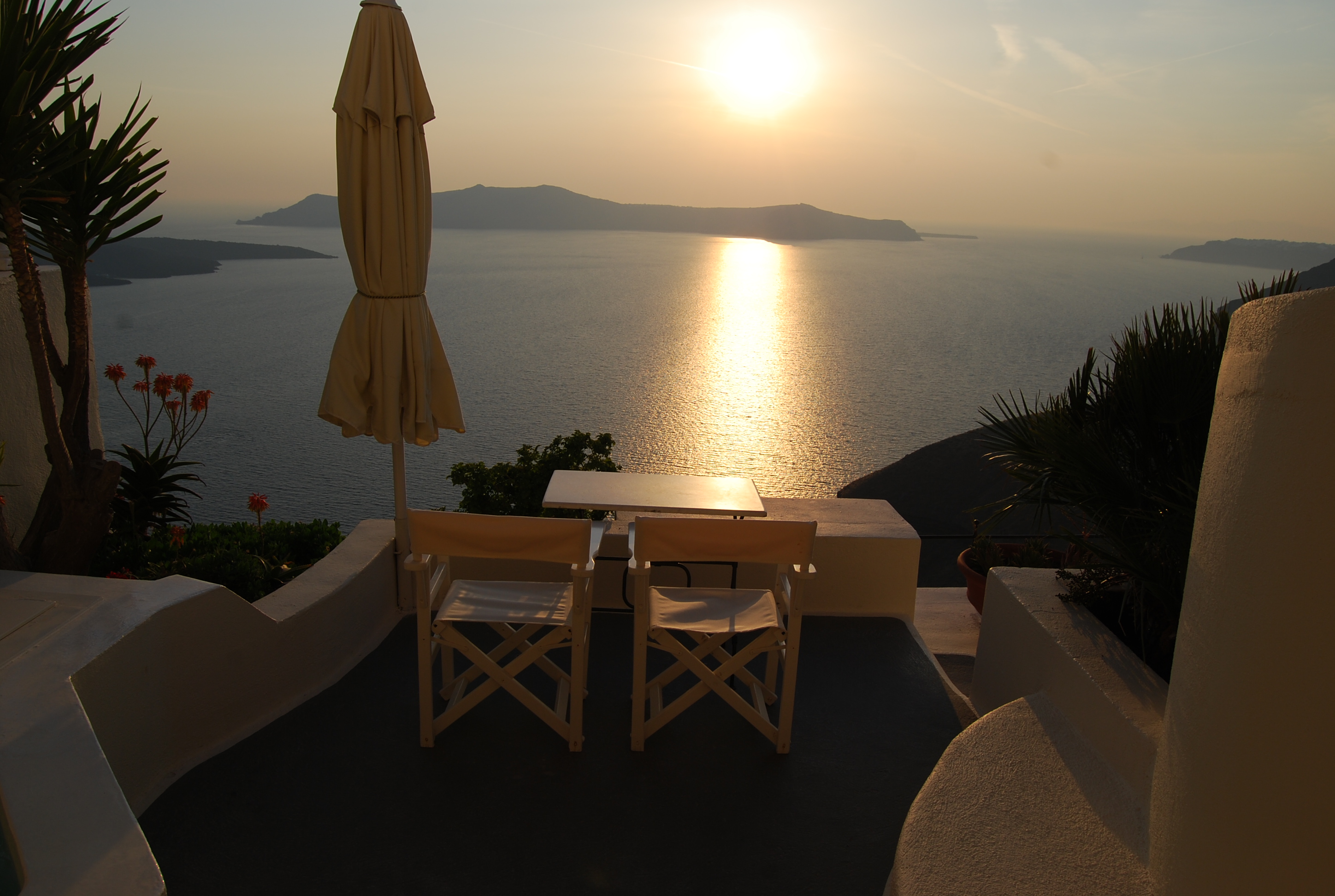
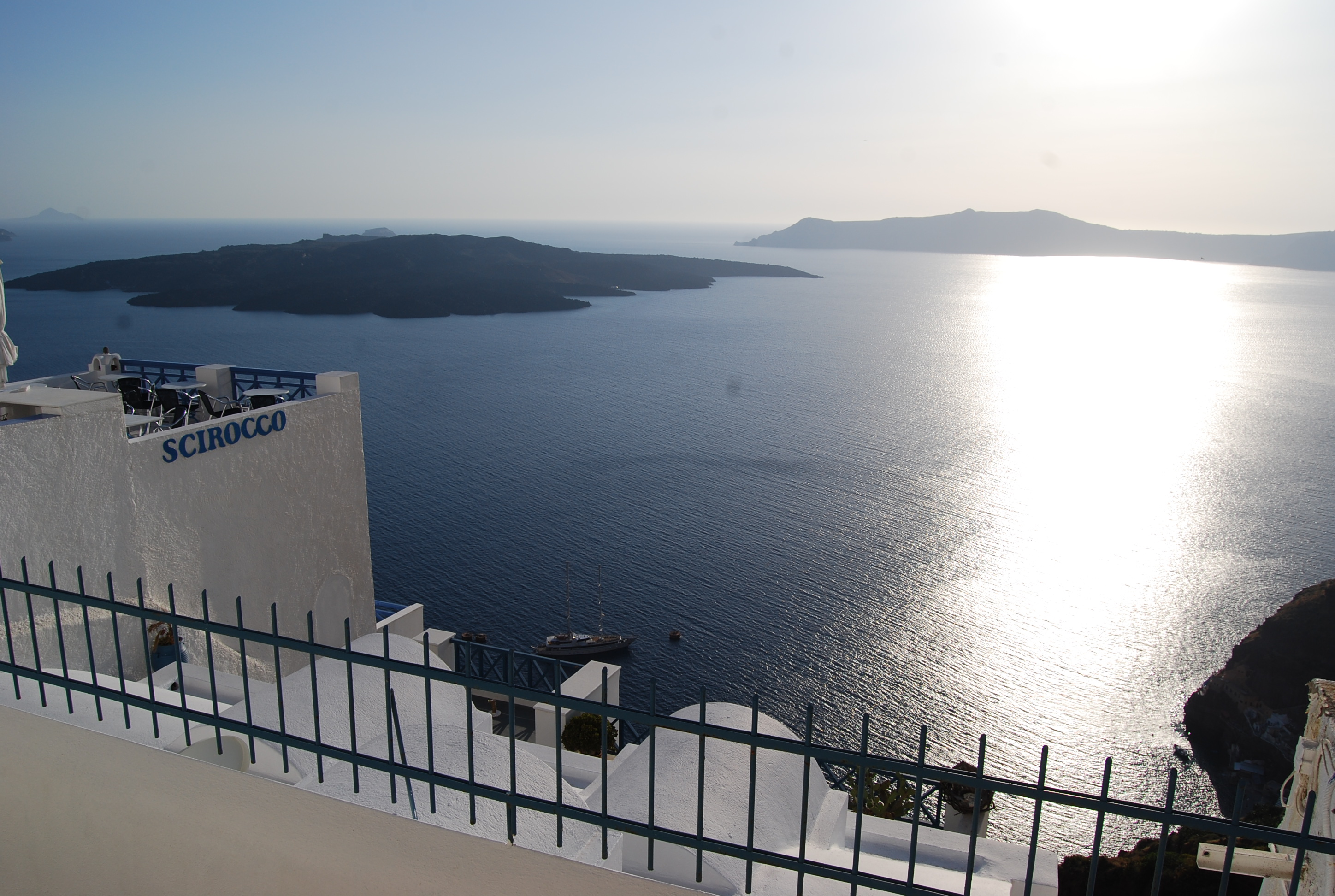
After a short transfer from the port of Athinios, we arrived in Fira, the largest town on the island. Our two-bedroom apartment, Enigma, has been built directly into the island’s rocky mountainside. It’s about 100 steps down to our front door, but the views of the multi-colored cliffs, surrounding buildings and the caldera at sunset were dramatic, to say the least.

All we needed to complete the picture? A glass of local Santorini white wine.

Problem solved.

Windmills and white-wash

Day 32
Mykonos, Greece

We didn’t think breakfast could get much better than what we had in Istanbul — then we saw the buffet this morning at the Mykonos Grand. Made-to-order omelets, fresh fruit, Greek yogurt, all so delicious that it not only fueled us for our excursion into town, but actually held us until dinner at 7 p.m.

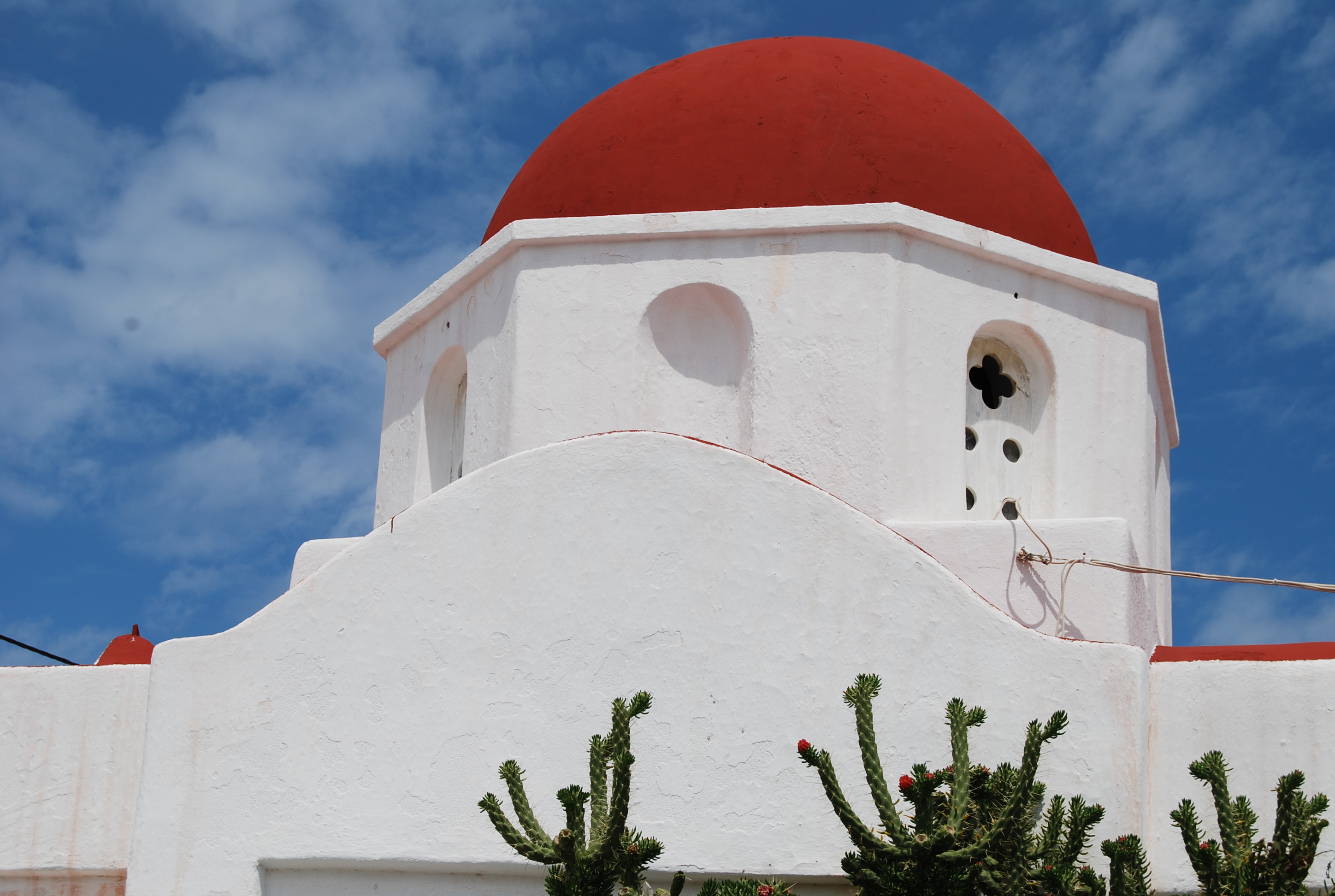
Afterwards, we made our way to Hora, the main port town, to walk the narrow alleyways lined with cafes, clothing boutiques, jewelry shops and art galleries. The morning clouds would soon burn off, creating a blue sky backdrop to the white-washed buildings and their vibrantly colored roofs.

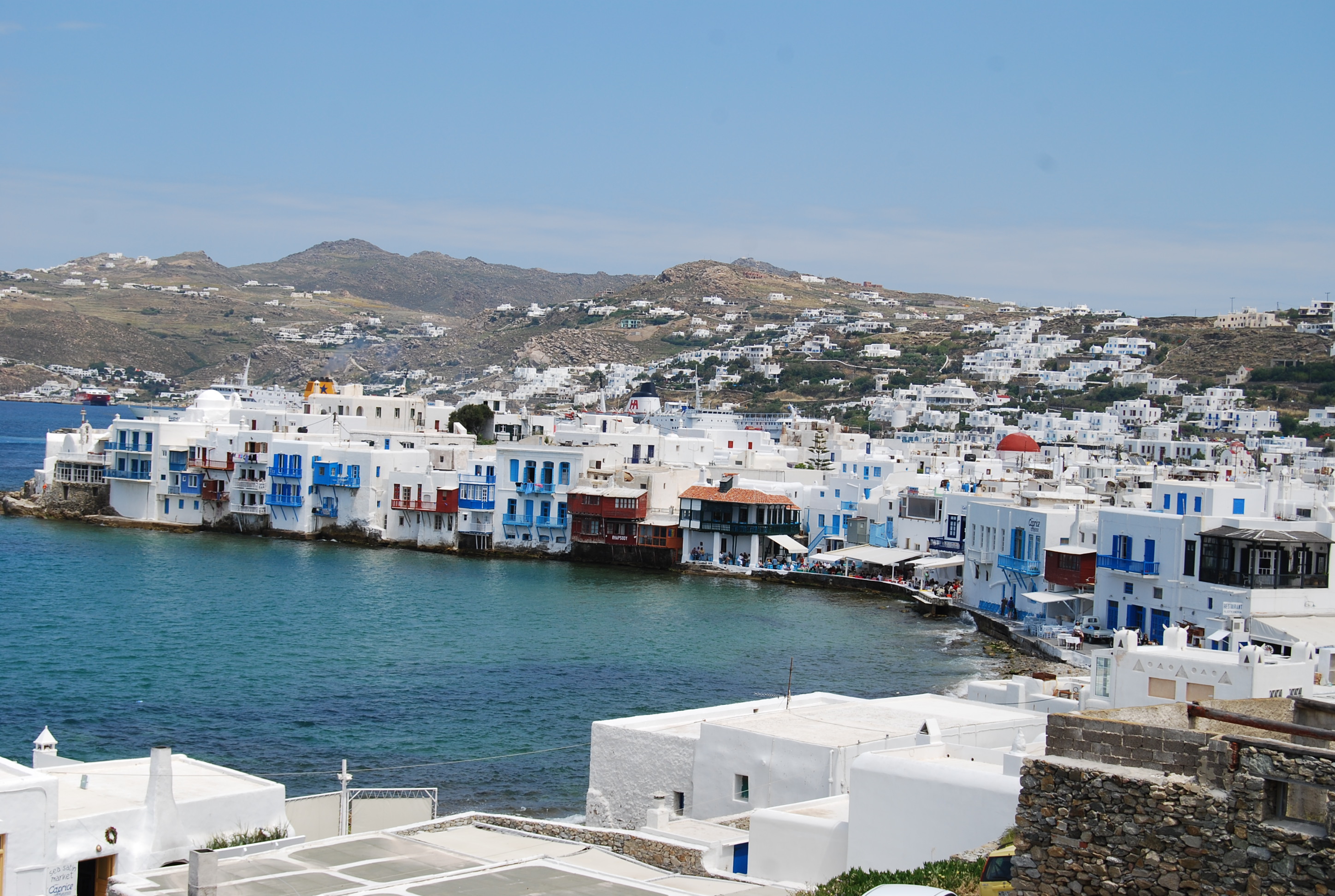
We walked up to the old remaining Mykonos windmills from which there’s a great view of Little Venice, a promenade along the Aegean Sea filled with outdoor cafes and restaurants.

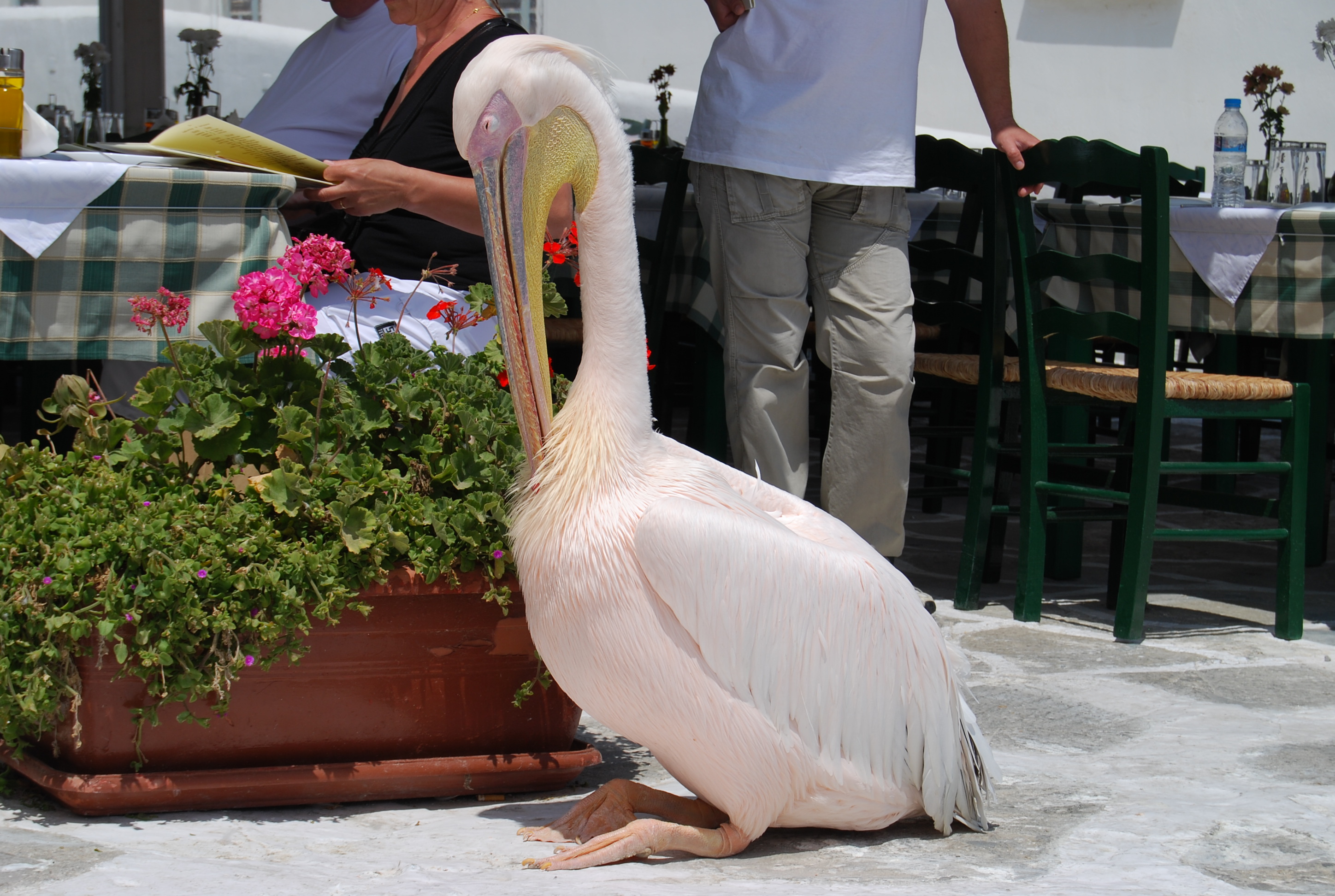
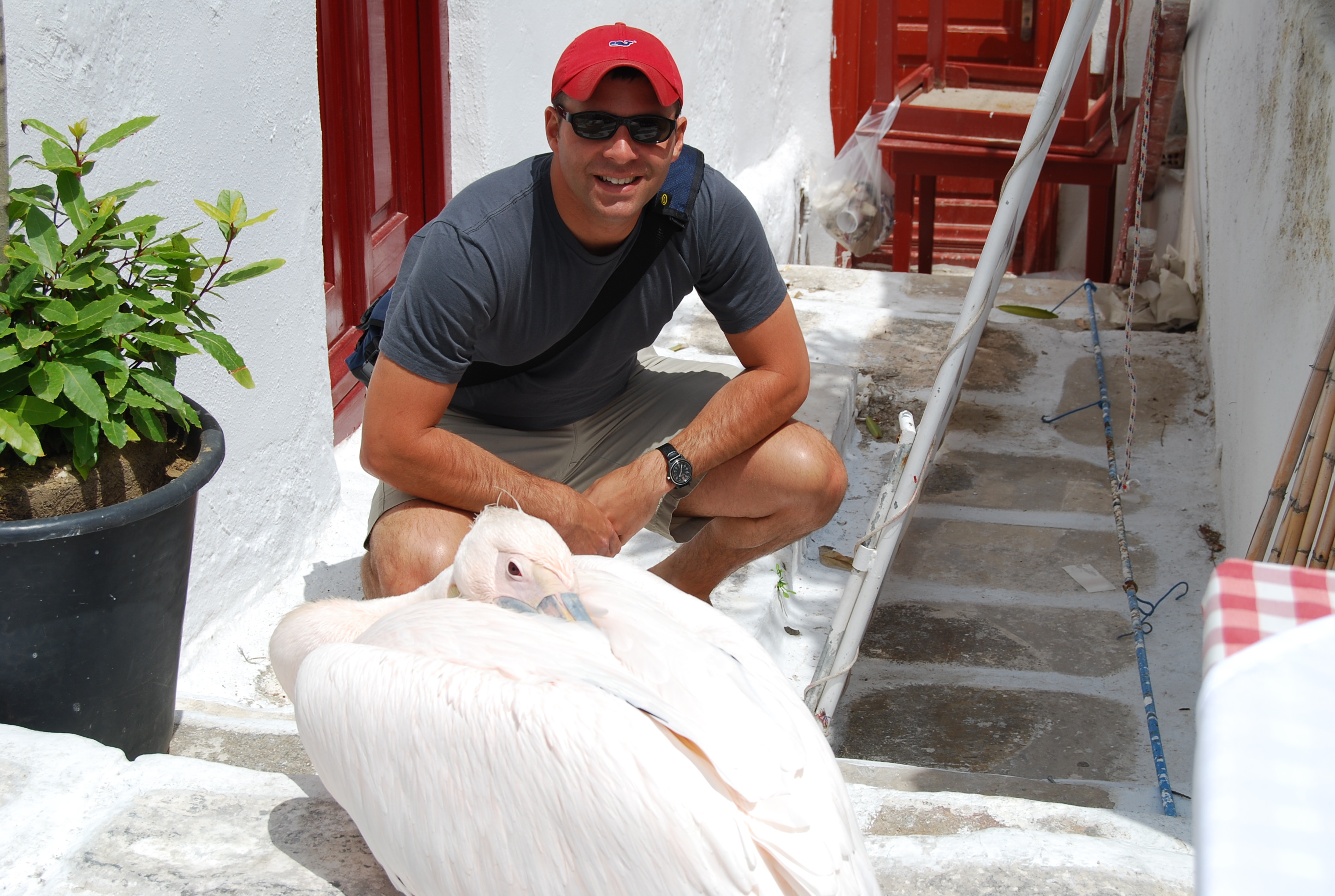
On our way back, we came across what at first looked like several statues of pelicans. Upon closer inspection, we realized that these gigantic beasts were actually alive — and not scared of humans!

We spent the rest of the afternoon reading, lounging around the pool and resting up for our trip tomorrow to Santorini.