Sliding into the Costa del Sol

Day 11
Malaga, Spain

Our overnight Acciona Trasmediterranea ferry from Melilla was actually quite comfortable. We had a cabin, and perhaps more importantly, a bathroom with shower, so we were able to wash up before disembarking here at around 8 a.m. We bid farewell to the boat and took a taxi to Silken Puerta Malaga, our hotel base for the next two nights.

Malaga is Andalusia’s second largest city, and with its high-rise buildings and active port, doesn’t offer the best first impression. Many use it as an access point to the Costa del Sol, which is unfortunate, considering how much it has to offer.

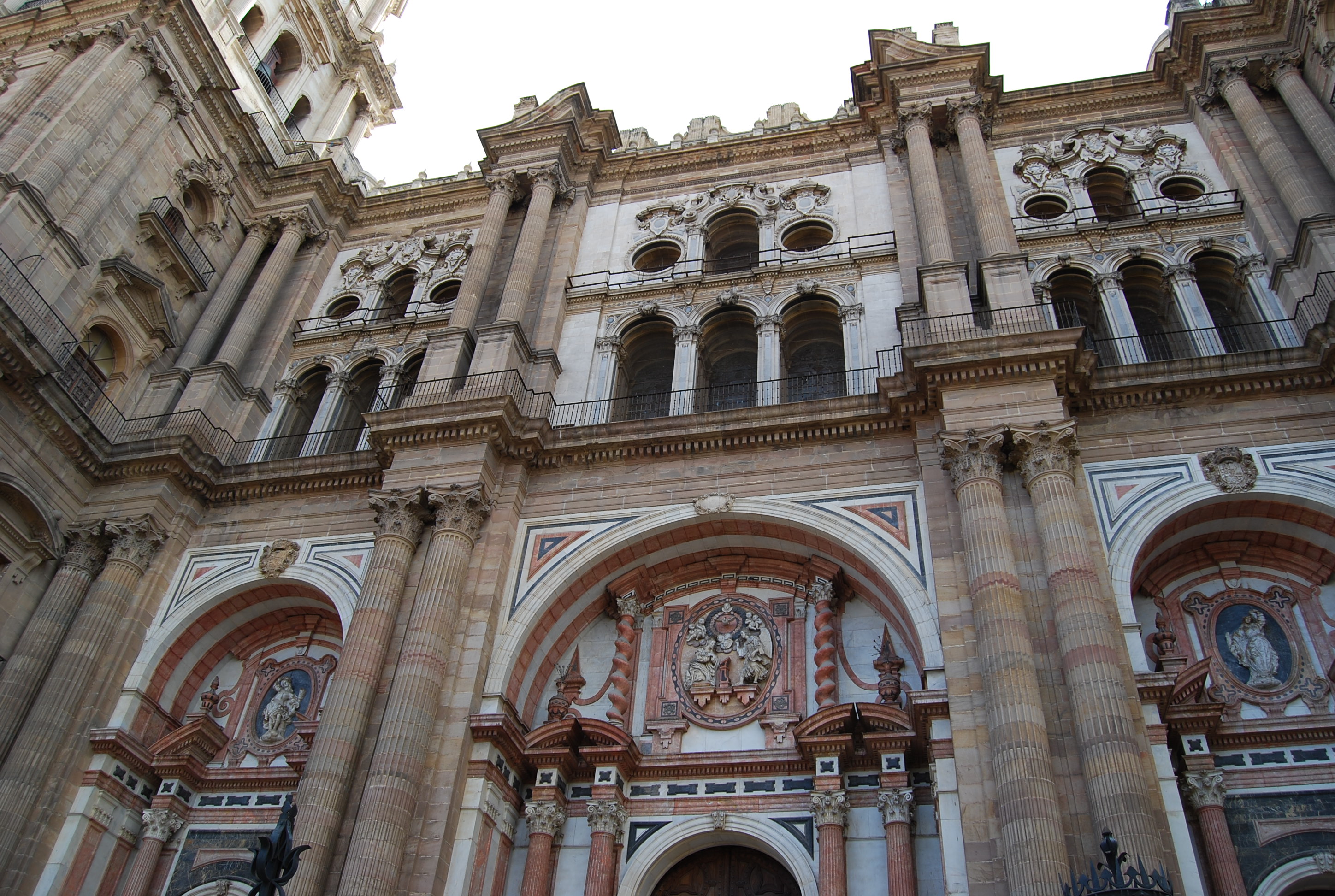
We started the day by visiting the old town’s cathedral. Construction began on it in 1528 but was interrupted by an earth quake in 1680; in 1765, funding ran out and the half-built second tower was abandoned, thus the cathedral’s nickname: La Manquita (the one-armed one).
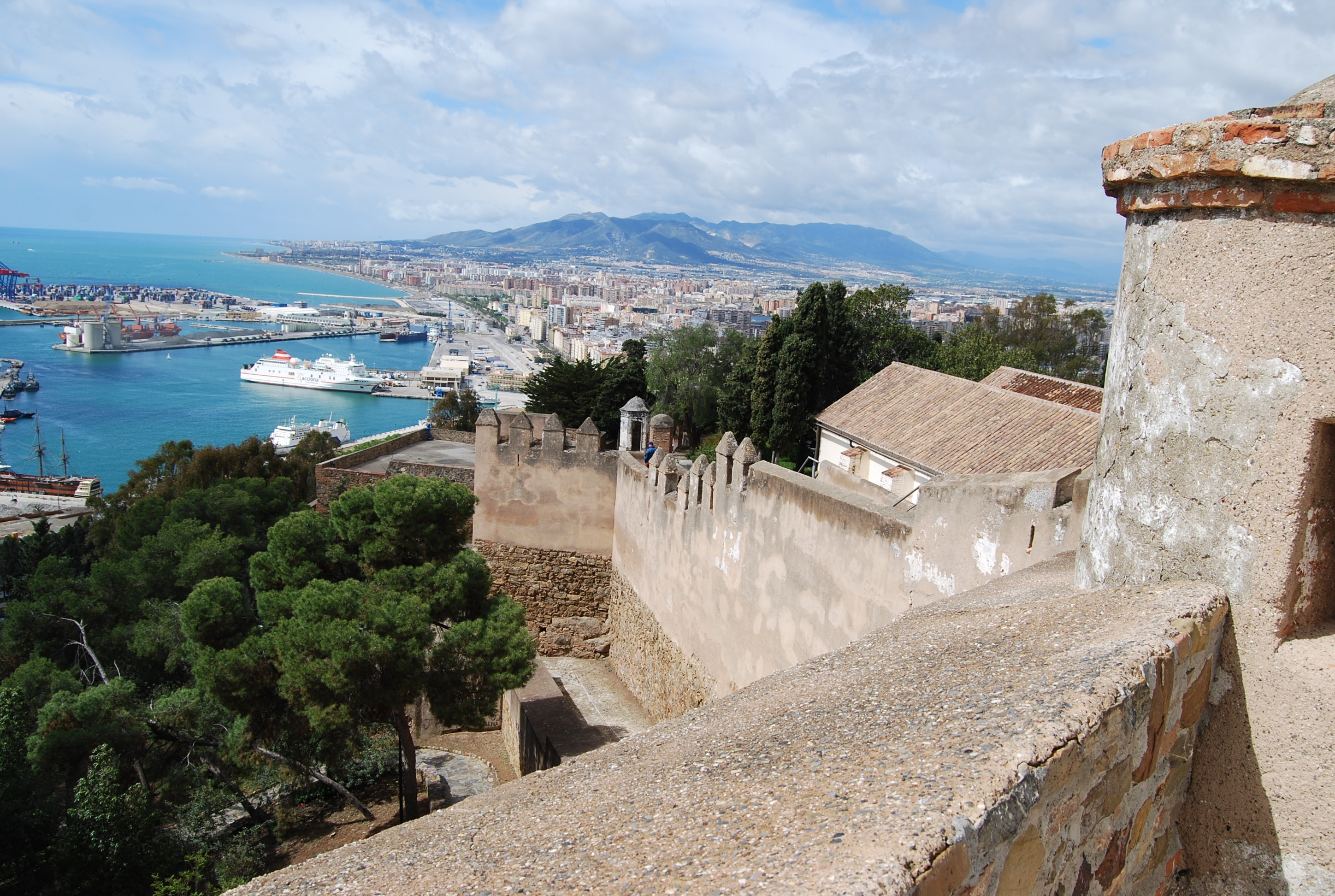
Afterwards, we visited the Museo Picasso Malaga (Picasso was born in Malaga) and then trekked to the top of the Alcazaba, a fortification built high on a hill between the 8th and 11th centuries. From up above, it offered some great panoramic views of the port, bullring and surrounding city.

We’re still recovering from our week in Morocco and adjusting to the time difference (we’re now 6 hours ahead). Still, tonight after some bocadillos (small sandwiches), we headed to the B Lounge at the Barcelo Malaga Hotel and took a ride down the slide (yes, slide) that connects the first and second floors.

Tomorrow, we’re going to the picturesque town of Ronda, accessible only by bridge and home to Spain’s oldest bullfighting ring.
Hola, Espana!

Day 10
Melilla, Spain

A taxi strike in Fes almost prevented us from getting here today. Once the 600 dihrams were out of my wallet though, we were ushered into a car for the 325 km drive to Nador, a town of about 100,000 a couple of miles south of the border with Melilla.

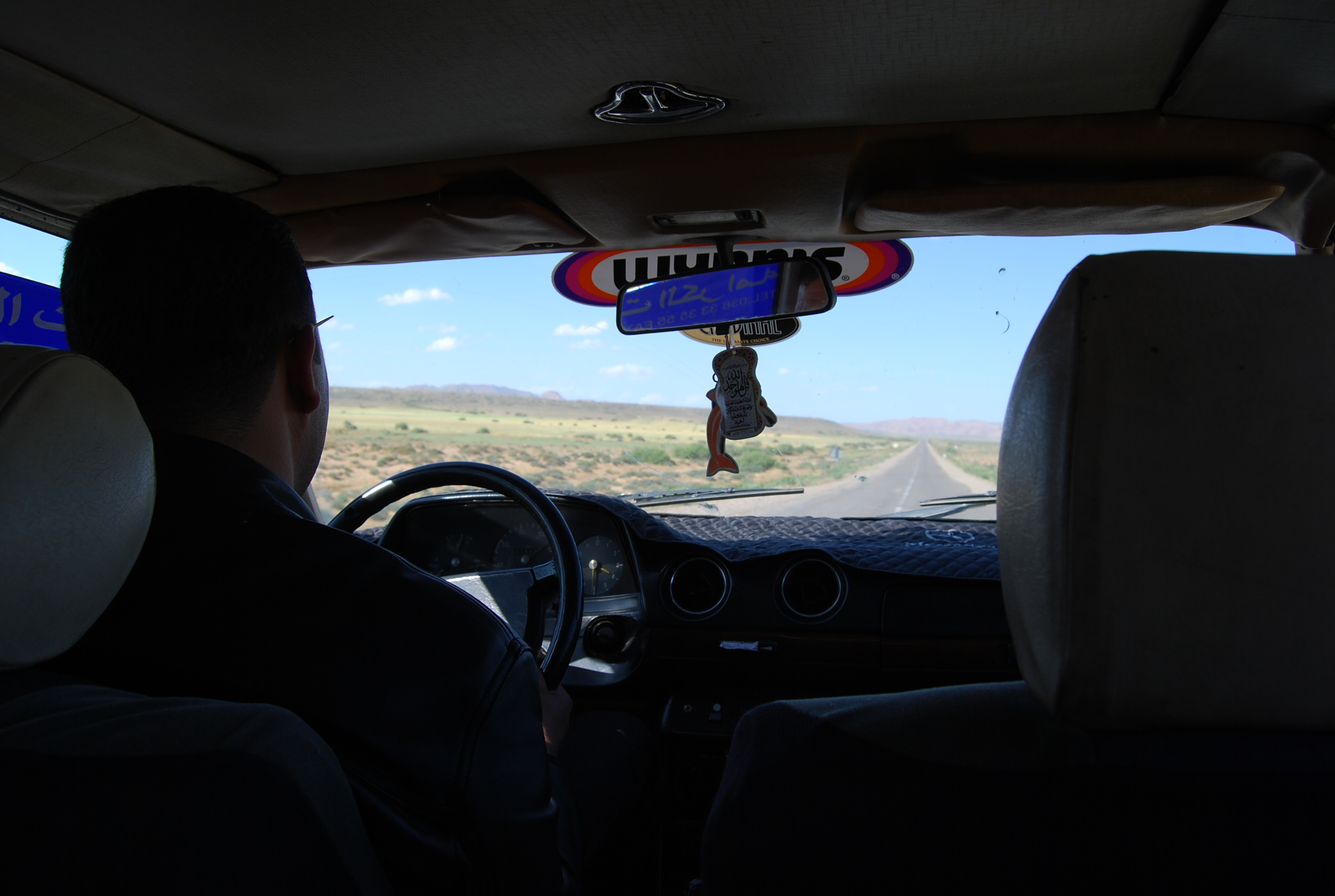
Our 4.5 hour trip was like a thrill ride at Six Adventures, minus the seat belts. Moroccan drivers don’t abide by the speed limit, right of way or the concept of two lanes. So, we didn’t get much rest in the back of our 25 year-old Mercedes Benz.

After what seemed like endless olive grovers and roaming herds of sheep, we arrived at the frontera. American passports in hand, we jostled to the front of the line and easily entered Spain. The change was almost immediate — hustling taxi drivers and touts from shop keepers were nonexistent in Melilla (where Franco launched the Spanish Civil War in 1936), although we were still on the African continent.

We just had salads and mussels for dinner and toasted our arrival in country #2 on my trip around the world. Morocco was an amazing but exhausting place — and we’re excited to be in Spain, although not as much as our stomachs are.

Our overnight ferry to Malaga, Spain departs in two hours.

It’s the people

Day 9
Fes, Morocco

It was an ominous start to the day. The mosques’ call to prayer awoke us at 4 a.m., a bit earlier than the usual sunrise alarm clock we’ve had for the last week. When we got out of bed a couple hours later, the skies — for the first time this trip — were overcast and rain looked probable. Despite this, after breakfast and already running low on clothing, we put up a wash. We pinned everything up on the roof deck’s clothes line to dry and went back to our room. Ten minutes later, downpours.

The rain continued throughout the day — which, as Friday, was relatively peaceful, as many Moroccans do not work. Gray skies and the occasional shower plagued us as we crisscrossed Fes in search of a means to get to Melilla tomorrow. Melilla is an autonomous Spanish city located on the northern coast of this country; on Saturday night, we’re taking an overnight ferry from there to Malaga, Spain, the next stop on my trip around the world. Originally, we’d planned a 6-hour bus there; this morning, we discovered that this bus actually departs at 1:30 a.m. — not happening. Our other option, we were told, was to take a 4.5 hour cab to Melilla at a cost of 1,300 dirham or almost $200USD — outrageous.

So, we spent much of today visiting two bus terminals, the train station, an airline ticketing agency and a travel agency (closed). We were finally able to book a private grand taxi heading directly there at noon tomorrow for 600 dirham, much more reasonable. Finding this deal was probably the day’s biggest success — as was finding my first cheeseburger for lunch!

When we got back to our riad, we had a drink with the owner and another young couple staying here. After dinner together, we all ended up in one of the home’s 600 year-old living rooms, where we easily had the best time of this adventure so far. And it wasn’t while gawking at tile work, slurping up bowls of harira soup or declining carpet salesman in the souq — we were simply sitting around, telling stories about our lives, our families, friends and our travels. It made me realize that over the next 71 days, I’ll see the sights, eat the foods and experience the cultures. But it’s truly the people who will make this trip what it is.

From down & dirty to squeaky clean

Day 8
Fes, Morocco

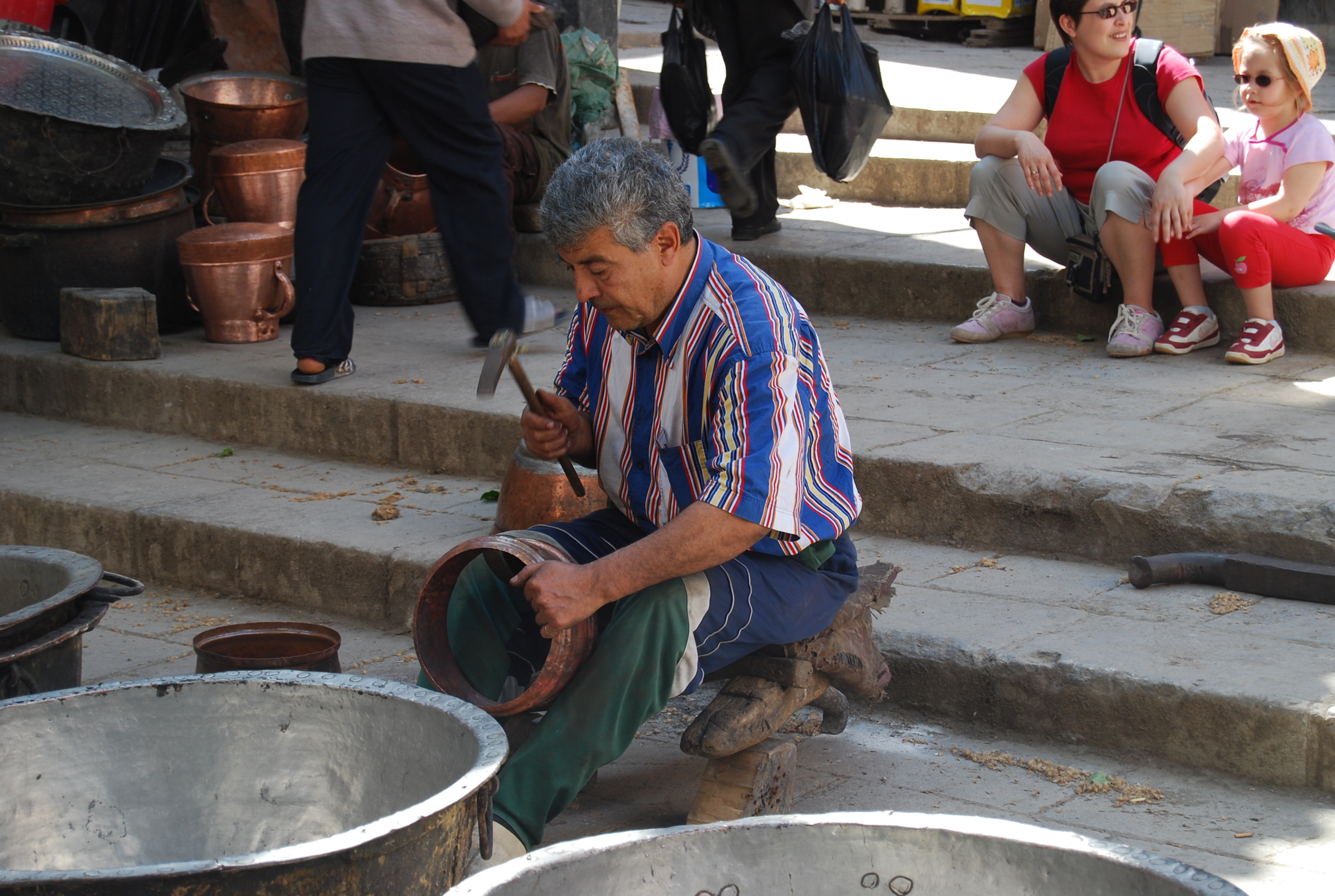
In a city so steeped in history, it’s not surprising that the Fassi people have clung to many of the traditions and practices developed in medieval times. Our riad, Dar Seffarine, is just a couple steps from Place as-Seffarine, where metalworkers shape bowls, pans and plates and the air rings out with the sound of hammers pounding metal. (Note: Tourists in photo background are not metalworkers.)

This morning, we ventured into the medina to witness one of Fes’ most iconic sights — its tanneries. Like the metal artisans, the tannery workers produce leather goods much in the same way they did hundreds of years ago. Finding the area wasn’t difficult (“just follow your noses”) and we were soon ushered onto the roof of one merchant, who explained to us the leather-making process. Fresh camel, goat and cow hides are brought in by donkey and then cleaned.

After drying, they are placed in these dye pits (indigo, saffron and poppy are used for color):

Next, workers shape and smooth the hides …

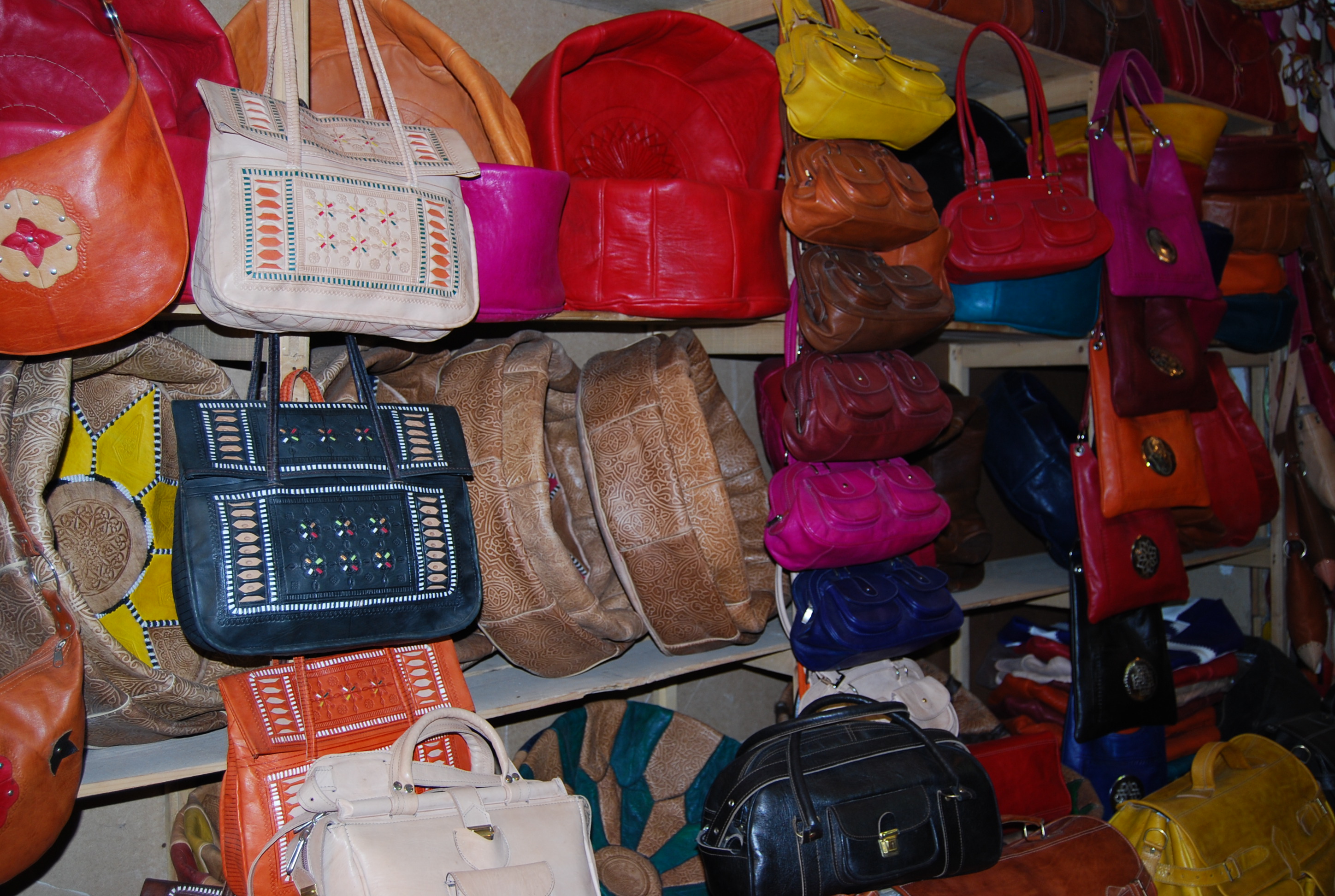
… after which, they are sewn into shoes, belts, bags — you name it — by artisans.

Over hundreds of years, not much has changed in this 30-day process. The tanneries remain organized according to ancient guild principles and components of the process, like the use of pigeon poop and cow urine, continue — thus the wretched smell.

Charlotte bought some killer navy ballet flats for about $20USD (we’re getting good at bargaining) and then we grabbed a cab to Bab Bou Jeloud, the main gate to the medina.

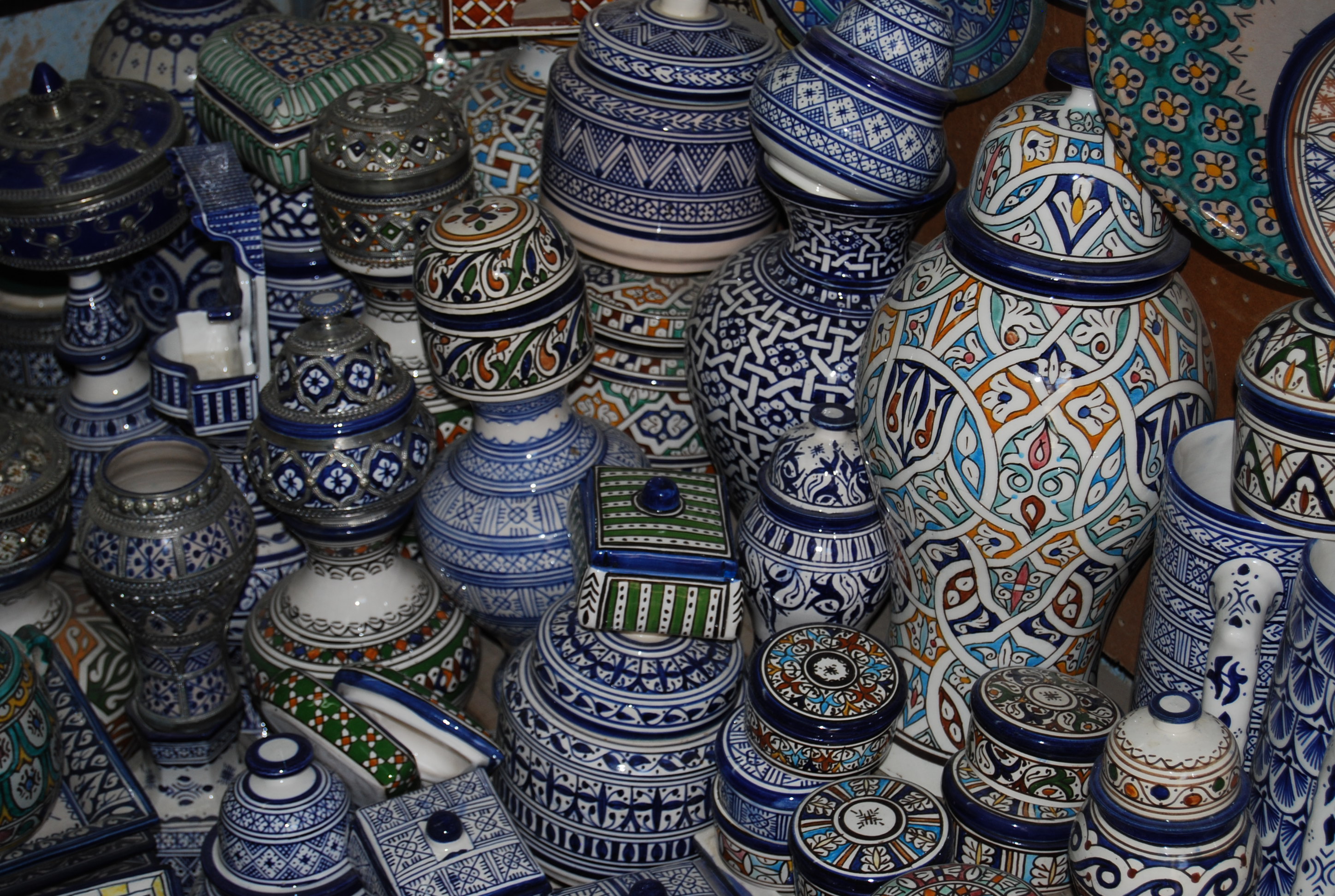
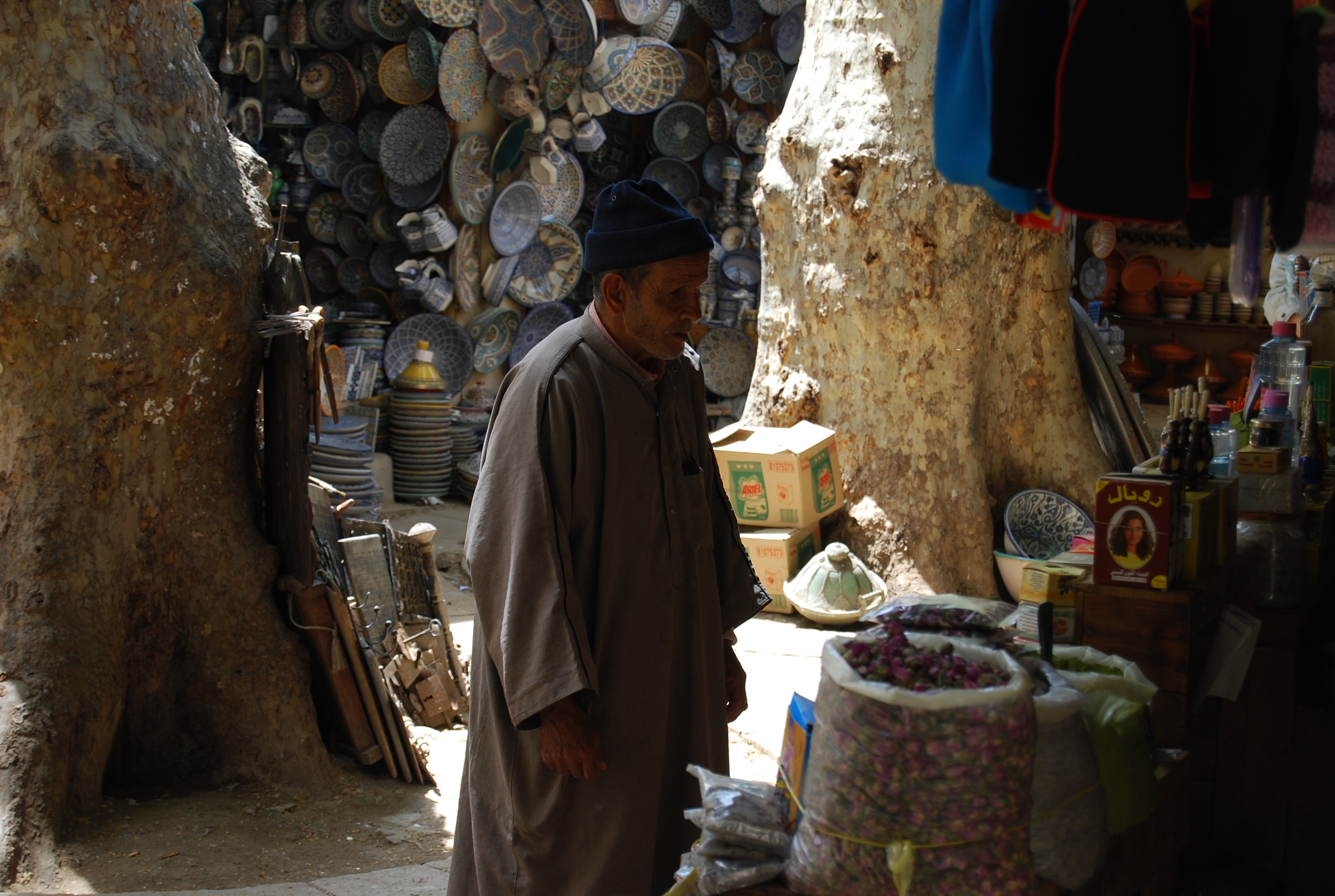
On a self-guided tour, we saw stalls of traditional blue and white pottery, worshippers at the Kairaouine Mosque & University (which claims to be the world’s oldest — take that Harvard!) and Fassis in the henna souq.

Exhausted from walking the narrow alleys and feeling filthy from the grime, dust and dirt, we took a taxi to the Ville Nouvelle for a scrub and massage at Nausikaa Spa, a traditional hammam (Arab bath). While an upscale spot, it was certainly not in our Lonely Planet, and we were one of the few non-locals there.

Spas tend to be awkward experiences for men. We don’t know where to go. What to do. And those slippers! Imagine now a spa where you don’t speak the language and haven’t got a clue what a “scrub” really is — needless to say, even Charlotte, a seasoned spa veteran, was at a loss.

In case you ever find yourself in our position, we wanted to pass on these words of advice:

  • Men don’t go naked — women can if they’re feeling particularly adventurous.
  • You’re supposed to bring a scrubber. We didn’t know what scrubbers were. Extras should be on hand if you’re clueless like us.
  • You’ll have no idea what is happening, how to enter the bathing room or where to go or wait. Pointing and smiling tends to work just fine.
  • The order of treatment should go something like this: undress (or put on bathing suit), shower, get covered in black soap (made from the resin of olives — yum!), bake in steam room until golden brown, lie on marble slab and be scrubbed hardcore and then rinsed by the attendant, sit in cool plunge pool. Relax, repeat, wonder what just happened.

The majority of people who live in Fes do not have running water in their homes. The streets are covered in dust, flies and donkey dung. Yet, after today’s bath, it’s safe to say that we’ve never felt cleaner. Go figure.
The road to Fes

Day 7
Fes, Morocco

We were up before dawn this morning to catch our 7.5 hour train to Fes. It was a long but picturesque haul from Marrakech as we watched the arid, dry landscape give way to a more fertile, mountainous farmland. Feeling a bit adventurous upon arrival, we took a taxi to the edge of the Fes medina, disembarked and, shunning a guide, followed the treasure map I’d scribbled in my notebook that would hopefully bring us to our riad in the old historic quarter.

After walking the usual maze of Moroccan streets that we’ve now become familiar with, we arrived at Dar Seffarine. This is an amazing place, housed in a building more than 600 years old, that has gone through 2.5 years of extensive renovations. Much of the old tile work and carvings have been brought back to life and it almost feels like we should be royalty here. Our room is large and nicely furnished, overlooking the central courtyard. From it, you can hear the sounds of Fes, the crowing of roosters, the hammering of metal, the call to prayer — there is almost a rhythm to life here.

But it’s the view from Dar Seffarine’s roof deck that provides the most complete picture of Fes el-Bali, essentially a working medieval city with 9,400 streets and alleyways.

We’ll be enjoying a home cooked dinner from the roof in a little bit. Tomorrow, we’ll try to cover as many of those nearly 10,000 streets as we’re able.

Supporting the local economy

Day 6
Marrakech, Morocco

On this, our last day in Marrakech, we felt it was our duty (kind of) to exchange some more U.S. dollars to dihrams in order to support the economy here — in two very different ways.

First, Ahmed, the manager of Dar Saria, guided us into the narrow streets of the souq. He brought us to a local wholesaler of handwoven textiles. After a friendly welcome from the owner and some mint tea, we were treated to what seemed a never ending parade of carpets and blankets unfurled before our feet. Prices ranged from several hundred to several thousand dollars, which while far less than you’d pay in the States, was still a bit much for us. We ended up with a pair of colorful silk pillow cases for around $40USD.

Next up was ceramics and pottery. With a wall to wall selection, the options at this stall seemed limitless. Charlotte found two small hand painted bowls (perfect for oatmeal and granola, she says) as well as a small antique Berber vase. One of the local specialties in Marrakech is a pottery made from limestone and black salt — and a small bowl rimmed with a hammered metal edge was too perfect to pass up. Finally, we visited the local lantern craftsman. He had a nice sized handmade copper lantern, with stained glass windows. With a bit of competitive haggling, we had a deal. All told, the ceramics and lantern ran us around $100USD.

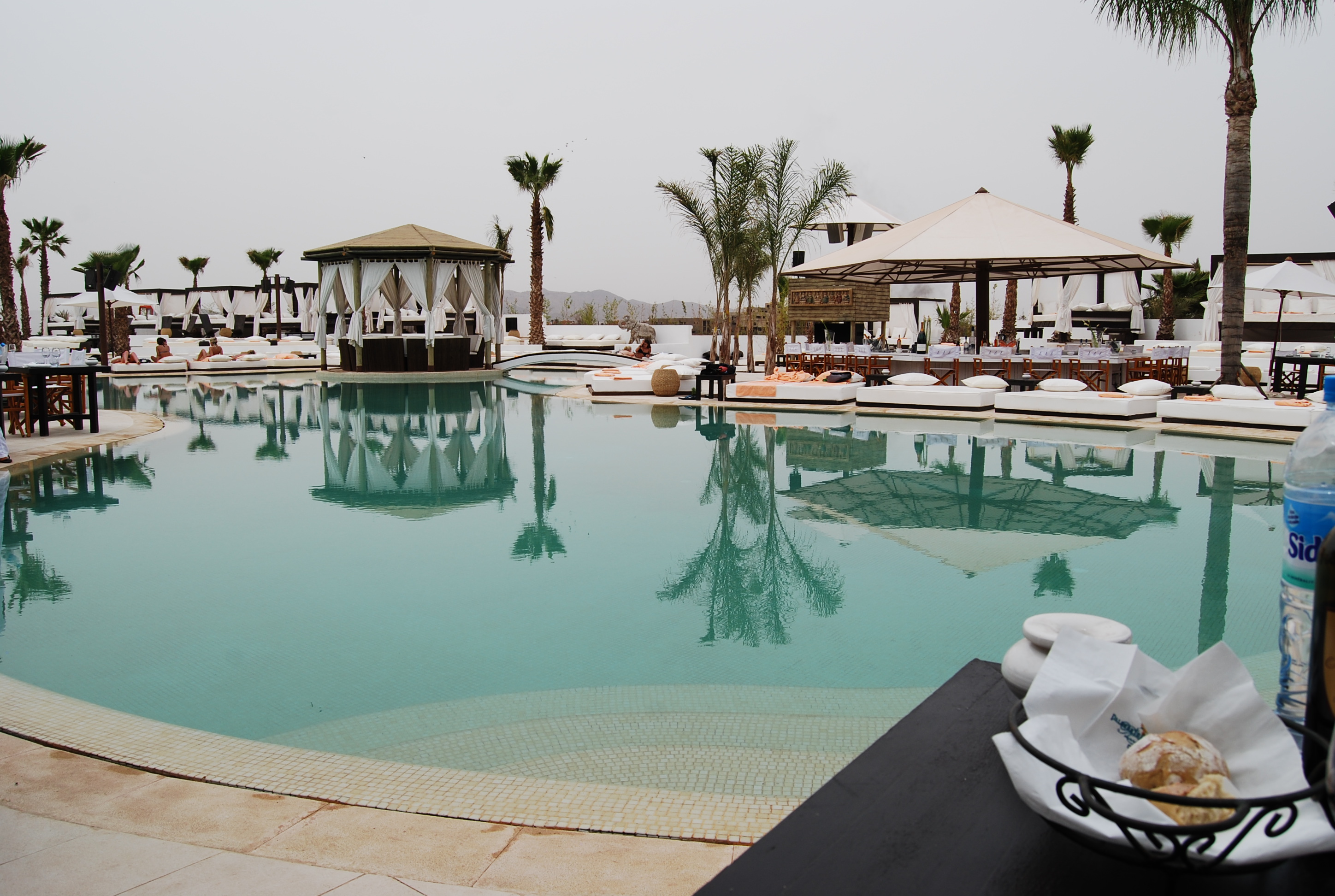
After our shopping excursion, we grabbed our bathing suits and took a 15-minute cab to the Palmeraie neighborhood, home to Morocco’s outpost of Nikki Beach. Although we had partly cloudy skies, it was still a welcome respite to lounge on some daybeds, split a bottle of nice wine and have a meal that didn’t include couscous. Our bill, with admission for the day, ran us about $140USD, about what we spent in the souqs. One has to hope that at least some of this money will stay here locally.

Tonight, we’re having our final Marrakech dinner in la square, before getting to bed early. Our 7-hour train to Fes departs at 7 a.m. tomorrow.

Escape to Essaouria

Day 5
Essaouria, Morocco

Essaouria is said to be southern Morocco’s most popular seaside town — and it’s not hard to see why. After a 3-hour bus from Marrakech this morning, we arrived here to sunny skies, a steady breeze and a friendly and welcoming people who are still get acquainted to the recent influx of camera-totting tourists.

This town of about 70,000 (pronounced “eh-sa-why-rah”) is a working port on the Atlantic — the country’s third largest — so, not surprisingly, our first stop was the harbor, where fishermen prepared their rowboats and unloaded their daily catches while the ocean splashed over the city’s walls.

With the seafood no fresher anywhere in Morocco, we headed to the market. After picking out selections (Dorado, calamari and a huge crab), they were flavored simply with salt and thrown on the grill and served with a salad. Before:

And, after:

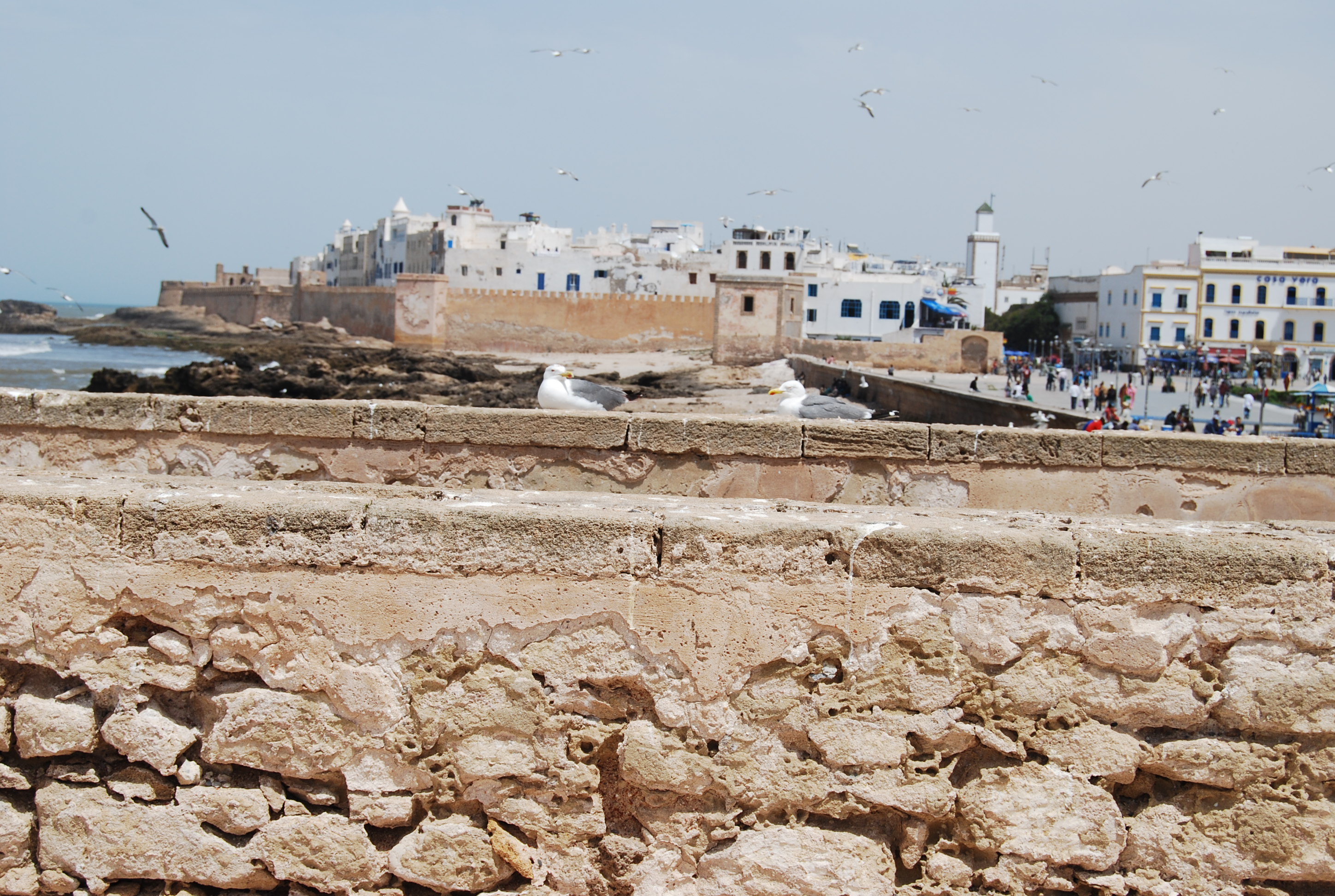
A walk along Essaouria’s ramparts and old city wall provided a panoramic view of the ocean and surrounding fortifications, whitewashed buildings and harbor.

The beach here, south of town, is quite wide. With the high winds (topping out at 46 mph), there are few sunbathers, but many locals playing pick-up game of soccer and offering tourists camel and horse rides to the former house Jimi Hendrix, who purportedly passed through Essaouria on the hippie trail in the late 60s.

Our last stop of the day was the relatively relaxed medina, a marked change from Marrakech’s aggressive vendors. We found a team of craftsmen who hand-carve original pieces from the thuya, a local and quite fragrant wood. Needless to say, after a bit of haggling (a must in Morocco I’ve learned), a beautiful hardwood bowl and tray were in my backpack for just about $30USD.

Escaping the buzz of Marrakech was welcome today. Tomorrow, we’ll be visiting the souqs to do some last minute shopping and then spending the remainder of the afternoon with Morocco’s trendiest sunbathers at the local outpost of Nikki Beach, a tony pool club.

A peaceful coexistence in Morocco

Day 4
Marrakech, Morocco

Luckily, many of the monuments to visit here are located within the medina’s walls. We spent today seeing all the major sights while taking mental notes about where we might want to return to.

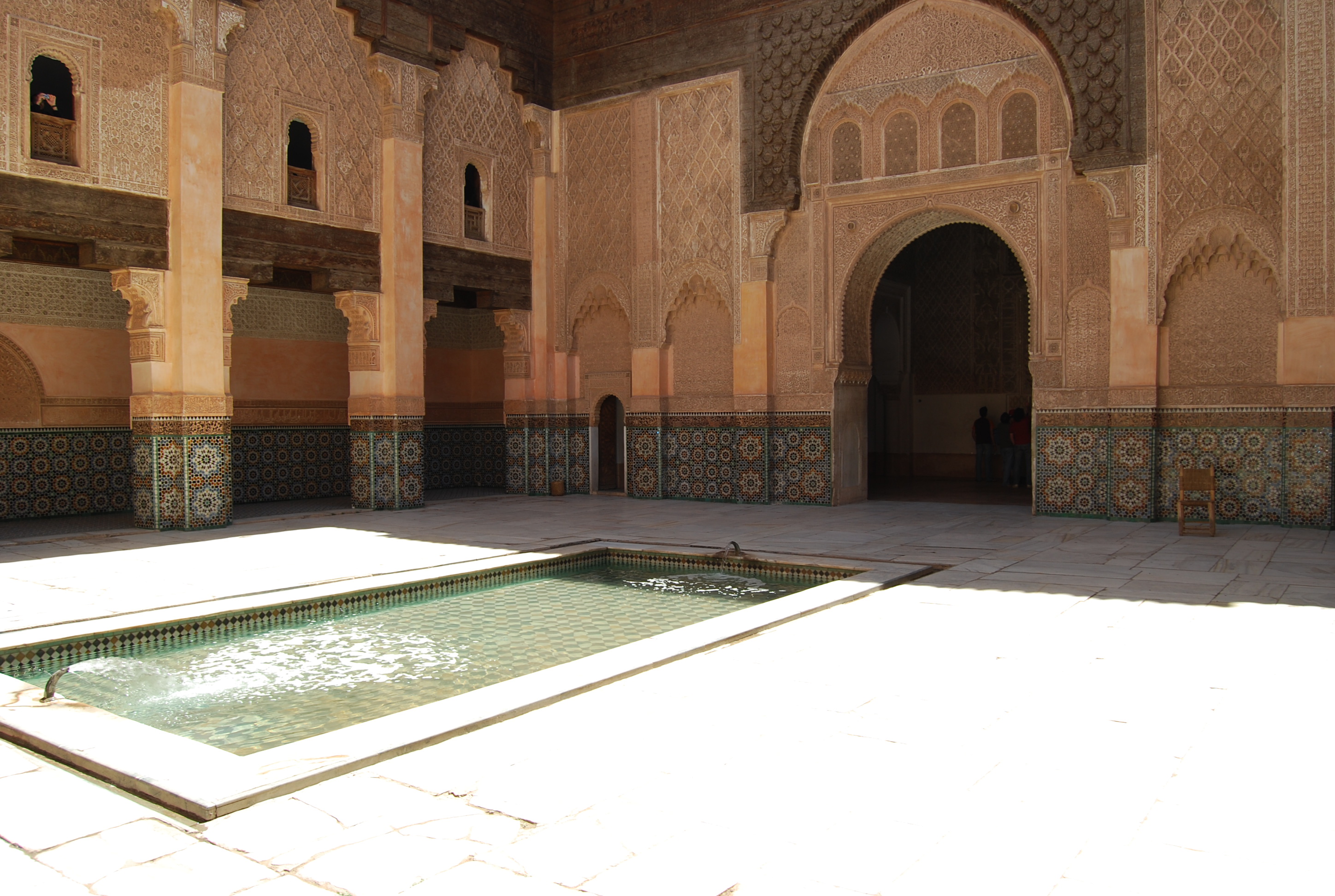
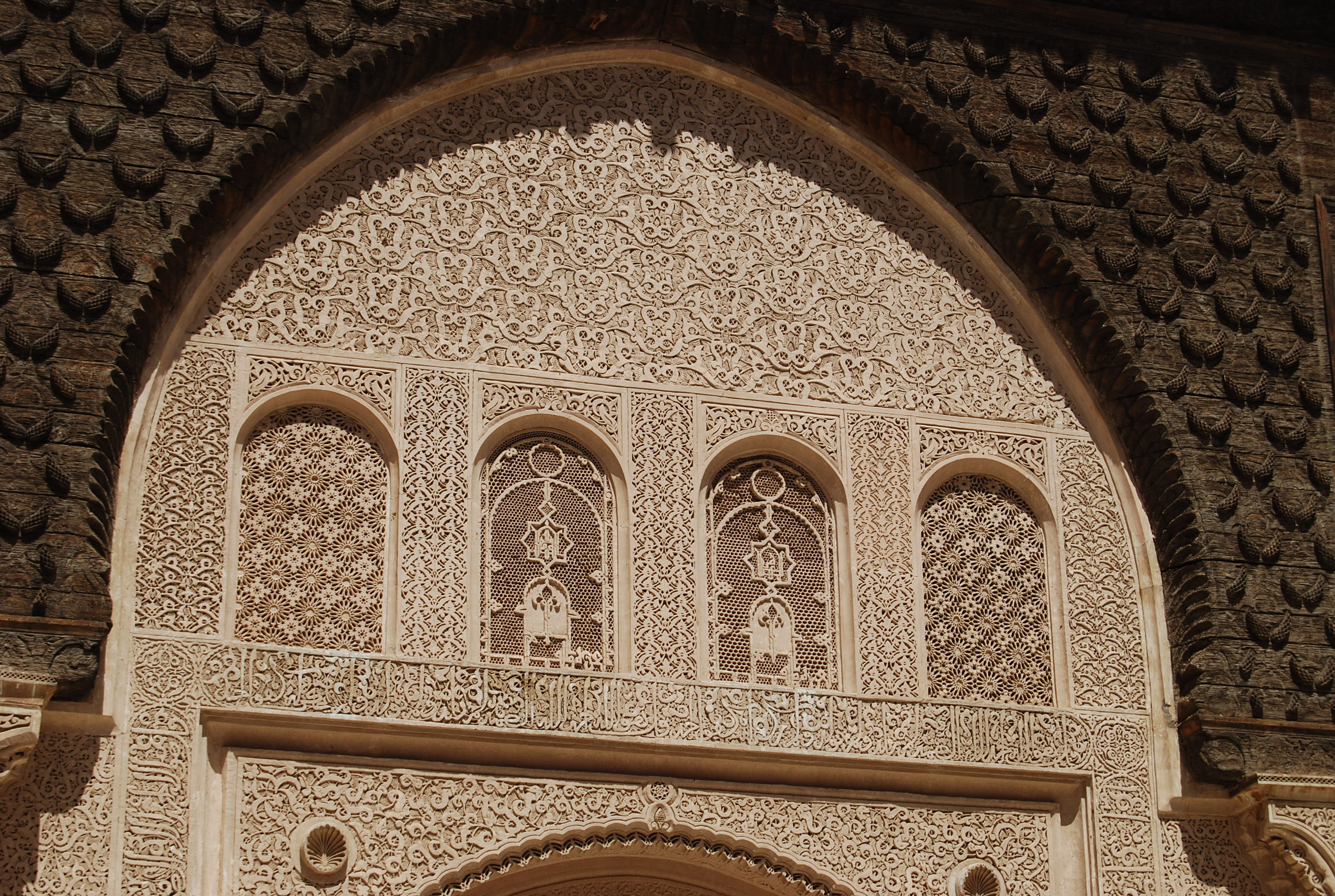
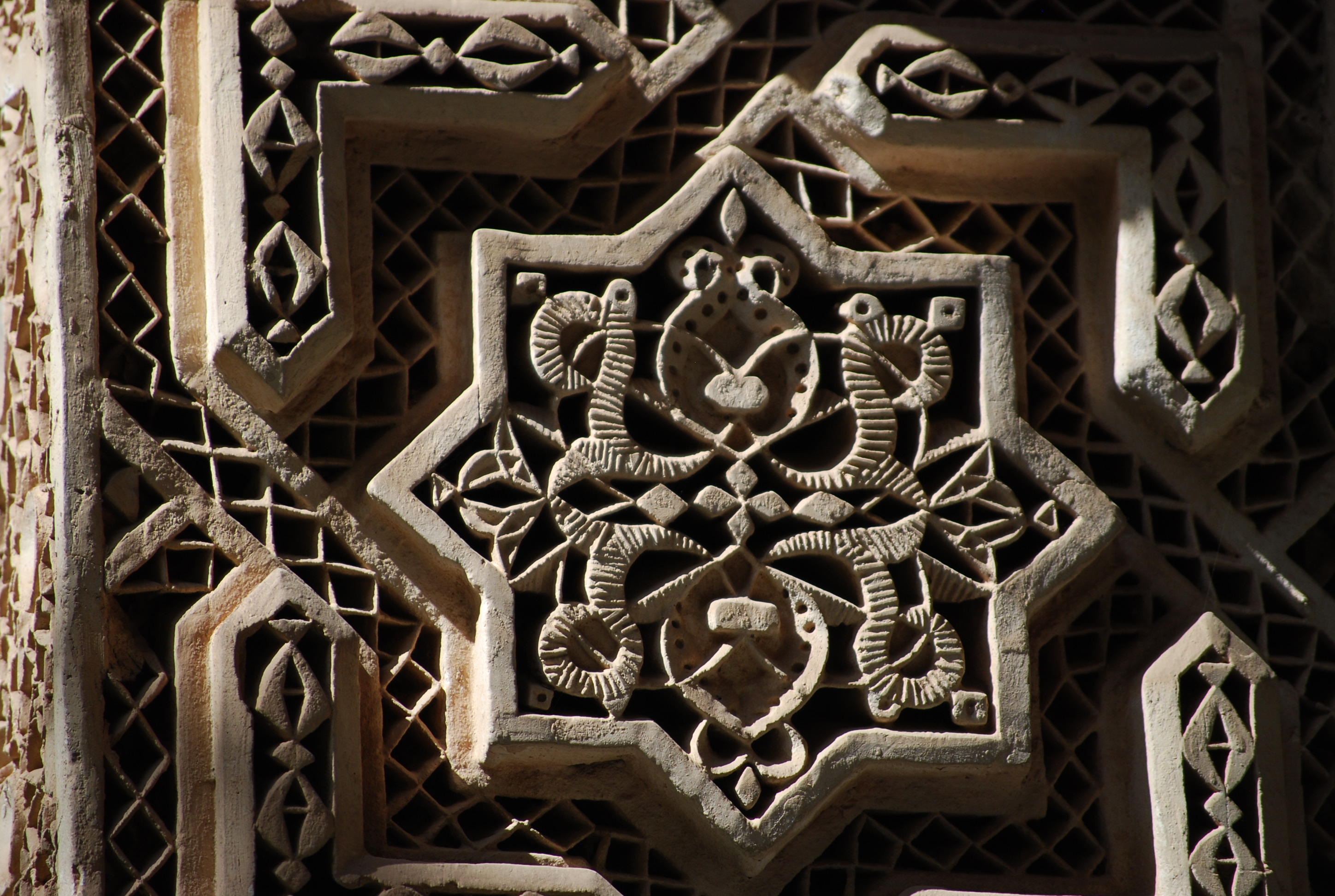
Ali ben Youssef Medersa is only a short walk from Dar Saria, where we are staying. The medersa is the city’s theological college originally founded in the 14th century. It was restored in 1564, and the intricate stucco and carved wood decoration are detailed to the point of mesmerizing.
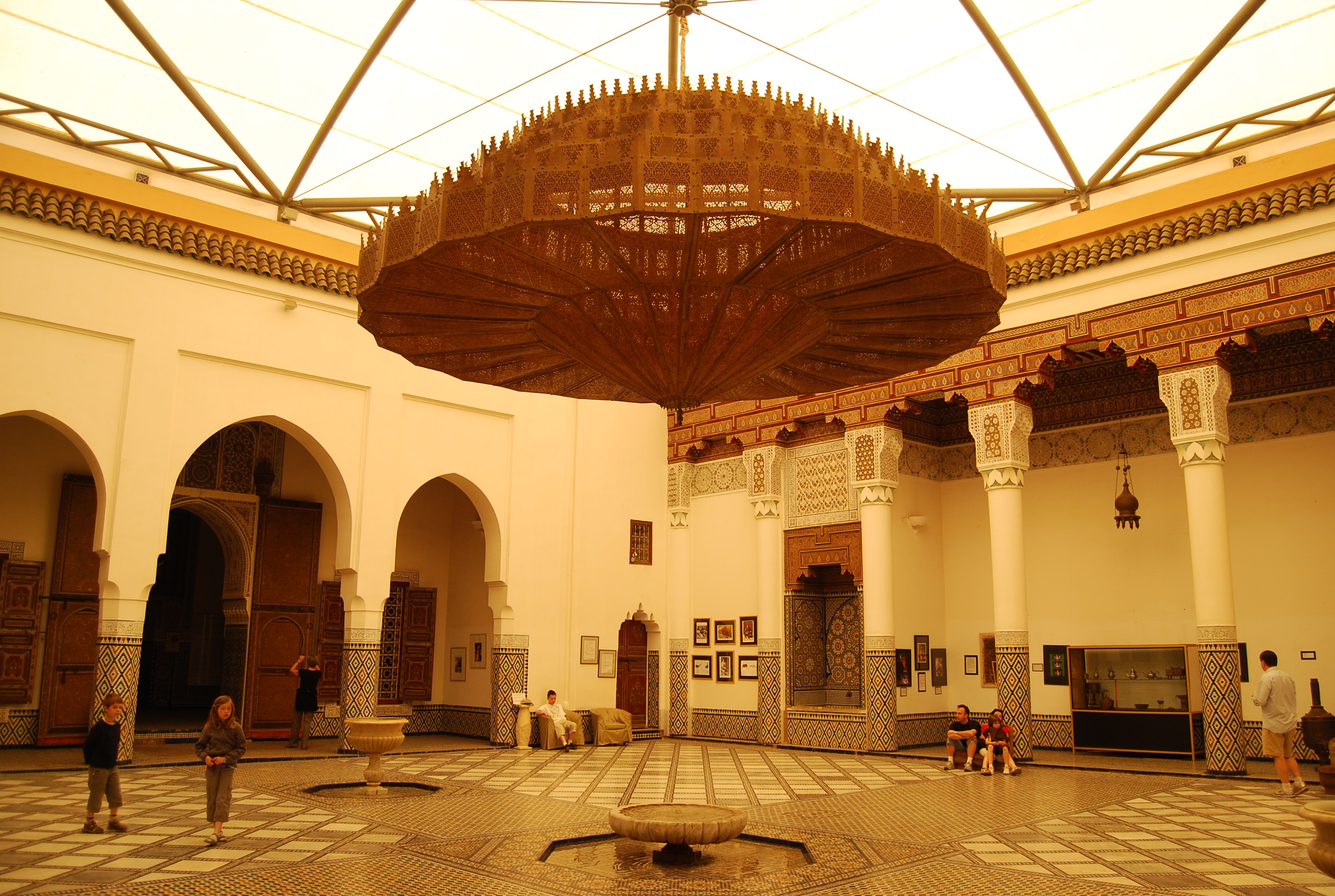
Right next door is the small Marrakech museum, housed in Dar Mnehbi, a restored 19th century palace, with temporary art exhibitions. For us though, the real treat was the building itself, with its excess of zellij and stucco work.

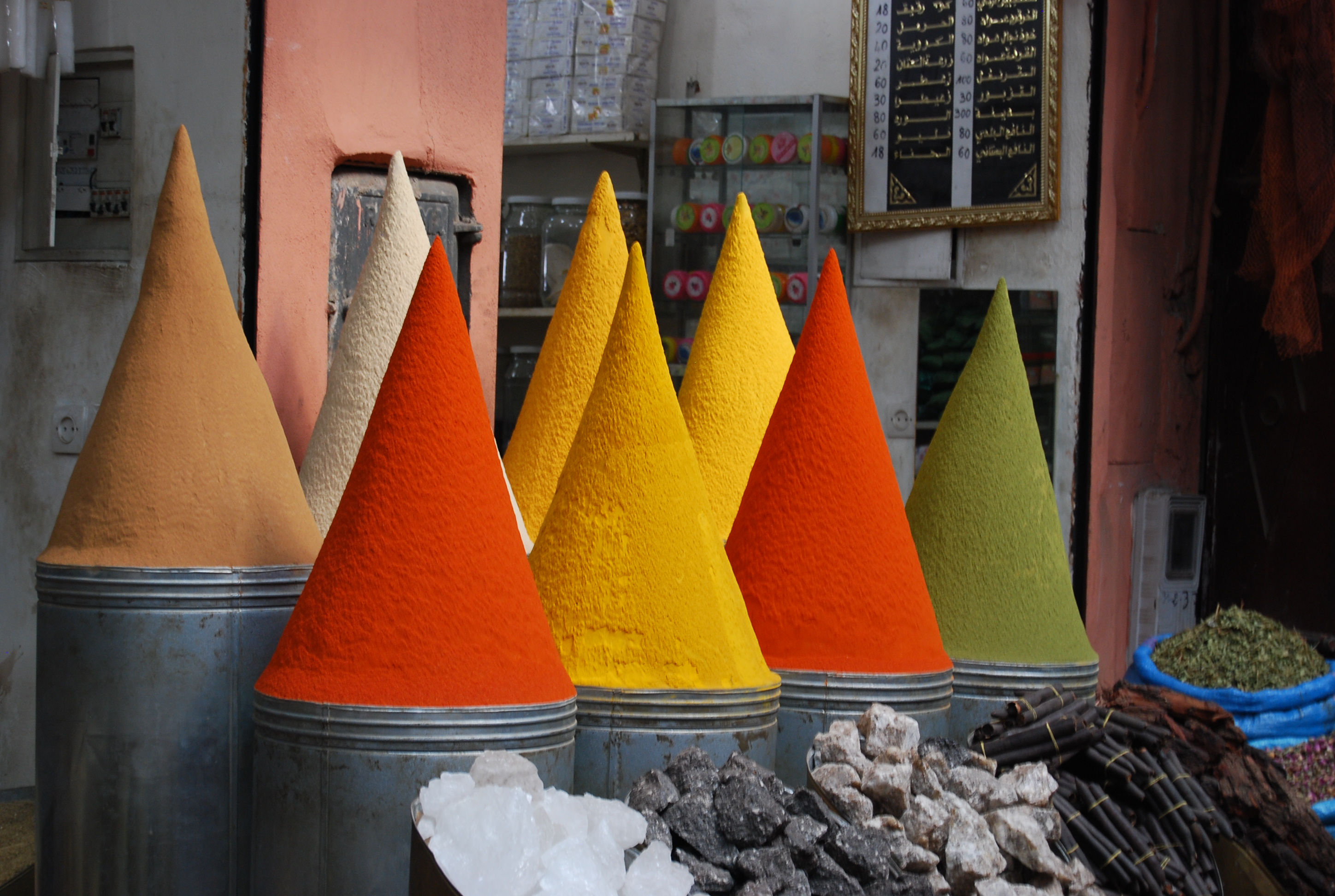
The real test of the day came on our walk back through the medina en route to Djemma el-Fna. Passing cones of spices, wonderful hand-made lanterns and every possible product in between, we somehow found our way — and all without buying anything!

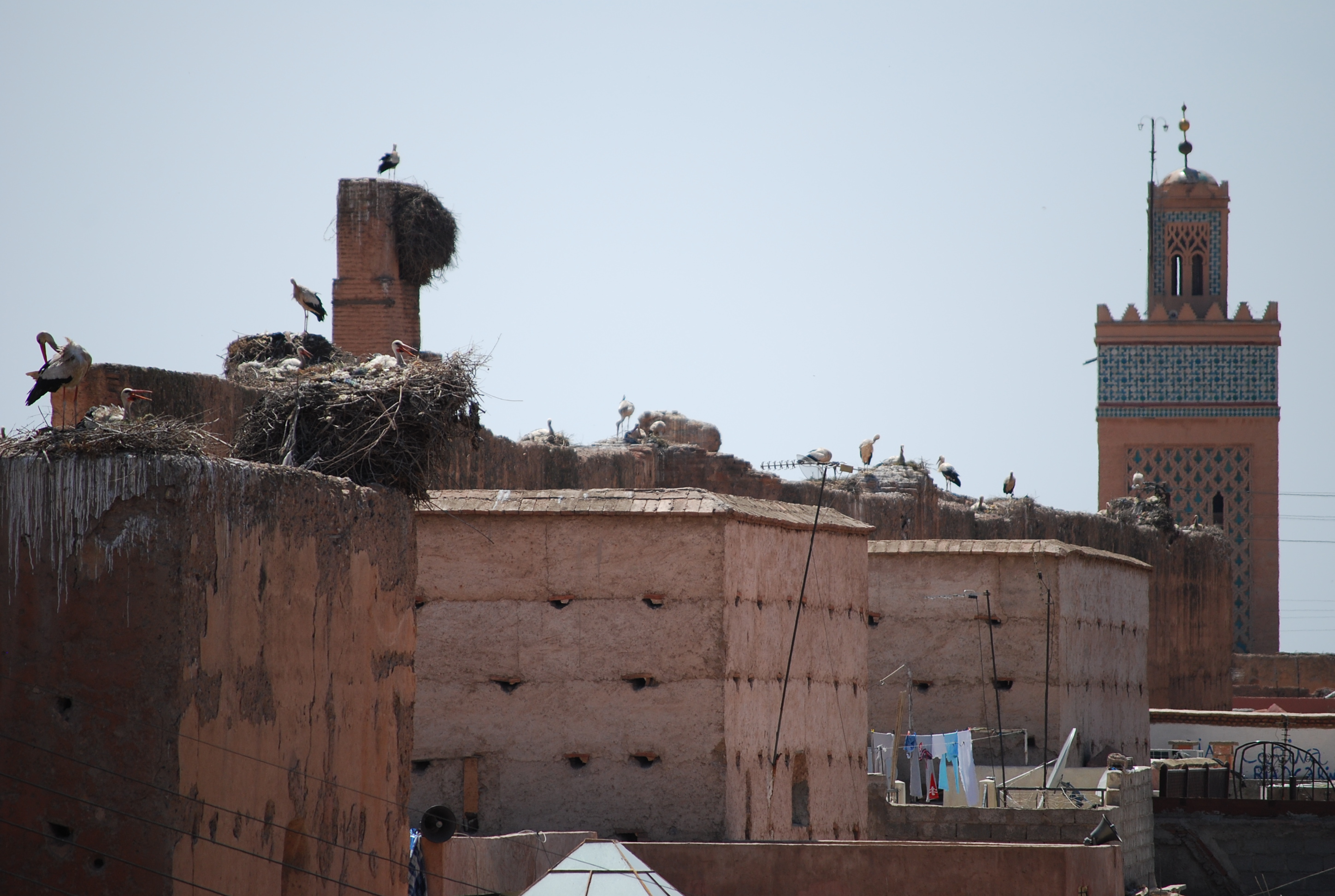
Our destination was Kozybar, a nice outdoor lunch spot whose roof deck offers tremendous views of the many storks that nest on the walls of Dar el-Bacha, an old palace. Right next door is another former palace, Palace de la Bahia, whose many rooms and courtyards hosted P Diddy on a visit to Morocco in 2002. Again, the level of painstaking detail was evident everywhere — in the metal work and stone carvings.

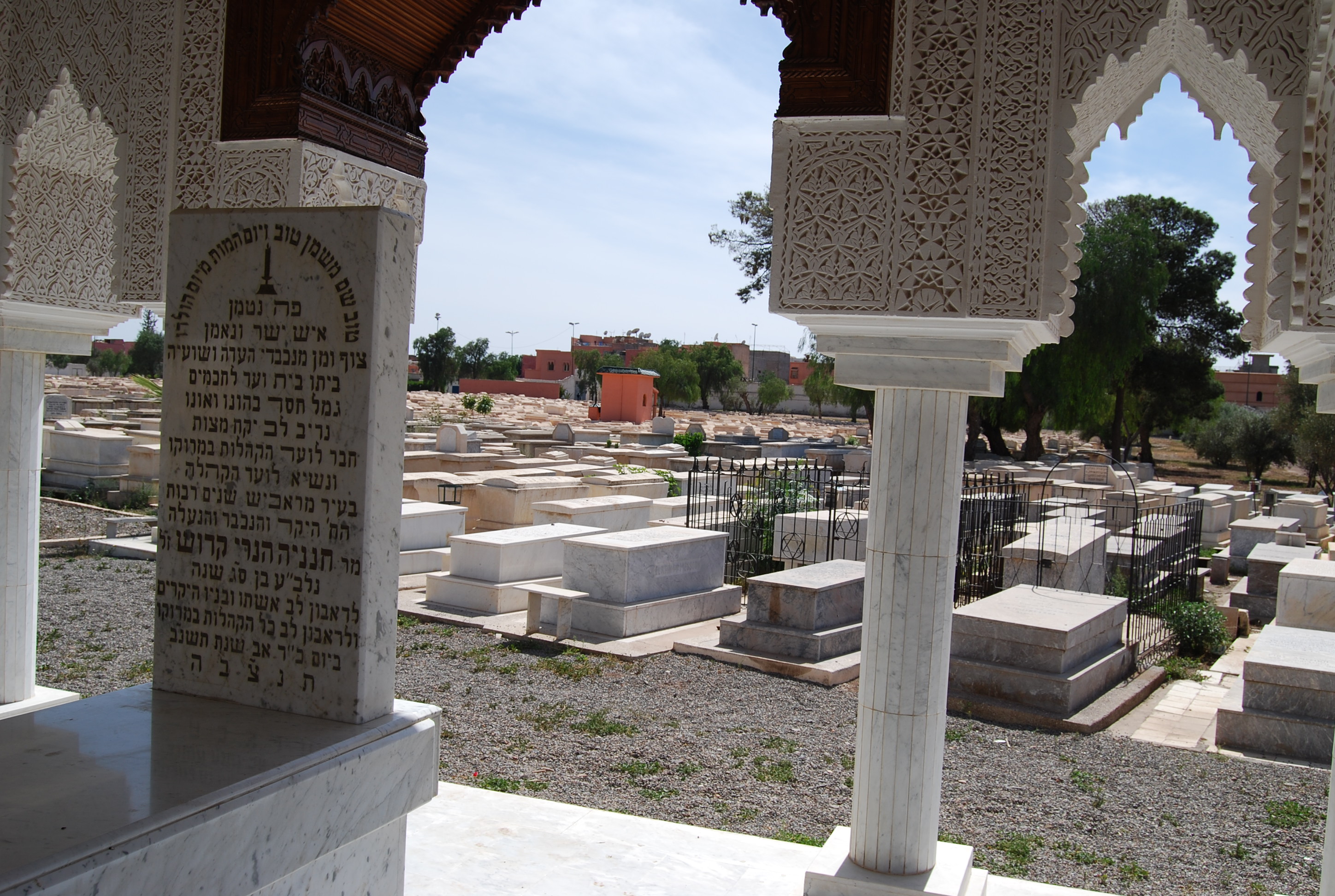
East of the main medina, in an area infrequently visited by tourists, is the mellah. It is here that Morocco’s remaining 300 Jews live among their many Muslim neighbors. Seeing this peaceful coexistence again gave me hope that the same might be possible elsewhere in the world. Perhaps the most interesting part of the mellah was the Jewish cemetery. With the Atlas Mountains as a backdrop, there are hundreds of graves, some dating back over 500 years.

Last on the list was the Jardin Majorelle, an exotic sub-tropical garden owned by the Yves Saint-Laurent Foundation. It was a welcome break from the hectic pace outside – and an opportunity to reflect on all that we saw today.

Tomorrow, we travel to Essaouria, an 18th-century Atlantic port.

The magic of Marrakech

Day 4
Marrakech, Morocco

We arrived in Marrakech yesterday by train at around 4 p.m. Unfortunately, the transfer to our riad (guesthouse) in the heart of the old city was nowhere to be found. After some haggling with a cab driver, we were on our way to Dar el Bacha, one of the entrances to the medina (marketplace). We met Ahmed, a young Moroccan man, who guided us through the labyrinth of streets to Dar Saria.

Behind a set of steel doors off an alleyway, this is a recently converted house of a former ciad, with three guest rooms surrounding a traditional courtyard. There’s a sprawling bougainvillea plant that occasionally drops its red petals to the tiled floor below.

Stepping into the peaceful sanctuary of the riad, it’s easy to forget the chaos just outside. The medina’s narrow streets are a maze — one filled with donkey-drawn carts, speeding mopeds, butchers selling their freshly slaughtered meat in the open and vendors selling everything from artisan crafts to spices to knock-off Tommy Hilfiger jeans.

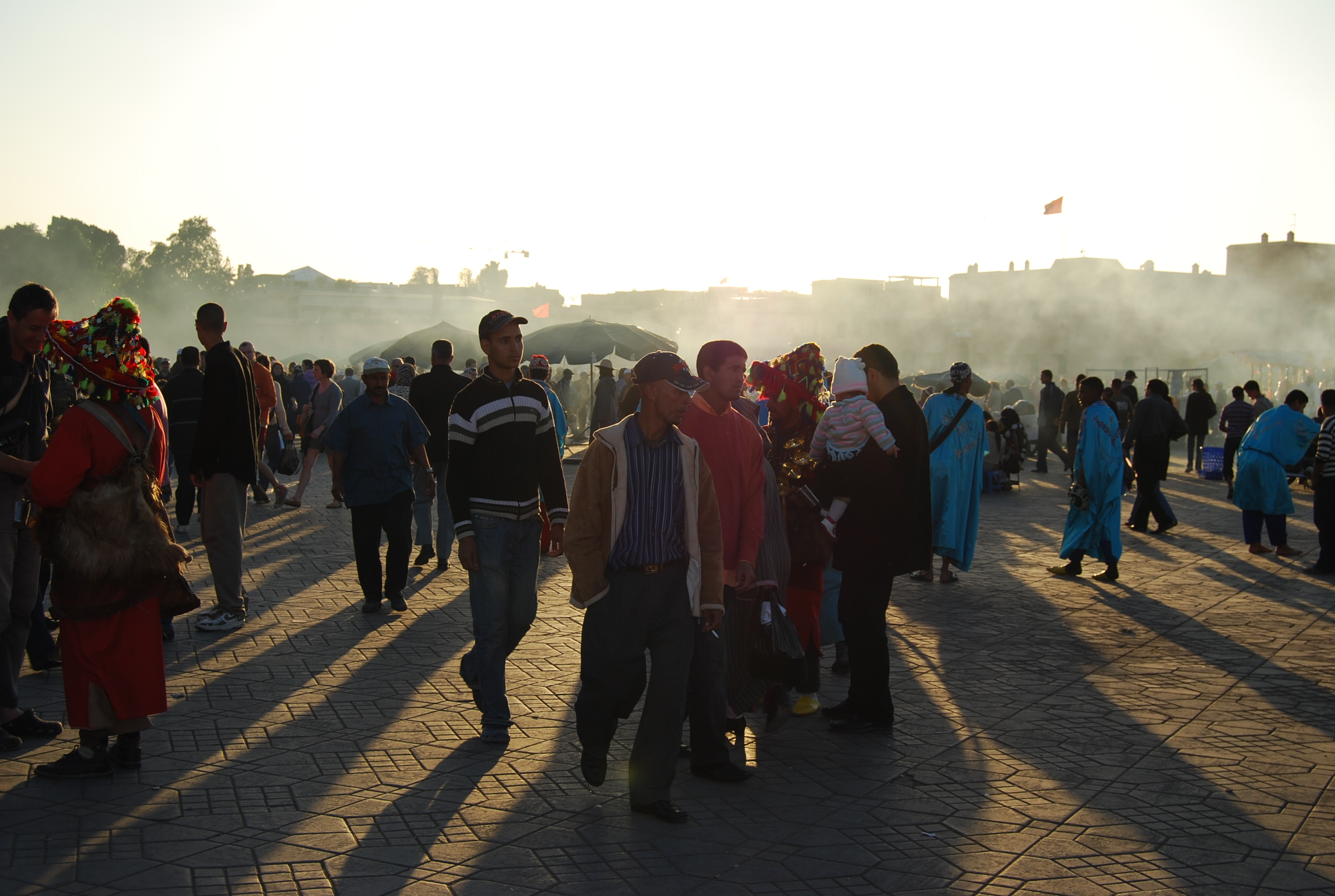
At the center of this all is Djemma el-Fna, a huge and spectacular square that one has to see in order to truly believe. It brims with orange juice vendors, smoky food stands, dancers, musicians, acrobats and storytellers. The smells, sounds and sights overwhelm the senses.

It didn’t take long for us to shell out a couple of dirhams for a glass of freshly squeezed, pulpy orange juice:

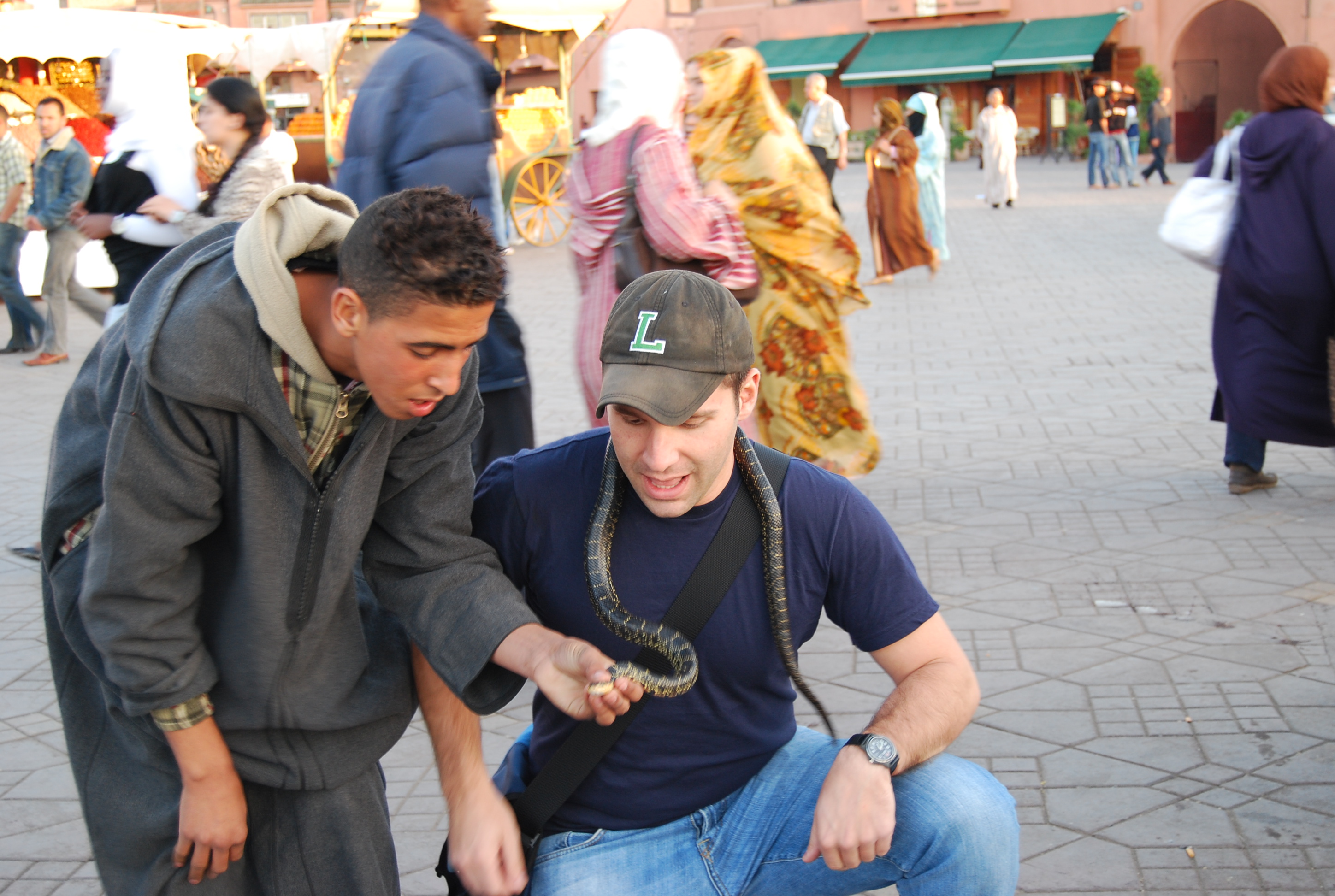
And then, the sounds of a flute drew us to a group of snake charmers, who quickly grabbed me.

Sensing a tourist, and a tip, others wanted to get in on the action. It was, well, interesting.

One vendor we were able to quickly turn down was the square’s “dentist” — a middle-aged man, pliers in hand, standing behind a table that demonstrated his past work.

The foods being hawked ranged from sheep’s head stew (a delicacy) to snails. For me, it was the dried fruits that looked most appealing though.


This morning, we will visit the Ali ben Youssef Mosque and Medersa, a koran teaching school, and then see the ruins of the Palais de la Bahia. After lunch, we’re planning on walking around the mellah, home to this city’s remaining 238 Jews, as well as the Jardin Majorelle, a beautiful park owned by Yves Saint Laurent. And, given our experience yesterday, I’m sure we’ll be returning, at least once, to the square.

Dispatch from the White House

Day 3
En route to Marrakech, Morocco

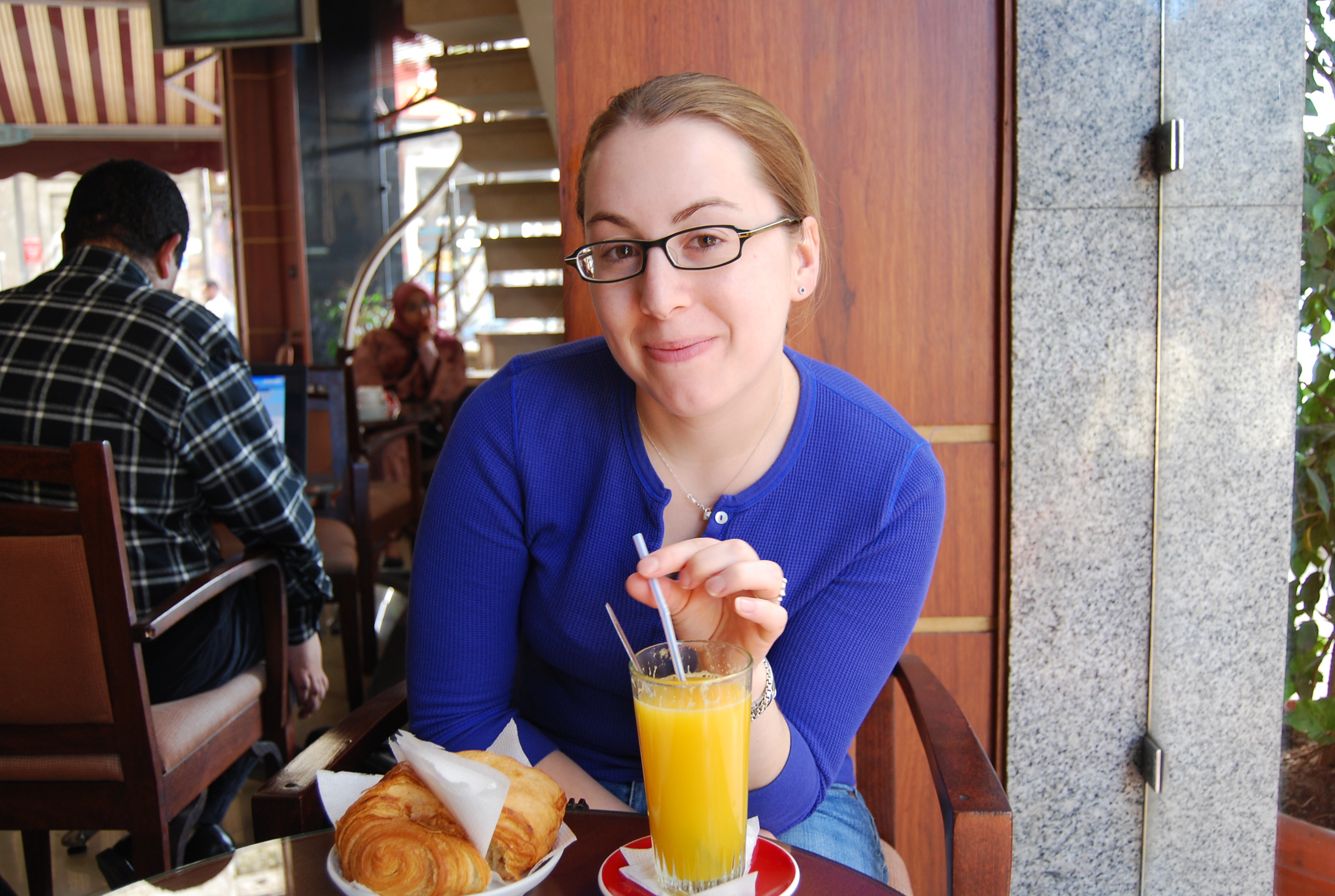
Casablanca (or the “White House”) is a grimy, polluted and congested city. Crossing the street is like playing a game of Frogger and the blasting horns of the petite cabs are constant. Not surprisingly, few travelers visit Morocco’s largest city, and as tourists, we stick out and have tended to draw the stares and touts of those unfamiliar with Americans. We spent yesterday afternoon walking around the dusty and fume-filled downtown, visiting the Ancienne Medina and checking out the Art Deco architecture, remnants of the city’s French colonial past. The highlight, quite possibly, was the delicious glass of orange juice that Charlotte got at a small cafe.

Dinner at La Fibule in Ain Diab, a neighborhood northwest of the city center, was very good. We started with an assortment of traditional Moroccan salads and then shared a steaming chicken tagine, a slow-cooked and tender piece of lamb and a bottle of sauvignon from Meknes, a city east of here that we’ll be visiting once we get to Fes. All of this with spectacular views of the Atlantic Ocean, the El-Hank Lighthouse and the Hassan II Mosque, where we just returned from.

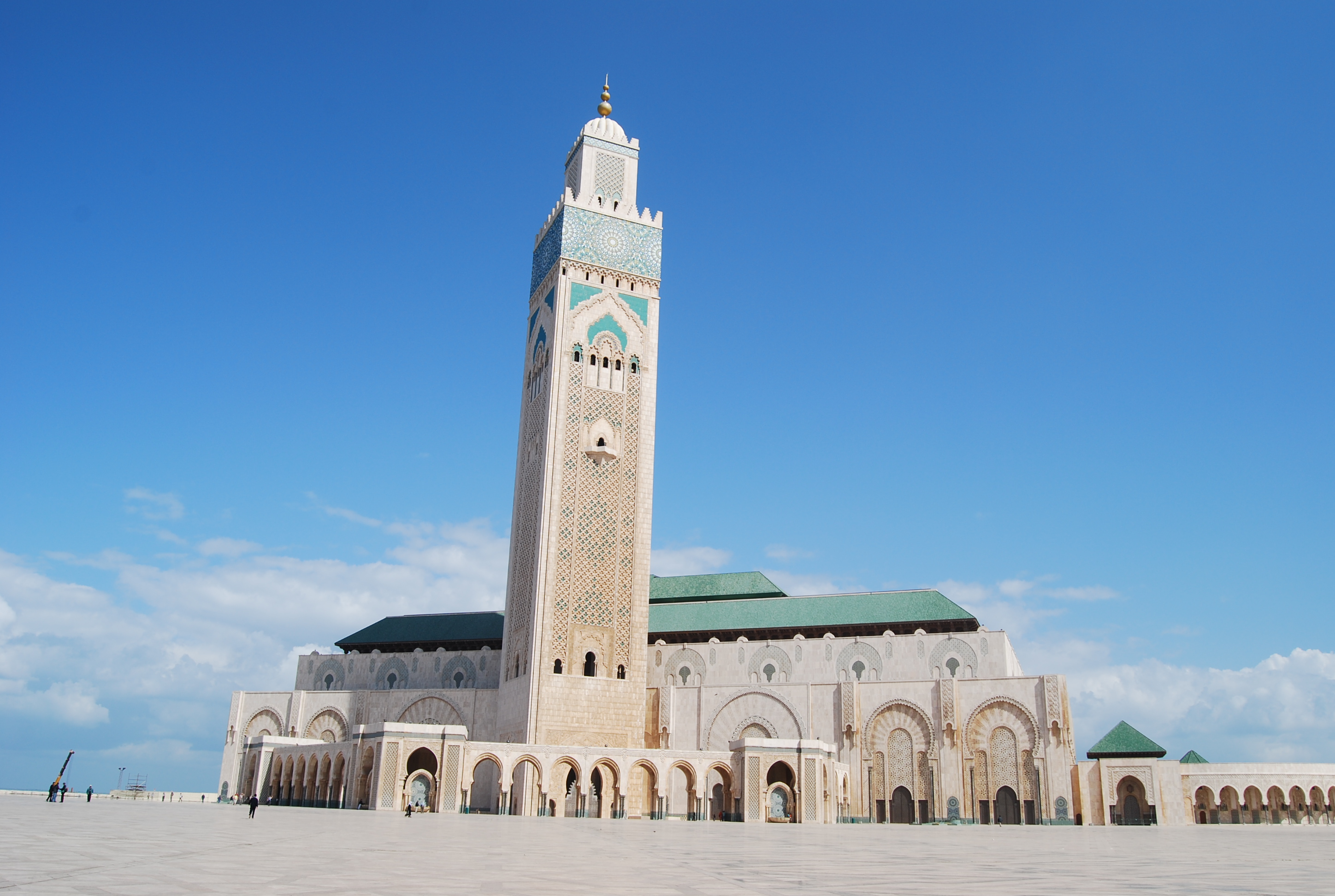
The mosque is Casablanca’s only “tourist” attraction — and it alone might be worth a visit to this city. It is a tremendous religious structure that can accommodate 25,000 worshippers and an additional 80,000 in the surrounding courtyard and squares.

Partly built on backfilled land that juts out into the Atlantic, the mosque’s location was picked by Hassan II in referral to the Koranic verse: “The Throne of God was on water.”


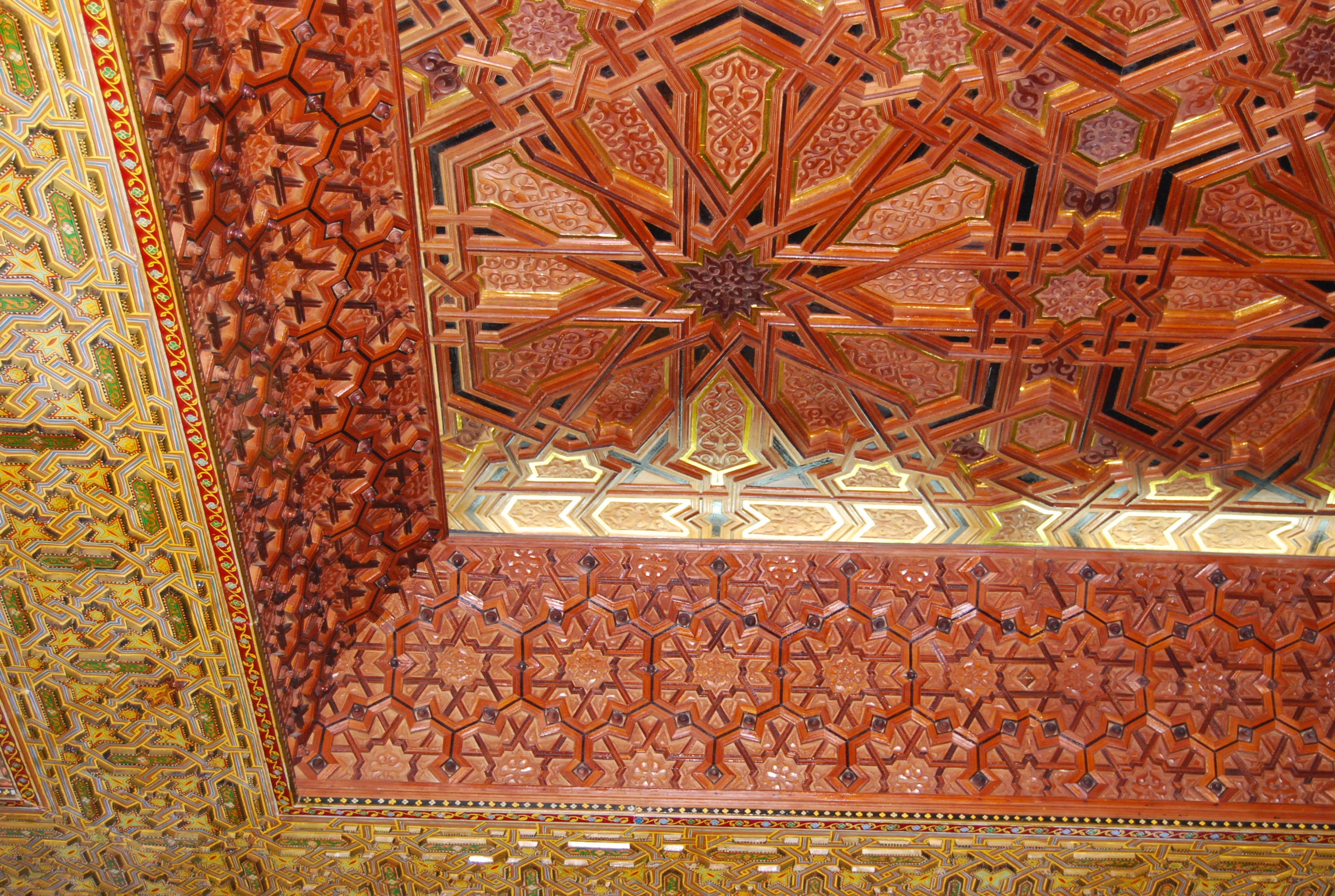
To say that the 20,000 square meter prayer hall is vast might be an understatement. It’s large enough to house Paris’ Notre Dame or Rome’s St. Peter’s. A team of 10,000 craftsmen worked 24 hours a day, 7 days a week for 6 years to complete its many intricate carvings. It is also one of only a handful of Islamic buildings that non-Muslims can enter into.

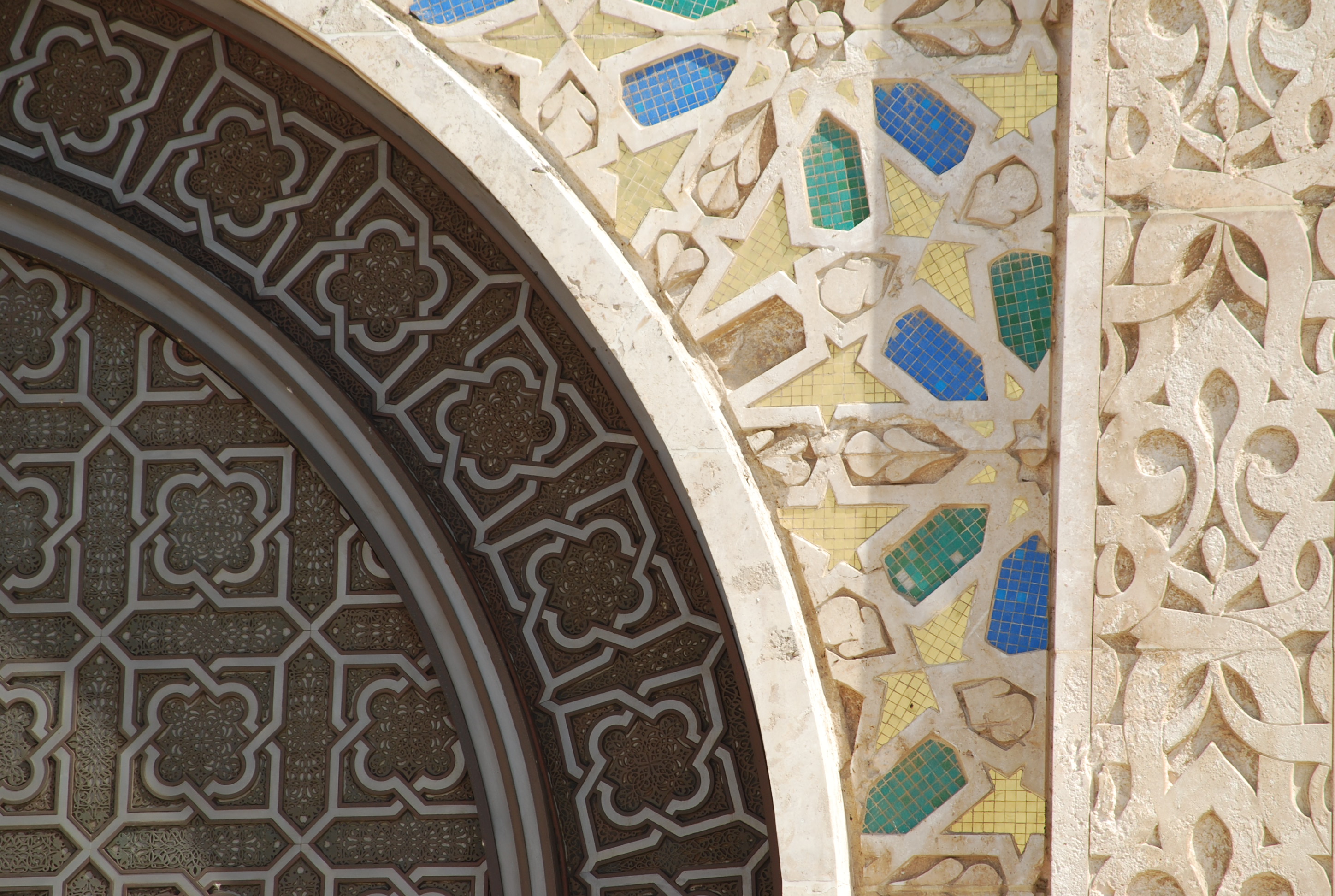
The color, design and attention to detail are just as mesmerizing outside:

Although the structure looks like it could have been built hundreds of years ago, it was actually completed in 1993. So, it also incorporates many modern features, like heated marble floors, a retractable roof and a laser beam that shines towards mecca from its minaret, the tallest in the world at 210 meters.

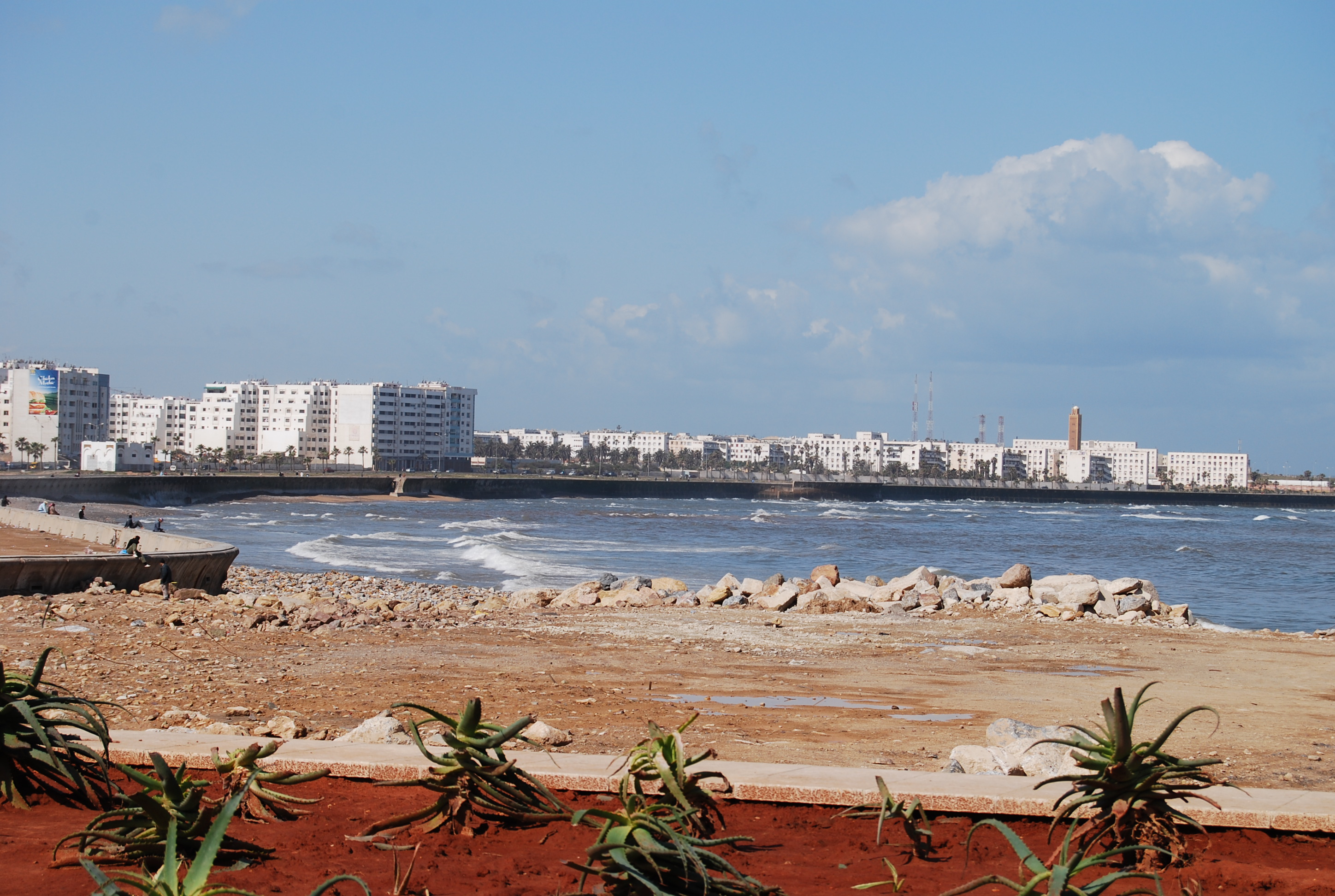
On our way back to the hotel, we stopped at the sqala, a fortification from the 18th century on the north side of the medina. There were panoramic views of the port and surrounding area:

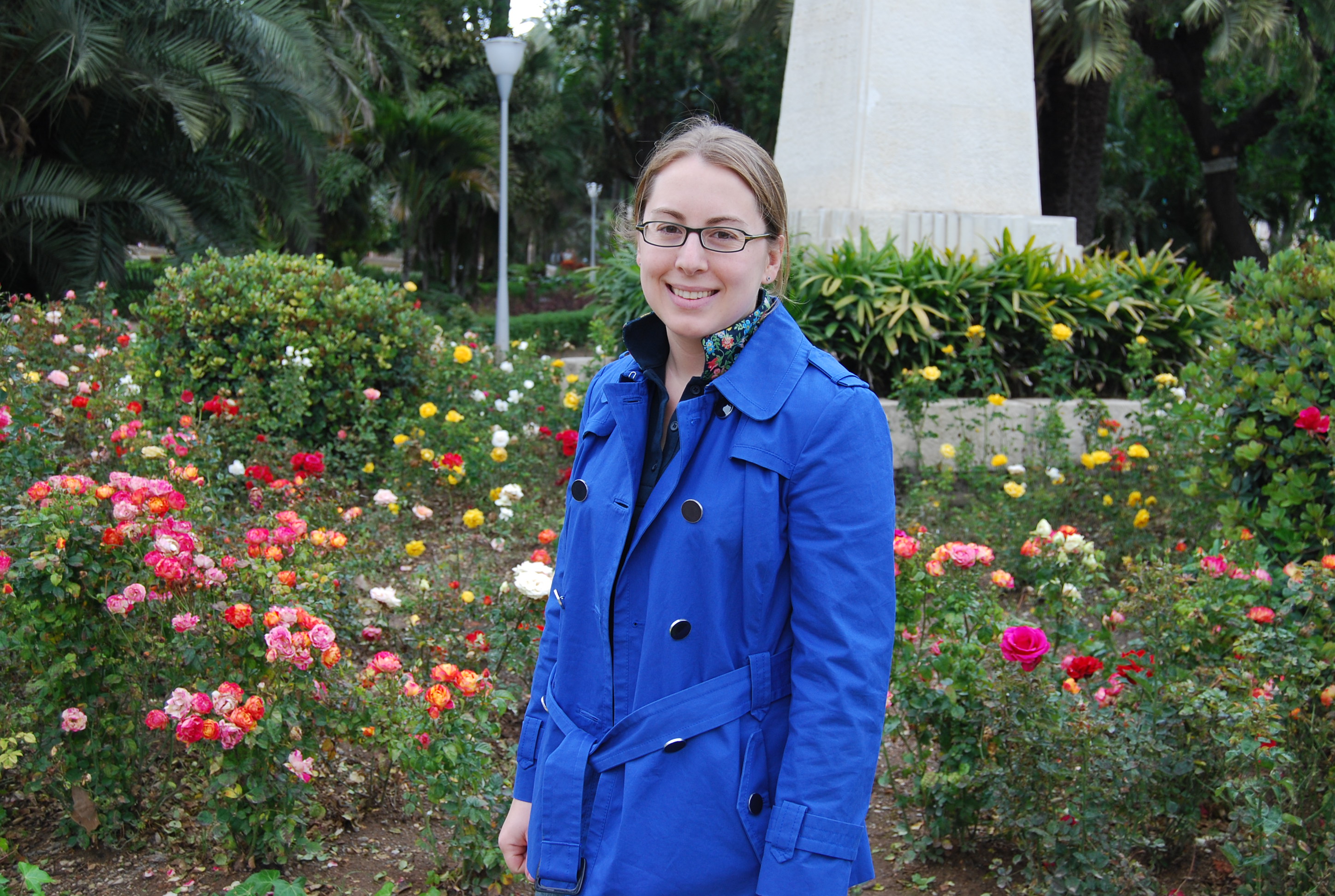
We had our cab driver take our picture before heading back to the hotel. You can see the Hassan II Mosque directly behind me.

Our train bound for Marrakech departs in an hour.