Steve speaks to the WaPo

Washington, D.C.

revolution-health

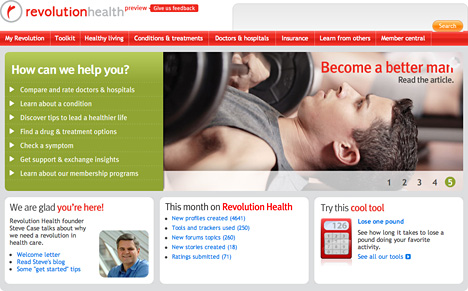
Steve Case just spoke about RevolutionHealth.com during a WaPo chat.

In response to a question about further engaging consumers, he said: “As I mentioned we just launched two months ago, and are in the building mode. Like AOL, we want to constantly improve the service, and also believe happy customers are the best marketing, so word of mouth is key. But we have gone from a site with no users a few months ago to several million monthly users today. And we’re just getting going.”

An Indian Acres embarassment

Washington, D.C.

img_1025

In a sign that the apocalypse truly is upon us, my beloved summer camp, Indian Acres, was just ranked the 9th most expensive sleep-away camp in the country. How embarrassing. It now costs a mind-boggling $8,500 for 7-weeks of cabin-living, freezing cold instructional swim and 5-star cuisine from acclaimed chef, Don Wentworth. At least we can all take solace in the fact that it’s not Camp Laurel.

Tuition there runs $10k.

Think you’re addicted to Starbucks?

Washington, D.C.

Starbucks Closings

Last year, while doing research for a People story on “obsessed fans,” I heard about a man named Winter. In 1997, he quit his job as a computer programmer and decided to try and visit every Starbucks in the world.

With ten years of crisscrossing the country and 6,959 domestic stores under his belt now, he’s 96.8% of the way there. (Winter has also visited 457 stores worldwide.) The problem is, Starbucks is opening stores faster than Winter can hit them up – so he stays on the road, sleeping in his car, fighting tirelessly to meet his goal of having a cup of Joe at every licensed, corporate-owned store.

Winter has come through DC a couple of times. After the jump, his candid thoughts on a few of the Bucks we’ve got here in the District. [Read more…]

The role of alumni giving in admissions

MetaEzra cites an interesting study by Princeton and Stanford economists that takes a new look at legacy admissions – and how schools benefit from pursuing this policy. Researchers analyzed 30-years worth of alumni giving data from an unnamed, private, four-year school. Taking into factors such as undergraduate record of the alum, occupation and degree level, they found some not so surprising – yet still eye-opening – results.

If an alumni’s child was accepted, the probability that they would give money to their alma matter the following year increased by 10%. A rejection meant a 25% decrease.

Without an understanding of a donation’s size though, I’m not sure we can determine the degree this plays in admission’s decisions. If weighing two similar candidates, an admissions officer might admit an alum’s child — but what if the applicant’s father only donated $100 last year?

I’d be more interested in learning about the role contributions made before an applicant’s review play. Does a $50,000 check for new squash courts get your kid into Amherst? What about $250k to the new biotech building at Columbia? Which leads to the big, looming question:

What does it cost to get into Harvard nowadays?

Is Alli your ally?

Washington, D.C.

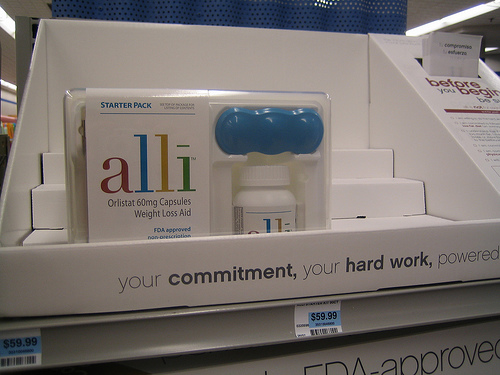
Alli, the first FDA-approved, over-the-counter weight-loss drug hit store shelves last week. I’ve put together a special package at Revolution Health that sorts out all you need to know about it.

Taken three times a day with each meal, the drug blocks the absorption of some of the fat in the foods you eat. Unlike other weight-loss products, it does not affect your brain or heart. Combined with a reduced-calorie, low-fat diet, the drug manufacturer (GlaxoSmithKline) claims that Alli can help you lose 50% more weight than dieting alone – so instead of losing 10 pounds, you could lose 15.

It’s not without “treatment effects” though that may include: “gas with oily spotting, loose stools and more frequent stools that may be hard to control.” Patients can expect these to occur if they consume greater than 15 grams of fat at each meal. The companion book to Alli is more blunt: “Until you have a sense of your treatment effects, it’s probably a smart idea to wear dark pants and bring a change of clothes with you to work.”

Still considering it? Here’s what a group of four medical experts had to say about the drug.

Why isn’t there a Metro stop in Georgetown?

Washington, D.C.

Seriously, why isn’t there?

You’ve probably heard the rumor that residents objected to the construction of a stop there out of fear that it would lead to an influx of riff-raff and other “undesirables.” But, according to Prof. Zachary Schrag, an assistant professor at George Mason, that’s not the underlying reason. Instead, he says that a Georgetown metro stop would cost too much (due to preservation efforts and proximity to the Potomac) and provide only limited benefits (Georgetown is not a big employment center and the commute from Virginia would be slowed with a stop there).

Interestingly enough, also according to Inside the DC Bubble, “the only station killed by local opposition was the Oklahoma Ave. station in Northeast. The largely African-American neighborhood wanted to remain quiet. The residents convinced the powers that be that the station was a bad idea.”

Three Sheets, a dream job

Washington, D.C.

4-3-08-three-sheets-premier

One of my favorite shows on television might be one you’ve never heard of.

Three Sheets, on the 100% hi-def-channel MOJO, features comedian Zane Lamprey. This guy essentially travels around the world, sampling regional beers and booze and the unique local customs that surround the drinking culture in different countries. Now rounding out its second season, Zane has traveled through Europe, Asia, South America, Caribbean and the U.S. Some of his greatest moments have come at Oktoberfest in Germany and while visiting Champagne, France although I’m also pretty excited for his upcoming Season 3 episode in Mendoza, Argentina. Can you believe he gets paid to do this?

Three Sheets is on tonight at 9 p.m. For those in the DC-area, MOJO is channel 226.

Mika rips on President Bush’s house (literally)

Washington, D.C.

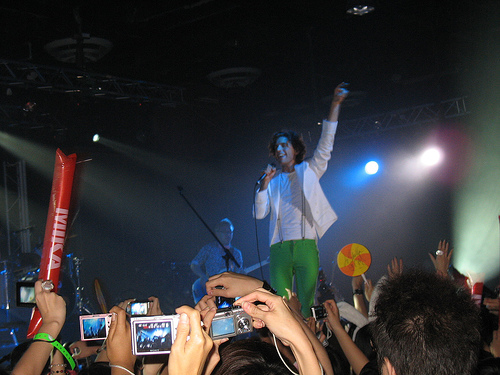
Lucked out big time yesterday and was able to score two tickets on craigslist to the sold-out Mika show at the 9:30 Club. (No cameras were allowed inside, the photo above is from his concert in Hong Kong although he was wearing the same outfit last night.) For those not yet in the know, Mika is a British pop sensation – trained by a Russian opera professional – whose single “Grace Kelly” reached number one on the UK Singles Chart in January. His debut U.S. album, Life in Cartoon Motion, released a month later.

And last night, Mika proved himself as truly a performer to those of us in the nation’s capital. It started with girls from the audience handing out lollipops by the box office and later included a Big Girl dancing on stage during “Big Girl (You Are Beautiful),” Mika banging on trash cans during “Love Today” and a confetti, balloon and dancing-bunny-costumed encore of “Lollipop.”

Along the way, he reflected on impressions of his first visit to D.C. “We did some sight-seeing today and saw the White House,” he said. “It was very small. I thought a man that powerful would have a bigger house.”

And then, barely audible, Mika gave one last compliment to the roaring crowd. “I don’t know if you all know how cool it is to show up in a place and see people like you,” he said. “It’s like nowhere else on the tour.”

Diagnosing Severe Netflix Anxiety (SNA)

Washington, D.C.

It was pretty exciting when Netflix sent me “Walk the Line last May. Not having gotten a chance to see it in the theater — and reading rave reviews from all who did — I was pumped to see it right away. But something came up and “Walk the Line” stayed in its little red envelope that week. And the week after that. And the week after that.

My Netflix queue came to a halt and I was torn: do I send it back or hang onto it? I chose the latter. So, there it sat. When November rolled around and I moved to my new apartment, Reese and Joaquin still sat on my nightstand. After all this time though, I couldn’t just send it back. I had to watch it. So, I threw it in a box and brought it with me.

Fast forward to February of this year. I’ve now had “Walk the Line” for 9 months. And, believe it or not, I’m finally in the mood to watch it. And you know what? It was pretty good.

I was thinking about this whole incident last night and came across an old Newsweek article discussing the same “disorder.” In the story, it’s given a name: Severe Netflix Anxiety. And, it made me thankful: at least I’m not former Netflix employee, Crystal Trexel. Trexel received the indie flick “Maria Full of Grace” in December 2004.

She finally returned it 20 months later.

BODIES, bodies everywhere

Washington, D.C.

A bunch of us had an opportunity this weekend to visit BODIES, a controversial traveling exhibit currently on display at the Rosslyn Dome in Arlington. It features unclaimed human bodies (from China) that are preserved through a process called polymer preservation, in which body fluids are removed and replaced with liquid silicone rubber. The results are fascinating. Here are the basics of what I learned:

  • Smoking is bad. One display featured two lungs, that of a healthy individual and that of a smoker. The latter was blackened and probably one-third the size of the healthy one. Underneath a placard stating that each pack of cigarettes cuts 2.5 hours from your life, a plexi-glass box was filled with discarded packs and lighters from those in attendance.
  • Skin is the body’s largest organ. To demonstrate this, a display showed a single piece of flattened skin from one body. It was pretty amazing to look at.
  • Our digestive system is long. Another display showed an entire human digestive system, from mouth to anus. Seeing it all like that, in one place, helped demonstrate the extraordinary ability of our body to coordinate complex processes.
  • Babies grow fast. An optional part of the exhibit showed the development of fetuses, starting as something the size of a pencil’s eraser and then doubling in size every week or so.
  • Testicles aren’t kidneys. As one astute observer – who had a little difficulty identifying parts of the human anatomy – learned, those things hanging below the stomach are part of the male reproductive system.

This isn’t anything like you’ve seen before. A doctor with us said she hadn’t even see the body presented in such a way during med school.

And if that’s not an endorsement, I’m not sure what is.