Spanish siestas and toilets

Barcelona, Spain
Day 15

It was a sad morning as Charlotte left to return to D.C. After seeing her off, it felt like a good day to relax and recharge the batteries before flying to Croatia tomorrow morning.

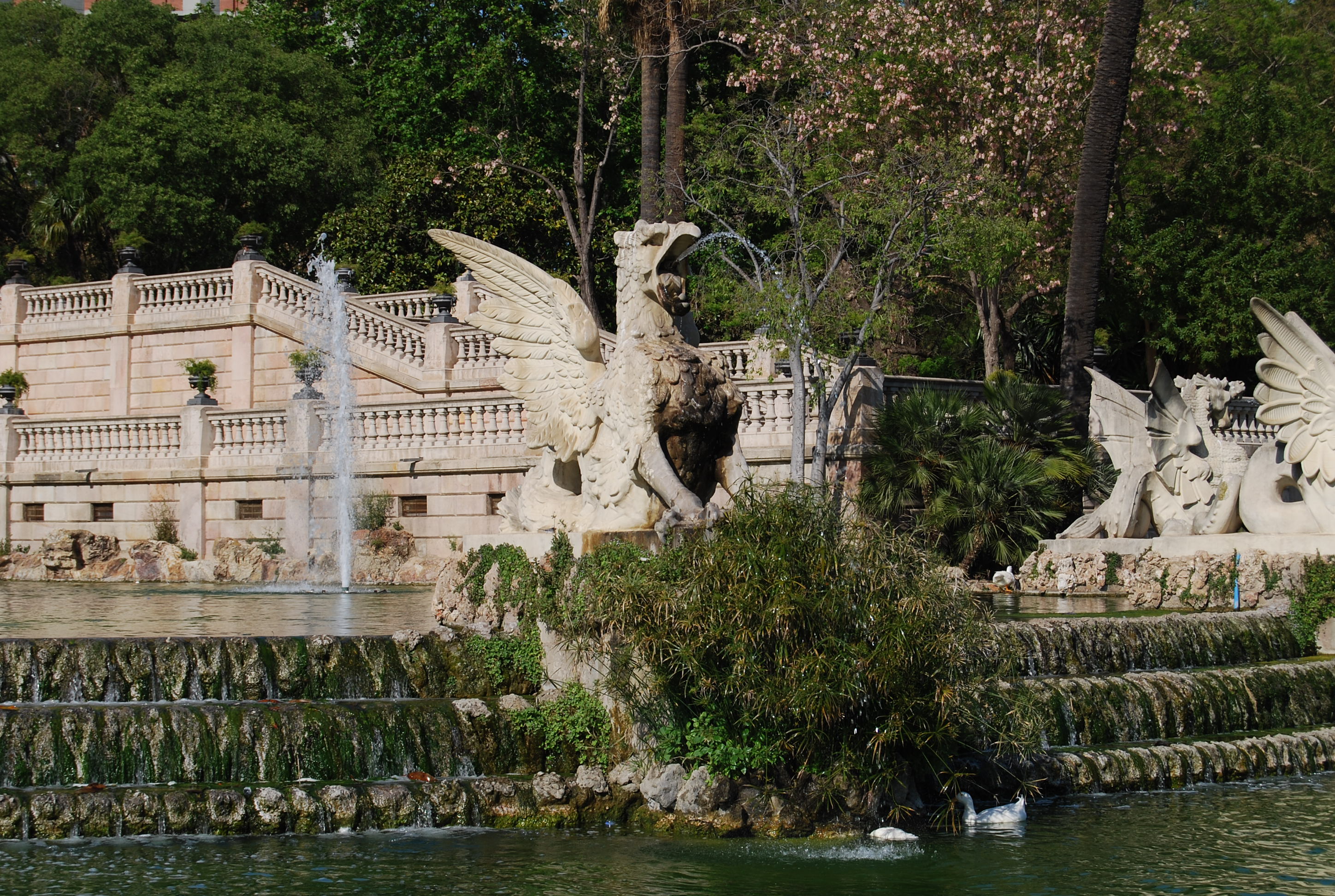
My first stop was Parc de la Ciutadella, a fortress commissioned by Felipe V after taking Barcelona at the end of the War of Spanish Succession in 1714. Rebuilt as a park in 1869 for an upcoming Universal Exhibition, it is today a traditional European green space with plenty of ponds, grassy knolls and fountains (including one built by, you guessed it, Gaudi). In other words, the perfect spot for an afternoon siesta.

With sunny skies and temperatures in the mid-70s, the man-made beaches of Port Olimpic were next calling my name. They were just right for catching up on some reading and relaxing — although the Mediterranean in April was still too cold for a dip.

Taking in Barcelona slowly like this today, and seeing all of the city’s green space, got me thinking about energy conservation and the environmental movement in Spain. While Europe is notorious for its small cars and hotel room lights that require a key card to turn on, Barcelona really seems to be taking it to the next level. First, there´s a bike-sharing service widely available throughout the city — that’s free.

And, even my hostel has gotten in on the action with toilets that have two flush buttons (you figure it out).

The U.S. could certainly learn a thing or two (or three) from here.

Gaudi´s favorite dish: jamon

Day 14
Barcelona, Spain

The streets were filled with book vendors and florists here this morning — today is Dia de St. Jordi, what could most easily be described as Valentine’s Day in Barcelona. Men buy women roses; women, in turn, buy books for men. It has become a much-loved national holiday, which meant the streets, plazas and monuments were even more crowded than yesterday.

If one man represents Barcelona’s Modernist movement, it is Antoni Gaudi. His architecture, art and legacy are ingrained throughout this city and we spent a good part of today seeing his work. The Casa Batllo was our first stop — this renovated apartment building has a façade whose blue, green and mauve tiles and wave-shaped window frames give the impression that it’ll wash away with the next tide. Inside is much of the same: the main salon swirls onto the main drag outside, Passeig de Gracia, while the internal courtyard is filled with undulating deep sea-blue tiles.

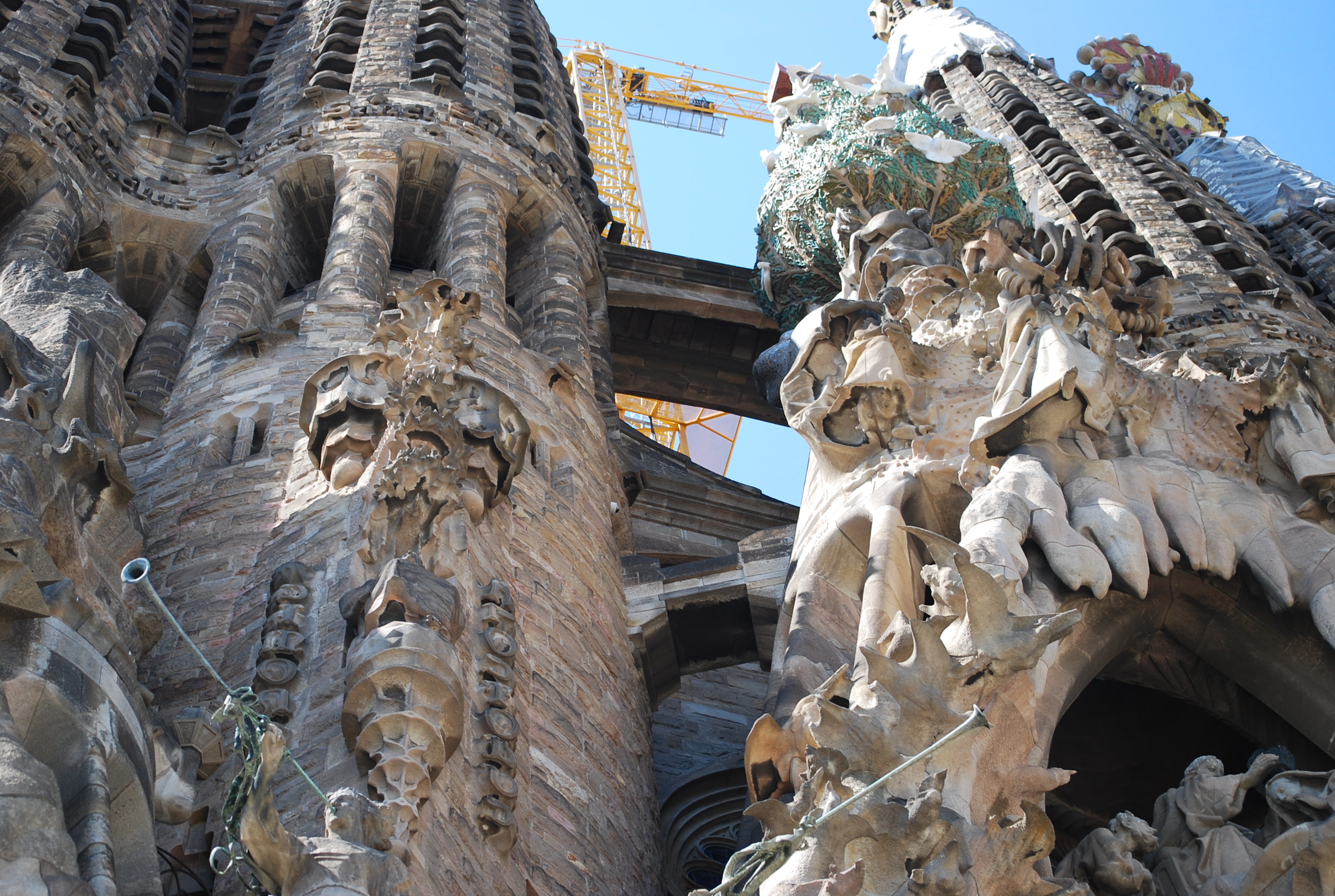
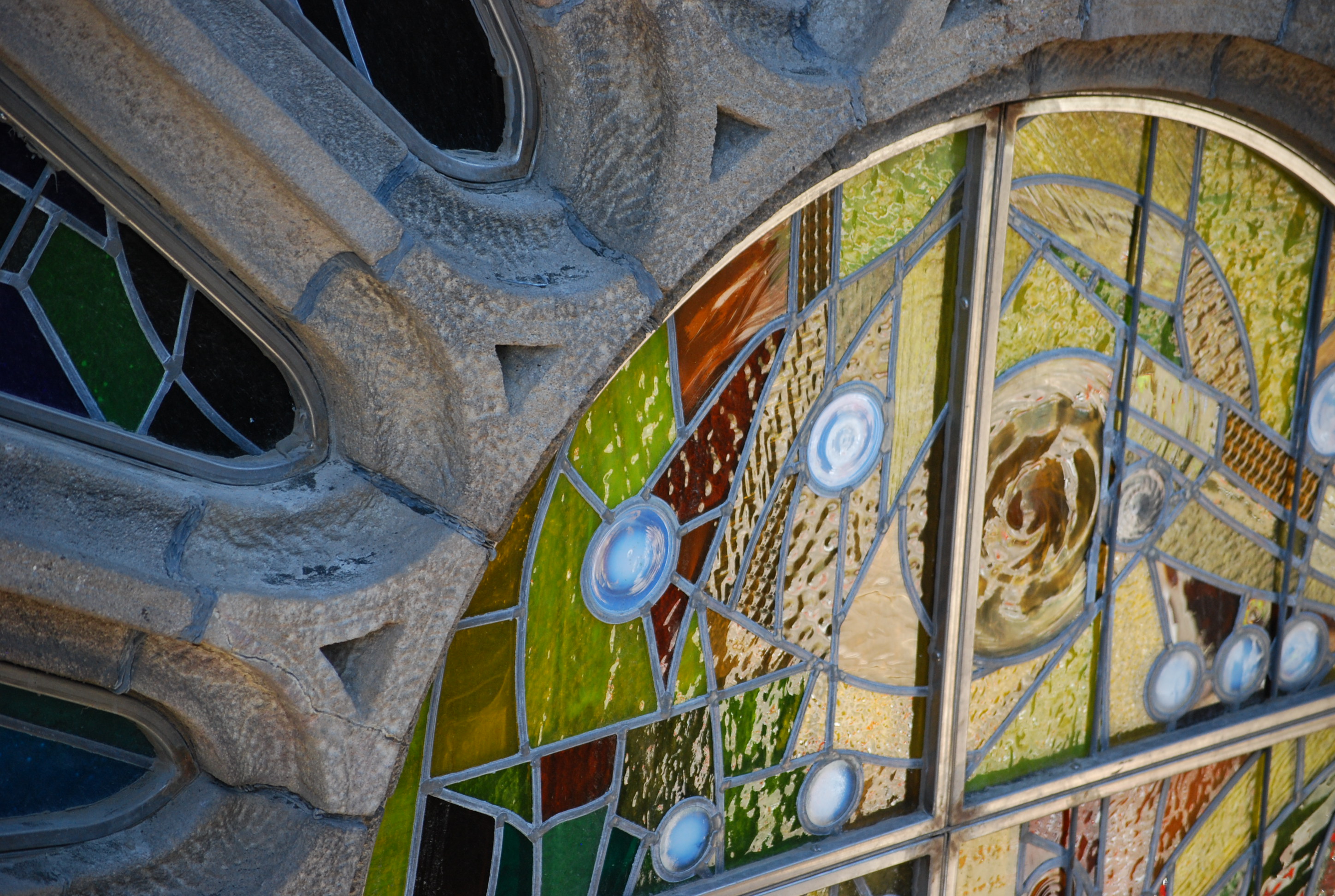
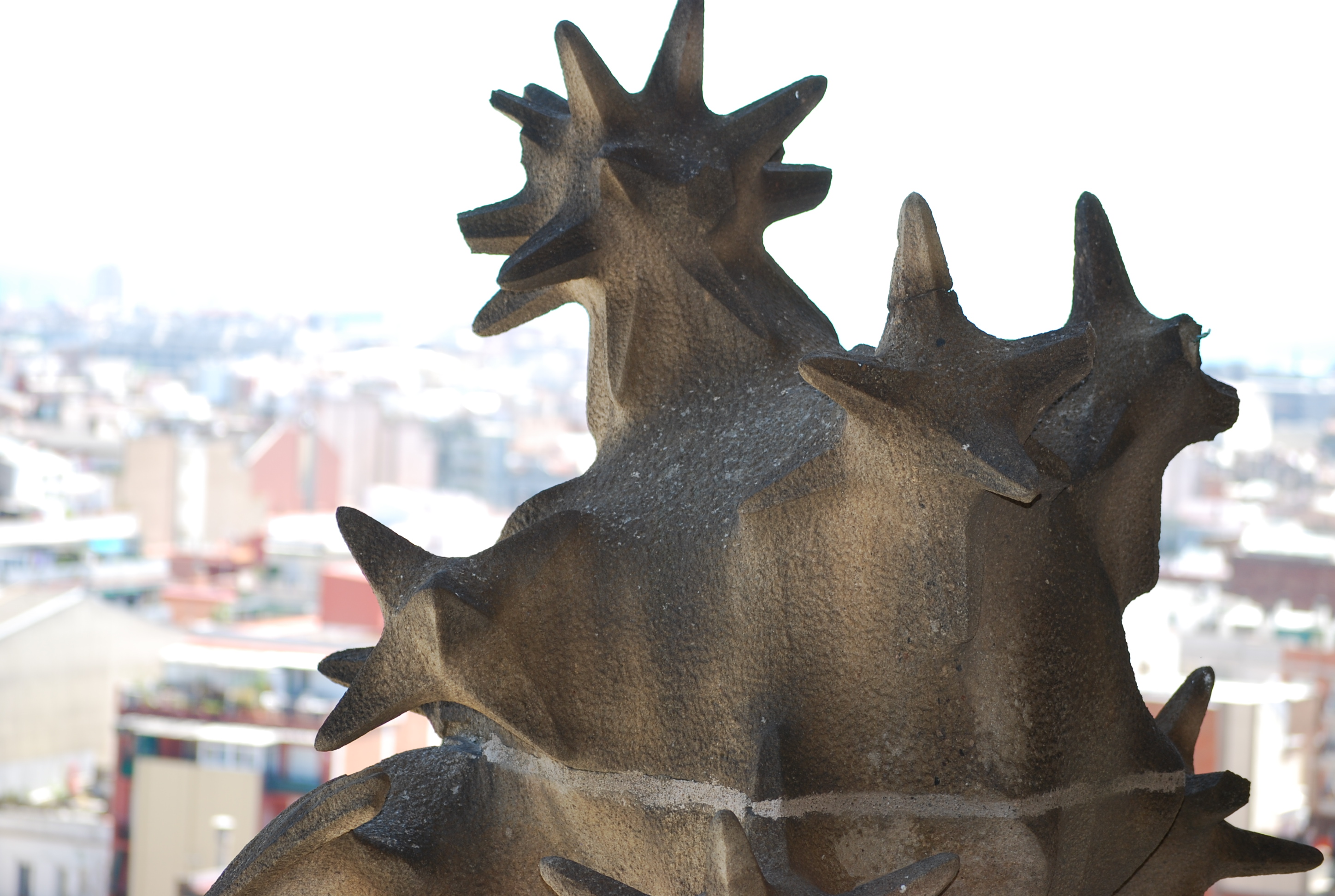
Next was La Sagrada Familia, perhaps Barcelona’s most defining and recognizable landmark. Gaudi became the chief architect of this unfinished temple in 1884 and spent the next 43 years of his life working feverishly to complete it, while obsessing over every detail (when asked why he fussed so much over embellishments at the very top of the towers which no visitors would see, Gaudi replied: “The angels will see them”). Today, over 125 years after construction began, La Sagrada is said to be still only half complete.

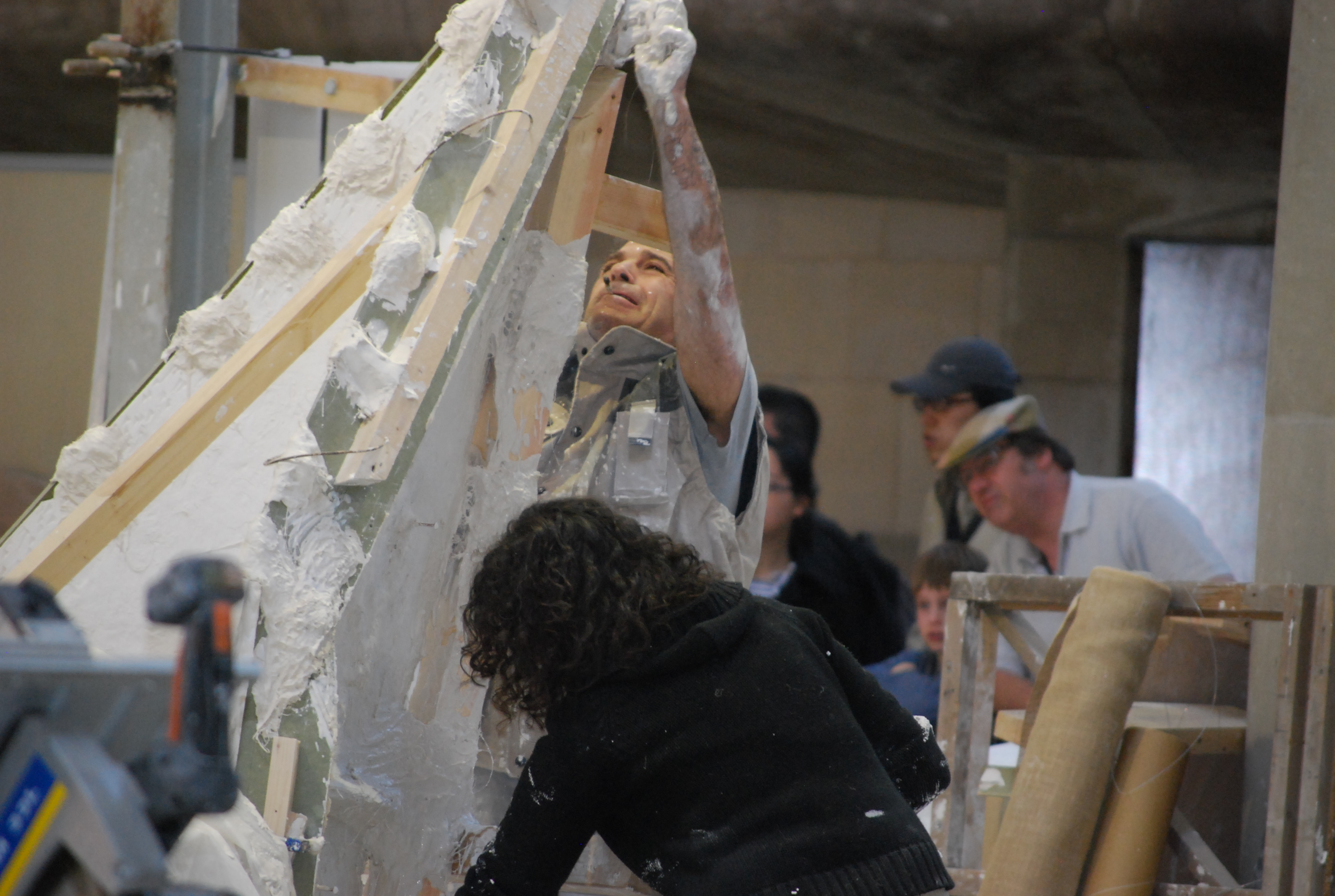
Rarely do you get to see the construction of a religious structure of this magnitude — more often, you can only experience them years after their completion. While the portions of La Sagrada that have been finalized are no doubt magnificent, part of its appeal, at least for me, was watching the artisans, craftsmen and construction crew continue to build it.

An elevator to the top of a tower offers another perspective of Gaudi’s work, as well as distant vistas of Barcelona and a vertigo-inducing walk down to the ground.

Needing an escape from the tourist onslaught, we walked back to Las Ramblas and bought a baguette, some Manchego queso and a couple varieties of Serrano jamon, packed it up with fruit and a bottle of Spanish red wine and jumped on the bus to Parc Guell for a picnic. It was a delicious desayuno.

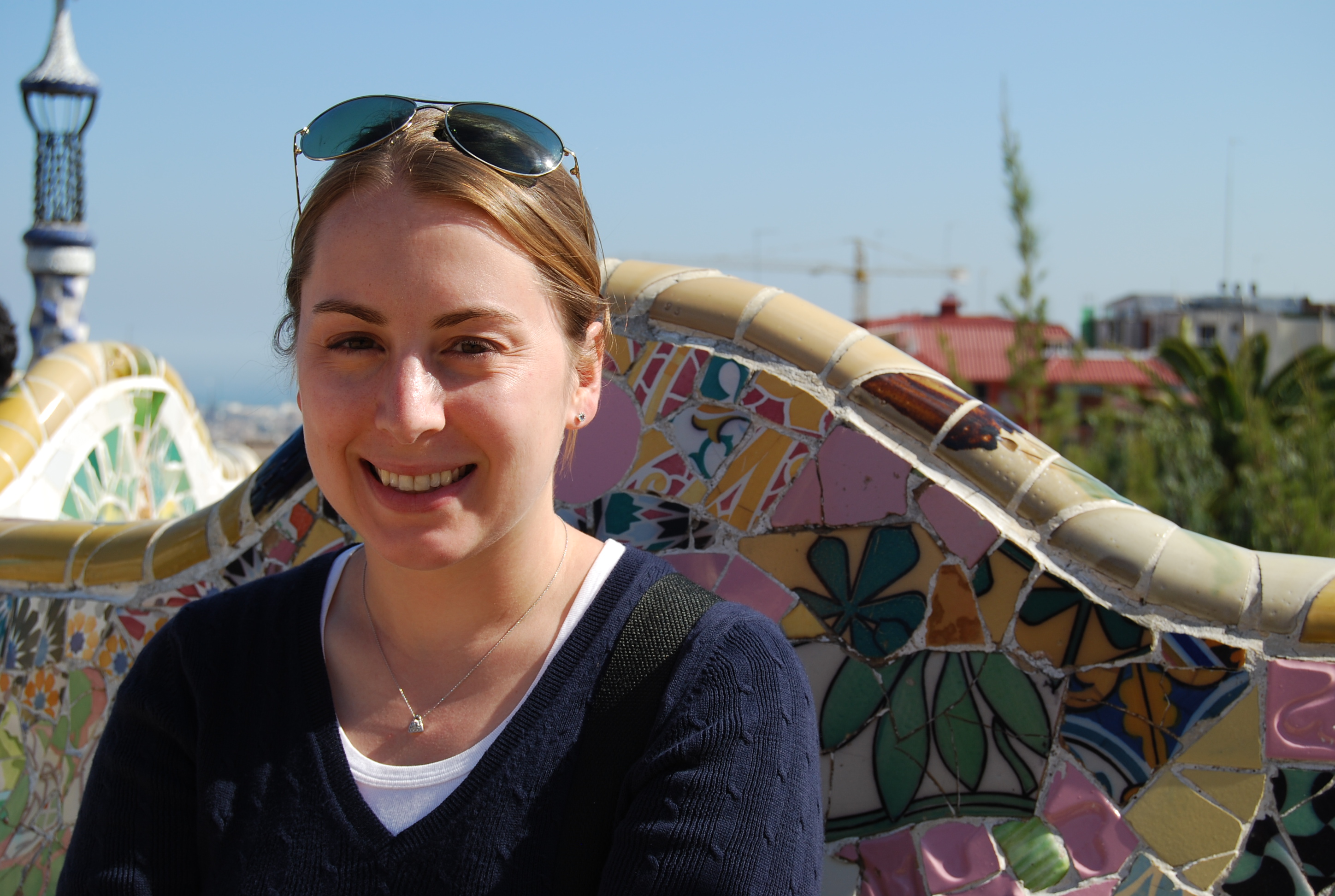
After lunch, we walked around the park, which Gaudi was commissioned to create in 1900. There are fairy-tale style gingerbread houses, candy-colored mosaic tiles and sweeping views of the mar.

Tonight is Charlotte’s last night. So, we’re off to do something special — I’ve got a feeling it might involve jamon y queso.

Rambling down Las Ramblas

Day 13
Barcelona, Spain

After a train, plane and automobile, we arrived here this morning and made our way to the Somnio, a new, centrally located hostel that was opened a couple of months ago by two sisters from the States. We dropped our bags off and walked to Origenes — a delicious nearby restaurant that offers traditional Catalonian cuisine made with all locally-sourced ingredients.

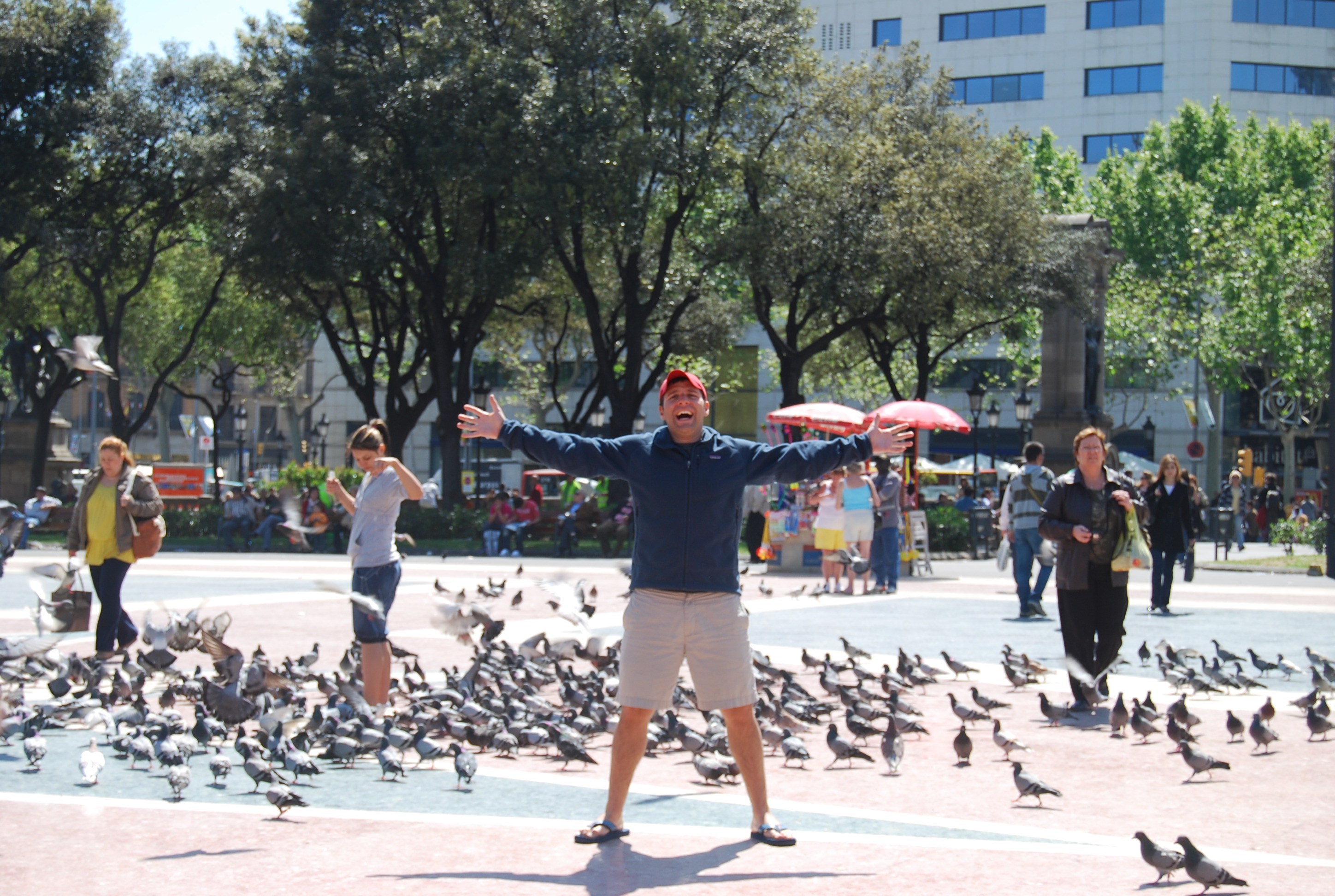
Our next stop was Plaza de Catalunya, home to perhaps Europe’s largest population of pigeons (after Venice). Dodging tour groups and backpackers, we took a moment to take in what is said to be the heart of Barcelona.

Feeling particularly like tourists, we then headed to Las Ramblas, a clogged pedestrian thoroughfare filled with football jersey-wearing Brits, mimes, outdoor pet stores, a Hard Rock Cafe and an overabundance of tourist schwag and Serrano jamon.

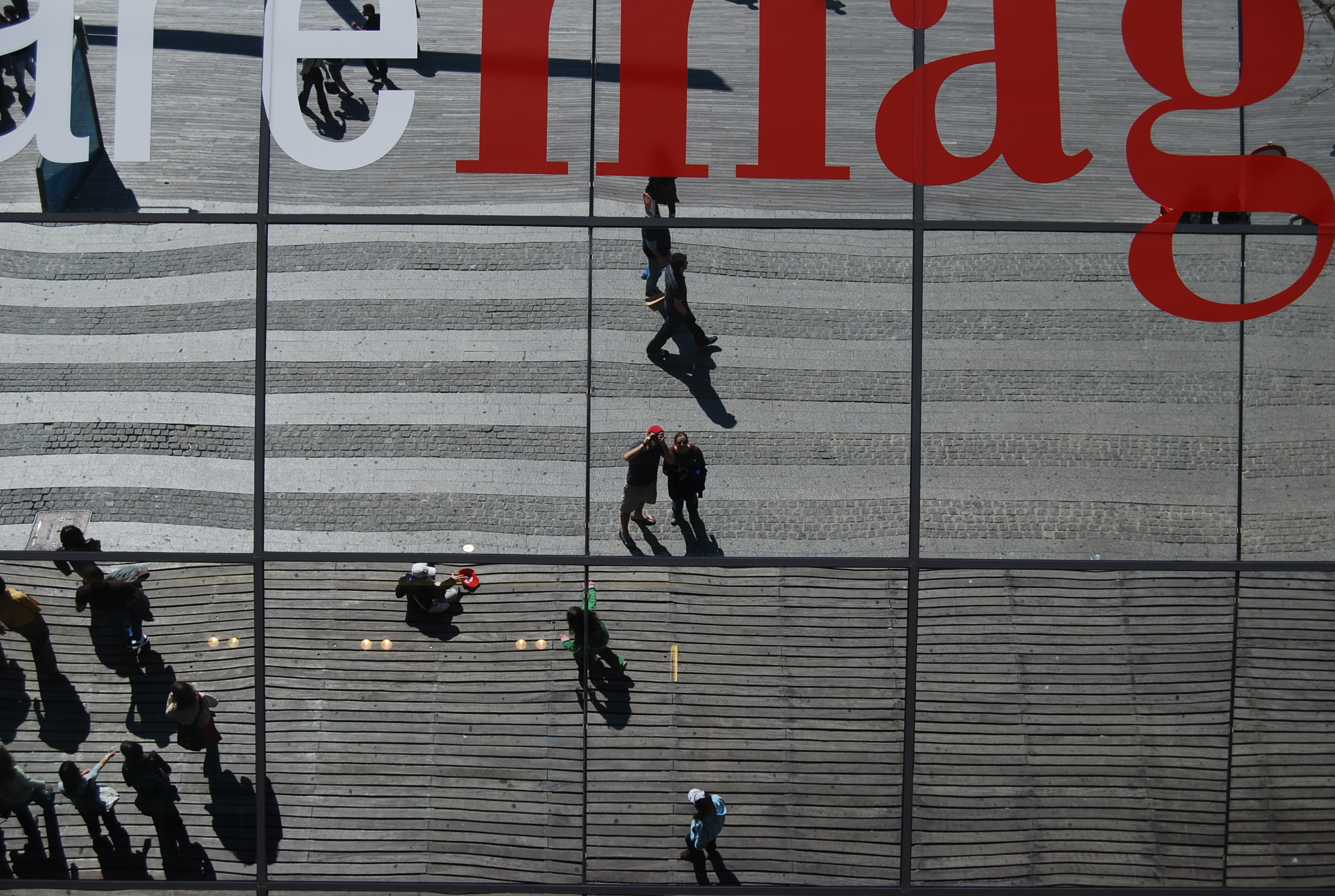
Las Ramblas ends at Barcelona’s waterfront, which on a beautiful and sunny afternoon was packed with boaters, sunbathers and yes, more tourists. The marina is a modernist building with a mirrored-roof that reflects the foot traffic below. Can you spot us?

This city feels alive — but not in the Marrakech, Morocco sense. There are tourists nearly everywhere you look. We’ll try our best to walk the line between seeing the sights and not making a dinner reservation at Planet Hollywood. Wish us luck.

El puente to Ronda

Day 12
Ronda, Spain

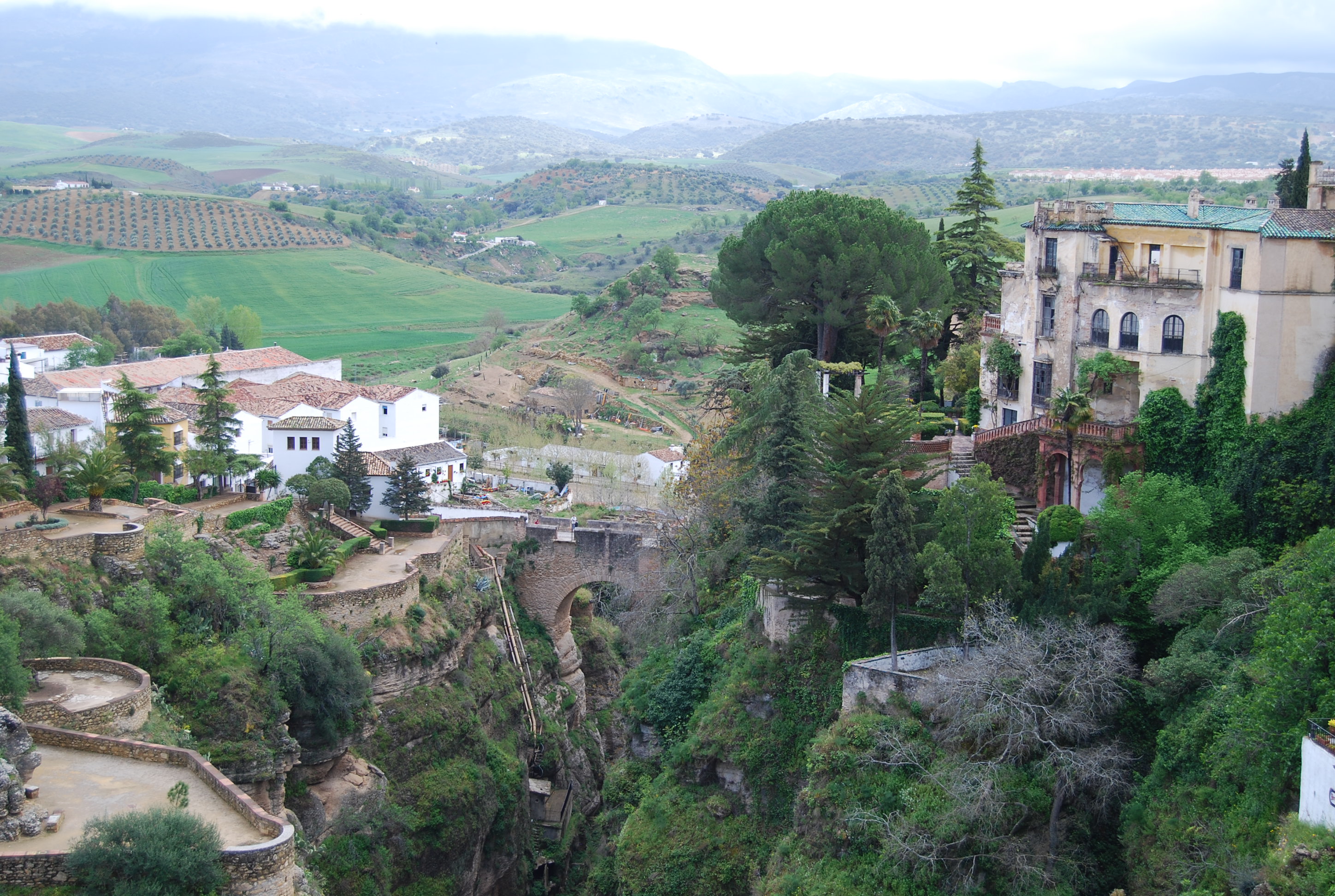
Perched atop a limestone cleft sits this small town about 100 kilometers north west of Malaga. We took a bus here this morning and soon learned why Ronda was one of the last Moorish bastions in southern Spain (it fell to the Christians in 1485). Its mountainous location 700 meters above sea levels affords it a fantastic vantage point to the surrounding valleys below.


Still, it has retained its Moorish influences and charm, with cobblestone alleys, whitewashed buildings and window grilles.

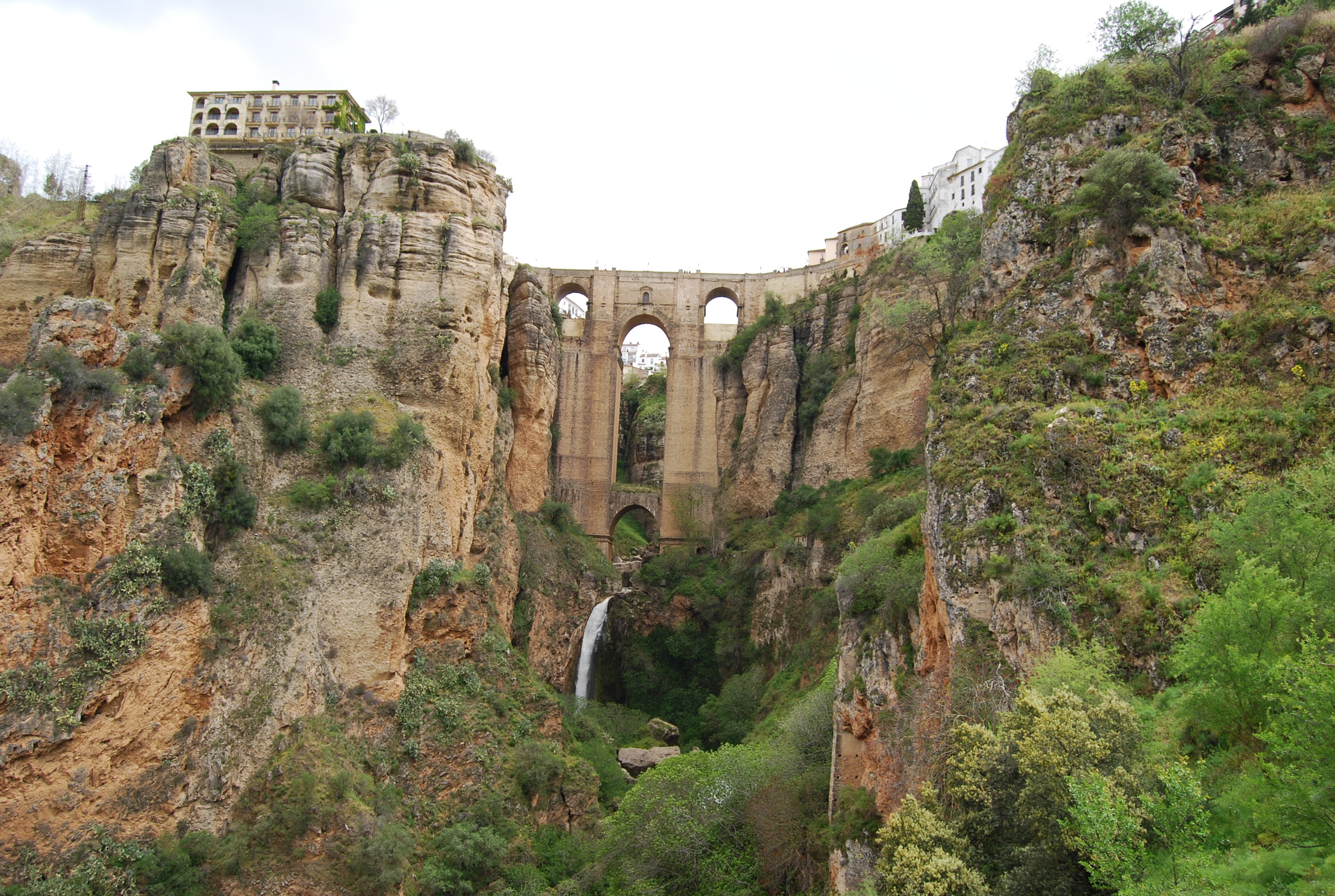
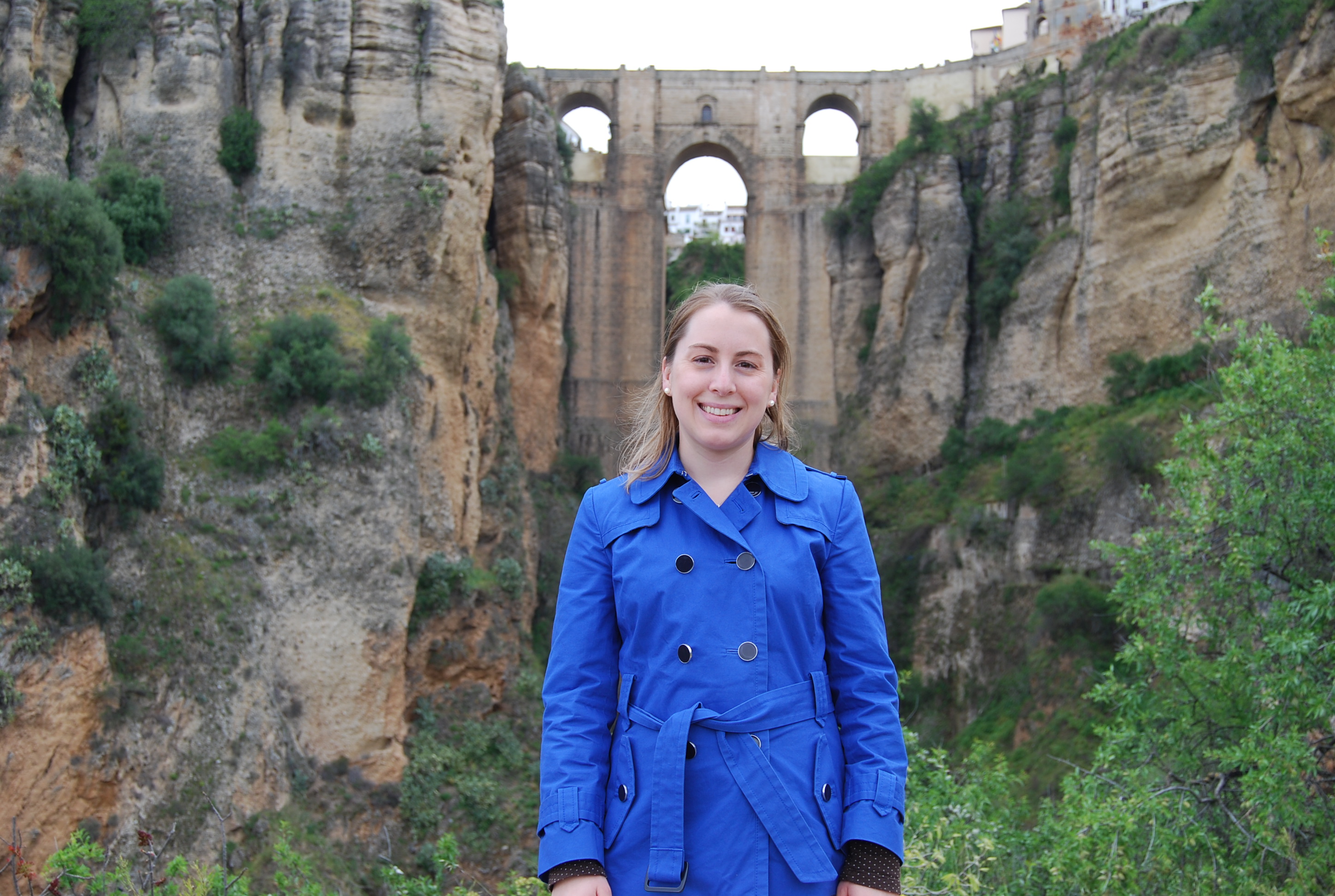
Ronda’s most defining feature is the Puente Nuevo (New Bridge), which spans the Tajo Gorge. It was considered a tremendous feat of civil engineering when completed in 1793.

After returning to Malaga, we hit up El Corte Ingles, possibly the best department store in the world, before finishing the night with some tapas. Our flight to Barcelona leaves tomorrow morning.

Sliding into the Costa del Sol

Day 11
Malaga, Spain

Our overnight Acciona Trasmediterranea ferry from Melilla was actually quite comfortable. We had a cabin, and perhaps more importantly, a bathroom with shower, so we were able to wash up before disembarking here at around 8 a.m. We bid farewell to the boat and took a taxi to Silken Puerta Malaga, our hotel base for the next two nights.

Malaga is Andalusia’s second largest city, and with its high-rise buildings and active port, doesn’t offer the best first impression. Many use it as an access point to the Costa del Sol, which is unfortunate, considering how much it has to offer.

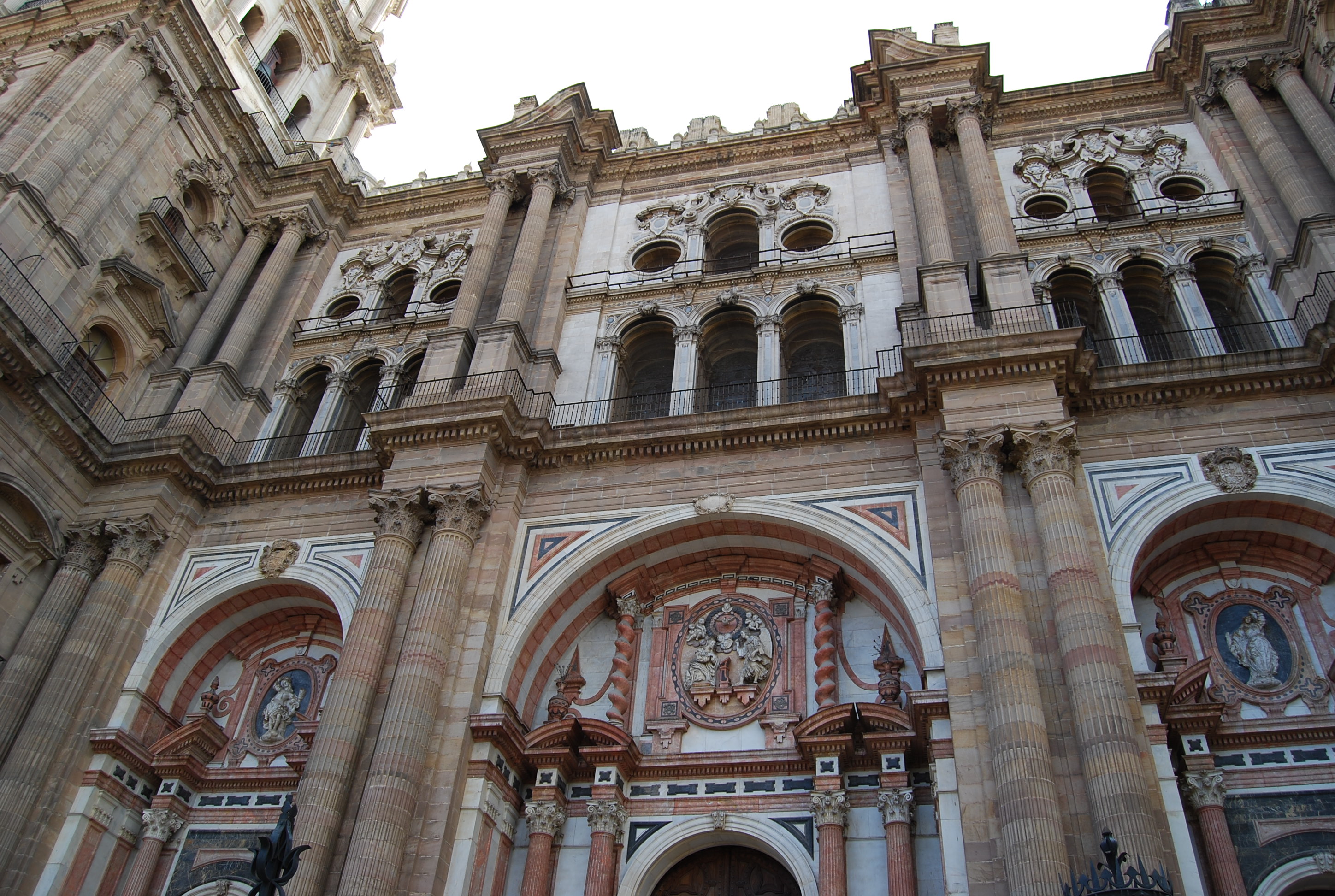
We started the day by visiting the old town’s cathedral. Construction began on it in 1528 but was interrupted by an earth quake in 1680; in 1765, funding ran out and the half-built second tower was abandoned, thus the cathedral’s nickname: La Manquita (the one-armed one).

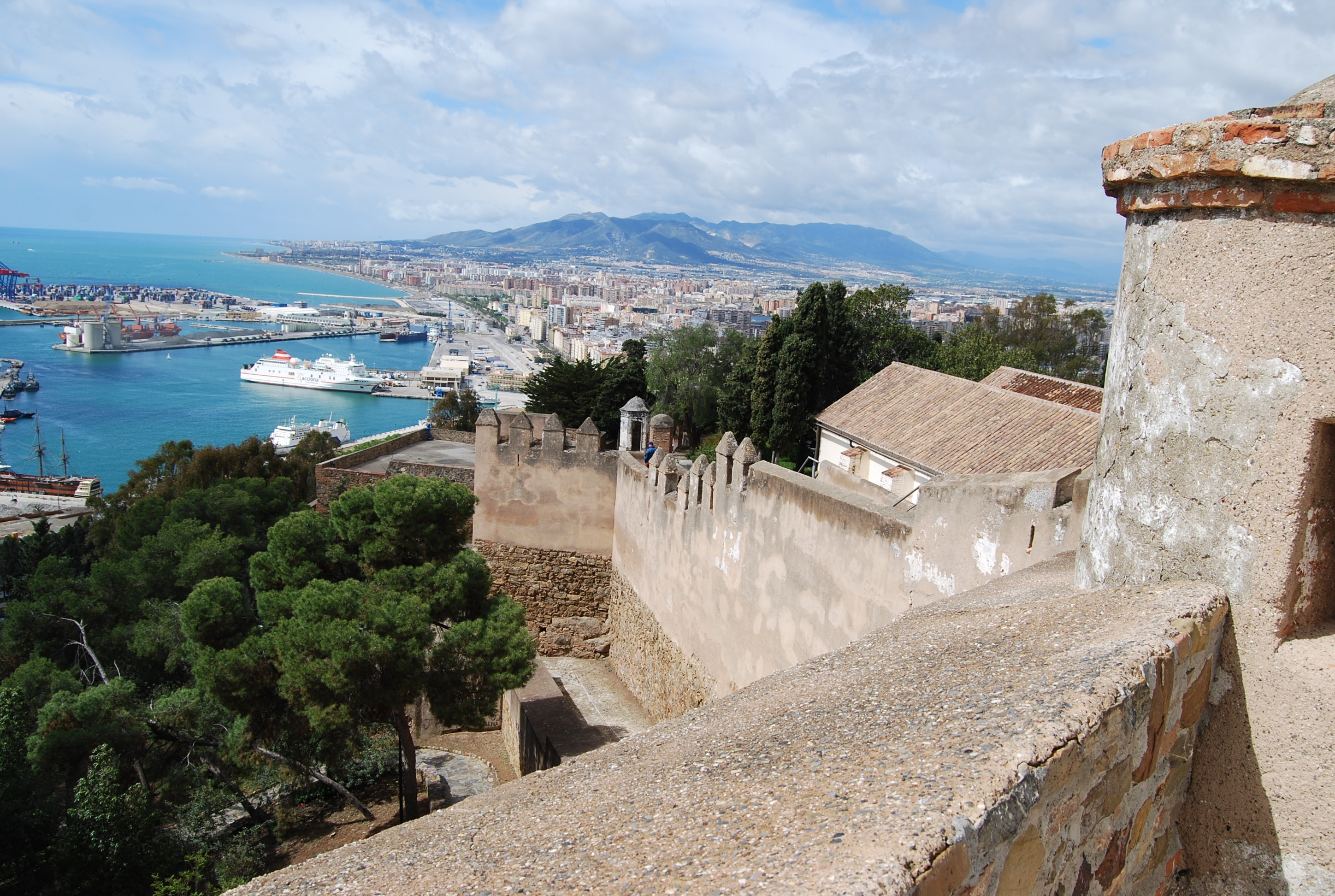
Afterwards, we visited the Museo Picasso Malaga (Picasso was born in Malaga) and then trekked to the top of the Alcazaba, a fortification built high on a hill between the 8th and 11th centuries. From up above, it offered some great panoramic views of the port, bullring and surrounding city.

We’re still recovering from our week in Morocco and adjusting to the time difference (we’re now 6 hours ahead). Still, tonight after some bocadillos (small sandwiches), we headed to the B Lounge at the Barcelo Malaga Hotel and took a ride down the slide (yes, slide) that connects the first and second floors.

Tomorrow, we’re going to the picturesque town of Ronda, accessible only by bridge and home to Spain’s oldest bullfighting ring.

Hola, Espana!

Day 10
Melilla, Spain

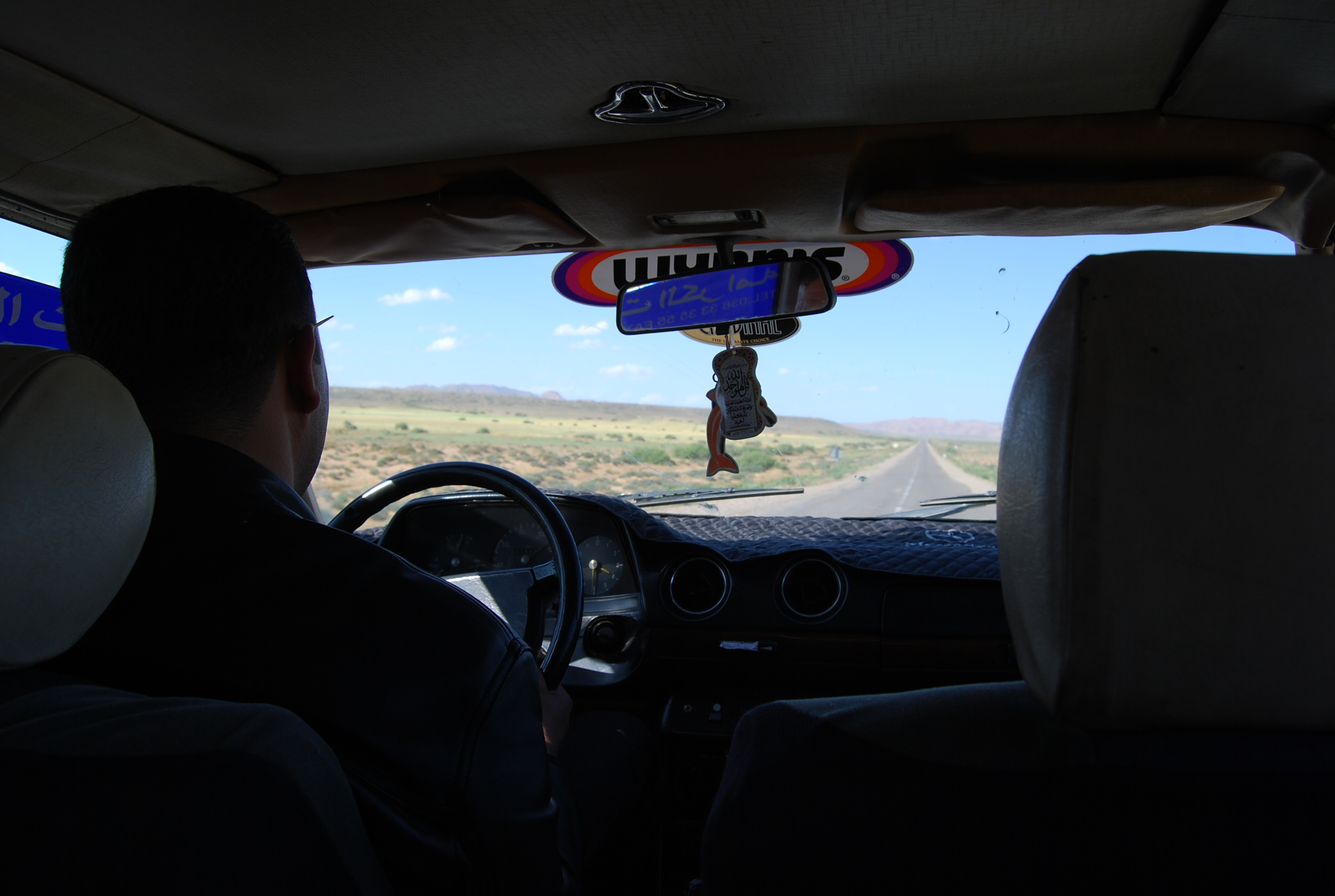
A taxi strike in Fes almost prevented us from getting here today. Once the 600 dihrams were out of my wallet though, we were ushered into a car for the 325 km drive to Nador, a town of about 100,000 a couple of miles south of the border with Melilla.

Our 4.5 hour trip was like a thrill ride at Six Adventures, minus the seat belts. Moroccan drivers don’t abide by the speed limit, right of way or the concept of two lanes. So, we didn’t get much rest in the back of our 25 year-old Mercedes Benz.

After what seemed like endless olive grovers and roaming herds of sheep, we arrived at the frontera. American passports in hand, we jostled to the front of the line and easily entered Spain. The change was almost immediate — hustling taxi drivers and touts from shop keepers were nonexistent in Melilla (where Franco launched the Spanish Civil War in 1936), although we were still on the African continent.

We just had salads and mussels for dinner and toasted our arrival in country #2 on my trip around the world. Morocco was an amazing but exhausting place — and we’re excited to be in Spain, although not as much as our stomachs are.

Our overnight ferry to Malaga, Spain departs in two hours.

It’s the people

Day 9
Fes, Morocco

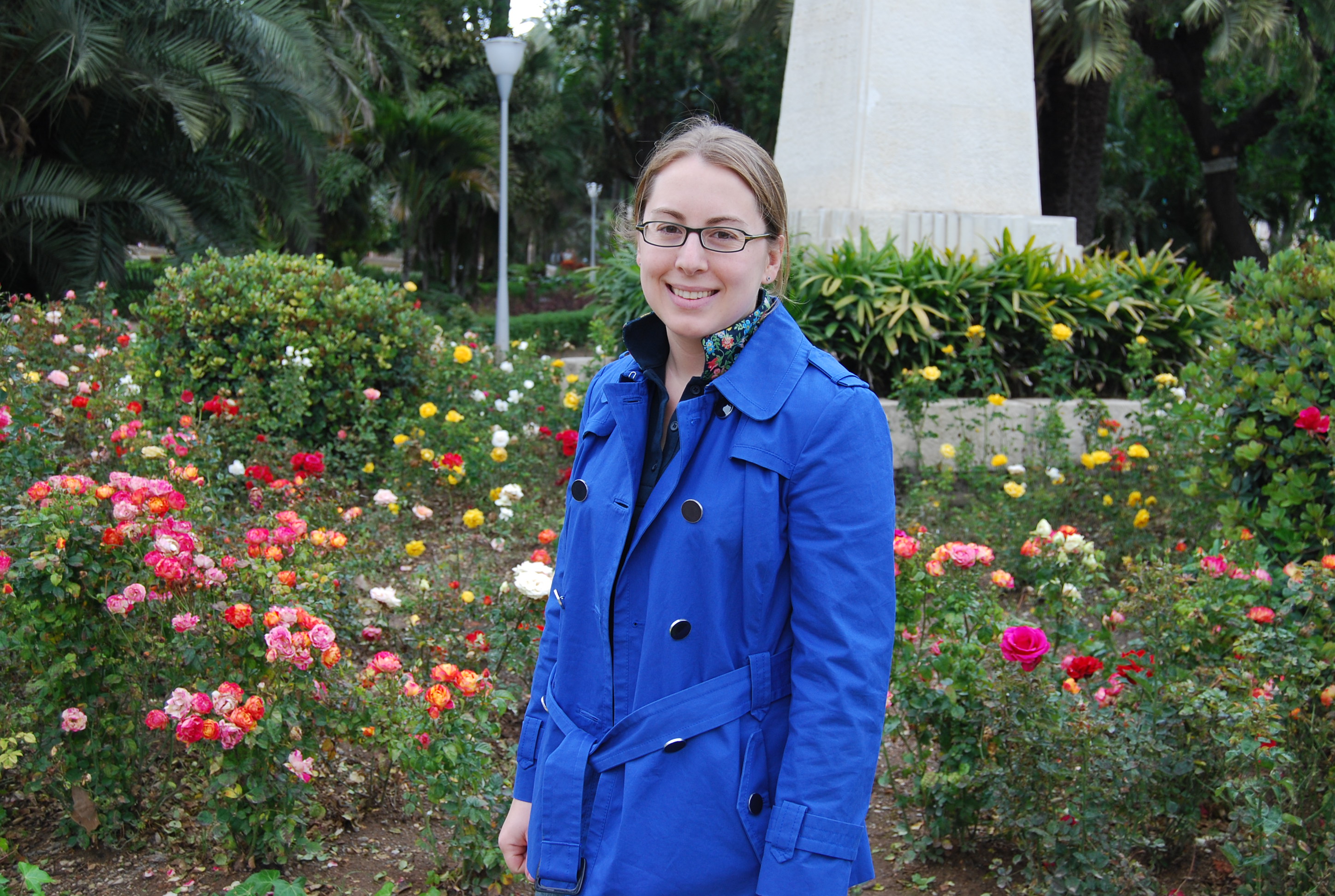
It was an ominous start to the day. The mosques’ call to prayer awoke us at 4 a.m., a bit earlier than the usual sunrise alarm clock we’ve had for the last week. When we got out of bed a couple hours later, the skies — for the first time this trip — were overcast and rain looked probable. Despite this, after breakfast and already running low on clothing, we put up a wash. We pinned everything up on the roof deck’s clothes line to dry and went back to our room. Ten minutes later, downpours.

The rain continued throughout the day — which, as Friday, was relatively peaceful, as many Moroccans do not work. Gray skies and the occasional shower plagued us as we crisscrossed Fes in search of a means to get to Melilla tomorrow. Melilla is an autonomous Spanish city located on the northern coast of this country; on Saturday night, we’re taking an overnight ferry from there to Malaga, Spain, the next stop on my trip around the world. Originally, we’d planned a 6-hour bus there; this morning, we discovered that this bus actually departs at 1:30 a.m. — not happening. Our other option, we were told, was to take a 4.5 hour cab to Melilla at a cost of 1,300 dirham or almost $200USD — outrageous.

So, we spent much of today visiting two bus terminals, the train station, an airline ticketing agency and a travel agency (closed). We were finally able to book a private grand taxi heading directly there at noon tomorrow for 600 dirham, much more reasonable. Finding this deal was probably the day’s biggest success — as was finding my first cheeseburger for lunch!

When we got back to our riad, we had a drink with the owner and another young couple staying here. After dinner together, we all ended up in one of the home’s 600 year-old living rooms, where we easily had the best time of this adventure so far. And it wasn’t while gawking at tile work, slurping up bowls of harira soup or declining carpet salesman in the souq — we were simply sitting around, telling stories about our lives, our families, friends and our travels. It made me realize that over the next 71 days, I’ll see the sights, eat the foods and experience the cultures. But it’s truly the people who will make this trip what it is.
From down & dirty to squeaky clean

Day 8
Fes, Morocco

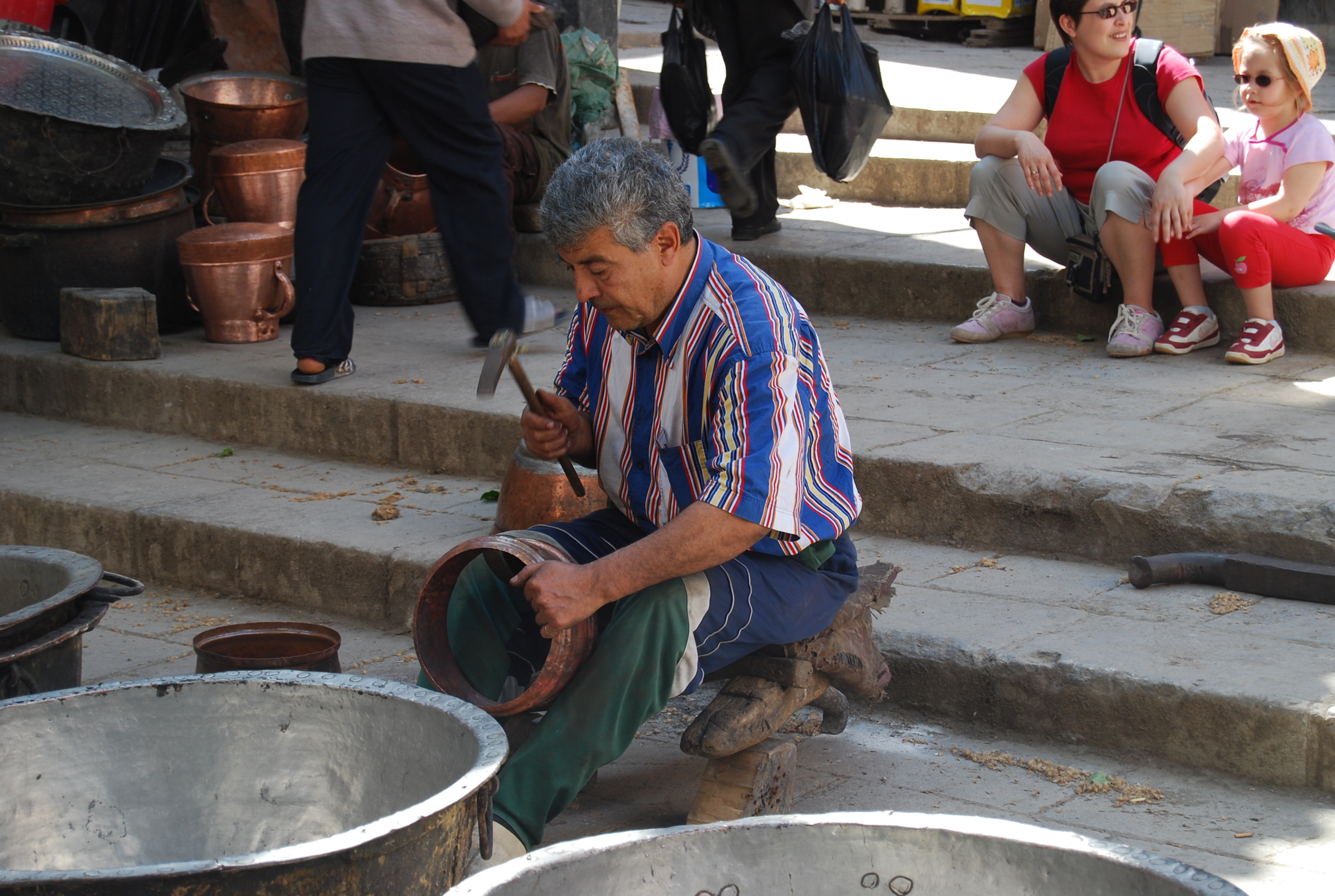
In a city so steeped in history, it’s not surprising that the Fassi people have clung to many of the traditions and practices developed in medieval times. Our riad, Dar Seffarine, is just a couple steps from Place as-Seffarine, where metalworkers shape bowls, pans and plates and the air rings out with the sound of hammers pounding metal. (Note: Tourists in photo background are not metalworkers.)

This morning, we ventured into the medina to witness one of Fes’ most iconic sights — its tanneries. Like the metal artisans, the tannery workers produce leather goods much in the same way they did hundreds of years ago. Finding the area wasn’t difficult (“just follow your noses”) and we were soon ushered onto the roof of one merchant, who explained to us the leather-making process. Fresh camel, goat and cow hides are brought in by donkey and then cleaned.

After drying, they are placed in these dye pits (indigo, saffron and poppy are used for color):

Next, workers shape and smooth the hides …

… after which, they are sewn into shoes, belts, bags — you name it — by artisans.

Over hundreds of years, not much has changed in this 30-day process. The tanneries remain organized according to ancient guild principles and components of the process, like the use of pigeon poop and cow urine, continue — thus the wretched smell.

Charlotte bought some killer navy ballet flats for about $20USD (we’re getting good at bargaining) and then we grabbed a cab to Bab Bou Jeloud, the main gate to the medina.

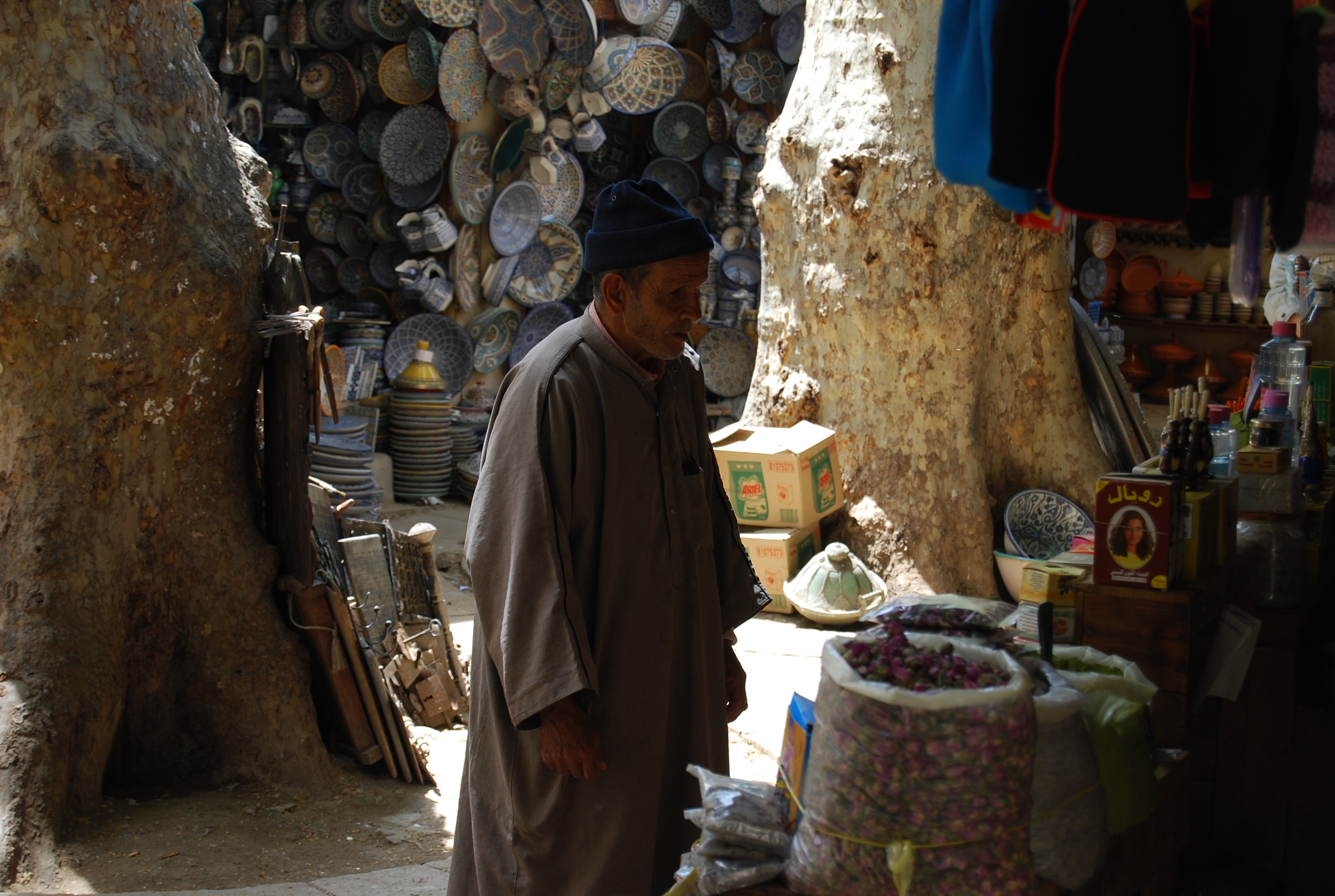
On a self-guided tour, we saw stalls of traditional blue and white pottery, worshippers at the Kairaouine Mosque & University (which claims to be the world’s oldest — take that Harvard!) and Fassis in the henna souq.

Exhausted from walking the narrow alleys and feeling filthy from the grime, dust and dirt, we took a taxi to the Ville Nouvelle for a scrub and massage at Nausikaa Spa, a traditional hammam (Arab bath). While an upscale spot, it was certainly not in our Lonely Planet, and we were one of the few non-locals there.
Spas tend to be awkward experiences for men. We don’t know where to go. What to do. And those slippers! Imagine now a spa where you don’t speak the language and haven’t got a clue what a “scrub” really is — needless to say, even Charlotte, a seasoned spa veteran, was at a loss.

In case you ever find yourself in our position, we wanted to pass on these words of advice:

  • Men don’t go naked — women can if they’re feeling particularly adventurous.
  • You’re supposed to bring a scrubber. We didn’t know what scrubbers were. Extras should be on hand if you’re clueless like us.
  • You’ll have no idea what is happening, how to enter the bathing room or where to go or wait. Pointing and smiling tends to work just fine.
  • The order of treatment should go something like this: undress (or put on bathing suit), shower, get covered in black soap (made from the resin of olives — yum!), bake in steam room until golden brown, lie on marble slab and be scrubbed hardcore and then rinsed by the attendant, sit in cool plunge pool. Relax, repeat, wonder what just happened.

The majority of people who live in Fes do not have running water in their homes. The streets are covered in dust, flies and donkey dung. Yet, after today’s bath, it’s safe to say that we’ve never felt cleaner. Go figure.

The road to Fes

Day 7
Fes, Morocco

We were up before dawn this morning to catch our 7.5 hour train to Fes. It was a long but picturesque haul from Marrakech as we watched the arid, dry landscape give way to a more fertile, mountainous farmland. Feeling a bit adventurous upon arrival, we took a taxi to the edge of the Fes medina, disembarked and, shunning a guide, followed the treasure map I’d scribbled in my notebook that would hopefully bring us to our riad in the old historic quarter.

After walking the usual maze of Moroccan streets that we’ve now become familiar with, we arrived at Dar Seffarine. This is an amazing place, housed in a building more than 600 years old, that has gone through 2.5 years of extensive renovations. Much of the old tile work and carvings have been brought back to life and it almost feels like we should be royalty here. Our room is large and nicely furnished, overlooking the central courtyard. From it, you can hear the sounds of Fes, the crowing of roosters, the hammering of metal, the call to prayer — there is almost a rhythm to life here.
But it’s the view from Dar Seffarine’s roof deck that provides the most complete picture of Fes el-Bali, essentially a working medieval city with 9,400 streets and alleyways.

We’ll be enjoying a home cooked dinner from the roof in a little bit. Tomorrow, we’ll try to cover as many of those nearly 10,000 streets as we’re able.

Supporting the local economy

Day 6
Marrakech, Morocco

On this, our last day in Marrakech, we felt it was our duty (kind of) to exchange some more U.S. dollars to dihrams in order to support the economy here — in two very different ways.

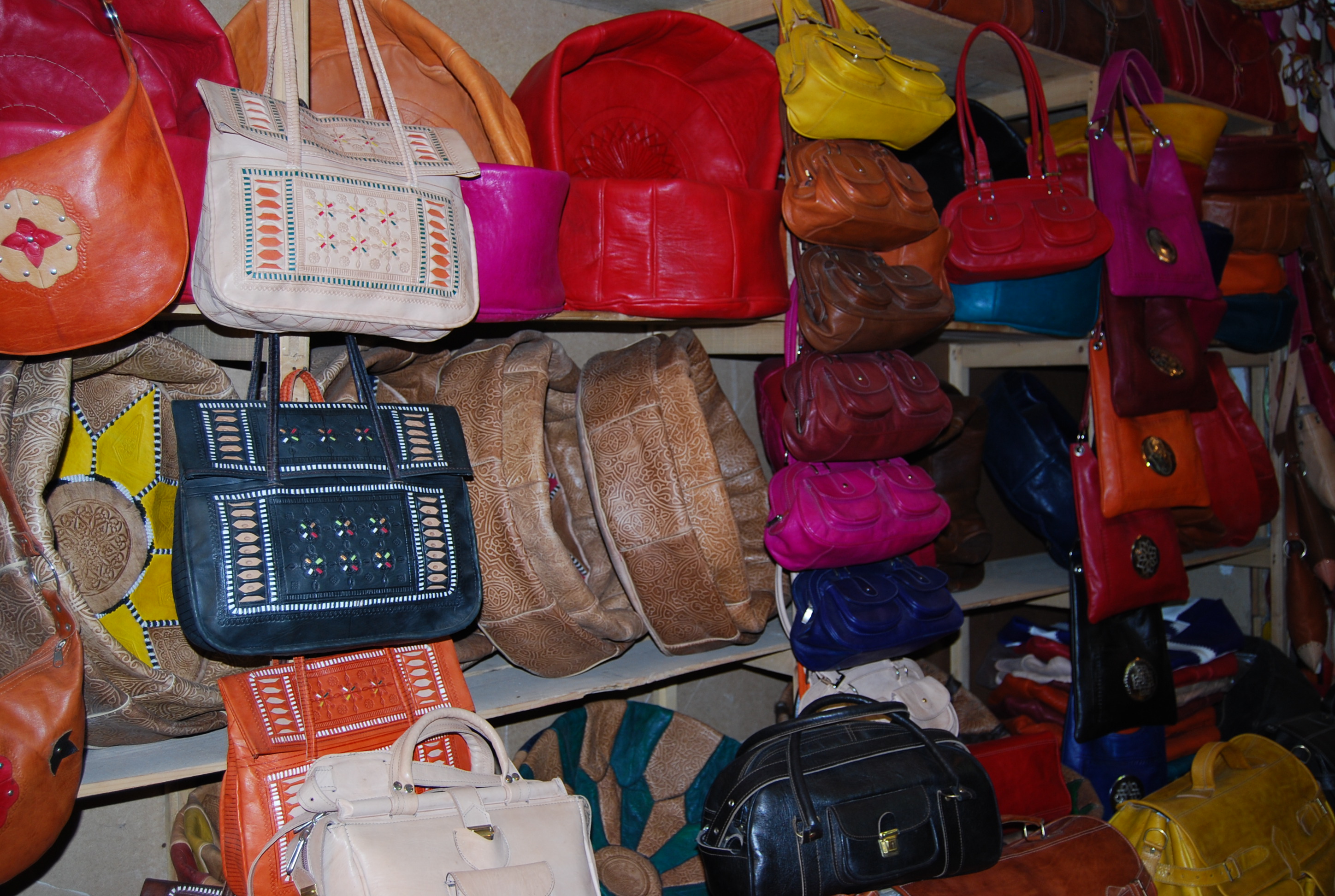
First, Ahmed, the manager of Dar Saria, guided us into the narrow streets of the souq. He brought us to a local wholesaler of handwoven textiles. After a friendly welcome from the owner and some mint tea, we were treated to what seemed a never ending parade of carpets and blankets unfurled before our feet. Prices ranged from several hundred to several thousand dollars, which while far less than you’d pay in the States, was still a bit much for us. We ended up with a pair of colorful silk pillow cases for around $40USD.

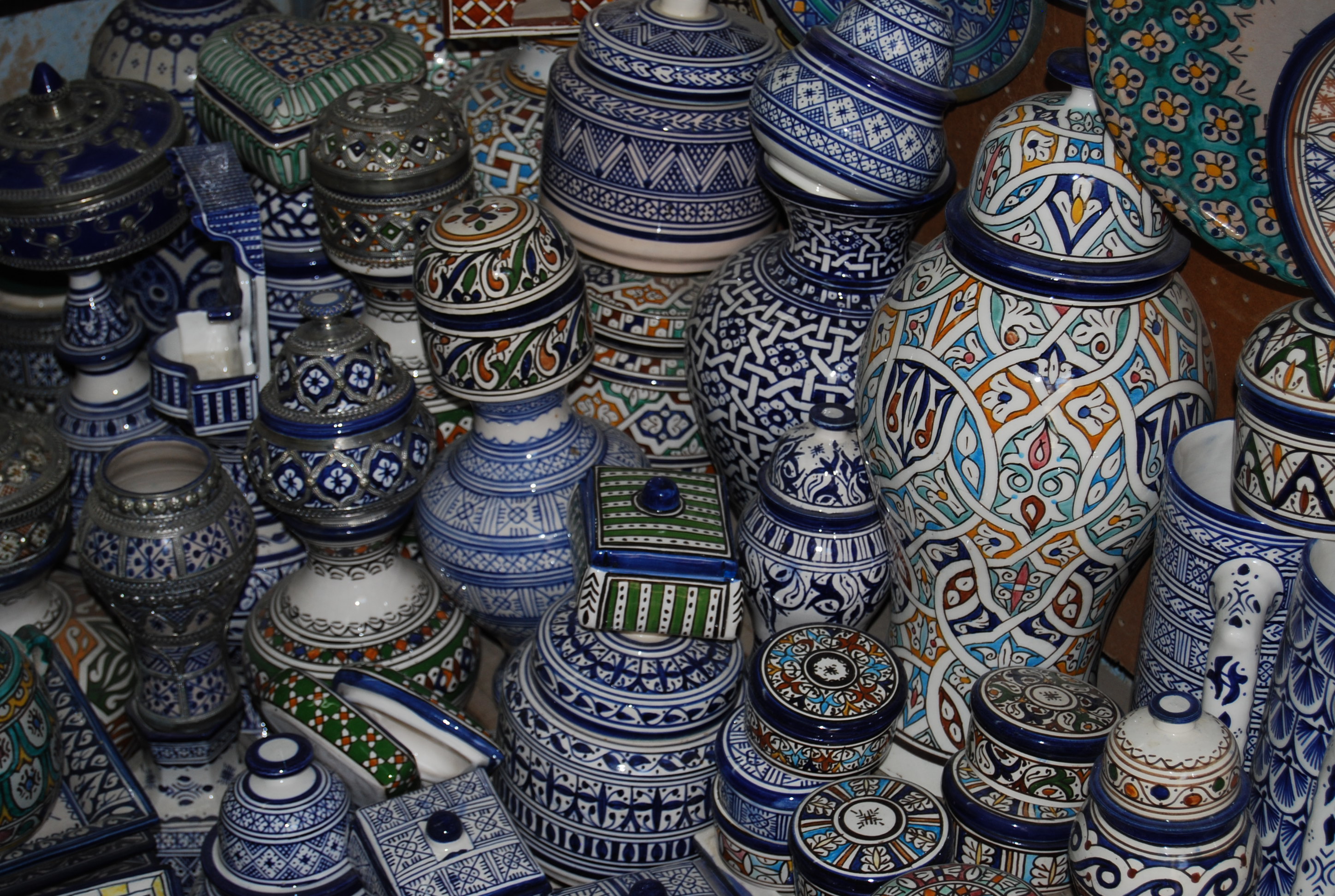
Next up was ceramics and pottery. With a wall to wall selection, the options at this stall seemed limitless. Charlotte found two small hand painted bowls (perfect for oatmeal and granola, she says) as well as a small antique Berber vase. One of the local specialties in Marrakech is a pottery made from limestone and black salt — and a small bowl rimmed with a hammered metal edge was too perfect to pass up. Finally, we visited the local lantern craftsman. He had a nice sized handmade copper lantern, with stained glass windows. With a bit of competitive haggling, we had a deal. All told, the ceramics and lantern ran us around $100USD.

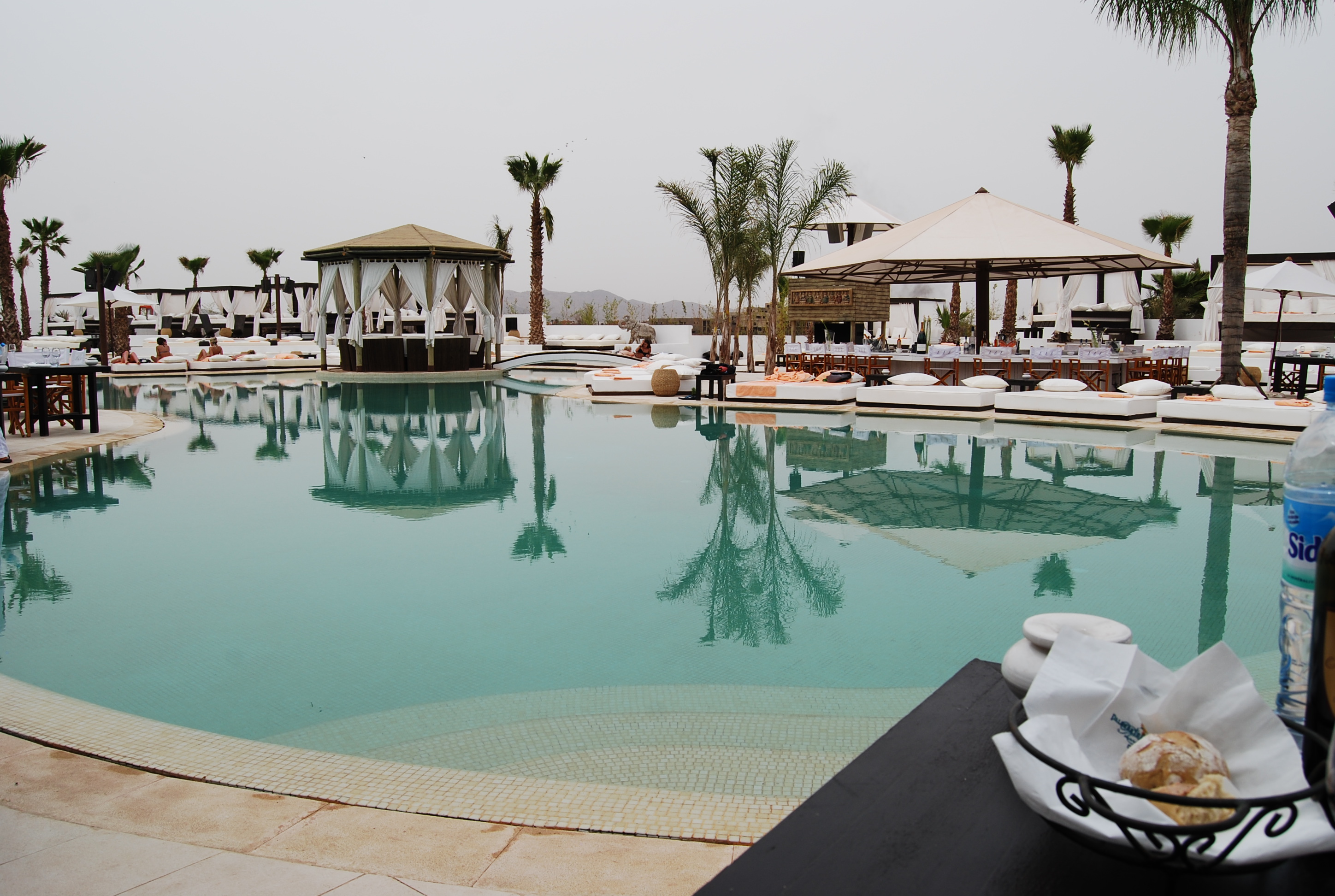
After our shopping excursion, we grabbed our bathing suits and took a 15-minute cab to the Palmeraie neighborhood, home to Morocco’s outpost of Nikki Beach. Although we had partly cloudy skies, it was still a welcome respite to lounge on some daybeds, split a bottle of nice wine and have a meal that didn’t include couscous. Our bill, with admission for the day, ran us about $140USD, about what we spent in the souqs. One has to hope that at least some of this money will stay here locally.

Tonight, we’re having our final Marrakech dinner in la square, before getting to bed early. Our 7-hour train to Fes departs at 7 a.m. tomorrow.